I.S.T.XL-14 Maya

In the early 1950s in the Republic of the Philippines, the Institute of Science and Technology (I.S.T., previously known as the Bureau of Science) designed at least three different prototypes, both to investigate the scope for local aircraft design and production and to examine the use of indigenous materials in their construction. One such material of interest was Wobex (Woven bamboo experimental), a reinforced woven bamboo.

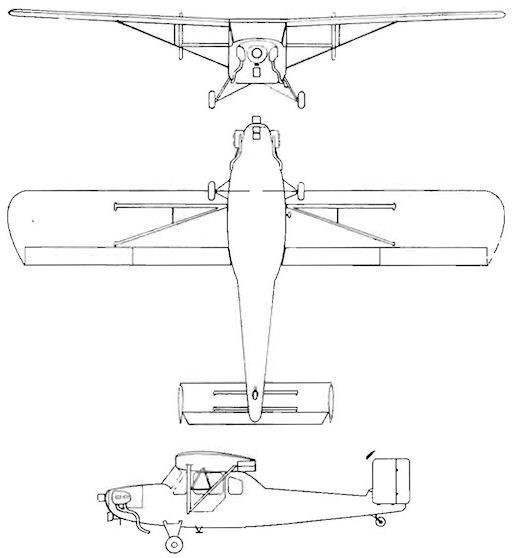
Designed by Antonio J. de Leon, the XL-14 Maya (until 1995 the Maya was the national bird of the Philippines) was the first of this series of prototypes. It was a single-engine, high-wing monoplane of standard layout except for its twin tail. The wing had constant chord and was built around two parallel, solid spars and wooden ribs. The leading edges were covered and reinforced with Wobex and the rest of the wing was fabric covered. The centre section was integral with the cabin top and the outer wings were braced on each side with V struts from the wing spars to the lower fuselage. Ailerons and slotted flaps were fitted. It had a strut braced tailplane, set slightly above the fuselage top on a short pylon. The tailplane carried almost rectangular endplate fins and rudders. The tail structure was wooden with fabric covering.
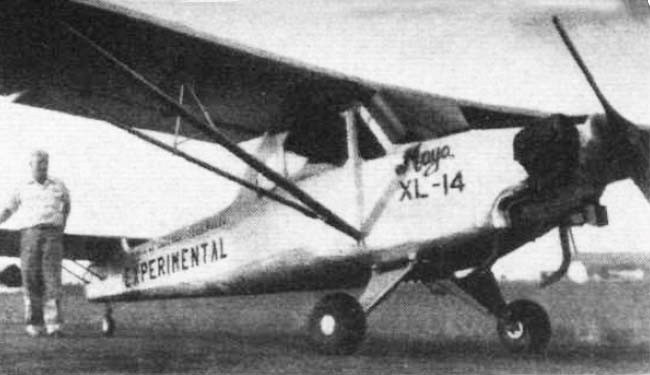
The Maya, bearing its experimental category registration PI-X-104 on its fins, had a semi-monocoque fuselage with wooden stringers and Wobex mat covering. The cabin stood above the rear fuselage line, enclosing side-by-side seats with a third, occasional seat, or luggage space, behind. In front a 75 kW (100 hp) Lycoming flat four engine, with cylinder-heads exposed, drove a two-blade propeller. It had a conventional undercarriage, with each mainwheel mounted on V-struts and half axles hinged to the fuselage central underside via rubber shock absorbers. The fixed tailwheel was steerable.
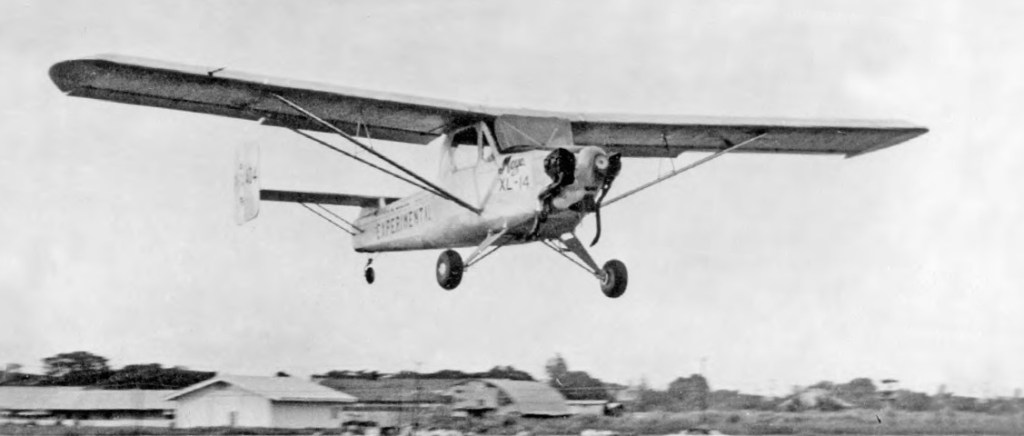
The date of the Maya’s first flight is not known, though the aircraft was complete by May 1955 and a later design, the XL-15 Tagak was being flight tested by October 1954. Only one Maya was built, for although it was described as being suitable for agricultural use and for utility and observation work, its function was always as a constructional material experimental aircraft.

Engine: 1 × Lycoming O-235-2, 75 kW (100 hp)
Propeller: 2-bladed wooden, fixed pitch
Wingspan: 10.24 m (33 ft 7 in)
Wing area: 16.0 sq,m (172 sq ft)
Length: 6.30 m (20 ft 8 in)
Height: 2.40 m (7 ft 10 in) tail up
Empty weight: 510 kg (1,124 lb)
Gross weight: 780 kg (1,720 lb)
Fuel capacity: 68 L (15 Imp gal, 18 US gal)
Maximum speed: 184 km/h (114 mph, 99 kn)
Cruise speed: 150 km/h (93 mph, 81 kn)
Range: 480 km (300 mi, 260 nmi)
Service ceiling: 3,820 m (12,530 ft)
Rate of climb: 3.6 m/s (710 ft/min) initial
Capacity: 2/3 (3rd passenger under 50kg (110 lb))
Isotta Fraschini V.5

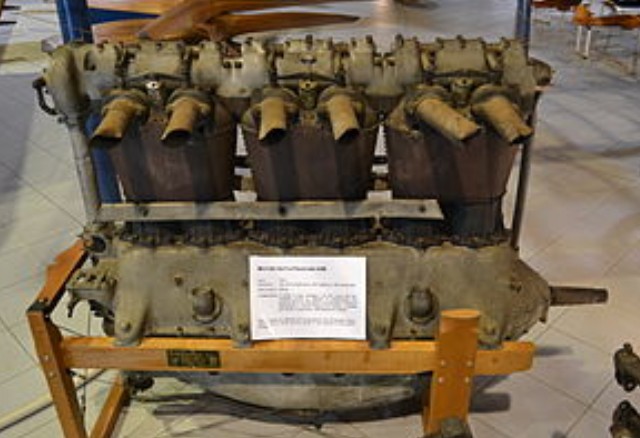
The Isotta Fraschini V.5 of 1916 was an Italian eight-cylinder, water-cooled, in-line piston aero engine first run in 1915. The “V” denoted “Volo” or “flight” rather than piston arrangement.

The V.5’s construction was fairly typical of aircraft engines of the period with cast-iron cylinders mounted in pairs with common heads and water jackets. It had much in common with the six-cylinder Isotta Fraschini V.4 and was built at a similar time. Though powerful, it was very heavy and thus, like some other Isotta Fraschini engines, better suited to airships than aircraft.

Applications:
Forlanini airship

Specifications:
Type: 8-cylinder inline
Bore: 130 mm (5.12 in)
Stroke: 180 mm (7.09 in)
Displacement: 19 L (1,165 cu in)
Length: 1,990 mm (78.3 in)
Width: 600 mm (23.6 in)
Height: 1,010 mm (39.8 in)
Dry weight: 351 kg (774 lb)
Valvetrain: Overhead camshaft
Fuel system: Twin carburettors, twin eight spark magnetos
Oil system: Forced feed
Cooling system: water; cast iron cylinders in pairs, each pair in a steel water jacket
Reduction gear: direct
Power output: 183 kW (245 hp) at 1,400 rpm

Isotta Fraschini V.4

The Isotta Fraschini V.4 of 1916 was an Italian six-cylinder, water-cooled, in-line piston aero engine of World War I (the “V” denoted “Volo” or “flight”). Its construction was fairly typical of aircraft engines of the period with six cast-iron cylinders mounted in pairs with common heads. This engine was also produced by Alfa Romeo.

Applications:
CANT 7
Caproni Ca.3
Caproni Ca.30
Caproni Ca.33
Caproni Ca.34
Caproni Ca.35
Caproni Ca.36
FBA Type H
Macchi L.1
Macchi M.5
SIAI S.8

Specifications:

V.4b
Type: Six-cylinder, water-cooled, in-line piston engine
Bore: 130 mm (5.12 in)
Stroke: 180 mm (7.09 in)
Displacement: 14.3 L (874 cu in)
Length: 1,470 mm (58 in)
Width: 460 mm (18.11 in)
Height: 1,020 mm (40.15 in)
Dry weight: 264 kg (584 lb)
Valvetrain: Overhead camshaft
Fuel system: Twin carburettors, two six spark magnetos
Oil system: Forced feed
Cooling system: Water; cylinders in pairs, each pair in a steel water jacket
Power output: 142 kW (190 hp) at 1,450 rpm
Compression ratio: 4.8

Isotta Fraschini Delta / R.C.21/60 / R.C.35

Isotta Fraschini Delta RC131

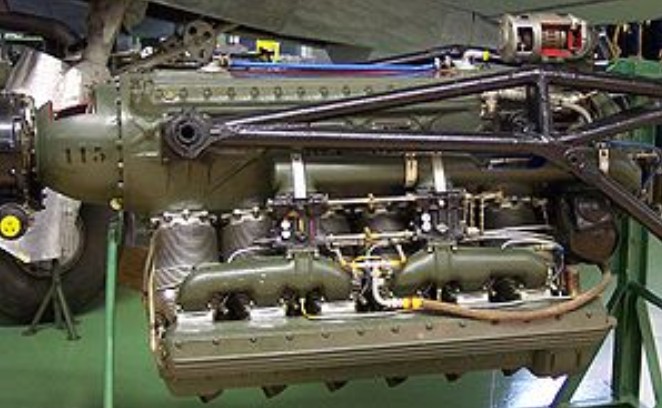
The Delta was a 12-cylinder inverted-V aircraft engine built by Isotta Fraschini prior to and during World War II. First run in 1927, the Delta produced about 750 hp in common versions, although others were rated up to 900 hp. The Delta was not widely used, although it could be found on a number of production aircraft and some advanced prototypes.

Although the air-cooling might be considered an anachronism even during the 1930s, the engine included a number of otherwise advanced features. For instance, the valves were powered by dual overhead cams driven by power shafts at the rear of the engine. Exhaust ports were arranged to exit toward the middle of the engine, one cylinder bank being the mirror of the other, allowing the piping to be ganged below the engine nacelle.

Around 3300 were built.

Applications:
Ambrosini SAI.107
Ambrosini SAI.207 prototype
Ambrosini SAI.403 prototype
CANT Z.515
Caproni Ca.313
Caproni Ca.314
Caproni Ca.331
Caudron C.714 (C.760) prototype
Henschel Hs 129 prototype
Reggiane Re.2001 prototype

Specifications:

Delta R.C.35 IS
Type: 12-cylinder air-cooled 60 degree inverted vee
Bore: 132 mm (5.197 in)
Stroke: 160/165 mm (6.299/6.496 in), with main and articulated rod
Displacement: 26.685 Litres (1,628.44 in³)
Length: 2000 mm (78.8 in.)
Width: 840 mm (33.07 in.)
Height: 883 mm (34.76 in.)
Dry weight: 510 kg (1,111 lb)
Valvetrain: 2 Poppet valves per cylinder, sodium cooled exhaust valves, double overhead camshafts.
Supercharger: single stage single speed centrifugal type supercharger, gear ratio 9.8:1
Fuel system: 4Isotta Fraschini downdraft carburetors Fuel type: 80/87 octane petrol (aviation gasoline) Oil system: dry sump, 2 scavenging, 1 pressure pump Cooling system: Air-cooled Power output: 770hp/2600rpm take off, 750hp/2600rpm/4000meters. Reduction gear ratio 0.64:1 Specific power: 0.75 hp/in³ (34.1 kW/L) Compression ratio: 6.4:1 Specific fuel consumption: 270 grams/hphour maximum, 250 grams/hp*hour cruise (70%)
Power-to-weight ratio: 1.485 hp/kg (0.67 hp/lb)

Isotta Fraschini Asso XI / XI R / XI R.C.40

Isotta Fraschini Asso XI

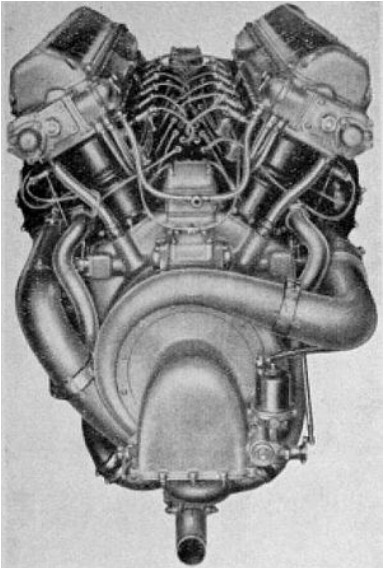
Isotta Fraschini produced a long series of engines with the name Asso (Ace, in English). The Asso XI.RC was an upright, liquid-cooled V-12 engine with maximum power output in the range 670-725 kW (900-970 hp) depending on the degree of supercharging. There were two variants, differing only in their supercharger speed: the R.C.40 ran at a little over 10 times the crankshaft speed and enabled the engine to maintain a rated power of 623 kW (836 hp) to an altitude of 4,000 m (13,120 ft) (hence the 40 in the variant name) whereas the R.2C.15 held 655 kW (880 hp) to 1,500 m (4,920 ft) with a supercharger gearing of 7.

All variants of the RC.40 had much in common constructionally with the earlier Asso-750.RC, though they had two, rather than three, banks of 6 cylinders and 4 rather than 2 valves per cylinder. Cylinder barrels were machined from carbon steel with flat-topped heads and valve seatings. Each barrel had a separate sheet steel water jacket. Cast aluminium head blocks were bolted to each of the two banks of 6 cylinders, providing valve ports, guides, coolant passages and camshaft supports. The pistons were also aluminium castings. The crankshaft was a 6-throw design with 8 plain bearings and a double row ball thrust bearing between the front two. The connecting rods had bronze bush little ends and white metal big ends. The crankcase was cast in two parts, the upper one with the housings for the crankshaft bearings.

Variants:
R
R.C.
R.C.15
R.2C.15
Supercharger speed 7 times crankshaft; rated power at 1,500 m.

R.C.40
Supercharger speed 75/7 times crankshaft; rated power at 4,000 m.

Applications:
CANT Z.501
CANT Z.505
CANT Z.508
CANT Z.1007
CANT Z.1011
Caproni Ca.124 idro
Caproni Ca.134
Caproni Ca.135
Caproni Ca.405
IMAM Ro.45
Piaggio P.32
Piaggio P.50
SAI Ambrosini S.S.4

Specifications:

RC.40
Type: 12-cylinder supercharged water-cooled 60° V-12 piston aircraft engine
Bore: 146 mm (5.75 in)
Stroke: 160 mm (6.30 in)
Displacement: 32.65 L (1,992 in3)
Length: 2,128 mm (83.78 in)
Width: 834 mm (32.83 in)
Height: 1,106 mm (43.54 in)
Dry weight: 594 kg (1,310 lb)
Valvetrain: Two intake and two exhaust valves per cylinder, drive via cams and T-shaped tappets from inlet and exhaust pairs of overhead camshafts geared together, one for each bank of 6 cylinders, each pair driven by its own shaft connected indirectly to the crankshaft bevel gear.
Supercharger: Single speed, single stage centrifugal, running at 10.714 times crankshaft speed.
Fuel system: 4×Isotta Frachini L.70C updraft carburreters, 2 for each bank of 6 cylinders.
Oil system: Dry sump with single pressure and scavenge pump shaft driven off crankshaft bevel gear.
Cooling system: Water-cooled, pump shaft driven off crankshaft bevel gear.
Reduction gear: 0.743 or 0.512
Compressed air starter
Power output: Rated power 623 kW (836 hp) at 2,250 rpm at 4,000 m (13,120 ft); take off power 596 kW (880 hp) at 2,250 rpm
Specific power: Rated 19.1 kW/L (0.42 hp/in3)
Compression ratio: 6.4:1
Fuel consumption: At Rated output, 194 kg/hr (428 lb/hr)
Specific fuel consumption: 0.312 kg/(kW.hr) (0.512 lb/(hp.hr))
Oil consumption: Cruise: 8 kg/hr (17.6 lb/hr)
Power-to-weight ratio: 1.05 kW/kg (0.64 hp/lb)

Issoire PIK-30 / Societe Siren PIK-30 / Eiri Avion PIK 30

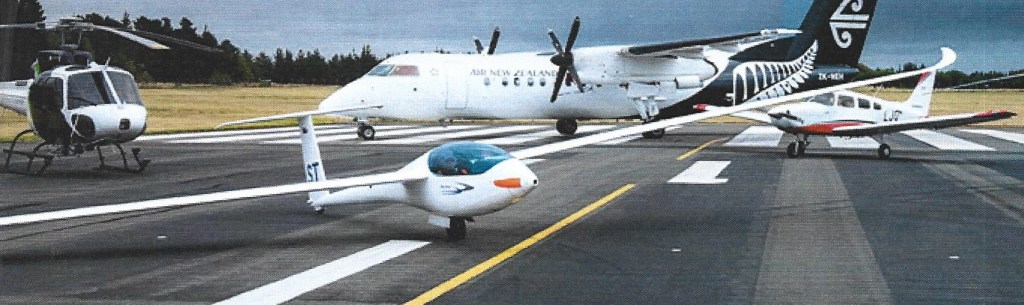
Issoire, part of the groupe Siren, acquired a license from Eiri Avion to build the 15 m. self- launching Finnish PIK 20E designed by Pekka Tammi and M.Moniot. The Pik 30 is a self- launching 17 m. development which first flew in 1984. It has the capability of being flown as a 15 m. sailplane or, with tip extensions, with 17 m. span. The PIK 30 has a mast mounted manually actuated retractable engine.
Construction of the wings and tail surfaces: GFRP sandwich with PVC core; carbon fiber spar caps and cockpit sides: GFRP monocoque structure reinforced with ribs of carbon fiber.

SIREN PIK-30 ZK-GST

Span: 17m / 55.8ft
Area: 10.63sq.m / 114.42sq.ft
Empty Weight: 340kg / 750lb
Payload: 120kg / 264lb
Gross Weight: 460kg / 1014lb
Wing Load: 43.27 kg
/sq.m / 8.86 lb/sq.ft
Water Ballast: 0
Aspect ratio: 27.2
L/DMax: 45 110 kph / 59 kt / 68 mph
MinSink: 0.54 m/s / 1.77 fps / 1.05 kt
Airfoil: Wortmann FX-67 K170, root, K150, tip
Engine: 32 kW/ 43 bhp Rotax 503
Seats: 1
No. Built: 10

Issoire E 78 Silene

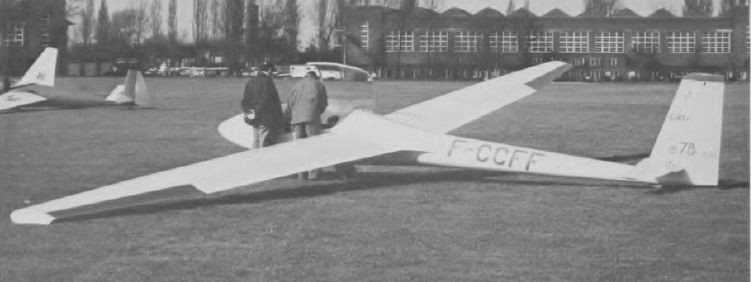
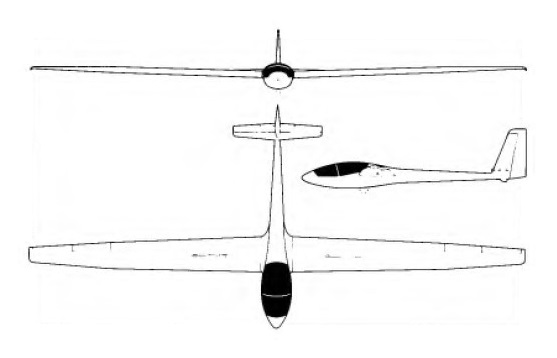
The E 78 Silene side-by-side two-seat sailplane was developed by CERVA (Consortium Europeen de Realisation et de Ventes d’Avions) and is the first French glassfibre two-seater. The company was owned by Siren SA and Wassmer-Aviation SA. The E 78 was designed by Siren and, following the closure of Wassmer, was transferred to Issoire in late 1977. The aim was to produce a sailplane suitable for all stages of glider training from ab initio to cross-country flights.

Construction was started in February 1973 and the prototype first flew at Argenton on 2 July 1974.

The wings are of glassfibre/plastic foam sandwich construction, incorporating two-section ailerons of similar material and Schempp-Hirth airbrakes operating both above and below each wing. Flaps are not fitted. The fuselage is a semi-monocoque glassfibre/plastic foam sandwich structure. The conventional tail unit incorporates a fixed incidence tailplane and trim tabs on each elevator.

The pilots sit in staggered position to keep the width of the fuselage to a minimum, the starboard seat being set slightly to the rear. The Silene is available with either retractable or fixed landing wheel with hydraulic brake and shock absorber.

E 78 Silene
Wing span: 18.0 m / 59 ft 0 3/4 in
Length: 7.95 m / 26 ft 1 in
Height: 1.5 m / 4 ft 11 in
Wing area: 18.0 sq.m / 193.8 sq ft
Wing section: Berlin E55 166
Aspect ratio: 18.0
Empty weight: 365 kg / 805 lb
Max weight: 565 kg / 1,246 lb
Water ballast: None
Max wing loading: 29 kg/sq.m / 5.94 lb/sq ft
Max speed: 119 kt / 220 km/h
Stalling speed: 34 kt / 63 km/h
Min sinking speed: 0.59 m/sec / 1.8 ft/sec at 39 kt / 73 km/h
Best glide ratio: 38 at 51 kt / 95 km/h

Issoire Aviation

Societe Issoire Aviation was formed in 1978, following the bankruptcy of Wassmer Aviation, by President/General Director of Siren SA. In addition to subcontract work for the French aircraft industry and construction of sailplanes, offered IA 80 Piranha as a two-seat lightplane.

1995 saw the takeover of Issoire Aviation by the REXIAA Group. Alongside the subcontracting activities, launch of the LIONCEAU programme, the first “all carbon” aircraft with the participation of all the companies in the group.