Jackaroo Aircraft Ltd designed a four-seat low-wing lightplane called the Paragon, Jackaroo Aircraft Ltd being re-formed in early 1960s as Paragon Aircraft Ltd. to produce it under new name of Paladin (subsequently Paladin), but this was not built. Assets acquired 1964 by Hampshire School of Flying.
Author: Terry
Jackaroo Aircraft Thruxton Memories
Back to Jackaroo Aircraft Thruxton
The Jackaroo brings back many happy memories. I was working at Baynes Aircraft Interiors as a trainee technician at Langley airfield and the now late Ron Prizeman was in charge of stressing and weight control.
On to the Jackaroo, the intent was to sell it at £1995 fly away Thruxton, plus a hundred or two for a starter, as a cheap cabin aircraft when American imports were nearly impossible to bring in.. Ron Prizeman was the man who did all of the paperwork for S/L Doran-Webb to get the conversion certified and some of the details fell my way.
For the Coventry air races in 1957 I travelled with Ron in his Triumph Roadster that had been fixed after a tree walked out in front of him on a very wet sharp bend. The Roadster had a dickey seat behind the three seat bench in the car and with the front seat full got rather wet in heavy rain despite the glass windshield
I became dogsbody the next year for the two ‘factory’ Jackaroos, removing weighty items to put into my little Austin 8, and polishing wing surfaces to get the best performance and beat the handicappers. In a crosswind with no brakes, the Jackaroo tended to weather cock whilst taxying and ran a lot with a wing tip in hand.
The two pilots were Lt Cdr Shea Simmonds from Boscombe Down and John Heaton, the wild man CFI at Thruxton. OEX was the cabin version and OEY was with room for a hopper replacing the three seats. I also had the job of transporting the one very merry pilot to and from a hotel in Leamington each day.
On the start line the motors were stopped for a while, and then had to be swung into life. Shea Simmonds somehow had not made ‘contact’ when requested and I thought that it would never start before the race after 10 or 12 swings. Eventually contact was made and all was well immediately, with some good monochrome pics of both of them blasting off when the flag dropped.
Funny enough I never got a ride in a Jackaroo, I don’t know why. I have a pal in the UK who has owned and flown a Tiger Moth for many years and a ride in it when I get back to the UK occasionally is a personal delight.
Old Aviation enthusiast South Africa 2018
John Parker
Jackaroo Aircraft Thruxton Jackaroo
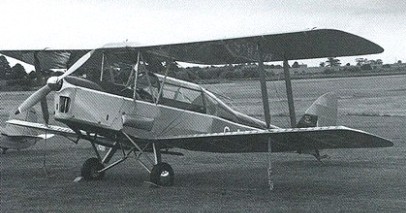
In the early 1950s Sqn Ldr J. E. Doran-Webb, managing director of the Wiltshire School of Flying at Thruxton, considered building a highwing four to five-seat touring aircraft using only Tiger Moth components. Contacts at the Royal Aero Club introduced him to Ronald Prizeman, who schemed a four-seater using the same biplane layout as a Tiger Moth but with a revised fuselage. This was accepted and formed the basis for certification as the D.H.82A (Mod) Jackaroo.
The front side frames of the Tiger Moth fuselage were moved apart by 12.5in within which four seats were installed, with the starboard pair staggered slightly forward. The basic structure and rigging of wings, tail and rear fuselage were not altered but it was necessary to increase the undercarriage track by designing a new W-shaped centre strut.
Two prototypes were built at Thruxton in 1956; G-AOEX was finished as a standard four-seater with cabin and known as a Series 1. It was test flown by Lt-Cdr Pat Shea-Simonds on March 2, 1957. The Series 2, G-AOEY, was conceived as a cargo carrier/cropduster. The cabin could be converted to carry a load of 5501b and a new low-profile superstructure neatly converted the Series 2 into a single-seater with open cockpit.
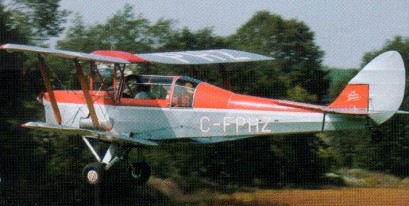
Jackaroo Aircraft Ltd was formed late 1950s at Thruxton, Hampshire, to produce the Thruxton Jackaroo widened-fuselage four-seat version of the de Havilland Tiger Moth. First “production” conversion flew on April 15, 1957, and quite a number of Tiger Moths were converted subsequently to Jackaroos. Company also designed a four-seat low-wing lightplane called the Paragon, being re-formed in early 1960s as Paragon Aircraft Ltd. to produce it under new name of Paladin.
Paragon was formed at Thruxton Aerodrome near Andover, Hampshire, from the earlier Jackaroo Aircraft Ltd., for conversion of standard two-seat Tiger Moth biplanes to four-seat configuration by inserting a new wider center fuselage and extending the top wing centre section. 18 Jackaroo conversions were carried out by the company.
By July 1957 the manufacturer was anticipating that production would reach at least six aircraft per month. An agricultural conversion kit was available at £150. Overseas owners were encouraged to convert their own Tiger Moths by purchasing a packaged kit at £600. Tiger Moths flown into Thruxton could be converted in ten days for £700.
Jackaroo Aircraft Thruxton Memories
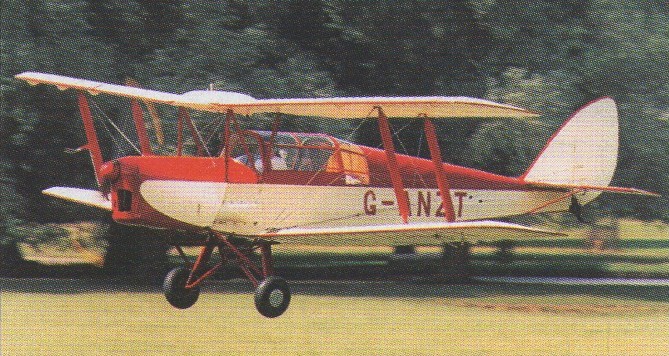
Rollason Aircraft at Croydon acquired Jackaroo G-ANZT in 1957, and incorporated a number of improvements. In April 1960 Rollason cornpleted a Jackaroo of its own, G-APOV, in which the rear fuselage faired smoothly from the wide cabin to the tail.
Although never certificated as aerobatic, the aircraft was spun on at least one occasion with all four seats occupied, an experience none of those on board ever wished to repeat.
The big prospective orders never came and import permits for five other Jackaroos already on the line at Thruxton were refused. Each was broken up for spare parts. Designer Ron Prizeman never complained however, despite never receiving his agreed royalty of £2 per aircraft
Assets acquired 1964 by Hampshire School of Flying.
Jackaroo Aircraft Ltd
UK
Jackaroo Aircraft Ltd was formed late 1950s at Thruxton, Hampshire, to produce the Thruxton Jackaroo widened-fuselage four-seat version of the de Havilland Tiger Moth. First “production” conversion flew on April 15, 1957, and quite a number of Tiger Moths were converted subsequently to Jackaroos. Company also designed a four-seat low-wing lightplane called the Paragon, being re-formed in early 1960s as Paragon Aircraft Ltd. to produce it under new name of Paladin.
Paragon was formed at Thruxton Aerodrome near Andover, Hampshire, from the earlier Jackaroo Aircraft Ltd., for conversion of standard two-seat Tiger Moth biplanes to four-seat configuration by inserting a new wider center fuselage and extending the top wing centre section. 18 Jackaroo conversions were carried out by the company, which also designed a light monoplane, the Paragon (subsequently Paladin), but this was not built. Assets acquired 1964 by Hampshire School of Flying.
Jacchia-Botarini-Wolsit Roma
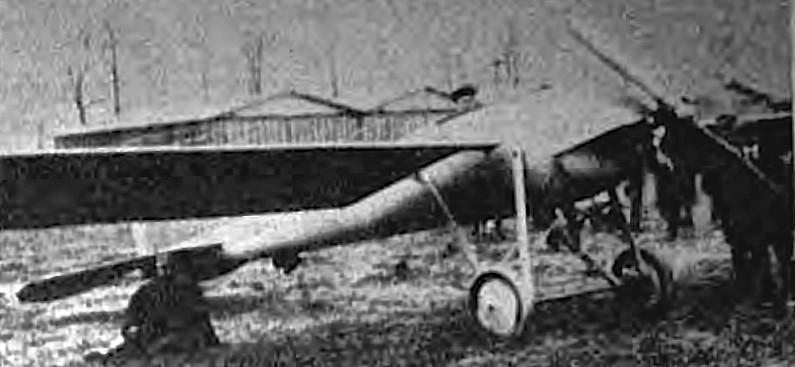
This “aero-torpedo” monoplane was destroyed when pilot Attilio Maffei crashed into some trees during a test flight on April 17th, 1913 in Italy. It was probably the “Jacchia-Wolsitt” floatplane that participated in the 1913 “Circuito delle Laghi”, modified to landplane configuration.
Jabiru 5100
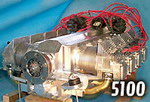
The Jabiru 5100cc Aircraft Engine is a 8-cylinder 4-stroke horizontally opposed air cooled engine. At 257lbs/117kg installed weight the Jabiru 5100 engine is ideal for many of the existing larger homebuilt aircraft such as the RV6/7, Glastar, Lancair & Glasair. The 5100 was in limited production.
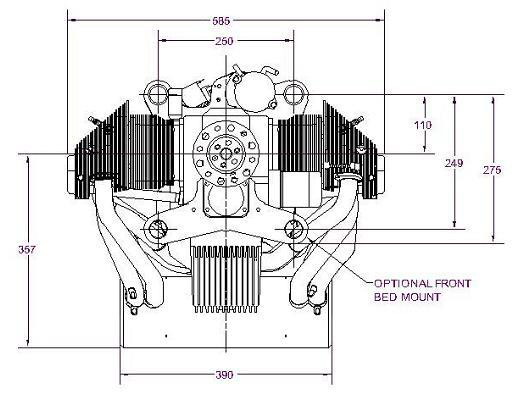
Overall dimensions are small. It’s 21.12″/638mm width allows tractor applications with very small frontal areas. The Jabiru engine is designed for either tractor or pusher installation.
Jabiru 3300
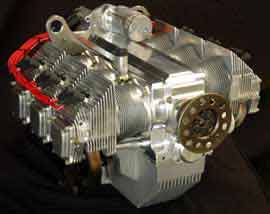
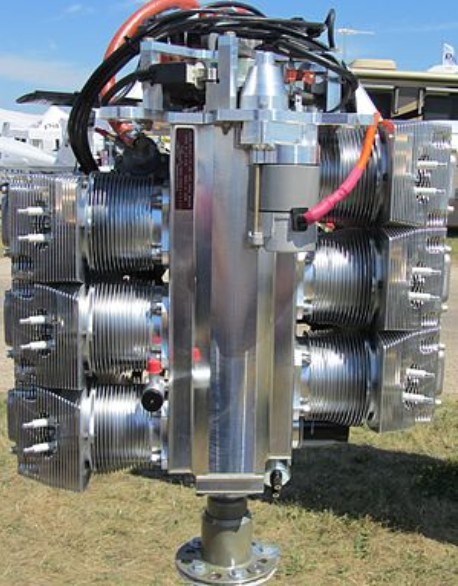
The Jabiru 3300cc Aircraft Engine is a 120hp 6-cylinder 4-stroke horizontally opposed air cooled engine. At 180lbs/81kg installed weight the Jabiru 3300 Aircraft Engine is an ideal replacement for 100-120HP equivalents.
Overall dimensions are small. Its 23.46″/596mm width allows tractor applications with very small frontal areas. The Jabiru engine is designed for either tractor or pusher installation.
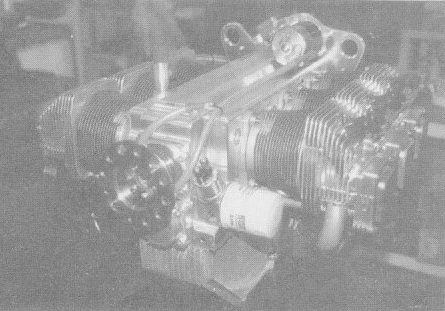
The Jabiru 3300 engine features direct propeller drive, 1 central camshaft, push rods, over head valves (OHV), ram air cooled, wet sump lubrication, dual transistorized magneto ignition, integrated ac generator, electric starter, mechanical fuel pump, naturally aspirated – 1 pressure compensating carburetor, and 6 bearing crankshaft.
2010 Price $17,500
Applications:
Aerocomp VM-1 Esqual
Alpi Pioneer 300
Arion Lightning
Australian Lightwing SP-2000 Speed
BRM Argos
Bushcaddy R-120
Creative Flight Aerocat
CZAW Parrot
Fisher Dakota Hawk
Flaeming Air FA 04 Peregrine
Ion Aircraft Ion
Jabiru J230
Jabiru J430
Just Superstol
MySky MS One
Nexaer LS1
Rand Robinson KR-2S
Sonex Aircraft Sonex
Titan Tornado
ULBI Wild Thing
Type: Flat-6
Displacement: 3300 cc (134cu.in.)
Bore: 97.5 mm (3.838″)
Stroke: 74 mm (2.913″)
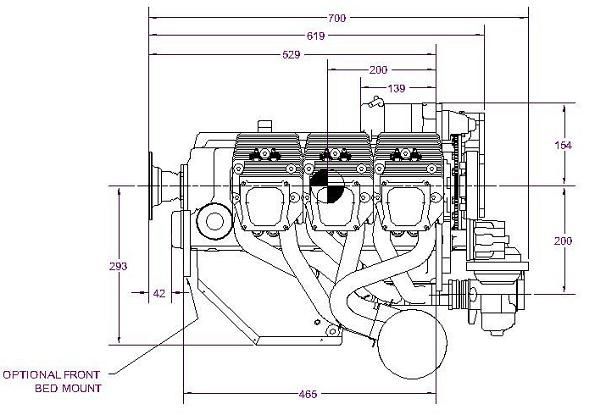
Length: 671 mm (26.42 in)
Width: 582 mm (22.91 in)
Height: 445 mm (17.54 in)
Dry weight: 81 kg (178 lbs) with exhaust, carburetors, starter motor, alternator & ignition system
Compression Ratio: 8:1
Directional Rotation of Prop Shaft: Clockwise – Pilot’s view Tractor applications
Ramp Weight: 178 lbs (81kg) complete including exhaust, carburetor, starter motor, alternator and ignition system
Ignition Timing: 25˚ BTDC fixed timing
Firing order: 1 – 4 – 5 – 2 – 3 – 6
Power Rating: 107 hp @ 2750 rpm continuous, 120 hp @ 3300 rpm intermittent
Fuel system: Mechanical fuel pump
Fuel consumption: 35 litres/h at Takeoff/Max. continuous rating
Fuel Consumption at 75% power: 26 l/hr (6.87 US gal/hr)
Fuel: AVGAS 100/130 or Auto Gas 91 MON (97 RON) Minimum
Oil system: Wet sump
Oil Capacity: 3.5 lt (3.69 quarts)
Oil: Aeroshell W100 or equivalent
Cooling system: Aircooled, Oil Cooling (optional, but usually necessary)
Spark Plugs: NGK D9EA – Automotive
Jabiru 2200
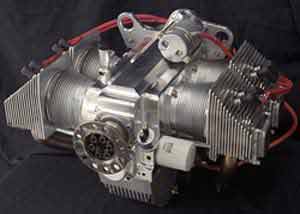
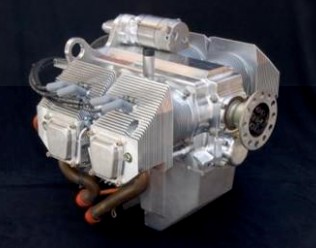
The Jabiru 2200 Aircraft Engine is a 85hp 4-cylinder 4-stroke horizontally opposed air cooled engine. At 132lbs/60kg installed weight it can be installed in an aircraft at the same weight as most popular 2-stroke engines.
Overall dimensions are small. It’s 23.46″/596mm width allows tractor applications with very small frontal areas. The Jabiru engine is designed for either tractor or pusher installation.
It is an ideal replacement for the Rotax 582 2-cylinder 2-stroke; it is the same installed weight as the Rotax 582. It is also a lightweight, smaller-package alternative to all of the VW derivative engines and the Rotax 912.
Jabiru 2200 85 hp engine features 1 central camshaft, push rods, over head valves (OHV), wet sump lubrication, integrated ac generator, electric starter, mechanical fuel pump, dual transistorized magneto ignition, direct propeller drive, and a 6 bearing crankshaft.
2010 Price $13,500
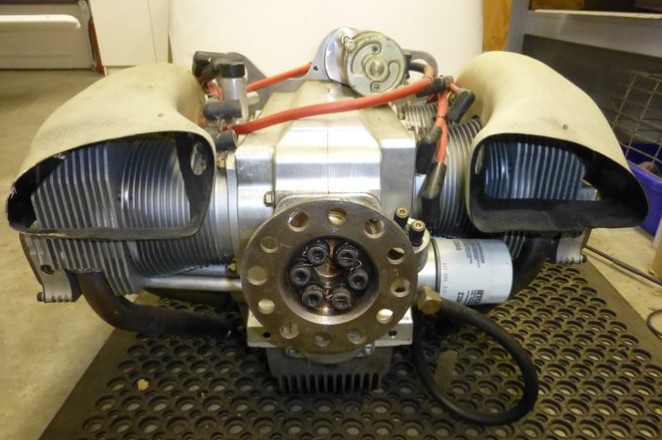
Specifications:
Displacement – 2200cc (134 cu in)
Bore – 97.5mm (3.838″)
Stroke – 74mm (2.913″)
Compression Ratio – 8:1
Prop Rotation – Clockwise from pilot view
Ramp Weight – 62.8kg (133lbs) Including exhaust, carburettor, starter motor, alternator, ignition system, regulator, propeller guides, engine mount rubbers, starter solenoid and muffler springs.
Power Rating – 64kW (85hp) @ 3300 RPM
Fuel – AVGAS 100/130, MOGAS >95
Fuel Consumption at 75% power: 15 l/hr (4 US gal/hr)
Oil Capacity – 2.3 Litres (2.2 Quarts)
Oil: Aeroshell W100 or equivalent
Spark Plugs – NGK D9EA Automotive
Ignition Timing: 25˚ BTDC fixed timing
Firing order: 1 – 3 – 2 – 4
Jabiru 1600
The Jabiru 1600 is a horizontally opposed direct drive four-stroke, air-cooled aircraft piston engine produced by Jabiru Aircraft. Jabiru designed and built the Jabiru 1600 to power the light sport aircraft it produced when it could not obtain supplies of the Italian KFM 112M engine used to power its early production aircraft. The 1600 was approved in Australia in November 1993 and was used on Jabiru production aircraft. Unit cost in 1995 was AUD$10,800.
Type: Flat-4
Bore: 88.0 mm (3.465 in)
Stroke: 66.0 mm (2.598 in)
Displacement: 1606 cm³ (248.9 in³)
Length: 532 mm (20.9 in)
Width: 574 mm (22.6 in)
Height: 472 mm (18.6 in)
Dry weight: 54 kg (119.0 lbs) dry, equipped
Cooling system: Aircooled
Power output: 45 kW (60 hp) at 3,300 RPM
Jabiru Engines
Jabiru engines are designed to be manufactured in small batch quantities using Computer Numerically Controlled (CNC) machine tools. The majority of the components are manufactured in Southern Queensland in a network of high technology small companies. The crankcase halves, cylinder, crankshaft, starter motor housings, gearbox cover (the gearbox powers the distributor rotors) and coil mounts together with many smaller components are machined using the latest CNC machine tools. The sump (oil pan) is the only casting.
The cylinders are machined from solid bar 4140 chrome molybdenum alloy steel, with the pistons running directly in the steel bores. The crankshaft is also machined from solid bar 4140 chrome molybdenum alloy steel, the journals of which are precision ground prior to being Magnaflux inspected. The camshaft is provided by a specialist camshaft manufacturer.
The engine is direct crankshaft driven and does not use a reduction gearbox. This facilitates its light-weight design and keeps maintenance costs to a minimum. The crankshaft features a removable propeller flange which enables the easy replacement of the front crankshaft seal and provides for a propeller shaft extension to be fitted, should this be required for particular applications.
Cylinder heads are machined from solid aluminium billet which is purchased directly from one of Australia’s largest aluminium companies, as is all alloy used in the engine, thereby providing a substantive quality trail to material source. Conrods are machined from 4130 alloy steel, the 45mm big end bearings are of the automotive slipper type.
Under a direct supply arrangement with Honda, various components of the engines are sourced. These items include camshaft followers, and the bendix gear in the starter motor. The ignition coils are also sourced from Honda, but are modified by Jabiru for their own particular application.
An integral alternator using rare earth magnets, provides alternating current for battery charging and electrical accessory drive. The alternator is attached to the flywheel and is driven directly by the crankshaft. The ignition system is a transistorised electronic system; two fixed coils mounted adjacent to the flywheel are energised by rare earth magnets attached to the flywheel. The passing of the coils by the magnets creates the high voltage current which is then transported by high tension leads to the centre post of two automotive type distributors (which are simply rotors and caps) before distribution to automotive spark plugs, two in the top of each cylinder head. The ignition system is fixed timing and, therefore, removes the need for timing adjustment. It is suppressed to prevent radio interference. The ignition system is fully redundant, self-generating and does not depend on battery power.
The crankshaft is designed with a double bearing at the propeller flange end and a main bearing between each big end; it therefore does not have flying webs. 48mm main bearings are also of the automotive slipper type. Thrust bearings are located for and aft of the front double bearing allowing either tractor or pusher installation.
Pistons are General Motors aftermarket made in Australia and are re-machined to include a piston pin circlip groove. They are fitted with 3 rings, the top rings being cast iron to complement the chrome molybdenum cylinder bores. Valves are 7mm (stem dia) which are purpose manufactured for the Jabiru engine in England.
The valve gear includes pushrods from the camshaft from the camshaft followers to valve rockers which are CNC machined from steel plate, induction hardened and polished on contact surfaces and mounted on a shaft through an aluminium bronze bush. Valve guides are manufactured from aluminium/bronze, as is found in larger aero engines and high performance racing engines. Replaceable valve seats are of nickel steel and are shrunk into the aluminium cylinder heads. The valve gear is lubricated from the oil gallery.
An internal gear pump, direct mounted on the camshaft and incorporating a small automotive spin-on filter, provides engine lubrication. An oil cooler adapter is provided. Most installations require an oil cooler to meet oil temperature limits.
The standard engines are supplied with two ramair cooling ducts, which have been developed by Jabiru to facilitate the cooling of the engine and direct air from the propeller to the critical areas of the engine, particularly the cylinder heads and barrels. The fitment of these obviate the need to design and manufacture baffles and the establishment of a plennum chamber, which is the traditional method of cooling air-cooled aircraft engines.
The engine is fitted with a 1 kw starter motor, which is also manufactured by Jabiru and provides very effective starting in all conditions. The engine has very low vibration levels, however it is also supported by four large rubber shock mounts attached to the engine mounts at the rear of the engine. An optional bed mount is available.
The fuel induction system comprises a Bing pressure compensating carburettor. Following carburation, the fuel/air mixture is transported to a small plennum chamber in the sump casting, in which the mixture is warmed prior to entering short induction tubes attached to the cylinder heads.
An effective stainless steel exhaust and muffler system is fitted as standard equipment, ensuring very quiet operations, which in the Jabiru aircraft have been measured at 62dB at 1000′ full power flyover (for 2200 engine).
For those owners wanting to fit vacuum instruments to their aircraft the Jabiru engine design includes a vacuum pump drive, direct mounted through a coupling on the rear of the crankshaft.
The Jabiru engine is manufactured within an Australian Civil Aviation Safety Authority (CASA) approved Quality Assurance System to exacting standards
As at October 2013, Jabiru Engines were offering:
2200 (4 cylinder)
3300 (6 cylinder)

