Back to Junkers G.23 / G.24
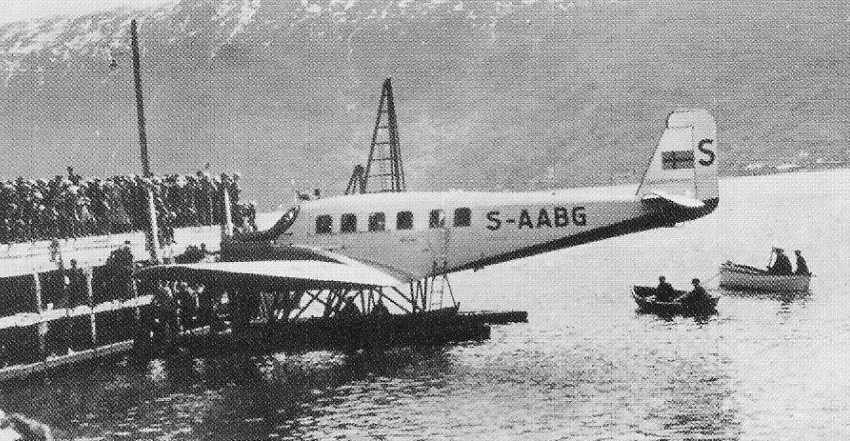


Flygindustri AB civil production included the G 23/G 24 three-engined nine-passenger airliners in 1924/25
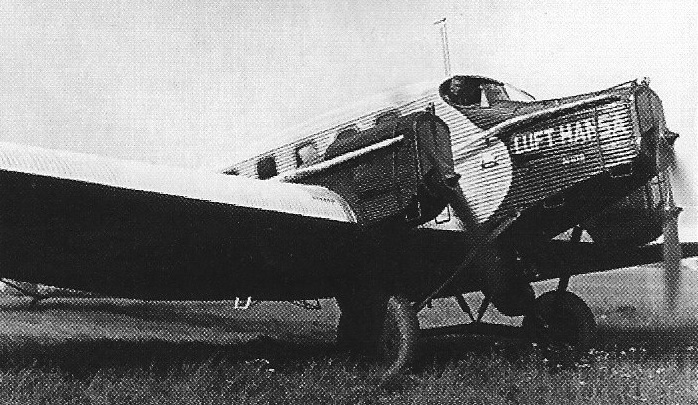
The G23 was another first for Junkers – the world’s first all-metal three-engined passenger/transport aircraft. Only nine were built before the G24, with more powerful engines, was introduced in 1925. It was intended for new long-range Deutsche Luft Hansa services.

Eleven of the 56 examples built were converted for single-engined operation, their wing-mounted engine units removed. These were redesignated F24 (circa 1928).
The G24 trans¬port had a bomber version built in Sweden.

G24
Engine: 3 x 310hp Junkers L.5
Max take-off weight: 6500 kg / 14330 lb
Wingspan: 27.76 m / 91 ft 1 in
Length: 15.70 m / 51 ft 6 in
Max. speed: 200 km/h / 124 mph
Range: 1300 km / 808 miles
Crew: 3
Passengers: 9
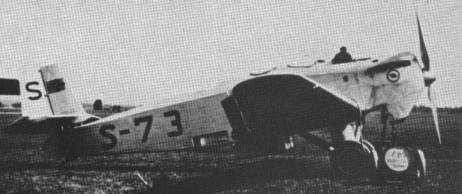
Dive bomber.
A Junkers K 37 bomber had been purchased by private funds and donated to the Imperial Japanese army air force early in 1932 as Aikoku 1, and drawing considerably on the K 37, the first prototype Ki 2 was built in accordance with a 1932 army specification.
The A 12 and A35 two seat postal and photography aircraft of 1926 had light bomber and reconnaissance fighter counterparts.
Negotiations by the new Soviet government for the produc¬tion of Junkers aircraft in Russia were started in 1919; they resulted in German production in Russia of the A20, H 21 and H 22 single engined military aircraft between 1923-25, and assembly of the F.13 transport from German manufactured parts.
In the Dessau design office headed by Dipi Ing Emst Zindel, work had begun during 1922 on three new military types intended for production at Fili the J20 two seat low wing reconnaissance floatplane and the J21 two seat reconnaissance and J22 single seat fighter parasol wing aircraft.
On December 4, 1922 Jfa received an order from the Soviet government for a total of 100 aircraft 20 J20s, 50 J21s and 30 J22s. The first of these machines were being assembled during August 1923.
In the Dessau design office headed by Dipi Ing Emst Zindel, work had begun during 1922 on three new military types intended for production at Fili the J20 two seat low wing reconnaissance floatplane and the J21 two seat reconnaissance and J22 single seat fighter parasol wing aircraft.
On December 4, 1922 Jfa received an order from the Soviet government for a total of 100 aircraft 20 J20s, 50 J21s and 30 J22s. The first of these machines were being assembled during August 1923. The J21 was built in quantity at Fili.
Negotiations by the new Soviet government for the production of Junkers aircraft in Russia were started in 1919; they resulted in German production in Russia of the A20, H 21 and H 22 single engined military aircraft between 1923 25, and assembly of the F.13 transport from German manufactured parts.
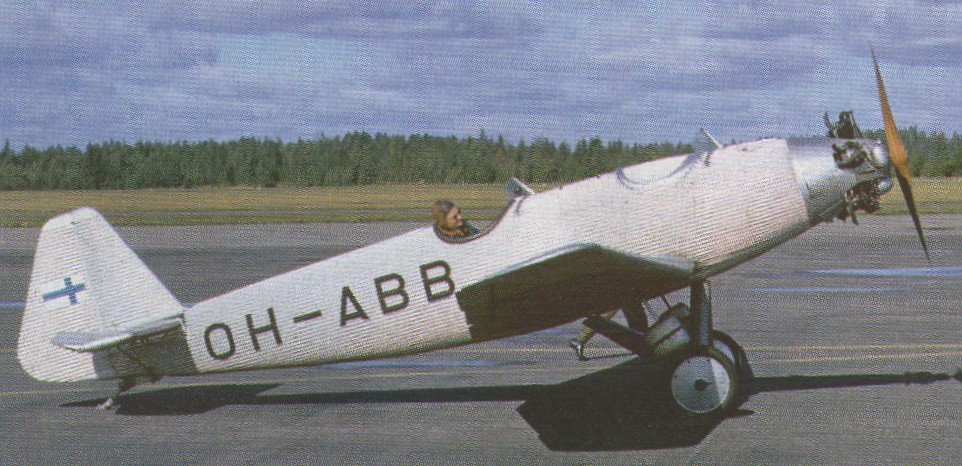
Launched in 1929 as aports and leisure aircraft, the A.50 Junior was a victim of its relatively high price in the depression era. Of planned production of 5000, only 69 were built and only 50 sold.
One of Junker’s early customers was the German aviator Marga von Etzdorf, who became the first woman to fly from Europe to Japan, piloting her bright yellow A50 Junior from Berlin to Tokyo in 1931. Her 12-day flight included crossing the rugged Ural Mountains and desolate Siberian wastes, while navigating with only a map and compass.
Replica: Junkers Aircraft A50 Junior
Junkers A 50 Junior
Engine: A. S. Genet, 87 hp
Length: 23.294 ft / 7.1 m
Wingspan: 32.808 ft / 10.0 m
Wing area: 147.467 sq.ft / 13.7 sq.m
Max take off weight: 1323.0 lb / 600.0 kg
Weight empty: 793.8 lb / 360.0 kg
Max. speed: 93 kts / 172 km/h
Cruising speed: 78 kts / 145 km/h
Service ceiling: 15092 ft / 4600 m
Wing loading: 9.02 lb/sq.ft / 44.0 kg/sq.m
Crew: 2
A 50ce Junior

