Back to Junkers Ju.288

Back to Junkers Ju.288
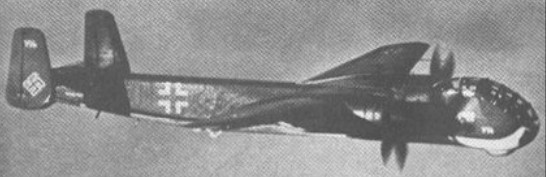
The Ju 288 was not a development of the Ju 88 or Ju 188. It was designed as a twin-engined (Daimler-Benz DB 610) medium bomber and was test flown in 1940. Development was slow but a long series of prototypes had been completed by 1943.
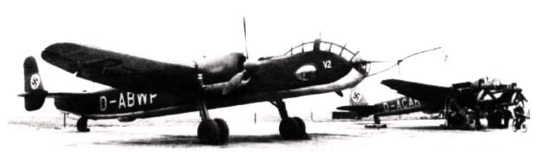
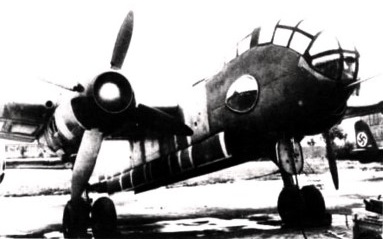
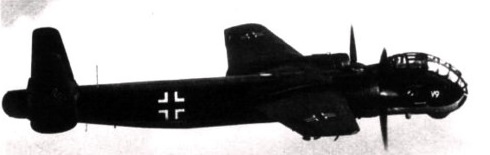
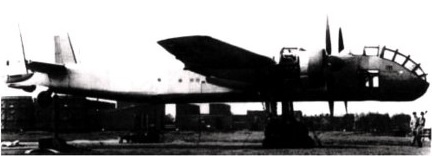
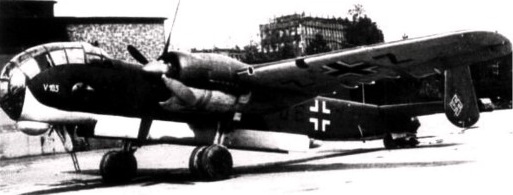
Only 21 test aircraft had been produced and none of them saw operational service.
Ju.288 V-2
Wingspan: 66 ft 3.75 in
Ju.288 V-6
Wingspan: 74 ft 4 in
Ju.288 V-14
W/no 0014
DF+CT
The B series prototype
Junkers Jumo 222 engines
First flew August 1942
Ju.288 V-15 to V-21
Another major redesign
Engines: 2 x Daimler-Benz DB 610, 2950 hp
C series prototypes
Ju.288 V-101
W/no 0101
BG+GX
C series prototype
First flew 5 November 1943
Engines: 2 x Daimlr-Benz DB 606
Ju.288 V-102
W/no 0102
BG+BY
Similar to the V-101
Engines: 2 x Daimler-Benz DB 610
Ju.288 V-103
W/no 0103
DE+ZZ
C series prototype, re-designed and strengthened
First flew 13 August 1943
Engines: 2 x Daimler-Benz DB 610 A/B, 2950 hp
Armed with an additional dorsal barbette
Ju.288 V-104
W/no 0104
Similar to the V-103
First flew 12 Novemver 1943
Ju.288 V-105
W/no 0105
Similar to the V-103
Later broken up
Ju.288 V-106
W/no 0106
BS+CA
First flew 17 May 1942
Ju.288 V-107
W/no 0107
BS+CB
First flew June 1943
Ju.288 V-108
W/no 0108
BS+CC
First flew 9 Octover 1943
Ju.288A
First 7 prototypes
Engines: BMW
Wingspan: 60 ft
Length: 52 ft
Ju.288A-1
Pressurised cabin
Max speed at 32,800ft: 416 mph
Range: 2235 miles
Crew: 3
Armament: 4 x remotely controlled 13mm MG 131 MG in barbettes, 2 x fixed forward firing 7.92mm MG 81 mg
Internal bombload: 8800 lb
Ju.288A-2
An all round gun position at the side of the nose
Ju.288A-3
Remotely controlled barbette armament
Series abandoned
Ju.288B
Wingspan: 75 ft 5 in
Length: 59 ft 5.25 in
Height: 14 ft 9 in
Wing area: 696 sq.ft
Max speed: 401 mph
ROC: 1420 fpm
Service ceiling: 30,500 ft
Range: 2200 miles
Ju.288B-1
Enlagred cabin, wider forward section, increased wingspan
Engines: 2 x Junkers Jumo 222 24-cyl
Remotely controlled MG 131 mgs in nose & dorsal turret
Crew: 6
Bombload: 6615 lb
One prototype completed then stored.
Ju.288C
Wingspan: 74 ft 4 in
Length: 59 ft 6.75 in
Height: 16 ft 4.75 in
Wing area: 699.4 sq.ft
Empty weight: 29,547 lb
Loaded weight: 50,700 lb
Normal weight: 47,165 lb
Max speed at 22,300ft: 407 mph
Cruise speed: 320 mph
Landing speed: 93 mph
Service ceiling: 34,110 ft
Max range: 1615 miles
Ju.288C-0
Modified with an extended canopy and strengthened airframe
Engines: 2 x Daimler-Benz 610, 2950 hp
Crew: 4
Armament: 2 x 7.92mm mg or 20mm MG 151 cannon in remotely controlled dorsal barbette / 2 x 7.92mm mg or 20mm MG 151 cannon in ventral barbette aft of bomb bay / Twin MG 131 mg in chin turret / 1 x MG 151 or 2 x MG 131 in remotely controlled tail turret
Bombload: 11,000 lb
Ju.288C-1
W/no 31051
First flew 4 December 1943
Armament: twin MG 131 in ventral barbette
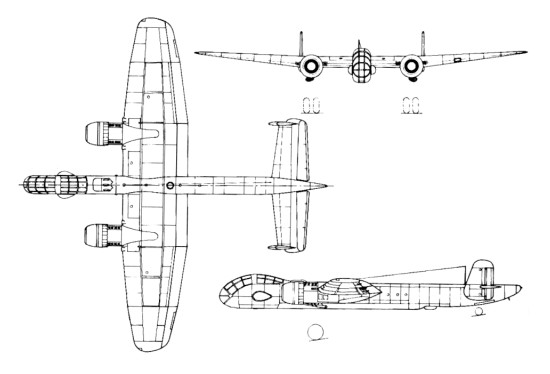
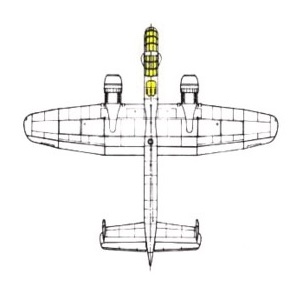
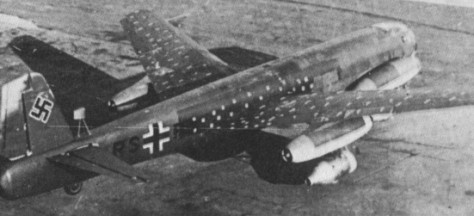
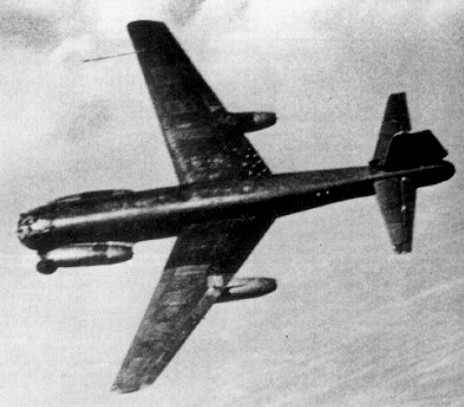
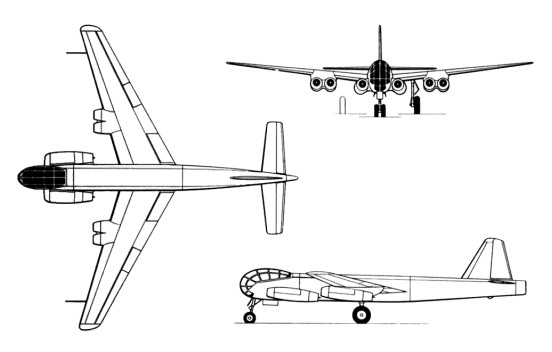
In 1943 the German Junkers com¬pany was given the task of designing a heavy bomber that would be faster than any contemporary Allied fighter. A swept wing planform was essential to reach the speed required, and to overcome the disadvantages of a backward swept wing, the Junkers design team proposed a wing swept forward. In theory such a wing should have the same effect as one swept back in reducing the effective thickness to chord ratio, but would have the highest lift coefficient at the root, decreasing outboard. The wing tips would thus be the last to stall, with aileron control available up to this point. An additional advantage of a forward swept wing was that by freeing the centre portion of the fuselage of wing spars, it facilitated the provision of the large weapons bay called for in the bomber specification, around the centre of gravity.
To test such a wing full scale Ju 287 Vl was produced, under supervision of Hans Wocke. To save time and money this aircraft utilised the fuselage of a Heinkel He 177A, the tail of a Ju 388 and nose wheels salvaged from a crashed Consolidated B 24 Libera¬tor. The forward swept wing, however, was representative of that of the intended bomber.

Power was provided by four Junkers Jurno 004B turbojets, two being attached to the sides of the fuselage nose and two being mounted under the wing. Two Walter 501 rocket units provided boost for take off.
A forward swept wing is structurally unstable; it reacts to increase the loads. As speed increased the forces eventually exceed the strength of the wing. To compensate for this divergence problem, as it is called, forward swept wings have to be very strong in torsion to prevent any twisting that would lead to catastrophic loads.
An indication of the severity of this problem is that on the Ju 287 V1, to preserve the structural integrity of the wing, the main landing gear did not retract into the wing, but was fixed, the wheels being enclosed in fairings.
Seventeen test flights were made by the Ju 287 V1, the first one at Brandis, near Leipzig, on 16th August 1944, in the hands of Flugkapitan Siegfried Holzbaur. The flights proved the aerodynamic advantages of the wing planform; wing tufts confirmed the progressive wing stall from the root to the tip. Lateral control at low speeds was good. However, the trials also proved some of the problems predicted. Two of the most serious were a tendency for the aircraft to Dutch roll in reverse, and for the aircraft to increase g inadvertently during a turn, when the pilot was attempting a steady turn.
Despite the problems, work started on the definitive bomber, the Ju 287¬V2, and final assembly was under way when the factory was seized by advancing Russian troops. The incomplete bomber was transferred to the Soviet Union, together with Hans Wocke and other key members of the Junkers design team, where it was completed and test flown in 1947.
EF.131
Wing span: 78 ft 8.75 in
Height: 26 ft 3 in
Empty wt: 34,838 lb
Loaded wt: 51,341 lb
Max speed: 534 mph
Service ceiling: 43,950 ft
Range 4410 bomb load: 1045 mi
V-1
Wing span: 65 ft 11.75 in
Length: 61 ft 0.5 in
Height: 15 ft 5 in
Wing area: 656 sq.ft
Empty wt: 25,557 lb
Loaded wt: 44,092 lb
Max speed: 404 mph
Max speed at 19,685 ft: 347 mph
Cruise speed: 320 mph
Landing speed: 118 mph
Stall speed: 105 mph
Rate of climb: 1910 fpm
Climb to 19,700 ft: 10 min 30 sec
Service ceiling: 35,425 ft
Range: 932 mi
V3
Engines: 6 x 800kg BMW 003A-1 turbojets
Wingspan: 20.11 m / 66 ft 0 in
Length: 18.6 m / 61 ft 0 in
Wing area: 58.3 sq.m / 627.54 sq ft
Max take-off weight: 21520 kg / 47444 lb
Empty weight: 11920 kg / 26279 lb
Max speed at 16,400 ft: 856 km/h / 532 mph
Cruise speed: 493 mph
Rate of climb: 2885 fpm
Climb to 19,700 ft: 10 min 30 sec
Ceiling: 12000 m / 39350 ft
Range full load: 980 mi
Range half bomb load: 1320 mi
Crew: 4

The Ju 252 was a transport aircraft powered by three 1,051kW Junkers Jumo 211 engines. It had been designed to replace the Ju 52/3m but only 15 were produced.
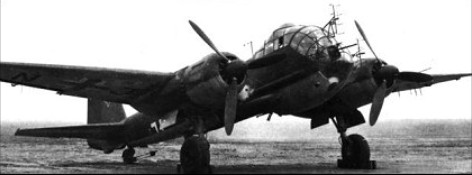
The Ju 188 was a development of the Ju 88. It had a redesigned nose, new wings of greater span with pointed tips, and heavier armament.
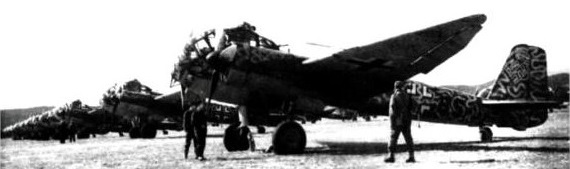
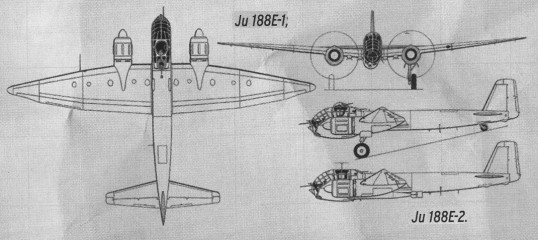
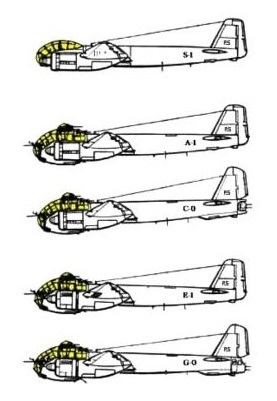
The first major versions were the Ju 188E and Ju 188F of 1941, which entered service before the Ju 188A and were bombing and reconnaissance types respectively. Power was provided by two 1,267kW BMW 801D and G engines. Next came the Ju 188A, which had been held up by the slow delivery of the 1,323kW Jumo 213A engines. One version of the A was adapted to carry two torpedoes. The Ju 188D was a reconnaissance version of the A, fitted with the same engines and armament.
Projected versions of the Ju 188 included the C bomber (with a remotely controlled tail turret); G (development of the G); H reconnaissance aircraft (developed from the G); R night fighter; and the T photographic reconnaissance aircraft with a pressure cabin.
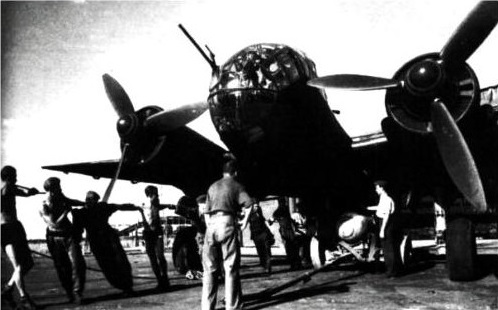
The only other version to enter service was the Ju 188S, a three-seat high-altitude bomber powered by Jumo 213E engines and with a pressurised crew cabin. The priority for low-level attack aircraft caused an abrupt end to Ju 188S production, all remaining airframes being converted into unpressurised aircraft mounting a 50mm BK 5 cannon. It is believed that around one thousand and seventy six of the type were delivered.
Some of the captured aircraft at the end of the war were used by Frances’s Aeronavale.
Ju.188 A-1
Wingspan: 72 ft 2 in
Length: 49 ft 0.5 in
Height: 14 ft 6.5 in
Wing area: 602.8 sq.ft
Loaded weight: 33,730 lb
Max speed: 325 mph at 20,500 ft
Cruise speed: 232 mph
Range: 1000-1550 mi
Ju.188 A-2
Wingspan: 72 ft 2 in
Length: 49 ft 0.5 in
Height: 14 ft 6.5 in
Wing area: 602.8 sq.ft
Loaded weight: 33,730 lb
Cruise speed: 295 mph
Landing speed: 109 mph
Time to 19,666 ft: 17 min
Service ceiling: 31,160 ft
Range: 1500 mi
Ju.188 B
Wingspan: 65 ft 10.5 in
Length: 49 ft 0.5 in
Height: 14 ft 6.5 in
Wing area: 602.8 sq.ft
Loaded weight: 31,970-31,989 lb
Ju.188 D
Wingspan: 72 ft 2 in
Length: 49 ft 0.5 in
Height: 14 ft 6.5 in
Wing area: 602.8 sq.ft
Empty weight: 21,825 lb
Loaded weight: 31,970-31,989 lb
Max speed: 350 mph at 27,000 ft
Cruise speed: 232 mph
Service ceiling: 36,090 ft
Ju.188 D-1
Loaded weight: 31,510 lb
Ju.188 D-2
Wingspan: 72 ft 2 in
Length: 49 ft 0.5 in
Height: 14 ft 6.5 in
Loaded weight: 31,510 lb
Wing area: 602.8 sq.ft
Max speed: 336 mph
Cruise speed: 232 mph
Service ceiling: 32,800 ft
Range w/drop tanks: 2200 mi
Ju.188 E
Wingspan: 72 ft 2 in
Length: 49 ft 0.5 in
Height: 14 ft 6.5 in
Wing area: 602.8 sq.ft
Max speed: 314 mph at 19,685 ft
Cruise speed: 232 mph
Loaded weight: 31,970-31,989 lb
Ju 188 E-1
Engine: 2 x 1194kW/1700 hp BMW 801D-2
Wingspan: 22.00 m / 72 ft 2 in
Length: 15.06 m / 49 ft 0.5 in
Height: 4.44 m / 14 ft 7 in
Wing area: 602 sq. ft / 55.92 sq.m
Empty weight: 9859 kg / 21,737 lb
Max take-off weight: 14570 kg / 32122 lb
Max speed: 500 km/h / 311 mph at 20,000 ft / 6096m
Cruise speed: 248 mph
Landing speed: 99 mph
Service ceiling: 9300 m / 30500 ft
Time to 19,666 ft: 17 min 35 sec
Range: 1947 km / 1210 miles
Armament: 1 x 20mm MG151 cannon, 2 x 13mm + 1 x 7.92mm mg, 3000kg / 6614 lb bombs
Crew: 4
Ju.188R
Experimental night fighter. Three prototypes built.
The first two were armed with four fixed forward firing 20m MG 151 cannon and eg radar.
The third was armed with two fixed forward firing 30mm MK 103 cannon.
Production was abandoned.
Ju.188 S
An unarmed fast high altitude intruder / bomber tpe, fitted with a pressurised cabin for the crew of three.
Began being delivered into service during the Summer of 1944.
Engnes: 2 x 175 hp Junkers Jumo 213E-1 engins with nitrous oxide fuel injection.
Wingspan: 72 ft 2 in
Length: 49 ft 0.5 in
Height: 14 ft 6.5 in
Wing area: 602.8 sq.ft
Loaded weight: 31,970-31,989 lb
Max speed: 428 mph
Cruise speed: 232 mph
Service ceiling: 38,400 ft
Bombload: 1763 lb internally
Ju.188S-1
An adapted grond attack version armed with a single ventrally mounted 50mm BK.5 cannon
Pressurisation equipment and engine boost system removed.
Ju.188S-1/U
Intended to be used as a close support type with additional armour protection for the crew of two.
Armed with 50mm BK.5 cannon.
Pressurisation equipment and engine boost system removed.
Ju.188 T
Unarmed photographic reconnaissance type.
Powered as the S series.
Wingspan: 72 ft 2 in
Length: 49 ft 0.5 in
Height: 14 ft 6.5 in
Wing area: 602.8 sq.ft
Loaded weight: 31,970-31,989 lb
Max speed: 435 mph
Cruise speed: 232 mph
Abandoned

Only two of the 1932 Ju 60s were built, but in 1934 an improved version, the Ju 160, made its appearance. The single engined, high speed transport, featured a new wing configuateion, fully retractable undercarriage and was fitted with three cabin side windows.
V-1
C/no 4202
‘Luchs’ (Lynx) D-UNOR
First flew 30 January 1934
V-2
Military version prototype
V-3
Wider chord wings, passenger door changes & other minor modifications
Ju.160A
Modified rudder and faired tailwheel
Eleven served with Lufthansa
Ju.160D
Improved version
Ten served with Luftwaffe
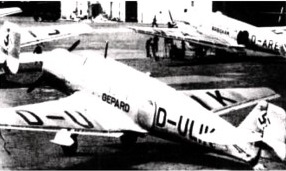
Forty-eight Ju 160s were built, entering service with Lufthansa during 1935-36.
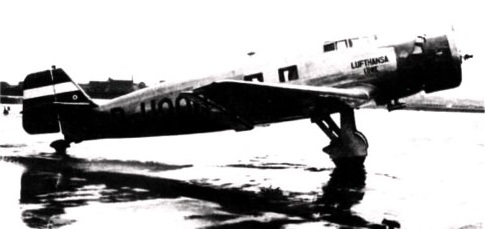
As well as operating on domestic routes, the Ju 160s also flew on the Breslau-Prague-Munich route. Most were commandeered by the Luftwaffe on the outbreak of World War II and were widely used for communications and training.
C/no 4206 ‘Panther’ D-UMEX
C/no 4207’Wolf’ D-UPOZ
C/no 4208 ‘Lucha’ (used again) D-UFIR
C/no 4219 ‘Jaguar’ D-UFAL
‘Gepard’ D-ULIK
Engine: 1 x 600hp BMW Hornet
Prop: 2 blade metal
Wingspan: 14.32 m / 46 ft 11 in
Length: 38 ft 10 in
Height: 3.92 m / 12 ft 10 in
Wing area: 366 sq.ft
Empty weight: 4996 lb
Loaded weight: 6836 lb
Max. speed: 177 mph
Cruise speed: 150 mph
Landing speed: 59 mph
Service Ceiling: 5200 m / 17050 ft
Range: 620-750 mi
Endurance: 3 hrs 12 mins
Crew: 2 in tandem
Passengers: 6
Engine: 1 x 600hp BMW 132E
Wingspan: 14.32 m / 46 ft 11 in
Length: 12.00 m / 39 ft 4 in
Wing area: 377 sq.ft
Empty weight: 5556 lb
Loaded weight: 7820 lb
Max. speed: 340 km/h / 211 mph
Cruise speed: 196 mph
Landing speed: 62 mph
Service Ceiling: 5200 m / 17050 ft
Range: 620-750 mi
Endurance: 3 hrs 12 mins
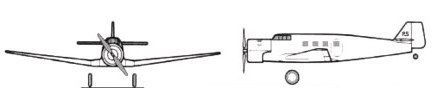
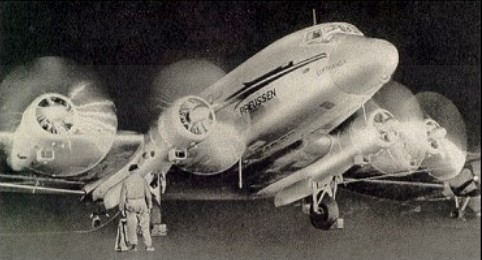
A forty-passenger commercial airliner of 1937, powered by four 1600 hp / 618kW BMW 801MA engines.
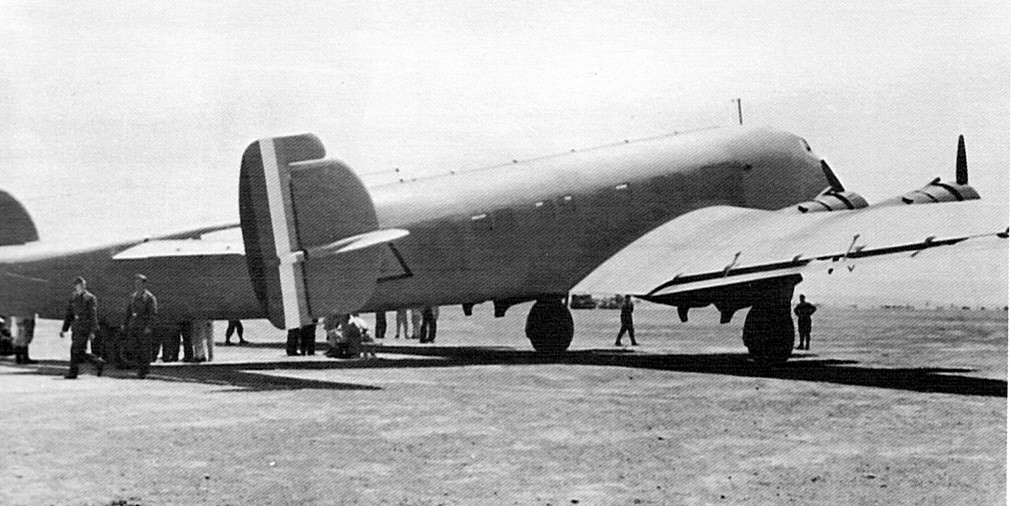
The wing design of the first four Ju-90 aircraft, which were all seriously underpowered, was changed on Ju-90V5 to Ju-90V7, with straight wings similar to the Ju-290, but less span.
Four prototypes and ten pre-production aircraft were built, designated Ju 90B-1.
Ju-90V6 and Ju-90V9 were converted to become Ju-390 prototypes.

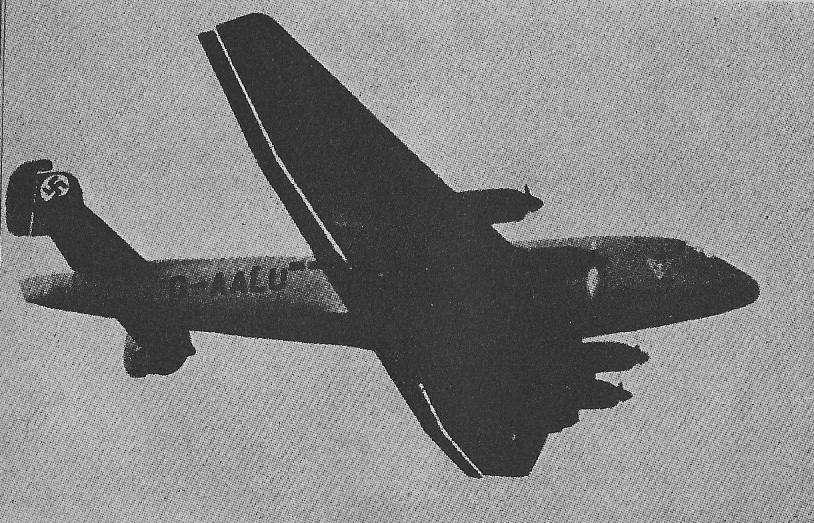
Eleven were delivered to Luft-Hansa during 1938, most of which later passed to the Luftwaffe as troop transports.
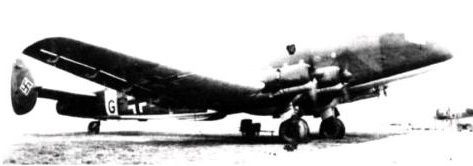
W/no 0008
D-ATDC ‘Hessen’
First flew 4 February 1940
Was to have been delivered to Lufthansa, but went to Luftwaffe as BG+GZ
Destroyed January 1943.
W/no 0009
D-AJHB ‘Thuringen’
First flew 6 March 1940
Delivered to Luft-Hansa on 20 March 1940
Served with Liftwaffe from November 1942 as BJ+OV
Destroyed as a modified weapons test aircraft J4-KH August 1944.
W/no 0010
D-AVMF ‘Brandenburg’
First flew 25 April 1940
Delivered to Lufthansa later
Crashed 8 November 1940
90 B
Military types fitted with porthole fuselage windows and oval tail fins.
90 S
W/no 0011
Modified during 1942, W/no 4918, with a new wing and fitted with a vertical loading ramp.
Engines: BMW 801
The partially built aircraft was later redesignated Ju 290 V-1
Ju 90
Engines: 4 x BMW 801MA, 1600 hp
Propellers: metal three-bladed variable pitch
Wingspan: 42 m
Length: 28,64 m
Height: 6,83 m
Wing area: 205,30 sq.m.
Ju 90
Wingspan: 114 ft 10 in
Length: 86 ft 3 in
Height: 24 ft 7 in
Wing area: 1980.55 sq.ft
Empty weight: 35,250-42,390 lb
Loaded weight normal: 50,706 lb
MAUW: 74,264 lb
Max speed: 218 mph
Cruise speed: 200 mph
Landing speed: 68 mph
Service ceiling: 18,500 ft
Ceiling 3 engine: 9840 ft
Range max: 1300 mi
Range normal: 775 mi
Ju 90S
Engines: 4 x BMW 801MA, 1600 hp
Propellers: metal three-bladed variable pitch
Wingspan: 42 m
Length: 28,64 m
Height: 6,83 m
Wing area: 205,30 sq.m.
Armament: 3 x MG 151/20, 20 mm / 2 or 3 x MT MG 131, 13 mm
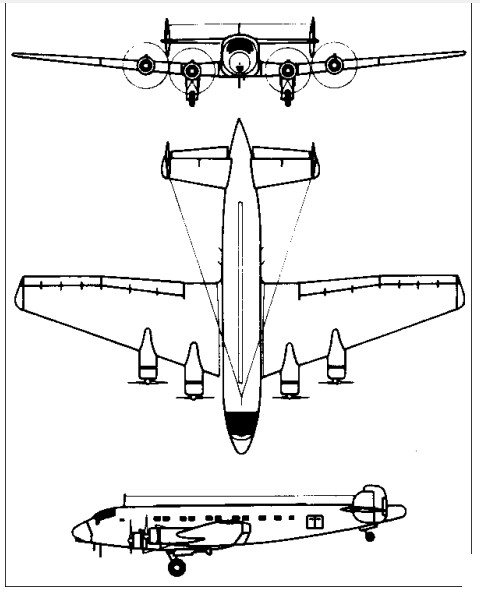
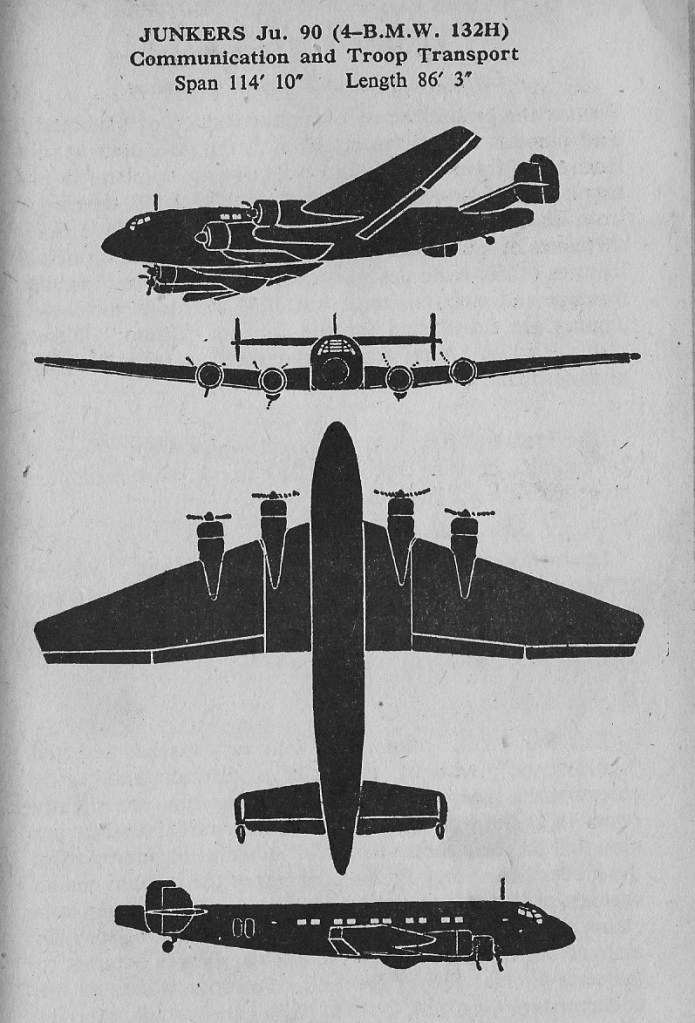
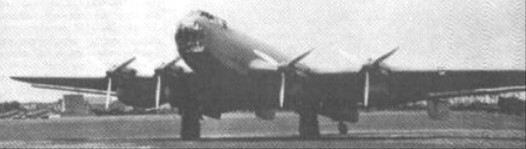
Four-engined heavy bomber, a competitor of the Do 19. It was cancelled, but Junkers re-used elements for the Ju 90 airliner, which was later developed into the Ju 290.

Back to Junkers Ju.88


