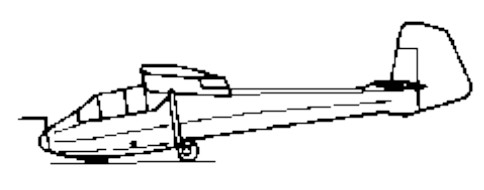
The Primorec is a 1957, all-metal trainer glider derived from the Czech LF109 Pinoyr.
Length: 25.591 ft / 7.8 m Height: 7.874 ft / 2.4 m Wingspan: 43.963 ft / 13.4 m Max take off weight: 954.8 lb / 433.0 kg Max. speed: 39 kt / 72 km/h Glide ratio: 18.0 Crew: 2
Russia Founded 1939, and since 1951 has manufactured Mil helicopters. The Kazan Aviation Institute at Kazan on the River Volga, nearly 500 miles east of Moscow, has designed and produced some of Russia’s most notable sailplanes, especially the very advanced KAI-19 high performance all-metal single-seater which, in two-seater form, broke the world’s 300km closed circuit speed record on 1 August 1964, and the KAI-17 training glider. Own designs are Ansat twin-turboshaft light multipurpose helicopter (first flown 1998) for up to 10 persons, and Aktay three-seat piston helicopter (to fly about year 2000).
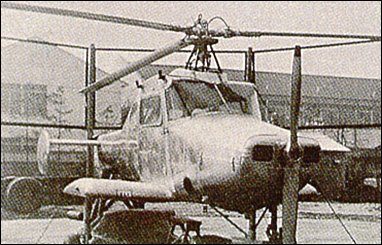
In 1952, Kayaba returned to rotary wing experimentation with the “Heliplane”. This was a compound helicopter fabricated from the fuselage and 180 hp Continental E-180 engine of a Cessna 170 light aircraft, with a rotor mounted above the cabin roof and low-set stub wings to which the undercarriage was attached. The three-blade rotor was fitted with small ramjets which were used for takeoff and landing and the rotor would rotate freely in horizontal flight when the “Heliplane” was being driven by the normal propeller. It first flew in 1954.
Engine: 185 hp Continental E-180 Rotor diameter: 24 ft 3.25 in Fuselage length: 10 ft 6 in Height: 9 ft 2.25 in Seats: 4
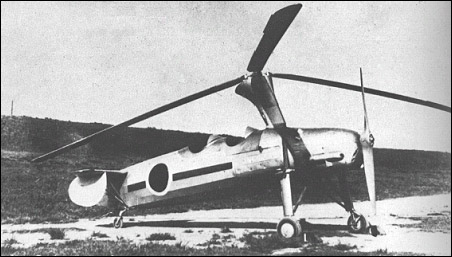
In 1939 the Imperial Japanese Army imported a Kellet KD-1A single-engined two-seat autogyro as an artillery spotter. Powered by a 225hp Jacobs L-4M4 seven-cylinder air-cooled radial, the KD-1A featured an advanced version of the Kellet direct control rotor system. Shortly after its arrival in Japan, the aircraft was seriously damaged during flight trials at low speeds. The Kellet KD-1A had been damaged beyond repair, but the Japanese Army delivered the wreck to K.K. Kayaba Seisakusho (Kayaba Industrial Co Ltd), a small company doing autogyro research, with instructions to develop a similar machine. The Kayaba engineering team developed a two-seat observation autogyro based on the Kellet KD-1A but modified to Japanese production standards, designated Ka-1. The Ka-1 was powered by a 240hp Kobe eight-cylinder inverted-vee air-cooled (licence version of the German Argus Argus As 10c) engine driving a two-blade propeller, and had a three-blade rotor. Completed in May 1941 at the Sendai (Miyagi Prefecture) plant of Kayaba, the first Ka-1 made its maiden flight at Tamagawa on 26 May, 1941. During its flight test programme the Ka-1 performed remarkably well, demonstrating its ability to take-off after running only 30m in still air. By running the engine at full power and holding the nose 15 deg up, the Ka-1 could hover and could also execute a full 360 deg turn while hovering. As maintenance in the field appeared to present less difficulty than anticipated the aircraft was placed in production for service with artillery units. Eventually some two hundred and forty aircraft of this type were built.
A small number of Ka-ls were modified for operation from naval craft as anti-submarine patrol aircraft. As the load-carrying capability of the standard two-seat Ka-1 was too limited, the carrier-borne Ka-ls were operated as single-seaters and carried two 60kg bombs or depth-charges. In this role the Ka-ls operated over Japanese coastal waters and particularly over the Tsugara and Korean channels. The Kayaba Ka-1 autogyro was the first armed autogyro/helicopter to have been used operationally.
At least one of these aircraft, the Ka-1 KAI, was tested with powder rockets on the rotor tips in an attempt to improve its load-carrying capability while another aircraft was fitted with a 240hp Jacobs L-4MA-7 seven-cylinder air-cooled radial. With Jacobs engine the type became the Ka-2.
Kayaba Ka-1 Engine: 1 x Kobe/Argus As 10c, 180kW / 240 hp Main rotor diameter: 12.2m Max take-off weight: 1170kg Empty weight: 775kg Max speed: 165km/h Cruising speed: 115km/h Ceiling: 3500m Range: 280km Armament: 2 x 60kg depth charges
Japan In 1939 a U.S.-built Kellett KD-1A autogiro was exported to Japan. K. K. Kayaba Seisakusho developed Ka-1 along similar lines for Japanese Navy; used for observation, antisubmarine patrol (incl. shipbome), and for testing rocket augmented rotors. Ka-2 was re-engined.
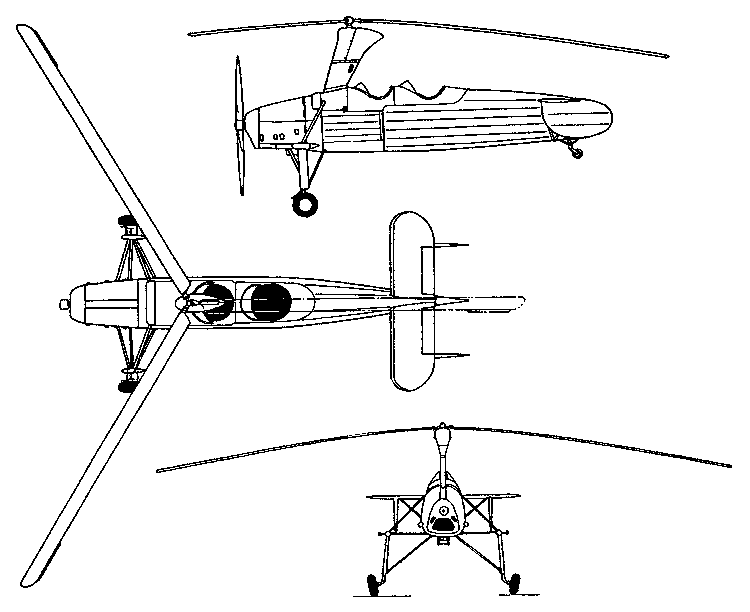
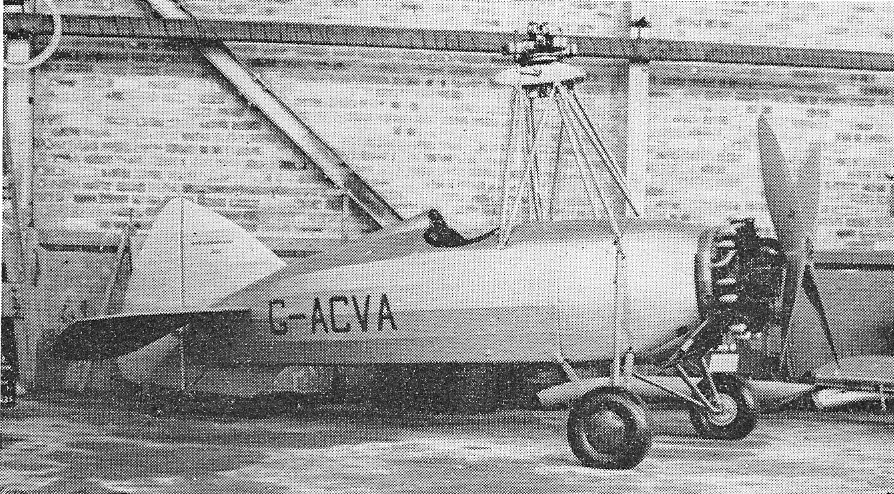
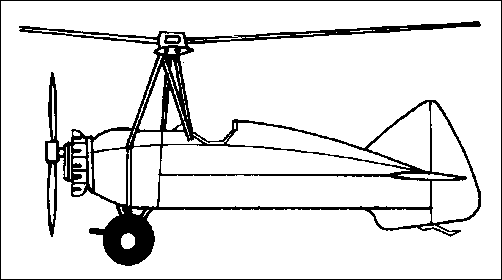
Power was a 75 hp Pobjoy, and chief feature of the machine was the positive control of lift by variable incidence of the rotor blades while in flight. Lateral control could be obtained by rocking the rotor spindle, while fore and aft control was by a hinged tailplane and normal elevators.
Engine: 75hp Pobjoy Rotor diameter: 22 ft Overall length: 17 ft 11 in Height: 7 ft 8 in
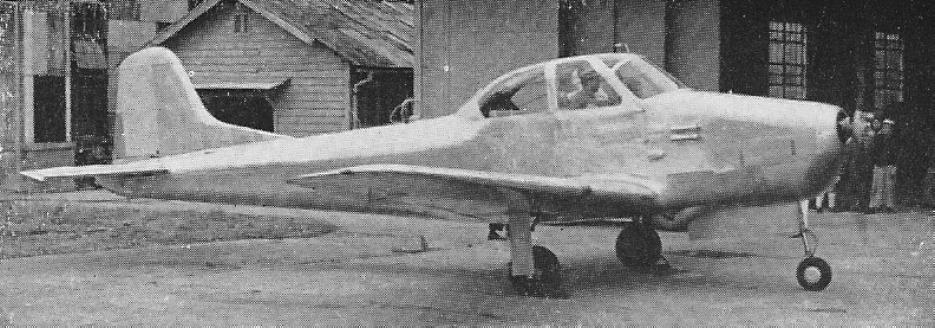
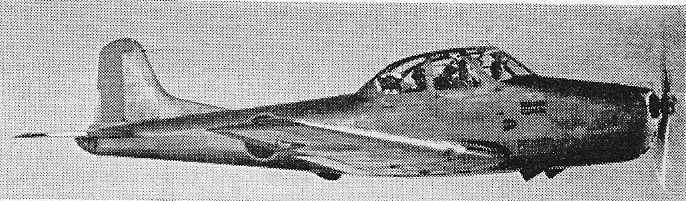
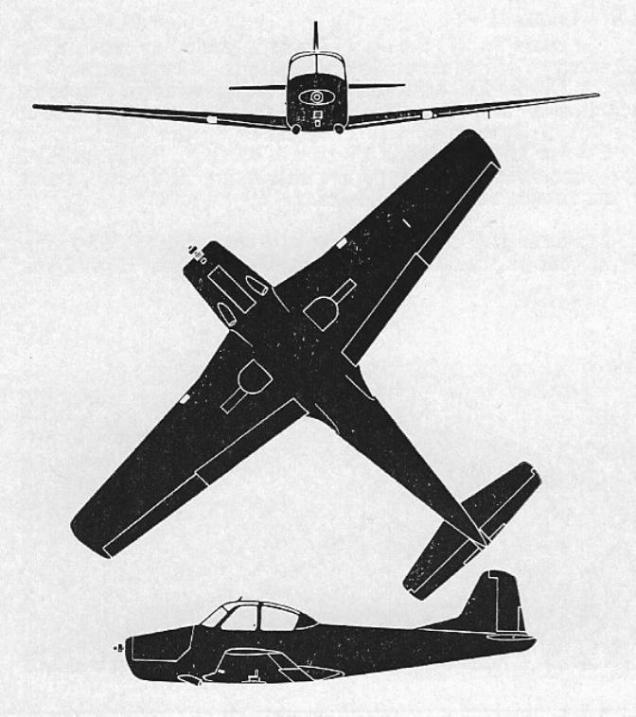
The Kawasaki KAL-2, deigned and built by the Kawasaki-Gifu division of the Kawasaki Aircraft Company, was produced in 1955 as a development of the KAL-1 ns KAT-1.
Of all-metal construction, the KAL-2 seats four.
KAL-2 no.2
An initial order for two was placed by the Japanese Air Self-Defence Force.
Engine: Lycoming GO-435-C2B, 260 hp Span: 39 ft 0.5 in Wing area: 206.66 sq.ft Length: 28 ft 8.5 in Height: 9 ft 6 in Empty weight: 2315 lb Loaded weight: 3527 lb Max speed: 183 mph at 7742 ft Cruise: 112 mph Range: 994 mi Seats: 4
The Kawasaki 440, also called the T/A 440, is a Japanese twin-cylinder, in-line, two-stroke engine that was designed for snowmobiles and produced by Kawasaki Heavy Industries until the early 1980s.
The engine was widely adapted for other purposes, including ultralight aircraft and Formula 500 automobile racing. Kawasaki did not condone or support the use of the engine in aircraft and it was largely supplanted in this role by the similar purpose-designed Rotax 377 aircraft engine.
The engine has two cylinders in an in-line configuration. The single ignition system uses a coil and points. Fuel is metered by a Mikuni 34 mm slide-type carburetor. Starting is by a recoil starter system with electric start as an option.
In its aircraft applications the 440 uses an aftermarket reduction drive system to reduce the maximum 5000 rpm to a speed more manageable for propeller use.
Specifications Type: twin-cylinder, two-stroke engine Displacement: 436 cc (26.61 cu inches) Dry weight: 49 lb (22 kg) Valvetrain: piston ported Fuel system: Mikuni 34 mm slide-type carburetor Oil system: premixed oil and fuel Cooling system: air cooled Reduction gear: aftermarket reduction drive for aircraft use Power output: 38 hp (28 kW) at 5000 rpm
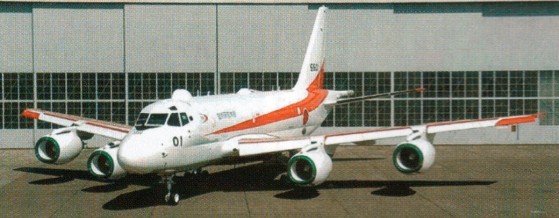
In 2007 the first prototype of the P-X maritime patrol aircraft was rolled out at Kawasaki’s Gifu factory. The P-X is to replace the Japanese Air Self Defence Force’s P-3 Orions.
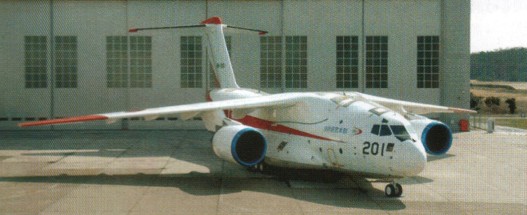
In 2007 the first prototype of the indigenously developed C-X transport aircraft was rolled out at Kawasaki’s Gifu factory. The C-X is to replace the Japanese Air Self Defence Force’s Kawasaki C-1s.