Back to Piper PA-31 Navajo / Chieftain
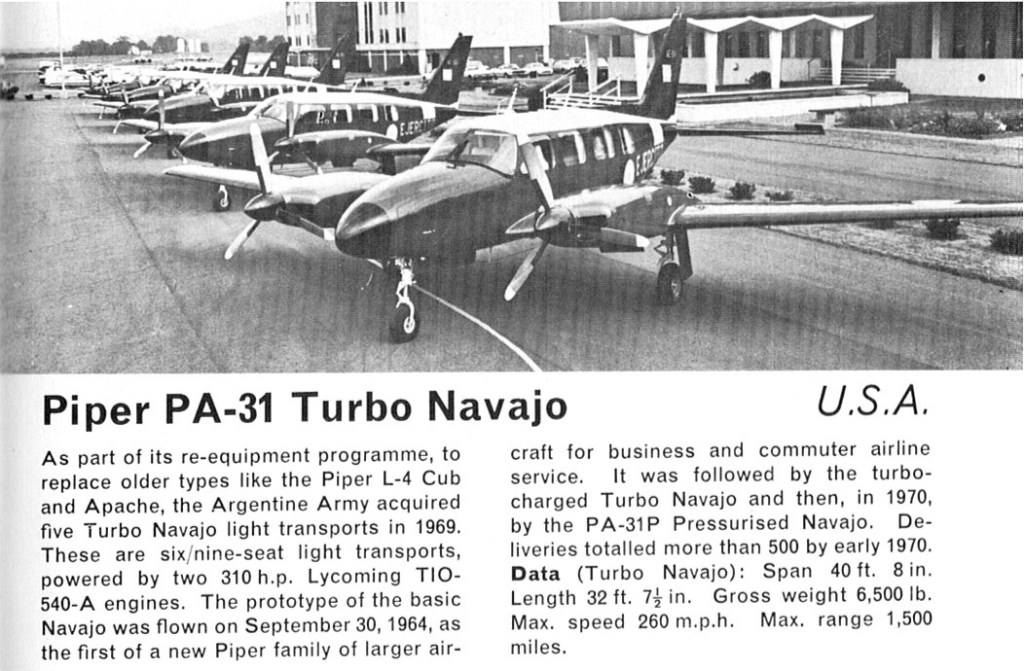
Back to Piper PA-31 Navajo / Chieftain
Back to Piper L-14 Army Cruiser

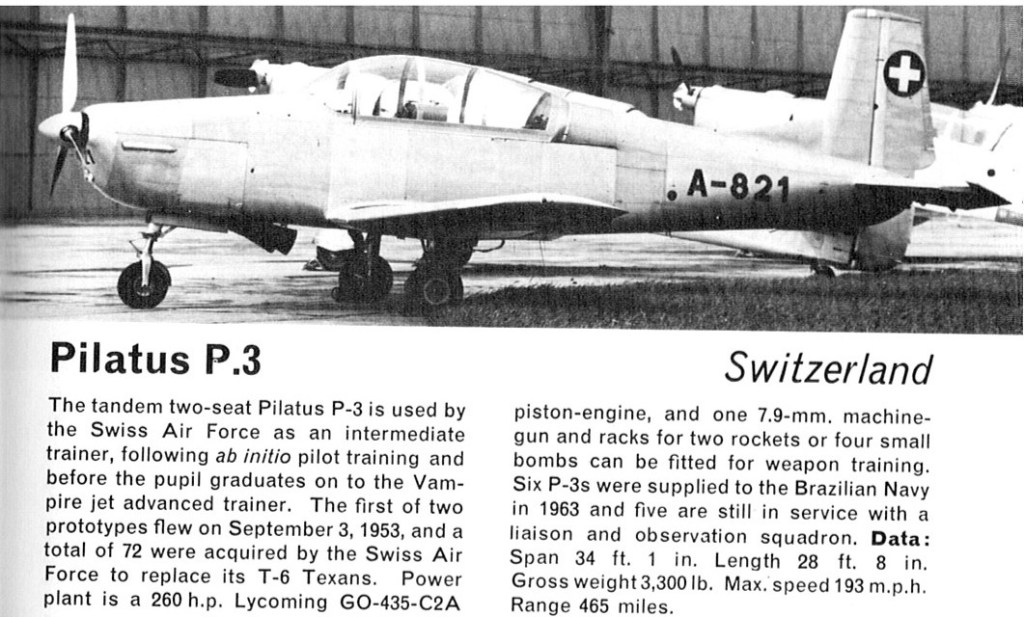
Back to Pilatus P3
Back to Bombardier Continental

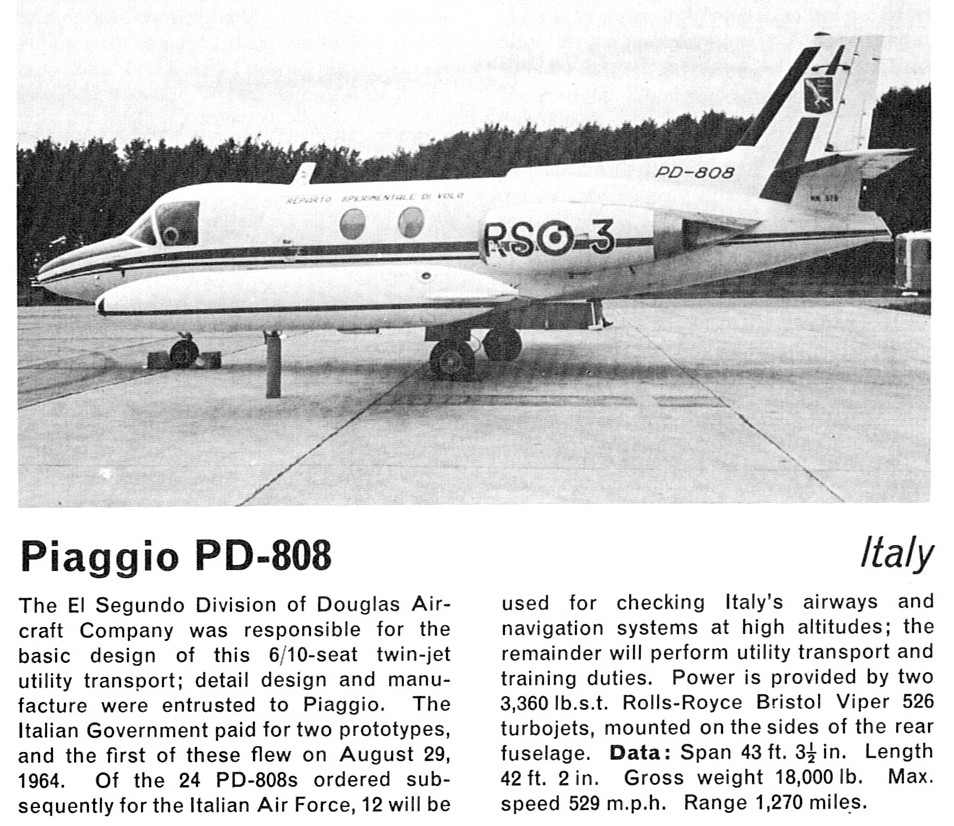
Back to Piaggio PD-808

Launched in 2014, the TBM 900 brought 26 refinements aimed at improving both speed and efficiency. According to Daher, key enhancements included a redesigned engine cowling, a new five-blade composite propeller, and aerodynamic tweaks to the fuselage and winglets. These changes resulted in reduced drag and improved climb rates, allowing the TBM 900 to outperform its predecessor while consuming less fuel.
There were also subtle exterior changes introduced to reduce drag. These included a re-contoured tail cone and engine nacelle, and the addition of inner main landing gear doors. Additionally, cabin improvements made the aircraft quieter and more comfortable.

There are five versions of the TBM 900 series aircraft.
Introduced in 2017, the TBM 910 was designed to build upon the aerodynamic and structural improvements of the TBM 900 while focusing primarily on avionics advancements. The TBM 910 featured the Garmin G1000 NXi avionics suite, offering faster processing speeds, improved resolution, and enhanced connectivity options.

The aircraft’s performance remained largely similar to the TBM 900, but the new avionics provided pilots with a more intuitive and user-friendly experience. Features include improved touchscreen controls, ADS-B capabilities, and enhanced synthetic vision.

Introduced in 2019, the TBM 940 introduced an automatic throttle system, which helped pilots manage power settings more efficiently. This variant also featured autoland technology, as well as automatic deicing.
Additional refinements included improved cabin comforts, upgraded climate control, and enhanced noise reduction.
Introduced in 2022, the TBM 960 featured a digital e-throttle and Pratt & Whitney PT6E-66XT engine. The TBM 960 also includes an autoland system.

Additionally, this variant boasts a dual-channel full authority digital engine control (FADEC) feature – Daher calls this EPECS, which stands for Engine and Propeller Electronic Control System. The TBM 960 is the first aircraft in the TBM line to feature this. The TMB 960 also has an MTOW that is 221 lb (100 kg) greater, totaling 7,615 lb (3,454 kg).
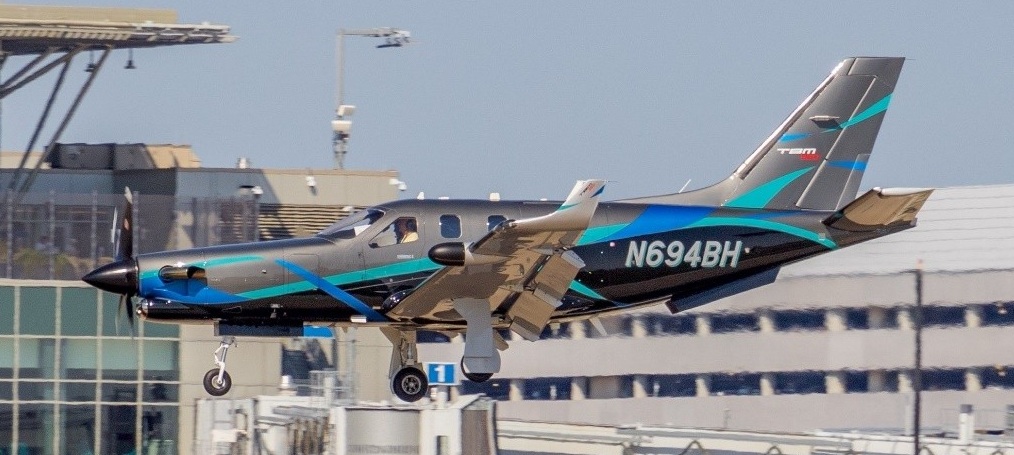
The TBM 960 replaced the 940, and was sold alongside the baseline TBM 910 model.
1,155 TBM series aircraft have been produced, as of July 2023. From its inception with the TBM 700 to the TBM 960.
TBM 900
Engine: Pratt & Whitney Canada PT6A-66D
Maximum cruise speed: 330 knots (380 mph, 611 km/h)
Range: 1,730 nautical miles (1,991 mi, 3,204 km)
Maximum takeoff weight (MTOW): 7,394 lbs (3,354 kg)
Service ceiling: 31,000 ft (9,449 m)
Fuel capacity: 292 US gal (1,105 L)
Seating capacity: 6
TBM 910
Engine: Pratt & Whitney Canada PT6A-66D
Maximum cruise speed: 330 knots (380 mph, 611 km/h)
Range: 1,730 nautical miles (1,991 mi, 3,204 km)
Maximum takeoff weight (MTOW): 7,430 lbs (3,370 kg)
Service ceiling: 31,000 ft (9,449 m)
Fuel capacity: 292 US gal (1,105 L)
Seating capacity: 6
TBM 940
Engine: Pratt & Whitney Canada PT6A-66D
Maximum cruise speed: 330 knots (380 mph, 611 km/h)
Range: 1,730 nautical miles (1,991 mi, 3,204 km)
Maximum takeoff weight (MTOW): 7,430 lbs (3,370 kg)
Service ceiling: 31,000 ft (9,449 m)
Fuel capacity: 292 US gal (1,105 L)
Seating capacity: 6
TBM 960
Engine: Pratt & Whitney Canada PT6E-66XT
Maximum cruise speed: 330 knots (380 mph, 611 km/h)
Range: 1,730 nautical miles (1,991 mi, 3,204 km)
Maximum takeoff weight (MTOW): 7,615 lbs (3,454 kg)
Service ceiling: 31,000 ft (9,449 m)
Fuel capacity: 292 US gal (1,105 L)
Seating capacity: 6

On 24 October 2024, Google co-founder Sergey Brin’s airship company LTA Research announced Pathfinder 1’s first if brief untethered flight at Nasa’s Moffett Field in California, part of the space agency’s Ames Research Center.
Pathfinder 1 is a fully rigid airship. This was the first flight of the first airship built by the Google cofounder’s company, the first time a classic rigid airship of this size had flown since the 1930s, and the first of a new generation of airships.
Pathfinder 1 is not a historical replica. It is a proof-of-concept airship designed to see if a rigid design can be updated with new materials. In particular, LTA Research wants to solve the problem of how to mass produce aircraft of this size.
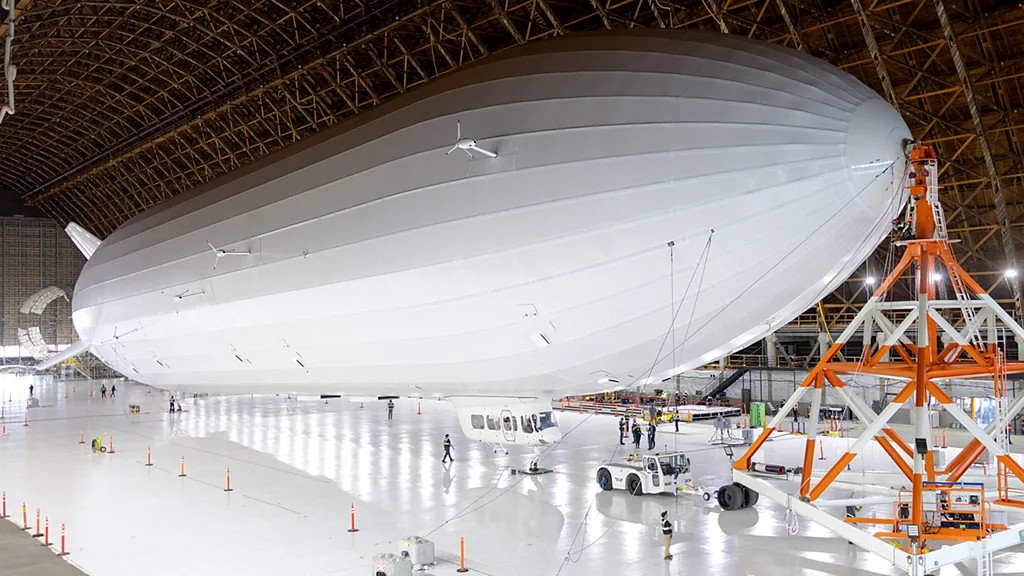
The fact that the giant rigid airship does not have tail fins in the traditional cross shape, but at an angle, is an example of such learning, because airships float up and down on a mooring mast and the bottom tail fin used to get damaged. Likewise, the airship’s engines are no longer inline but staggered along its length to reduce the wind, drag and vibration that they used to cause. It uses helium as a lifting gas.
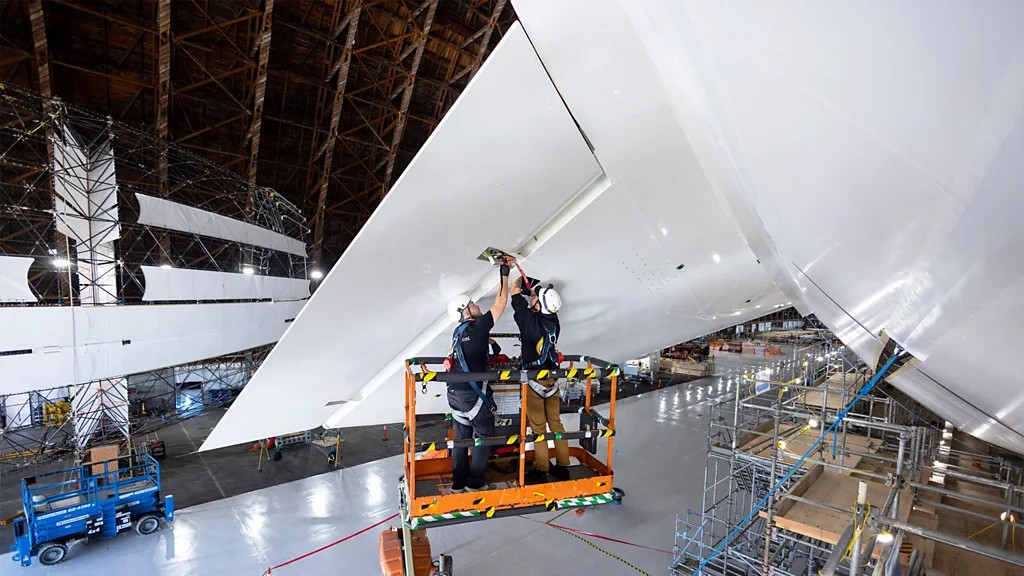
The first flight of Pathfinder 1 has been at least 12 years in the making. Brin’s interest in airships seems to have begun in 2012 around the same time as a modern semi-rigid Zeppelin NT (New Technology) airship began tourist flights from Moffett Field.
The following year he founded LTA Research Ltd and in 2017 his airship company began to lease space at Moffett Field and research began at the Akron Airdock. There they built a 12-engine, 50ft-long (15m) electric “baby airship” to test their technology.
The use of computerised controls, new and much stronger lightweight materials like carbon fibre and titanium to construct the complex skeleton of the rigid airship are just some of the ways the giant rigid airship has been brought into the 21st Century. So too are the use of flame-retardant synthetic materials for the envelope of the airship, sensors to monitor the helium and engines that can be rotated to provide vectored thrust.
In 2017 work started at Moffett Field on LTA’s smallest airship Pathfinder 1, and planning began in Akron on the Pathfinder 3, its successor which is planned to be one-third-larger. (There is no Pathfinder 2.)

Back to Piaggio P.149



 All Aero