Magni M14 Scout / VPM M-14 Scout

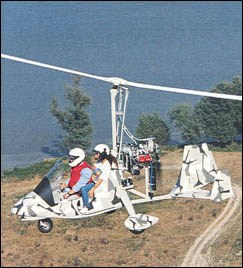
Nearly identical, performance-wise, to the M-16 is the sporty M-14 model. More compact, the M-14 delivers the utility of tandem seating with aerodynamic performance. It has a slightly higher useful load of 648 pounds, versus the M-16‘s 617 pounds and retains a lot of the standard features, such as electric trim.

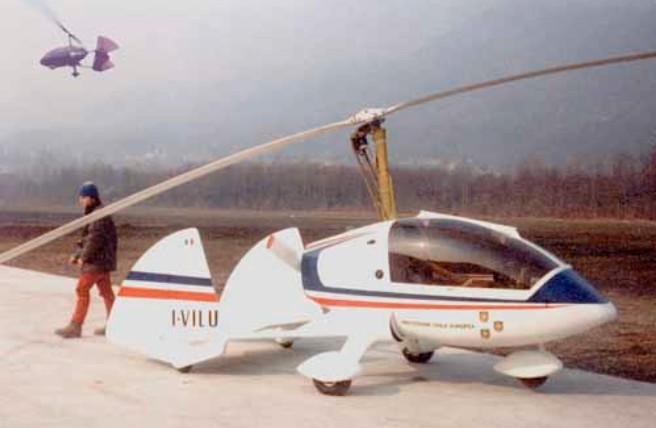
Streamlined composite and 4130 steel airframe, including wheel pants, spring landing gear, prerotator, fin/rudder with two outrigger tail fins. Sold as Kit or Fully-Assembled.

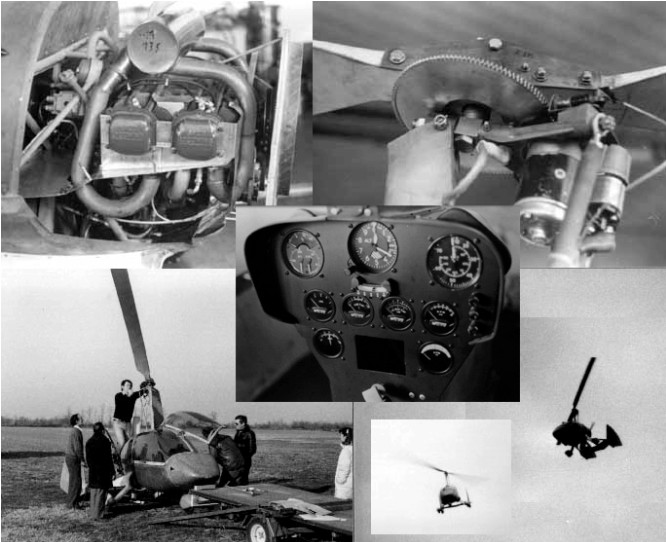
The Scout 2000 millennium model of the M-14 was standard with electric trim, Flydat or EIS engine monitor, altimeter, airspeed indicator, rotor tachometer, prerotator, rotor brake, wheel brakes, landing light, and wheel pants.

Two different engines were available: Rotax 914 turbo (115hp) or Rotax 912 ULS (100hp). With the Rotax 912 ULS, carburetor heat and temperature gauge is standard.
The M14 Scout, with compact seating and aerodynamic design, afford good performance and two-seat. The M14 is Magni’s sporting model, but two seats.

M-14 Scout
Engine: 120 hp Arrow 1000cc.
Prop: 67” VPM composite, 3 blade ground adjustable.
Rotor blades: 27’ or 28’ x 8.7” VPM composite.
Min speed: 20 mph.
Cruise: 80 mph.
Top speed: 100 mph.
Gross wt: 1432 lbs.
Width: 5’3”.
Height: 8’2”.
Length: 13’.

M-14 Scout
Engines: 115 hp Rotax 914, 100 hp Rotax 912ULS
Propeller: 67″ VPM composite, 3-blade ground adjustable
Rotor Blades: 27′ composite (fiberglass and carbon fiber)
Min Speed 20 mph
Cruise 90 mph
Top Speed 115 mph
Empty Weight 547 lbs / 538 lbs
Useful Load 665 lbs / 674 lbs
Gross Weight 1,212 lbs
Width 5’11”
Height 8’2″
Length 12’11”

Magni M-14 Scout 2000
Rotor diameter: 8.23m
Overall length: 3.95m
Overall width: 1.80m
Overall height: 2.50m
Propeller diameter: 1.70m
Weight empty: 248kg
Max take-off weight: 550kg
Max level speed: 185km/h
Cruising speed: 145km/h
Rate of climb at sea level: 5m/s
Service ceiling: 3500m
Take-off run: 70m
Landing run: 0-30m
Range, no reserves: 305km
Endurance: 2.1 hr

Magni M-13 Duck / VPM M-13 Duck

A single seat partially enclosed autogyro. Composite and aluminium airframe, stream lined including wheel pants. Spring landing gear, pre-rotator, fin-rudder with two out rigger tail fins.

Engine: 65 hp Arrow 500cc.
Prop: 65” VPM composite, 3 blade ground adjustable.
Rotor blades: 24’ x 8.7” VPM composite.
Min speed: 20 mph.
Cruise: 80 mph.
Top speed: 95 mph.
Empty wt: 353 lbs.
Useful load: 308 lbs.
Gross wt: 661 lbs.
Width: 5’3”.
Height: 6’5”.
Length: 11’6”.

Magni MT-7 / VPM S-2

In 1980 Vittorio Magni of Italy had designed a new, two-seat autogyro with a 150 hp Lycoming engine. The machine got the project name MT-7 (Magni-Tervamaki). Vittorio later redesignated the machine as VPM S-2.

The calculations and general design blueprints were delivered to Vittorio, who was responsible for all the detail design. He also built the machine together with his son. The machine was completed in 1985, and it also flew well.

Some years later the machine was lost in an accident in France. The control rods had been bent in road transport by a truck.

Magni continued the development of autogyros and has designed a series of gyros which all seem to have the rotor head and blade design of JT-5 and MT-7.

Magnan Sundance

Sundance is a high performance, single surface swept tailless monoplane of constant chord. The Sundance system of constructin breaks down into a Rogallo size bag. The SSundance employs drag rudders for positive turn response while longitudinal control is achieved through weight shift. Spoilers were also optional, interconnected with the drag rudders.

The airframe is made fro 2024-T3, 1.75in x .035 wall for the leading edge, 2024-T3 1in x .049 for the struts and trailing edge. All tubes and parts are 100% bright dip anodised in three different colours: black, red and clear. All stress points on the tubing are sleeved reinforced.

Rigging cable is aircraft 3/32in 7 x 7 302 stainless steel with continuous top rigging and double nico pressed. Tangs, shackles, and nose plates are 305 stainless steel. The strut brackets, kingpost plug, drag rudder plugs, and elbow joints are machined from 6061-T6 alumnium and bright dipped anodised. Nuts, bolts, washers, and turnbuckles are aircraft quality.

The sail is Howe & Bainbridge 3.8oz stabilised dacron. All seams are double and single zig-zag stitched and stress points are reinforced. All sails came with Velcro fastening. There was a choice of 11 colours.

Special hardware include injection molded plastic saddles, micro-balloon tips for the ribs, and compression plugs for structural integrity.

The Sundance was provided with a seated harness. The prone harness is constructed of 8oz para’pac nylon and 1in foam. Webbing is a combination of 8000 lb test web for attachment points and 2000 lb test streamlined tubukar web for the suspension lines. Seats and supine harness are constructed of injection molded polyurethane plastic. Web is 5000 lb test.

Sundance A
Chord length: 5 ft
Wing span: 27.25 ft
Wing area: 134 sq,ft
Aspect ratio: 5.54
Sweep angle: 30˚
Weight: 45 lb
Pilot weight: 125-155 lb
Takeoff speed: 14 mph
Stall speed: 16 mph
Max speed: 45 mph
Best glide ratio (L/D): 9-1
Best L/D speed: 25 mph
Min sink: 192 fpm

Sundance B
Chord length: 5 ft
Wing span: 32 ft
Wing area: 157 sq,ft
Aspect ratio: 6.53
Sweep angle: 30˚
Weight: 49 lb
Pilot weight: 150-210 lb
Takeoff speed: 14 mph
Stall speed: 16 mph
Max speed: 45 mph
Best glide ratio (L/D): 10.6-1
Best L/D speed: 25 mph
Min sink: 156 fpm

Magnan Harrier

Harrier IV

The Harrier IV is a high aspect, high performance flexwing. With a wider than average span, the lateral control is very responsive, partially due to the roached tip design which increases washout under loading. Pitch control is responsive but not sensitive to minor control because of dampening. It is stable on all axis, and no spin tendency and parachute landings can be made without problem of dropping off.

The Harrier IV features a precambered keel and precambered full length ribs throughout the sail. It came with 66in bar, double deflexers, 100% anodised in black, red, or clear.

The airframe is made from 2024-T3 1.75in x .035, 6061-T6 1.75in x .049 leading edge, cross bar and keel, 6061-T6 1in x .083 for the control bar, and 2024-T3 1in x .049 for the kingpost. All holes are sleeved, dowled and bushed.

Rigging cable is aircraft 3/32 7×7 302 stainless steel with continuous top rigging and double nico pressed. Tangs, shackles, and nose plates are stainless steel. The kingpost bracket, control bracket, kingpost plug and elbow joints are 6061-T6 aluminium. Deflexers are made from machined 2024-T3 aluminium. Nuts, washers, bolts, and turnbuckles are aircraft quality. All aluminium components are bright-dip anodised either red, black, or clear. All steel components are polished.

The sail is Howe & Bainbridge 3.8oz stabilised dacron in a choice of 11 colours. All seams are double zig-zag stitched and stress points reinforced. The sail is designed with roached tips for improved efficiency and stability. Each sail came with Velcro fasteners for the ribs.

The Harrier IV prone harness is constructed og 8oz para’pac nylon and 1in foam. Webbing is a combination of 8000 lb test web for attachment points and 2000 test streamlined tubular web for the suspension lines, available in five colours. Seats and supine harness are constructed of injected molded polyurethane plastic.

Leading edge: 21 ft
Keel length: 8 ft
Wing span: 37.75 ft
Wing area: 160 sq,ft
Aspect ratio: 8
Nose angle: 115˚
Sail billow: 0.25˚
Weight: 39 lb
Pilot weight: 150-195 lb
Takeoff speed: 15 mph
Stall speed: 16 mph
Max speed: 55 mph
Best glide ratio (L/D): 8-1
Best L/D speed: 30 mph
Min sink: 220 fpm

Magnan M-2 Marin

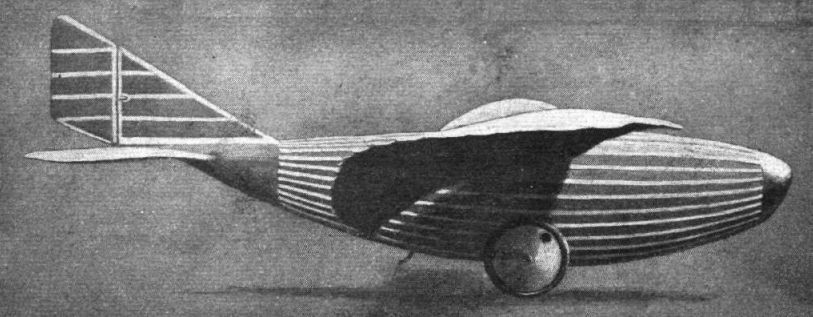
Apart from the studies made in Germany, several French experimenters have attacked the problem of “gust-soaring,” among them being Dr. Magnan, who has made a close study of bird flight, and who reached a stage when he could justify the building of a machine for the purpose of carrying out actual flying experiments. This machine is of unorthodox design, both aerodynamically and structurally.

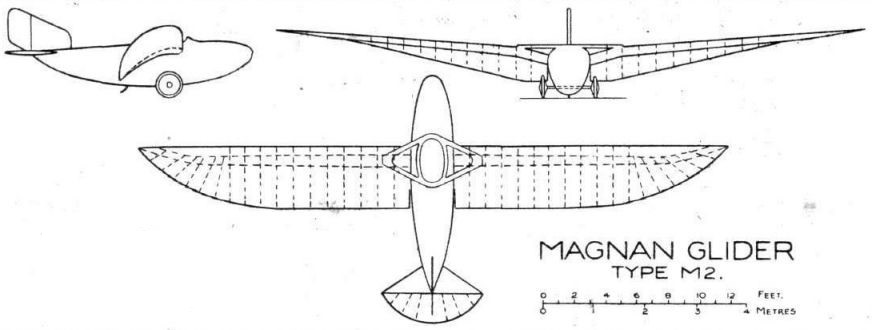
Basing his design to some extent upon birds, in 1921 Dr. Magnan produced a cantilever monoplane, the wing of which is of uniform chord over approximately one-half of its span, but tapering to a point at the tips. The leading edge is straight and the taper is provided solely by the trailing edge. Near the root the wing is swept down suddenly and sharply to form a pronounced dihedral angle. This angle extends over but a few feet of the span, and the rest of the wing is at a smaller dihedral. The wing tapers in thickness as well as in chord, and the angle of incidence is progressively altered, being around 20 degrees at the root. In addition to the change in section and angle, the wing ribs are so constructed that they are capable of being flexed to an extent under varying loads. No ailerons are fitted. Lateral control is by wing warping.

The fuselage is short in proportion to the span, and a large portion of it projects ahead of the wing. This results in the tail being very close to the wing, only about one chord-length separating the trailing edge from the forward end of the fixed tail plane. A large rudder is fitted. The “fin area” of the forward portion of the fuselage is very considerable, of rounded section.

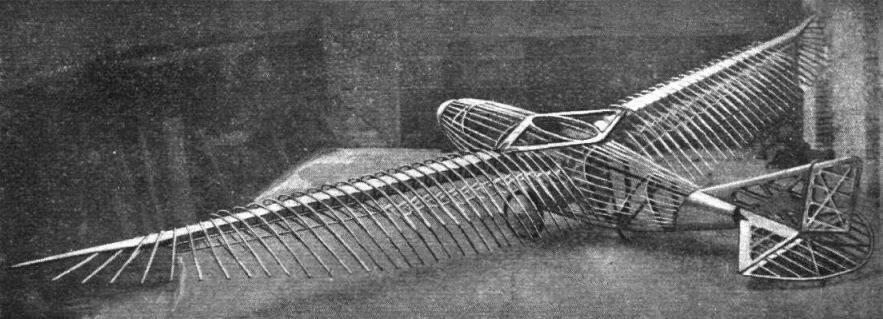
The monoplane wing has but a single spar, of box section and built of wood. There are two fairly sharp bends in each spar, one a few feet out from the body, where the horizontal cabane meets the spar, and another a few feet from the tip, where the spar tip is swept forward to meet the straight leading edge. The ribs have top and bottom flanges of ash, the lower flange, which runs from leading to trailing edge, being screwed and glued to the lower face of the spar. The top flange stops short of the trailing edge, about one-third of the chord from it, and is so attached to the lower flange and to the spar that it can slide a short distance in a fore-and-aft direction, thus allowing the trailing edge to flex.

Near the wing tips the ribs slope outwards, and also they are so mounted on the spar as to give a pronounced “wash-out” to the wing. Lateral control is by warping, but instead of the warp causing a change of angle without sensible change in camber, in the Magnan monoplane both angle of incidence and camber are altered. The fabric covering is applied in a way which was claimed to prevent wrinkling when the wing is being warped.

The fuselage is of egg-shape section, and is built up of formers alternating sloping back and forward, thus forming a series of Vees as seen in side view. To these formers are attached four main longerons and a great number of stringers, and wire bracing is employed for stiffening the structure against torsion. The fuselage is fabric covered except at the extreme nose and stern. The tail is of more or less orthodox design, but is supported on a duralumin cone bolted to the rear bulkhead of the fuselage proper.

A simple undercarriage consisting of two wheels carried on a duralumin axle is fitted, the axle being sprung by rubber cords anchored inside the lower portion of the fuselage.

The pilot’s seat is mounted on longitudinal rails, somewhat like the sliding seat in a boat, and for fore-and-aft control he can alter the position of the centre of gravity by sliding the seat along. The ordinary controls are of the usual type.

The machine was to be launched from a cliff on the coast, and glide into the wind until fairly low over the sea. During a gust the pilot would pull back the stick, and if necessary shift his seat back so as to bring the tail down quickly. As a gust dies down he would push the stick forward and slide his seat forward at the same time so as to avoid stalling the machine. During a lull it was to be the pilot’s endeavor to glide forward with the minimum loss of height, i.e., at the best gliding angle for the particular conditions. Dr. Magnan considered that another method would be to glide down-wind during the lulls and up-wind during the gusts, but that it was doubtful if the machine could be manoeuvred quickly enough to make this form of gust-soaring feasible.

Some preliminary tests over land were made with the machine, piloted by Canivet, and these were stated to have indicated that the machine should, under suitable conditions, be capable of taking advantage of a gusty wind.

As alighting on the sea was to be one of the normal functions of the machine, the fuselage and wings have been made watertight, the opening for the wheel axle being bulkheaded off from the rest of the fuselage.

Type Marin M.2
Length o.a., 4-95 m. (16 ft. 3 ins.)
Wingspan, 11-5 m. (37 ft. 9 ins.)
Chord (root), 1-3 m. (4 ft. 3 ins.)
Wing area, 10 -25 sq. m. (110 sq. ft.)
Weight of wing, 60 kgs. (132 lbs.)
Weight of machine (empty) 130 kgs. (286 lbs.)
Weight in flying trim, 200 kgs. (440 lbs.)
Wing loading, 19 kgs./sq. m. (4 lb./sq. ft.).