Back to Fiat G.50 Freccia / G.51 / G.52
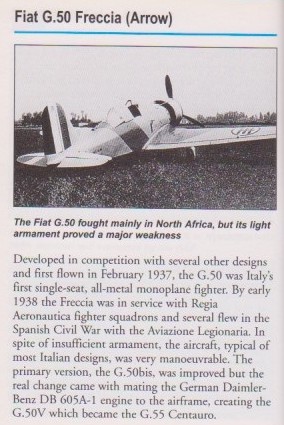
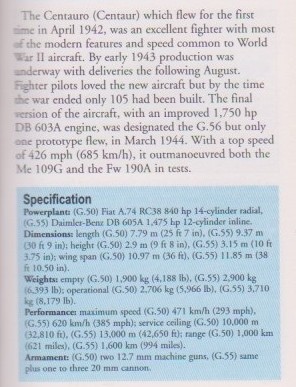

William Lendrum Mitchell (December 29, 1879 – February 19, 1936) was a United States Army officer who had a major role in the creation of the United States Air Force.
In 1908, as a young Signal Corps officer, Mitchell observed Orville Wright’s flying demonstration at Fort Myer, Virginia. Mitchell took flight lessons at the Curtiss Flying School at Newport News, Virginia.
In June, he took private flying lessons at the Curtiss Flying School because he was proscribed by law from aviator training by age and rank, at an expense to himself of $1,470 (approximately $33,000 in 2015).[12] In July 1916, he was promoted to major and appointed Chief of the Air Service of the First Army.
Mitchell served in France during World War I and, by the conflict’s end, commanded all American air combat units in that country. After the war, he was appointed deputy director of the Air Service and began advocating for increased investment in air power, believing that this would prove vital in future wars. He argued particularly for the ability of bombers to sink battleships and organized a series of bombing runs against stationary ships designed to test the idea.
Recognized as one of the top American combat airmen of the war alongside aces such as his good friend, Eddie Rickenbacker, he was probably the best-known American in Europe. He was awarded the Distinguished Service Cross, the Distinguished Service Medal, the World War I Victory Medal with eight campaign clasps, and several foreign decorations. Despite his superb leadership and his fine combat record, he alienated many of his superiors during and after his 18 months of service in France.

He antagonized many administrative leaders of the Army with his arguments and criticism and in 1925, his temporary appointment as a brigadier general was not renewed, and he reverted to his permanent rank of colonel, due to his insubordination. Later that year, he was court-martialed for insubordination after accusing Army and Navy leaders of an “almost treasonable administration of the national defense” for investing in battleships. He resigned from the service shortly afterwards.
On February 19, 1936, Mitchell died in New York City at Doctors Hospital of a coronary occlusion. He had been admitted to the hospital on January 28. He was 56 years old.
Mitchell was buried at Forest Home Cemetery in Milwaukee, Wisconsin. None of Mitchell’s children from his first marriage attended the funeral. His widow, Elizabeth, later married Thomas Bolling Byrd, the brother of Virginia governor Harry F. Byrd Sr. and explorer Richard E. Byrd.
Mitchell received many honors following his death, including a Congressional Gold Medal. He is also the first person for whom an American military aircraft design, the North American B-25 Mitchell, is named. Milwaukee Mitchell International Airport in Milwaukee, Wisconsin, is also named after Mitchell.
Back to Admiralty Air Department Flying-Boat
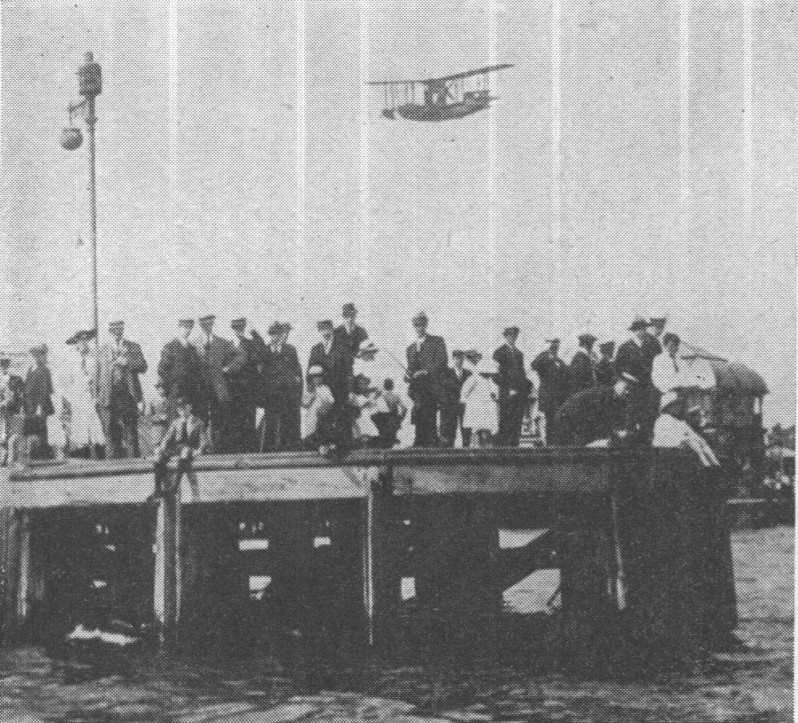
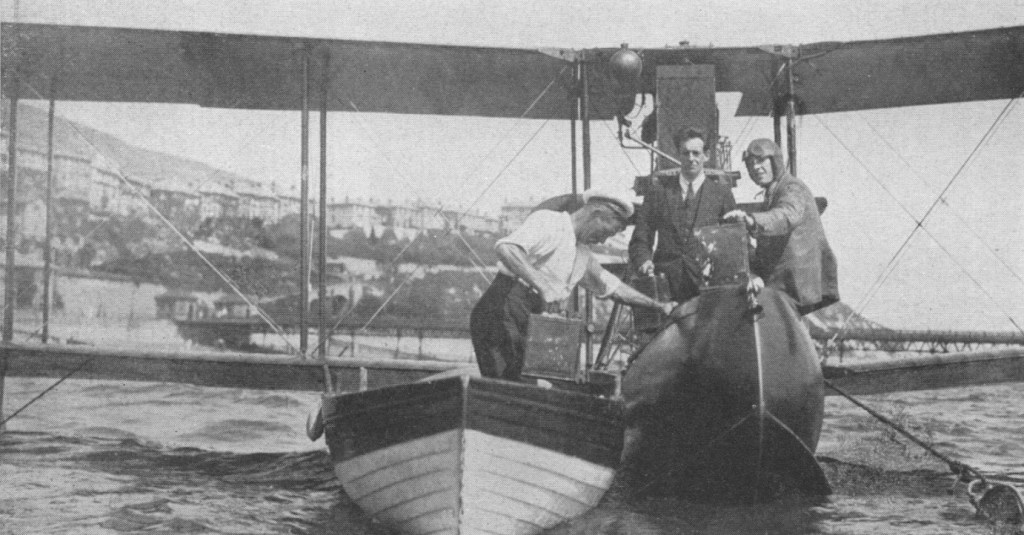

The Boeing Model 204 was an American biplane, pusher configuration flying-boat aircraft built by Boeing in 1929. Externally, the 204 looked identical to the Boeing Model 6E, but a number of internal changes, including increasing the passenger capacity to four, gave it a new type certificate and model number.
Construction was started on five aircraft, but only two were completed. The first, designated 204 and the second 204A. A third aircraft was built by a private owner who had bought the three incomplete machines. The 204A was a dual-control version which was later owned by Peter Barnes, who flew it on his private Seattle-Victoria, British Columbia main run.
The C-204 Thunderbird, a modified 204, was the first type produced by Boeing Aircraft of Canada. These had altered wing and tailplane incidence and a reduction in upper wing area. The prototype was first flown on 30 March 1930, the first of a batch of four. They failed to sell readily, though they were sometimes leased for work. Eventually three were sold. All worked in British Columbia, remaining active until 1939.
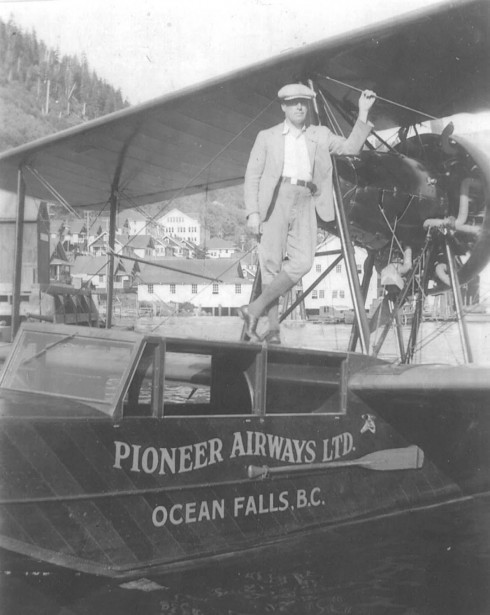
204
Four-seat variant of the Model 6E, one built.
Crew: one pilot
Capacity: four passengers
Length: 32 ft 7 in (9.93 m)
Wingspan: 39 ft 8.25 in (12.10 m)
Height: 12 ft 0 in (3.66 m)
Wing area: 470 sq ft (43.66 sq.m)
Empty weight: 3,298 lb (1,496 kg)
Gross weight: 4,940 lb (2,240 kg)
Powerplant: 1 × Pratt & Whitney R-1340 Wasp , 410 hp (305 kW)
Maximum speed: 115 mph (185 km/h, 100 kn)
Cruise speed: 95 mph (153 km/h, 83 kn)
Range: 350 mi (563 km, 300 nmi)
Service ceiling: 9,000 ft (2,743 m)
Rate of climb: 1,000 ft/min (5.1 m/s)
204A
As the Model 204 with dual-control, one built.
C-204 Thunderbird
Four 204s built by Boeing Canada.
Back to SAAB 105








 All Aero