Miller JM-2

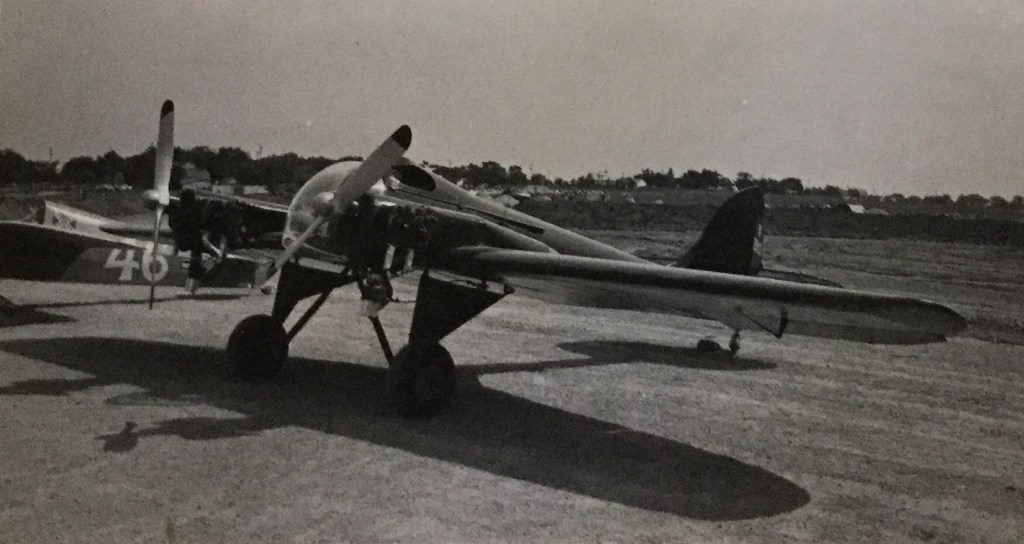
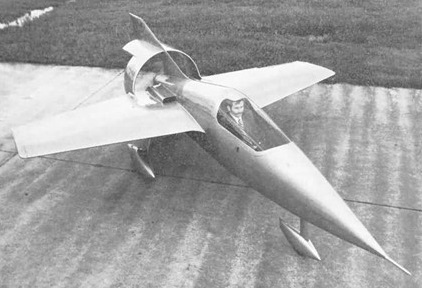
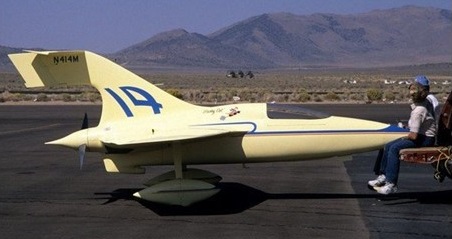
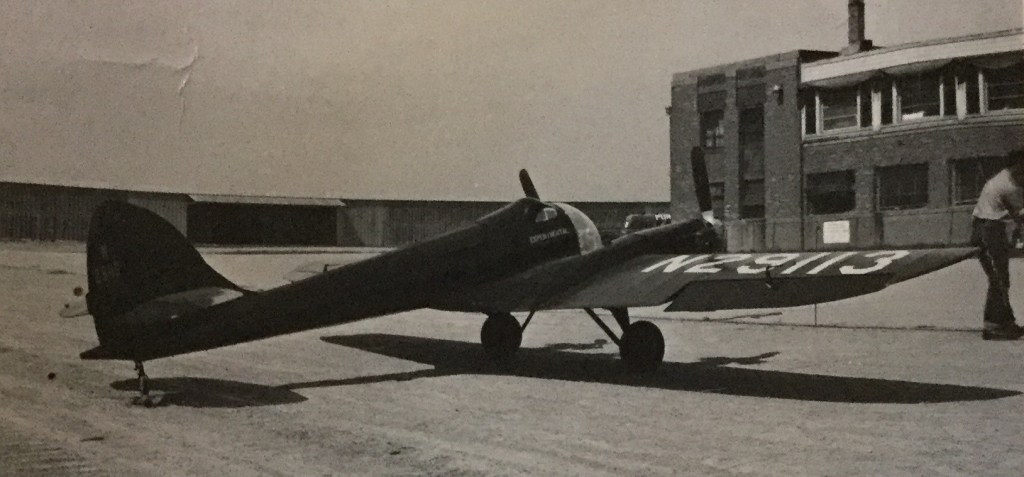
Designed by J.W. Miller, the JM-2 takes a different approach to Formula One racing. Both the engine and main wings are set aft of the pilot’s enclosed cockpit. The Continental O-200A drives a pusher prop with its spinner taking the place of the tailcone. The two sections of the vertical propeller shroud act as the vertical stabilizer, and the elevators are placed in T-tail fashion. The wings are covered with honeycomb material reinforced by fiberglass and resin. The fuselage is constructed of a welded steel tube load bearing structure encased in four fiberglass panels.
Miller JM-2 Article

Variation:
Miller-Bohannon JM-2 Pushy Galore

The nose gear was both steer-able and retractable
Gross Wt. 1100 lb
Empty Wt. 630 lb
Fuel capacity 12 USG
Wingspan 15 ft
Length 19 ft
Engine 100-hp Continental O-200
Prop: 4-blade
Top speed 235 mph
Cruise 190 mph
Stall 70 mph
Climb rate 1600 fpm
Takeoff run 1500 ft
Landing roll 2000 ft
Range 300 nm
Miller / J.W. Miller Aviation

J.W. Miller Aviation Inc., Horseshoe Bay Airport, Box 757, Marble Falls, TX 78654, USA.
J.W. Miller Aviation, Marble Fails, Texas, makes modification kits for Apaches, Twin Comanches, Aztecs and Aero Commanders. Many of Miller’s airframe parts are made of honeycomb reinforced fiberglass. To research this, Miller returned to formula one racers, his JM 2.

Miller Biplane

Miller biplane NC575W

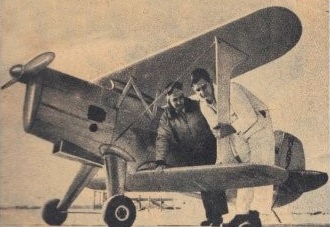
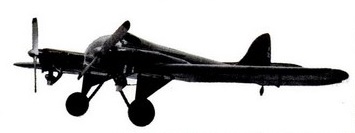
This apparently undesignated Miller biplane entirely made of plywood was built in Milwaukee in the after-war years. It took 850 hours of work on its inventor’s spare time and 500 dollars’ worth of material to get it completed. It had a wingspan of 4.6 m and a length of 4.1 m, and was powered by a Henderson engine. Miller, a licensed mechanic and student-pilot, claimed a speed of 230 km/h and a range of 640 km for his diminutive biplane.

Millennium Jet SoloTrek Exo-Skelitor Flying Vehicle (SoloTrek XFV) / Trek Aerospace Springtail / Dragonfly

An American company named Millennium Jet of Sunnyvale, California, developed a recreational flying platform aircraft with the comic-book name of “SoloTrek Exo-Skelitor Flying Vehicle (SoloTrek XFV)” that got a certain amount of public fanfare for a time. It was an extremely unusual design that looked like an exotic piece of exercise equipment with twin ducted fans bolted on at the top. The fans tilted together to provide forward propulsion, or individually to spin the aircraft around. The pilot stood up in the frame and controlled the vehicle with two handgrips at the end of armrests. The right handgrip was a joystick for directional control and the left handgrip was the throttle. The pilot had flight instrumentation as well, provided by a display built into helmet goggles.

Two were built, with initial tethered flight of the first in 2002, but the machine never entered production. Millennium Jet evolved through whatever mechanisms to a new organization named Trek Aerospace that push a revised version of the machine named the “Springtail”, a derivative with a cockpit named the “Dragonfly”, and small UAVs based on the twin ducted fan configuration. The effort seems to have gone quiet.

Militky Brditschka MB-E1

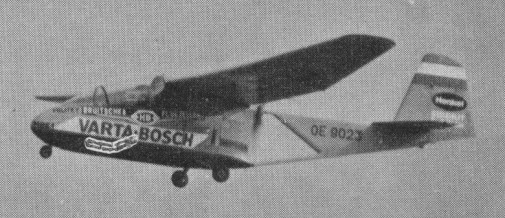
Heinz W. Brditschka also converted an HB-3 airframe in 1973 to have electric power, in which form it was known as the Militky MB-E1; Fred Militky, who designed the installation of the 13hp Bosch electric motor that replaced the piston engine, was an engineer with the Graupner model-building company, and used his experience with electrically powered radio-controlled models to produce this first electric motor glider. This made what is claimed to be the first ever manned electric-powered flight on 21 October 1973.

The silent Militky Brditschka MB El made its 9 minute maiden flight on October 21 1973. Power was provided by a standard Bosch 10kw electric motor and Varta batteries, giving 13 hp.

Militi M.B.2 Leonardo

The Militi M.B.2 Leonardo is an Italian single-seat powered flying-boat glider version of Militi’s M.B.1 flying-boat glider, designed and built by Bruno Militi.

The Leonardo is a parasol-wing monoplane with a two-step hull and a fuselage of aluminium alloy, wood and fibreglass. The mixed construction wing is supported by two N-struts in the centre and a vee-strut outboard on each side, it has plain ailerons but no flaps. The pilot has an open cockpit with a small windscreen. The 42 hp (31 kW) modified Panhard motor car engine is strut-mounted above the wing centre section and drives a two-bladed fixted-pitch laminated wood pusher propeller.

The aircraft was first flown on 21 June 1970 and was exhibited at the 1972 Turin Air Show.

Engine: 1 × Modified Panhard two-cylinder four-stroke air-cooled motor car engine, 31 kW (42 hp)
Wingspan: 8.14 m (26 ft 8½ in)
Length: 5.91 m (19 ft 4¾ in)
Width: 0.90 m (2 ft 11½½ in)
Height: 2.20 m (7 ft 2½ in)
Wing area: 11.40 m2 (122.7 ft2)
Aspect ratio: 5.7
Empty weight: 145 kg (319 lb)
Gross weight: 250 kg (551 lb)
Maximum speed: 116 km/h (73 mph)
Cruising speed: 80 km/h (50 mph)
Stall speed: 55 km/h (34.5 mph)
Range: 200 km (124 miles)
Endurance: 2 hours 30 min
Climb rate: 580 ft/min
Service ceiling: 4000 m (13125 ft)
Crew: 1