NPO Molniya was created 1976 to develop the Buran, Russia’s first reusable spacecraft. With less work on Buran in later years, began developing civil aircraft. First to fly was six-seat Molniya- 1 general-purpose transport with twin booms and pusher engine (first flown December 1992); Allison turboproppowered version proposed as Molniya-3. Projects include twin-engined Aist general-purpose transport in six- and nine-seat versions; Lagoda 10-seat amphibian; Molniya-100 19-passenger transport; Molniya-300 6/15-passenger high-performance business/commuter transport; Molniya-400 combi transport or freighter with twin turbofans, in combi configuration carrying 250 passengers on upper deck and freight containers on lower deck; Molniya- 1000 Heracles twin-fuselage super-heavy freighter with a 450-tonne payload (or possible 1,200-seat passenger capsule) and 6-10 engines; and Vityaz smaller variant of Heracles.
Author: Terry
Möller Stomo 3 / Sturmer
Möller Flugzeugbau was founded at Bremen late 1930s, built Stomo 3 single-seat cabin monoplane powered by 18 hp Kroeber M.4 engine. Similar Moller Sturmer had a 53 hp Zundapp engine.
Möller Flugzeugbau
Germany
Möller Flugzeugbau was founded at Bremen late 1930s, built Stomo 3 single-seat cabin monoplane powered by 18 hp Kroeber M.4 engine. Similar Moller Sturmer had a 53 hp Zundapp engine.
Molesworth-Hughes 1911 Triplane
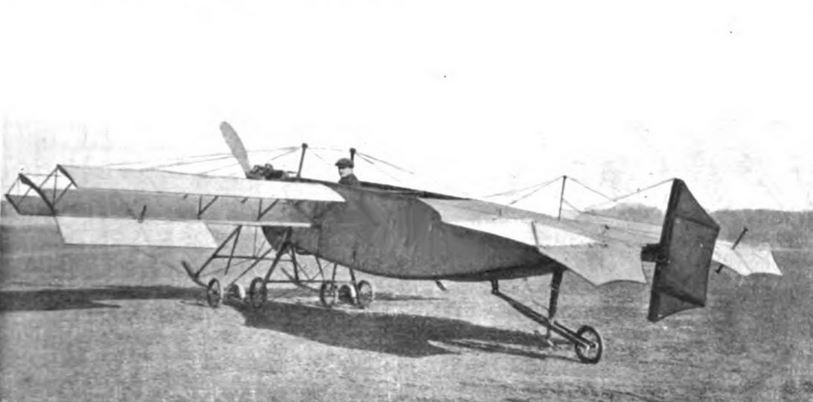
A modification of the underpowered 1910 MacKensie-Hughes triplane, which featured heavily back-staggered wings that have been seen as predecessors of the Handley-Page flaps. Even with a stronger 60 hp ENV engine it failed to fly, and was apparently abandoned after a take-off mishap at Brooklands in March 1911.
Moisant 1911 monoplane

The 1911 Moisant monoplane was designed and built by John Moisant.
Moisant Le Corbeau / Crow

John Bevins Moisant designed and built two aircraft between August 1909 and 1910, before he became an officially licensed pilot. His first was the Moisant Biplane.
Moisant designed and built the Le Corbeau / Crow in 1910.
Moisant L’Ecrevisse Gallery
Back to Moisant L’Ecrevisse

Moisant L’Ecrevisse

John Bevins Moisant designed and built two aircraft between August 1909 and 1910, before he became an officially licensed pilot. His first was the Moisant Biplane. This experimental aircraft became the first all-metal aircraft in the world, being constructed entirely from aluminium and steel. Also known as the “aluminio-plane”, an all-metal sesquiplane built at Issy-les-Moulineaux by American aviator John Benjamin Moisant entirely of steel and aluminium; constructed by workmen hired from the Clément-Bayard airship hangar and completed in February 1910.
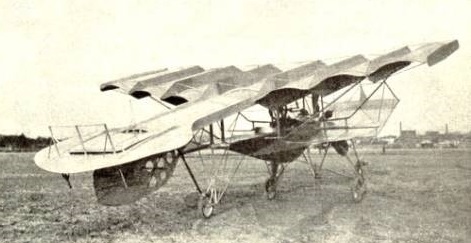
Revolutionary in the construction of its wing – patented by John Moisant (a US citizen) in France as 414,748 – described as aiming to make the machine automatically stable laterally without any form of ailerons or wing warping.
The Moisant biplane’s inaugural flight, and Moisant first flight, ultimately resulted in a crash after ascending only 90 feet.
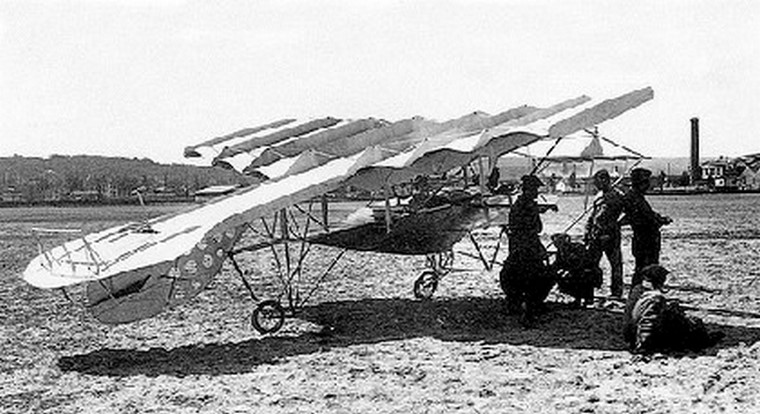
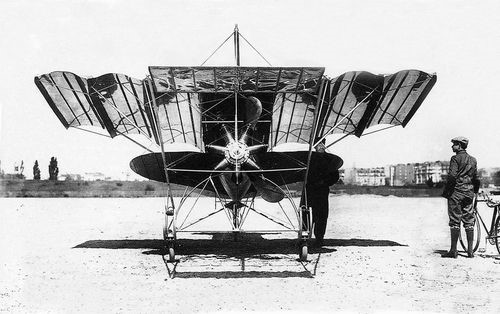
Engine: Gnôme, 50 hp
Wingspan: 5.5 m
Length: 9 m
Wing area: 22 sq.m
Weight 250 kg
Moisant, John Bevins
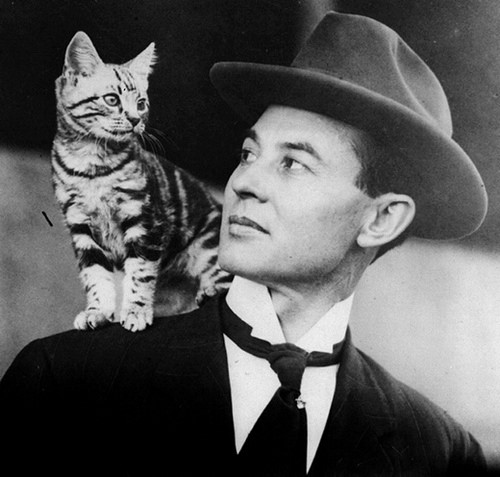
John Bevins Moisant (25 April 1868 – 31 December 1910) was an American aviator born of French/Canadian parents. As a pilot, he was the first to conduct passenger flights over a city, across the English Channel, from Paris to London.
Moisant entered the aviation field in 1909 as a hobby after attending the Grande Semaine d’Aviation de la Champagne air show in Reims, France in August 1909. In the spring of 1910, Moisant took four flying lessons at the Blériot School, headed by Louis Blériot.
Moisant funded his aviation career with proceeds from business ventures in El Salvador, where he had led two failed revolutions and coup attempts against President Figueroa in 1907 and 1909.
He designed and built two aircraft between August 1909 and 1910, before he became an officially licensed pilot. His first was the Moisant Biplane. This experimental aircraft became the first all-metal aircraft in the world, being constructed entirely from aluminium and steel. This aircraft was completed in February 1910.
The Moisant biplane’s inaugural flight, and Moisant first flight, ultimately resulted in a crash after ascending only 90 feet.
On August 9, 1910, Moisant flew his third flight as a pilot in his first recently purchased Blériot XI from Étampes to Issy-les-Moulineaux over Paris, landing the aircraft at the starting line of the Le Circuit de l’Est aerial time trial circuit. Accompanying Moisant as a passenger on the flight was his mechanic, making the trip the first passenger flight over a city in the world.
Only months after becoming a trained pilot, Moisant died after being ejected from his airplane over a field just west of New Orleans, Louisiana, where he was competing for the 1910 Michelin Cup.
Mohawk Aircraft Corp Spurwing / Redskin
Mohawk Aircraft Corporation formed at Minneapolis in 1927, developing their Spurwing two-seat monoplane with a Warner Scarab engine and similar three-seater Redskin.

