Nieman JAI-6 / SFR

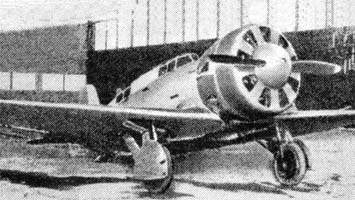
Nieman JAI-6 at Factory No.135

In parallel with the request for the development of a single-engine, scout aircraft, the collective led by Yosif Nieman received a request to develop a prototype aircraft: a high speed unarmed photographic reconnaissance aircraft and, named Nieman SFR (JAI-6) (Russian: Неман СФР (ХАИ-6) ) under the NIS JAI Projects Group. The main defense of this new type of aircraft would be its high speed. Officially the VVS designated the SFR model which corresponds to the acronym of Fast Photographic Reconnaissance Aircraft (in Russian: С коростной Ф отоР азведчик – СФР).

Delivery of the JAI-6 for testing was scheduled for September 1, 1934.

The concept project of the JAI-6 high-speed two-seat reconnaissance aircraft, with an air-cooled engine -58 (M-22U), was developed by the builder brigade S. Ya. Zholkovsky at the end of 1933. The general structure was similar to that of the JAI-1.

In January 1934 the project was handed over to the NII VVS for analysis, but it was quickly returned as the calculation data was considered extremely low and the M-58 engine was not available for production. On recommendations from SV Ilyushin, the project was modified to accommodate a 712 hp Wright Cyclone SGR-1820 F3 engine.

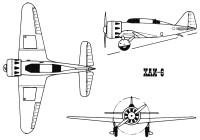
The JAI-6 was designed as an all-wood cantilever low-wing monoplane with an aerodynamically clean fuselage. The retractable type landing gear, manually retractable.

All rudders featured duralumin structure. The wings and stabilizer were made of plywood-clad wood, the aerodynamic brakes of aluminium.

Many elements in the plane were used by the builders for the first time. In order to obtain the highest possible speed, wing mechanization was increased, adding flaps, in addition to the ailerons. The wing was planned as an integral unit (consoles and centerplane in one whole). A curious feature was the use of wooden fuel tanks. During the Great Patriotic War this experience would be applied to the Yakovlev and Lavochkin fighter models with the aim of saving metal.

In the course of the development process of the JAI-6, the retractable landing gear had major problems. The retraction of the gear was done manually and the process was generally similar to that of the JAI-1, but in this case the construction of the gear was very complex. The development of this landing gear was the diploma work of 5th year JHA students PG Shishov and ID Kravchenko.

A methodology for calculating this type of complex landing gear had not yet been developed. All the calculations that were made did not show the necessary resistance and during the static tests in the JHA laboratory the undercarriage was destroyed because it could not support the fixing point. Nieman, after reviewing what happened, proposed a distribution of fixation points that should lead to a decrease in elastic deformation. Finally the wheels passed the physical resistance test, but no way was found to demonstrate the design mathematically. In the project submitted to the state commission these calculations were not included.

In the JAI-6 a photographic turret was located in the central region of the fuselage, behind the observer’s cabin. Hatches for the AFA-13 camera were located on the floor and on the sides. Through these hatches, photographs were taken at an angle of up to 80º and distances of up to 40 – 50 km to the sides. For the first time, a remote control system was also developed to rotate the camera and open the gates.

The military received the project with the new power plant in February 1934 and by May they approved a life-size wooden model, presented by the JAI. The calculations gave a speed of 450 km/h at 4,000 meters and 435 km/h at 2,000 m. The climb time to 5,000 meters was calculated at 8 minutes, the ceiling at 10,000 meters, and the range at 1,000 km. Those data were impressive for the time. The use of TsAP type aerodynamic brakes was foreseen in the wing.

Complications in development delayed the delivery date. The date was first moved from September 1 to November 1, 1934 and then to March 1, 1935, but for this date they were not yet ready.

In January 1935, the aircraft was delivered to production at the newly created TsOM JAI building (JAI Central Experimental Workshops, directed by Galietko. With the hope of being able to develop the static and resistance tests, the production of three copies was ordered in parallel. At the beginning of June 1935 the first prototype was ready and it was sent to the airfield of the Kharkiv Aviation Factory in Sokolniki for testing.

Everything was ready for the first flight when the aircraft mechanic SV Kieglievich received the information that the Wright Cyclone engine needed high octane gasoline. The JAI did not have it so they had to look for it in a military aviation unit. On June 15, test pilot BN Kudrin and designated test engineer Ye. I. Baru made the first flight.

The JAI-6 successfully passed the factory tests, reaching a speed of 429 km/h at an altitude of 2,500 meters, which can be considered a world record for this type of aircraft, although it was never registered.

Everything seemed to be going smoothly, but soon the problems began. The idea of an unarmed fast aircraft had its detractors within the VVS. During Nieman ‘s trip to the United States as part of a state commission, the VVS instruction was received to set up a defensive point in the observer’s cabin. From the NII VVS was sent, to the JAI, “Top Secret” blueprint of a new basket-shaped machine gun installation protruding from the fuselage. Builders were allowed to review plans only in a special department and under the supervision of security personnel. The calculations showed that the central fuselage of the JAI-6 was so narrow that it did not admit a normal machine gun installation, much less that enormous basket.

Soon the builders were informed of the early visit to the institute of the chief of armaments of the Red Army, Marshal MM Tukhachevki, with the aim of defining the fate of the JAI-6. On the morning of the day after the notification, Tukhachevsky arrived at the TsOM accompanied by the aircraft manufacturer AI Putilov, requesting to be shown the plane, the plans, the weapon installation model and the problems for its construction.

Next to the plane the marshal found the director of the JHA PP Krasilnikov, the chief builder LD Arson, the chief test engineer Ye. I. Baru and the head of the weapons brigade I. Dyachenko. About the installation of weapons on the JAI-6 personally stated the head of the project S. Ya. Zholkovsky. Putting a plywood sheet on the ground, Tukhachevsky took off his greatcoat and lay down under the aircraft. There he evaluated the different models and installation variants, reaching the conclusion that it was impossible to carry out any installation without affecting the speed advantages of the aircraft. Tukhachevsky got up, confirmed the builders’ proposals, congratulated them on his work, and left.

The change in military requirements crucified the future of the JAI-6. A few months after Tukhachevsky ‘s visit, the institute was visited by the head of the GUAP aviation department, SV Ilyushin, and reported that the VVS leadership refused to obtain an unarmed scout plane and that the purpose of his visit was to be able to confirm this decision.

At the beginning of November 1935, the JAI-6 prototype was delivered to the NII VVS, where tests were carried out, including the use of a ski undercariage. The test program was led by PM Stefanovski. With this, the issue of the JAI-6 was closed and its builders began to dedicate themselves entirely to the development of the JAI-5.

JHA-6
Engine: 1 x 712 hp Wright Cyclone SGR-1820 F3
Wingspan: 9.20
Wing area: 14.00 m²
Length: 7.3m
Empty weight: 1020 kg
Maximum takeoff weight: 1730 kg
Maximum speed: km/h 429
Practical range: km 980
Service ceiling: 9800 m
Accommodation: 2
Nieman, Yosif Grigorievich

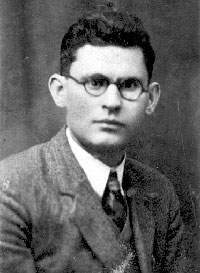
Yosif Grigorievich Nieman (Russian: Иосиф Григорьевич Неман) was born in 1903 in Bielostok, a Polish city in the Grodnienski Governorate into a Jewish family.

In August 1920, during the Civil War, he volunteered for the Red Army. He served as a politician in the department of the 4th Army and then in the political leadership of the Kharkiv Military Region and the Ukrainian Military Region. In 1922 he was demobilized and sent to study at the Kharkiv Technical Institute, which he finished in 1929.

He began his aeronautical career in the construction bureau of KA Kalinin in 1926, participating in the development of the Kalinin К-3, К-4 and К-5 models.

In 1930, he became head of the aeronautical construction chair at the Kharkov Aviation Institute, where he was able to develop his conception of creating airplanes with high aerodynamic characteristics. With the support of the director PP Krasilnikov he organized the aeronautical projection within the research scientific sector (NIS) of the center. The actual projection, proposed by Nieman as a method of preparing future specialists, was based on the work of brigades of NIS students and professors.

In 1930 YG Nieman was selected as JHA’s head of the aircraft construction chair despite not having the necessary scientific degree. He held this post until his arrest in December 1938. From 1944 he returned to occupy the position, this time until his death.

The first JAI project using the Nieman method was called JAI-1 and originated as a diploma paper from the institute.

In March 1933, after the serial production of the JAI-1 was approved, Nieman’s construction brigade received official status. Thereafter it was named the NIS JHA Project Group and received as its base two small rooms on the fourth floor of the aerodynamics corps of the old Technological Institute, near the wind tunnel. Nieman was named lead builder and engineer S. Ya as replacement. Zholkovsky.

As a productive base for the development of the experimental models, the Central Experimental Workshops of the JHA – TsOM JHA (in Russian: Ц ентральные о пытные м астерские (ЦОМ) ХАИ) directed by the engineer Galietko, were organized. Several specialists from KA Kalinin ‘s KB with extensive experience in aeronautical development entered the projection group.

In September 1934, the specialized magazine Samoliot described the JHA aeronautical construction group as a leader in the USSR “in the openness of aeronautical thinking, courage in solving problems and culture in the production of airplanes.”

In the course of the years 1932 – 1938 and under his direction, a whole family of high-speed aircraft (for the time) was developed at the JAI, which included civil transport, reconnaissance and bomber aircraft, designed to be developed as part of the practical activity by students and teachers of the institute, among which the models JAI-1, JAI-3, JAI-5, JAI-6, JAI-51 and JAI-52 (Ivanov) stood out.

On August 17, 1933, he was awarded the Order of the Red Star for the creation of the JAI-1 airliner.

Once the JHA-5 project was approved in January 1935, Nieman was appointed lead builder of an OKO-135 design bureau based at the Kharkov Aviation Factory.

The title of Professor was received in 1938 by virtue of his achievements in organizing the educational process.

Four years later, on December 11, 1938, Nieman was arrested and sentenced to 15 years of labor in a camp, charged with “organizing subversion in the factory and being an agent of foreign espionage.” The OKO-135 design bureau continued without leadership, working on improvements to the stock R-10 aircraft.

In May 1939 Nieman was posted to the Tupolev “Sharaga” in the NKVD TsKB -29, where he worked under Myasichev on the development of the Pe-2. A year later he was appointed head of the Tupolev Tu-2 construction brigade.

On July 19, 1941, by resolution of the Presidium of the Supreme Soviet of the USSR, Nieman was released and all charges against him were dropped.

After his release Nieman worked in the OKB at the Omsk Aviation Factory. From 1942 he became Myasichev ‘s replacement at Factory No.22 in Kazan.

He died of leukemia on November 18, 1952, his body being buried in Kharkiv City Cemetery 2.

In November 1952 he was preparing for the defense of his doctoral thesis, which did not take place due to his sudden death.

The Supreme Court of the USSR fully rehabilitated him on November 5, 1955, postmortem.

Niemi Sisu 1A

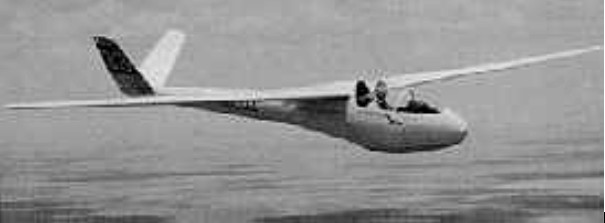
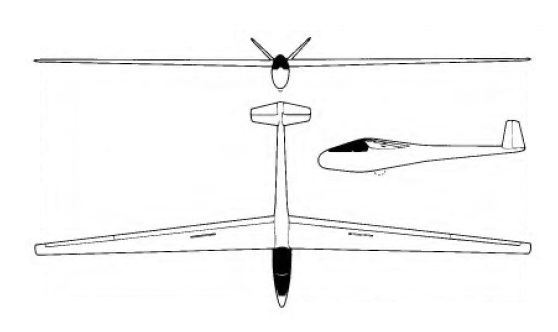
The prototype, designed and built over a period of six years by Convair engineer Leonard Niemi in his garage workshop and known as the Sisu 1, was a cantilever shoulder-wing type of all-metal construction with a laminar flow wing of NACA 65-series section to provide very low drag over a broad speed range, with forward sweep to delay tip stall. The ‘butterfly’-type V-tail has an included angle of 90°. The two-spar wing has an aluminium alloy skin and plate stringers, with glassfibre/foam stiffening in the leading edge and camber-changing flaps. To achieve the smoothness and accuracy necessary for laminar flow, wing contours were filled and sanded, and all control surface hinge lines and joints in the canopy and removable fairings were sealed.

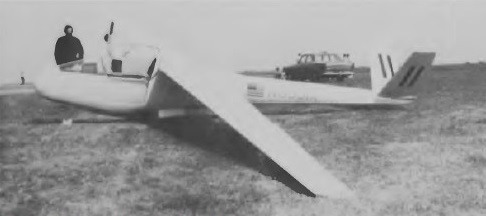
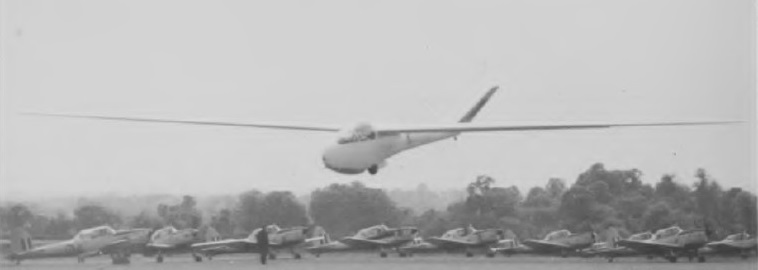
The Sisu 1A was the production version, 10 of which were built by Arlington Aircraft at Arlington, Texas, and later at Greenville, South Carolina, between 1960 and 1965. This version had a lighter wing structure, and featured vented air brakes and large-span slotted flaps. Landing gear consists of a retractable monowheel and a miniature fixed tailwheel; the pilot sits under a flush-fitting two-piece canopy.

Sisu 1A

Flown for the first time on 20 December 1958, this American high performance single seater was noteworthy in being the first sailplane ever to exceed 1,000 km in a soaring flight when flown by Alvin H. Parker, it set up an international straight line distance record of 1,041.52km (647.17 miles) in a flight from Odessa, Texas,.

The Sisu 1 A set three world records for Alvin Parker out of Odessa, Texas: 784 km/ 487.24 miles on 27 August 1963, 1963; free distance 1,041.52 km. /647.17 miles to Kimball, Nebraska, on 31 July 1964; and goal, 930.6 km. / 578.27 miles, 1969. For the free distance flight Parker had an aero-tow to 2000 ft, soared to 14,300 ft and was airborne for more than 10.5 hours.

The Sisu 1A N1100Z, the second 1A to be built, that set the world distance record was donated to the Smithsonian Air & Space Museum and another was donated to the National Soaring Museum.

The type has won the US National Soaring Championships three times, in 1962,1965 and 1967, flown by different pilots (John Ryan, 1962; Dean Svec, 1965; and A.J. Smith 1967). A. J. Smith, winner of the 1967 US Championships, further lightened his ship, and flew his Sisu for a time with wing tip extensions to increase the span from the standard 50ft 0in.

Gallery

Sisu-1A
Span: 15.24 m / 50 ft 0 in
Length: 6.46 m / 21 ft 2.5 in
Wing area: 10.03 sq.m / 108.0 sq.ft
Aspect ratio: 23.1
Airfoil: NACA 65 (3)-418
Empty Weight: 222 kg / 490 lb
Gross Weight: 347 kg / 765 lb
Payload: 125 kg / 275lb
Wing Load: 34.6 kg/sq.m / 7.1 lb/sq.ft
Max speed: 161 mph / 140 kt / 260 km/h (in smooth air)
Stalling speed: 35.5 kt / 68 km/h
Max rough air speed 70 kt (130 km/h)
Min sinking speed: 0.64 m/s / 2.07 ft/sec / 1.24 kt at 55 mph / 47.5 kt / 88 km/h
L/DMax: 37 @ 92 kph / 50 kt / 57 mph
Best glide ratio: 41.4:1 at 62 mph / 54 kt / 100 km/h
No. of Seats: 1
No. Built: 11

Nicoluer HN.700 Menestrel II

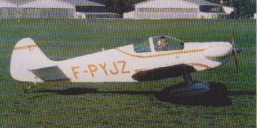
A two-seat version of Menestrel first flown in 1989. The wooden low wing Menestrel is of standard fabric covered wooden construction with a one-piece single spar wing with partly elliptical outer panels. It is available in plans only.

Gallery

Engine: VW, JPX or Limbach, 80 hp
Wing span: 7.8 m / 25 ft 7 in
Wing area: 9.8 sq.m / 105.5 sq.ft
Length: 5.30 m / 17 ft 5 in
MAUW: 510 kg
Empty weight: 290 kg
Max speed: 200 kph
Cruise speed: 187 kph / 115 mph / 100 kt
Minimum speed: 70 kph
Stall: 40 mph / 35 kt
Climb rate: 4.9 m/s
Seats: 2
Fuel consumption: 17 lt/hr
Plan price (1998): 2000 Fttc