Back to Aviat Husky A-1
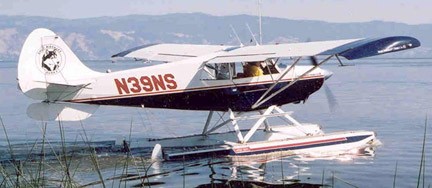
Back to Aviat Husky A-1
In 1908 Armand and Henri Dufaux designed and built a tractor triplane in Switzerland
In 1908 Dernaut designed and built a monoplane in France
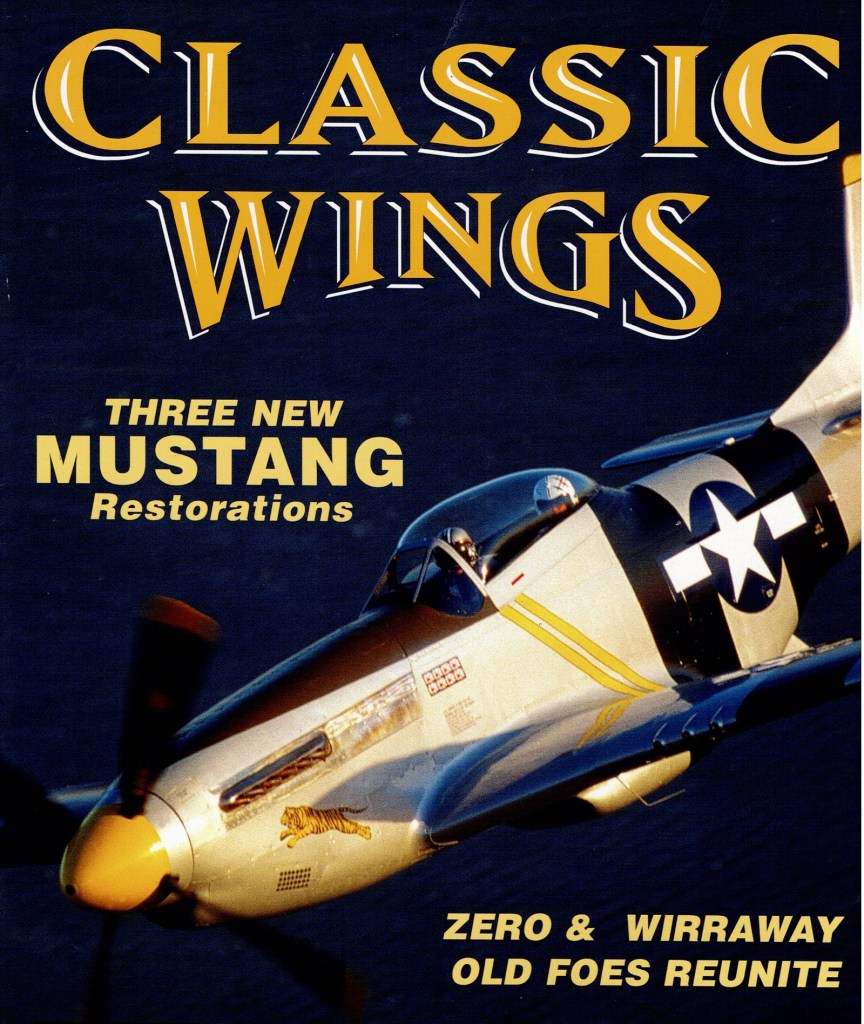
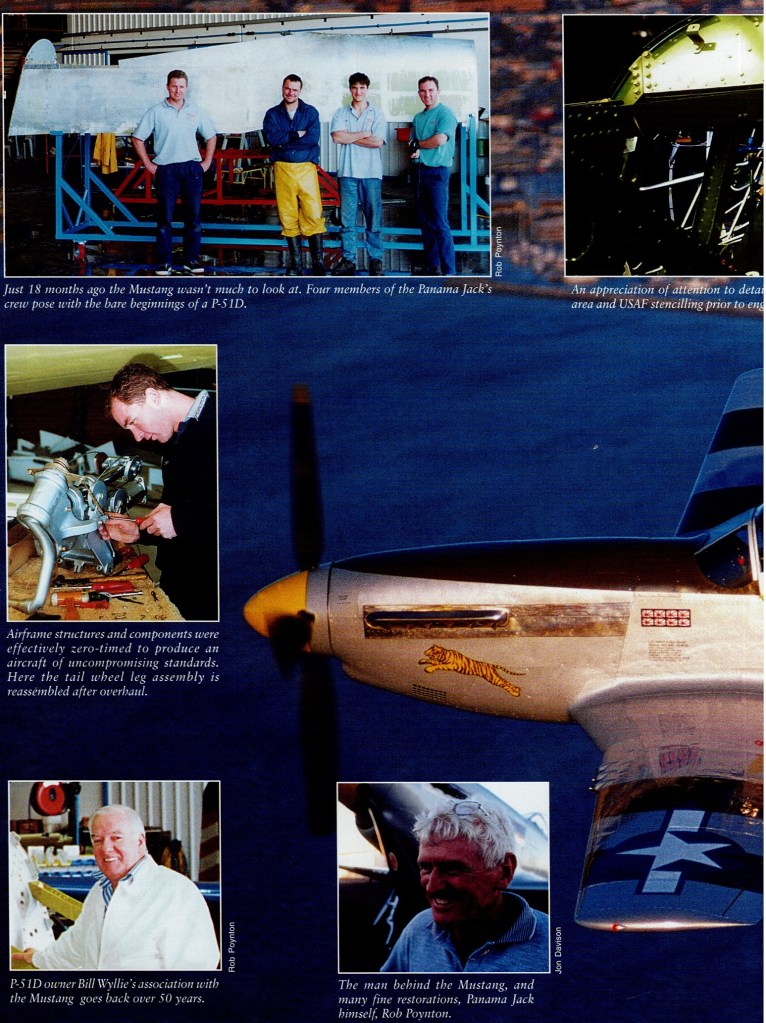
Back to P-51 Mustang


Back to Dornier Do-28
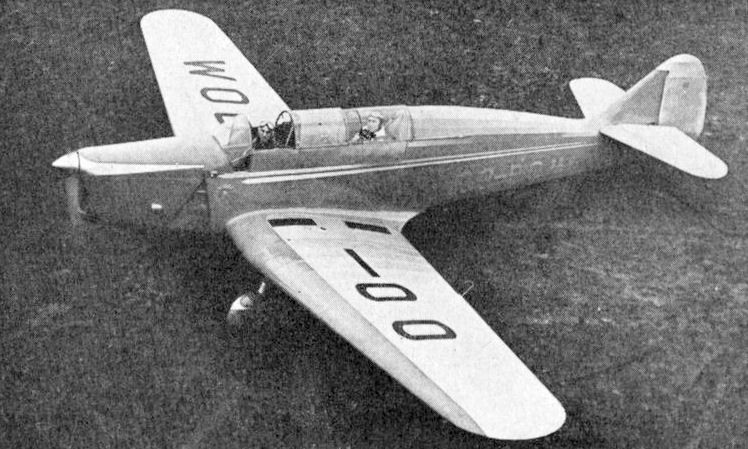
In the 1930s, designer Ernest Oscar Tips of Fairey Aviation’s Belgian subsidiary, Avions Fairey produced a series of light aircraft named after him, starting with the Tipsy S. These aircraft were not built by Fairey Aviation. The last to emerge before the Occupation of Belgium in 1940 was the Tipsy M ab initio trainer. Post war, the parent company decided, uniquely to produce this aircraft, calling it the Fairey Primer. Only one Tipsy M had been produced in Belgium and this became the Primer prototype.
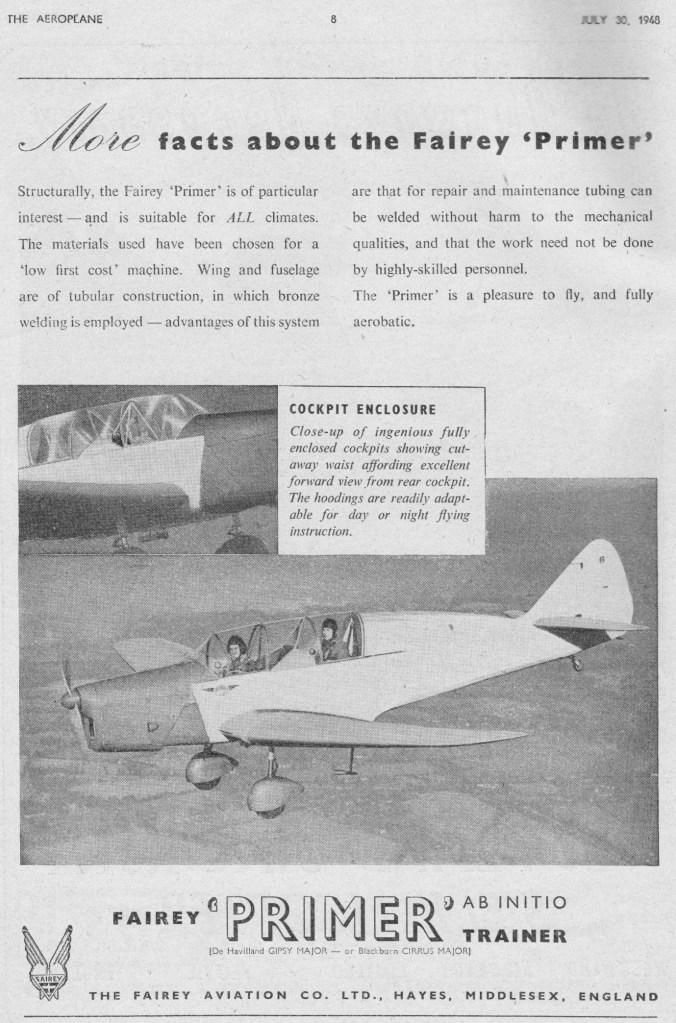
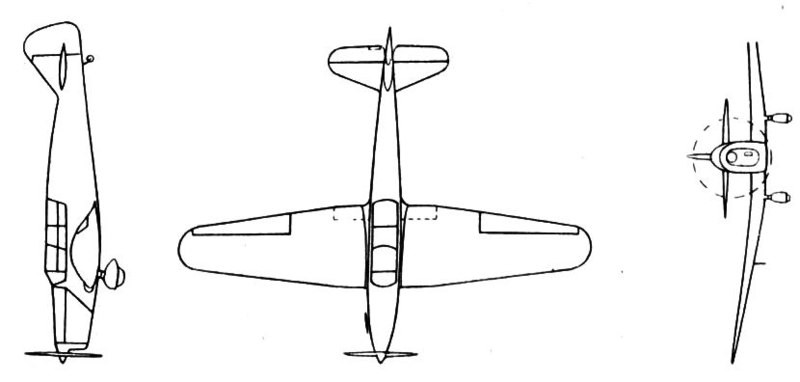
The Primer was a conventional single-engined, low-winged monoplane, constructed of welded metal tubes with wood in subsidiary structures like ribs and stringers, all fabric covered. The wings were quite symmetrically tapered and carried manually operated flaps across the centre section. Mild dihedral began outside the centre section. Each mainwheel, equipped with brakes was mounted on a single leg fixed at the end of the centre section. On the prototype the wheels were spatted, but these were removed on production aircraft. There was a small tailwheel below the fin. The rudder was horn balanced and the starboard elevator carried a trim tab.
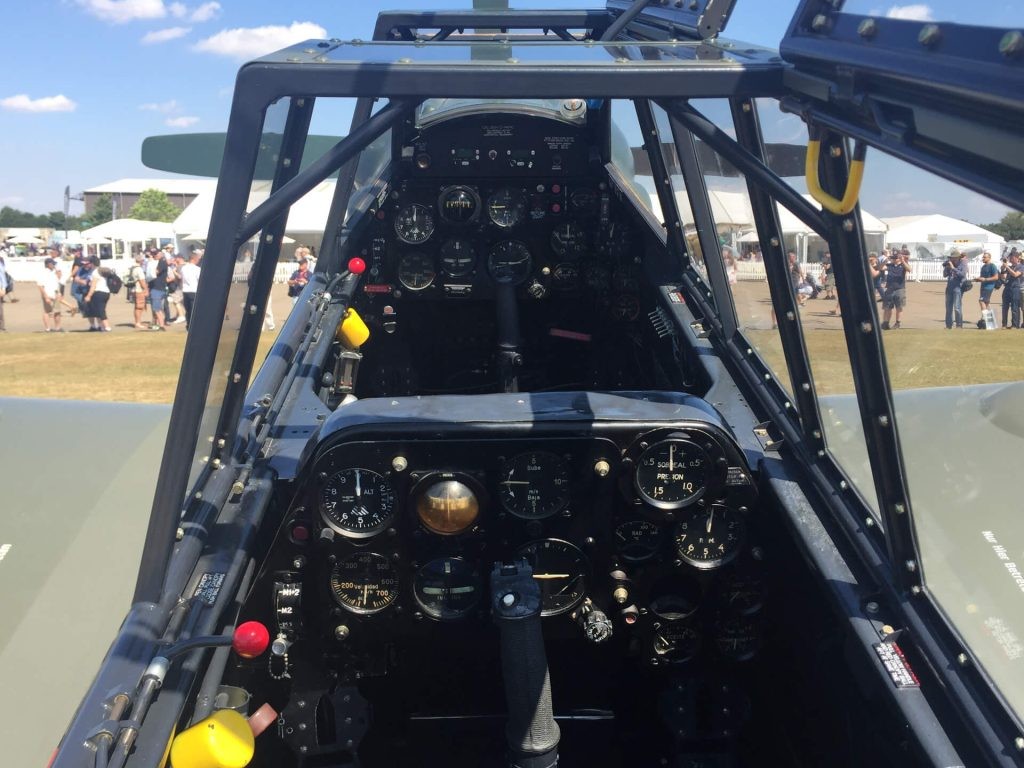
The enclosed tandem dual control cockpits merged into a raised decking behind them, giving the aircraft a smooth but slightly humped look. Both cockpits were over the wing. The engines used by Primers, the 145 hp (108 kW) de Havilland Gipsy Major 10 and the 155 hp (116 kW) Blackburn Cirrus Major 3 were inverted in-line engines and ran in similar cowlings.
The Tipsy M, registered OO-POM and Gipsy powered, first flew at Avions Fairey’s works at Gosselies about 1938 and it visited the parent company’s works in England in June 1939. The Gosselies factory was destroyed by bombing on 5 May 1940 and at about that time all drawings and jigs for the aircraft were destroyed, deliberately or not. Before the German invasion in May 1940 the machine was taken apart and shipped to England, probably in September or October 1939; certainly it flew from Fairey Aviation’s Great West Aerodrome (the site now covered by London Heathrow Airport) for five months after November 1940. It was then used as a company hack until September 1941, when it was put into store. Shortly after the war OO-POM went back to Belgium for small modifications at Fairey’s suggestion; they then took over the Tipsy M with the aim of producing it under licence. Early in 1948, it was flying from White Waltham, still bearing its Belgian registration. The following year it received a UK registration (G-AKSX), but seems only to have flown with the experimental number G-6-1. It spent a period of assessment with service pilots at the Aeroplane and Armament Experimental Establishment, Boscombe Down.
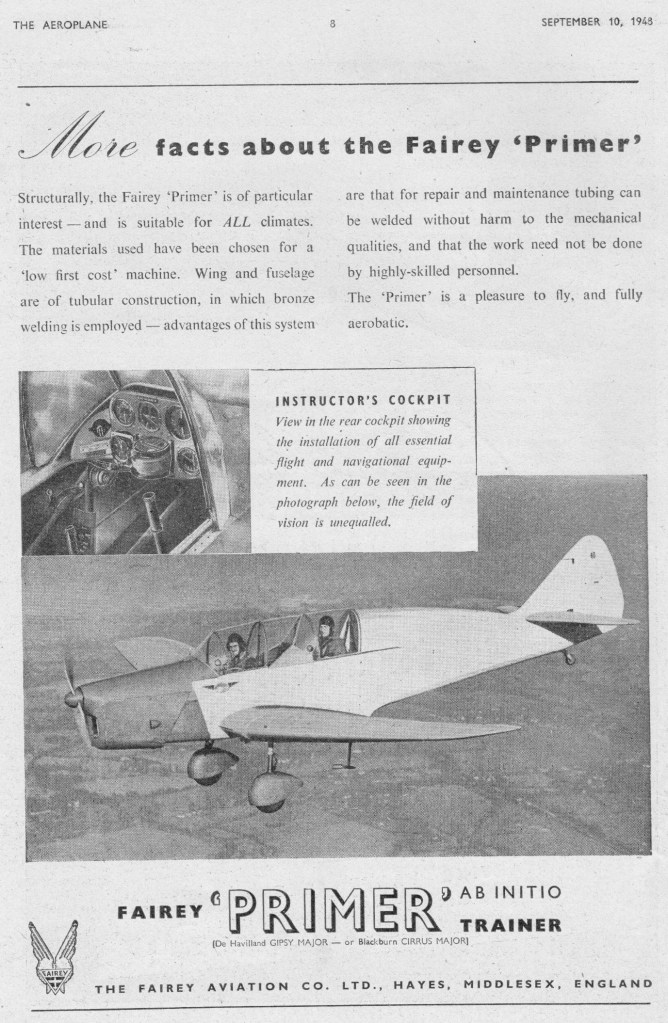
When returned from Boscombe Down, the Primer prototype had to be stripped down in order to recreate the lost drawings and jigs. The engine and some other parts were used to build the first production aircraft, though the CAA records G-AKSX as being sold abroad in Aug 1948; whether in flying condition or not is not noted. Fairey had intended to produce a run of ten, but only built two. The first of these, G-ALBL, gained its certificate of airworthiness in October 1948. Initially it had the Gipsy engine but this was later replaced by the Cirrus. It was dismantled in 1949; the CAA records it as destroyed in 1953. The second production aircraft, G-ALEW used this powerplant from the start, and was assessed against the de Havilland Chipmunk at Boscombe Down. The last of the line, it was dismantled in 1951.
Powerplant: 1 × de Havilland Gipsy Major 10, 145 hp (108 kW)
Wingspan: 32 ft 10 in (10.0 m)
Wing area: 154.5 sq ft (14.36 sq.m)
Length: 27 ft 6 in (8.38 m)
Height: 6 ft 10 in (2.08 m)
Empty weight: 1,360 lb (617 kg)
Gross weight: 1,960 lb (890 kg)
Maximum speed: 134 mph (215 km/h, 116 kn) at sea level
Cruise speed: 122 mph (196 km/h, 106 kn) at 2,300 rpm
Range: 383 mi (616 km, 333 nmi)
Service ceiling: 19,500 ft (5,900 m)
Rate of climb: 900 ft/min (4.57 m/s) at sea level
Crew: 2
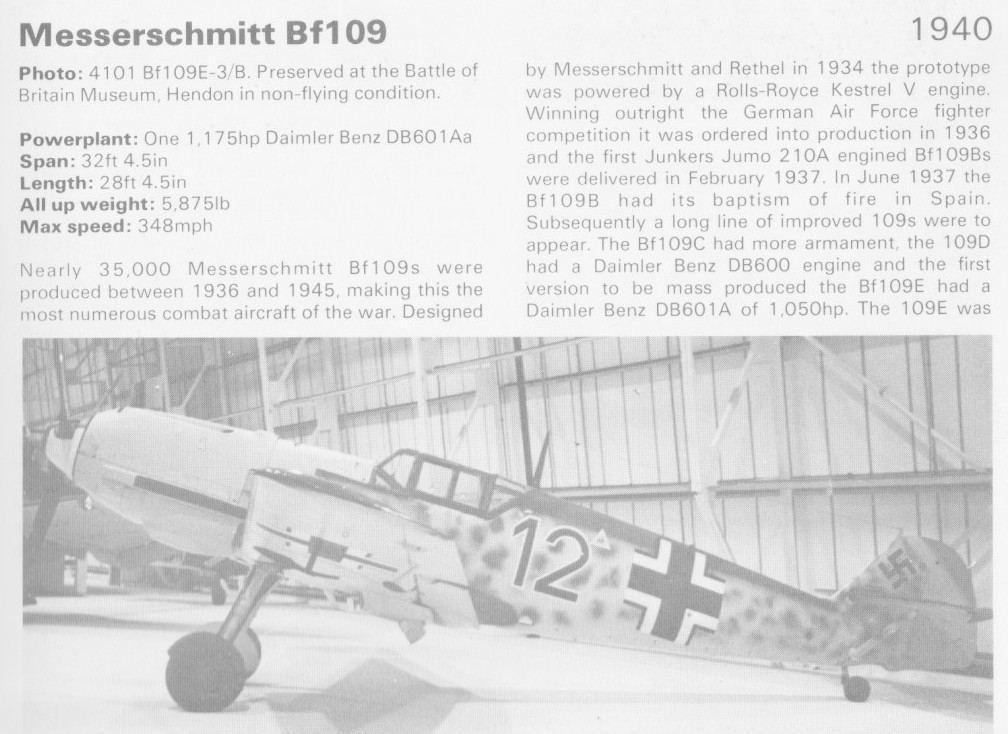
Back to Messerschmitt Me 109
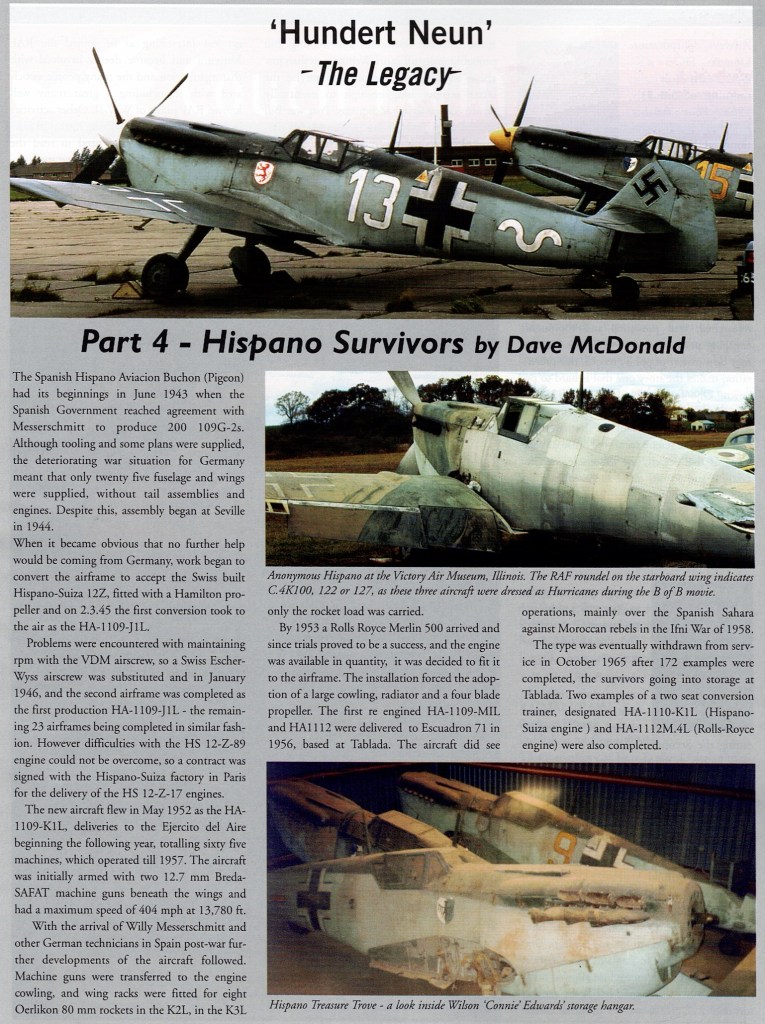
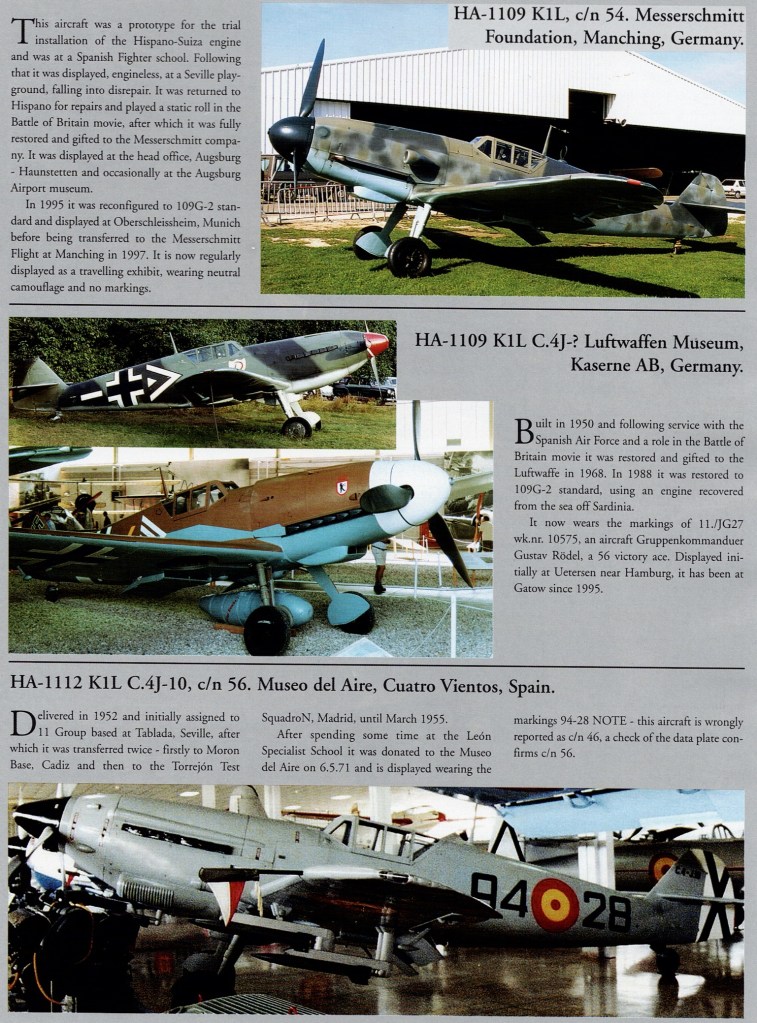
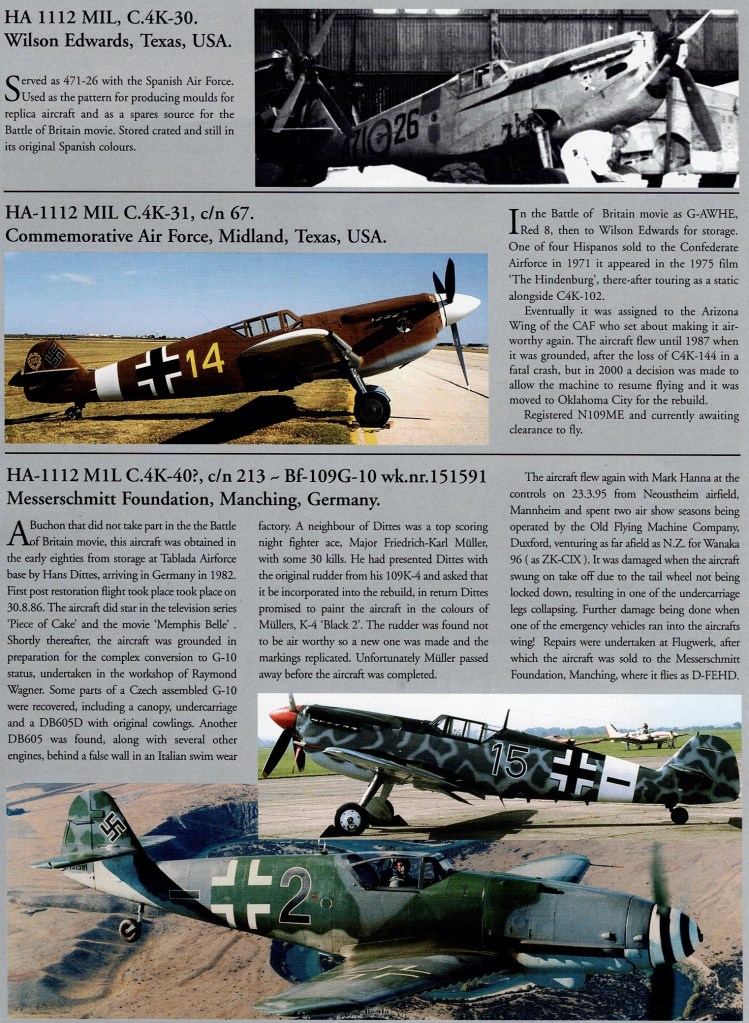
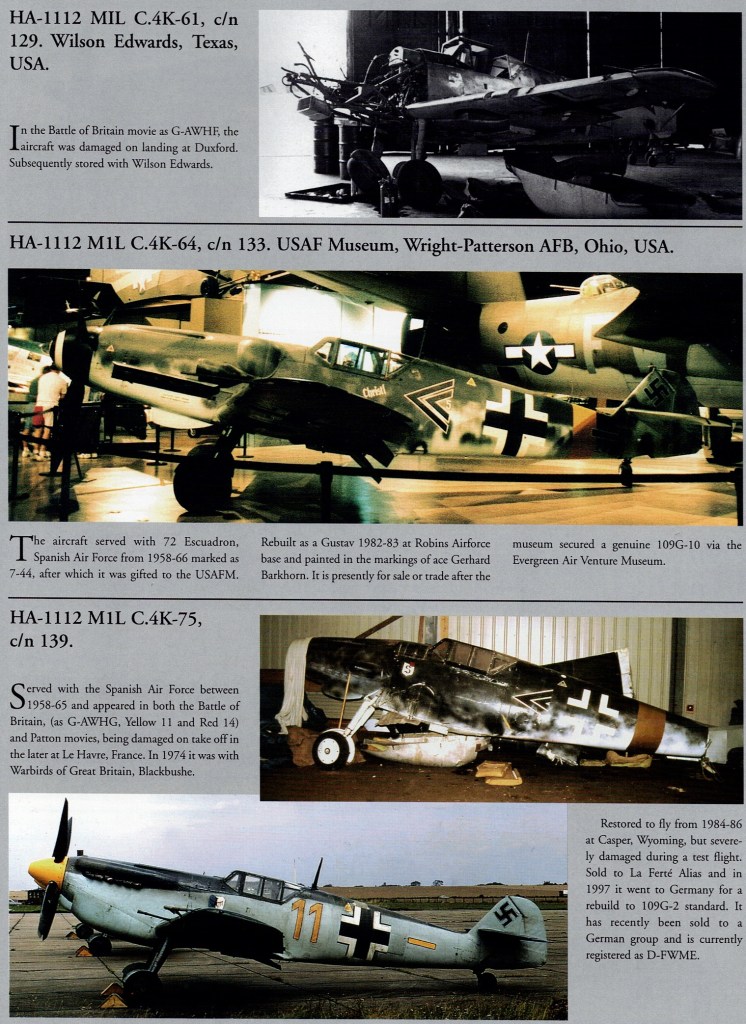
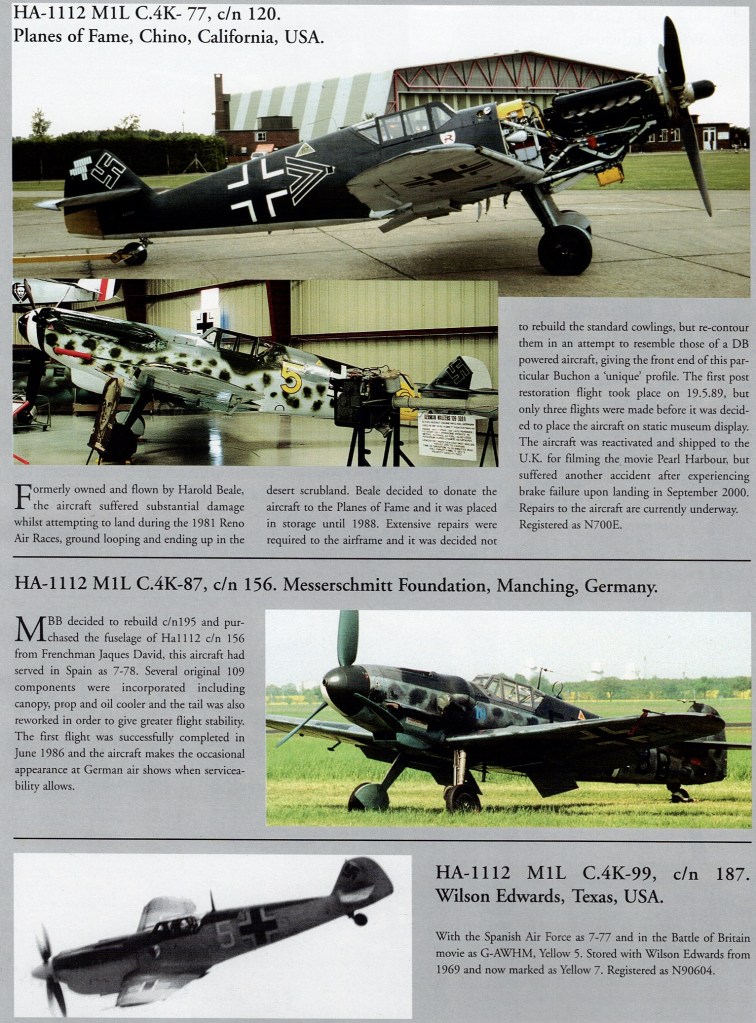
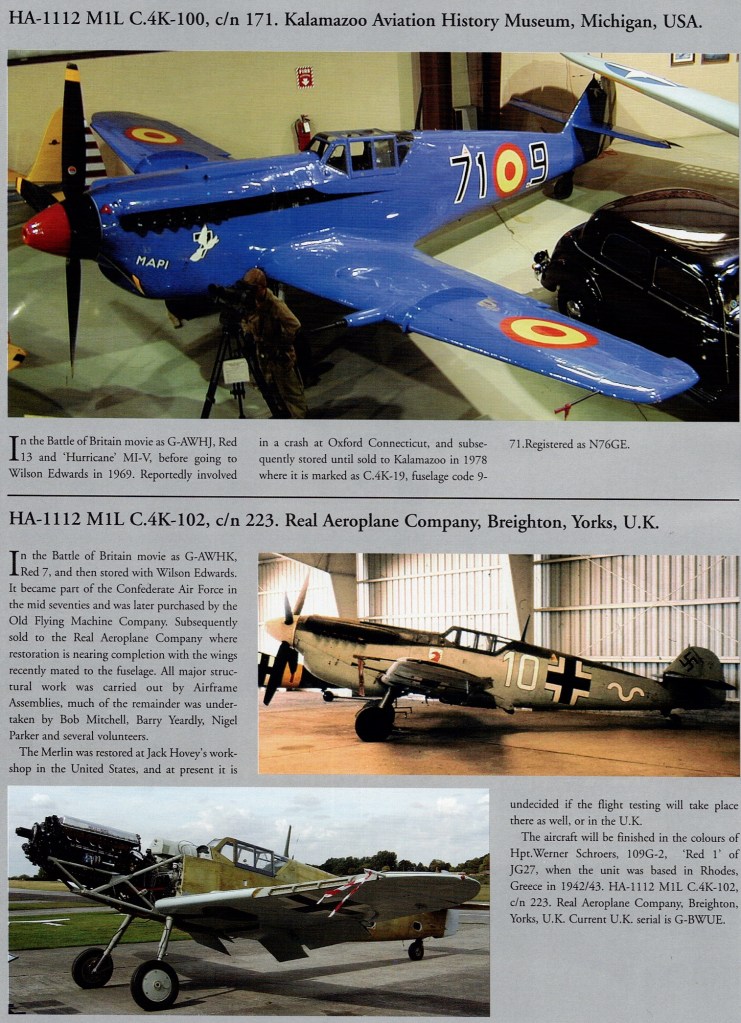
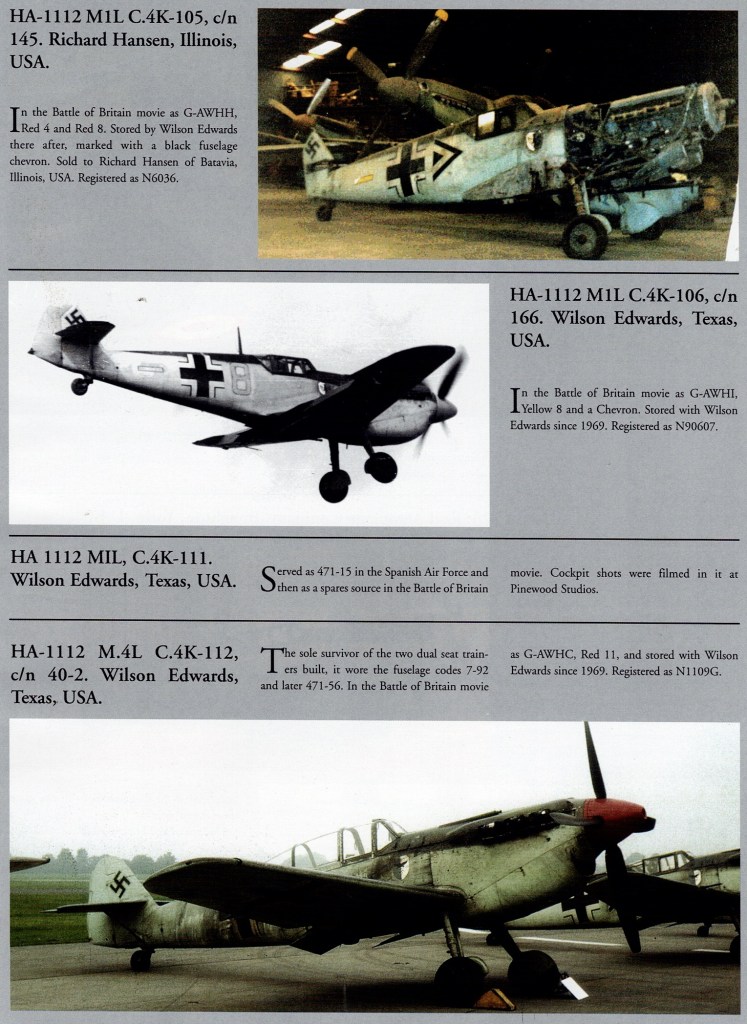
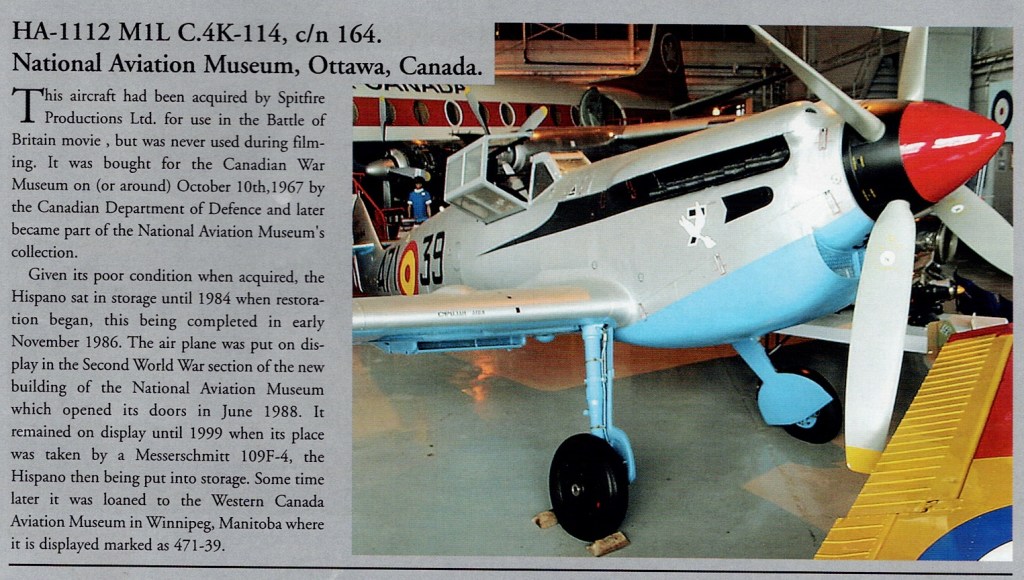


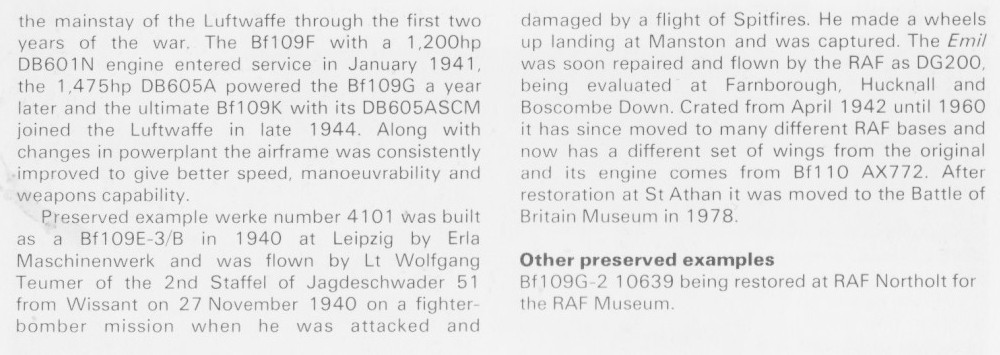
Hispano HA-1112-M4L Buchon Listed for Sale
January 2025

Platinum Fighter Sales has announced the listing of an extraordinary aircraft: the world’s only factory-built, two-seat Hispano HA-1112-M4L Buchon. This ultra-rare airplane represents a unique chapter in aviation history.
The Origins of the Buchon
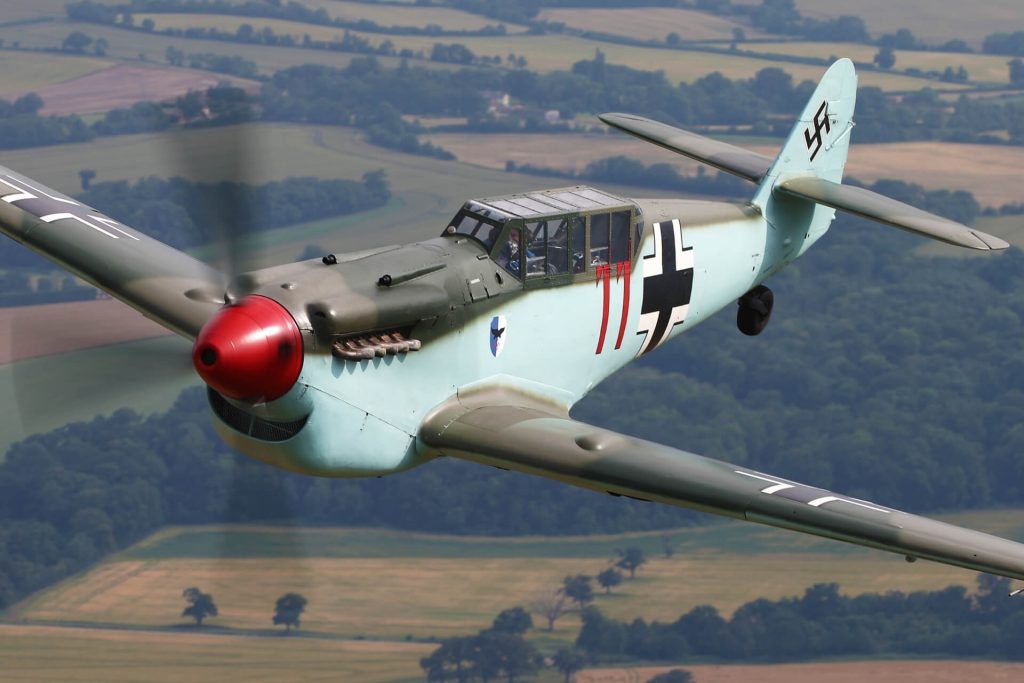
By 1942, the Spanish Air Force’s fleet of Messerschmitt Bf-109Ds was aging, prompting Spain to license the production of the newer Bf-109G model. Germany delivered 25 airframes to Spain, but wartime demands meant they arrived without engines. Hispano Aviación adapted these airframes by installing Hispano-Suiza 12-89 engines, designating the aircraft as HA-1109-J1L. The first of these took flight in March 1945. Subsequently, the aircraft were upgraded with Hispano Z12-17 engines and armed with two 12.7 mm Breda machine guns, along with provisions for rocket racks. These models were reclassified as HA-1112-K1L and entered service in May 1951.
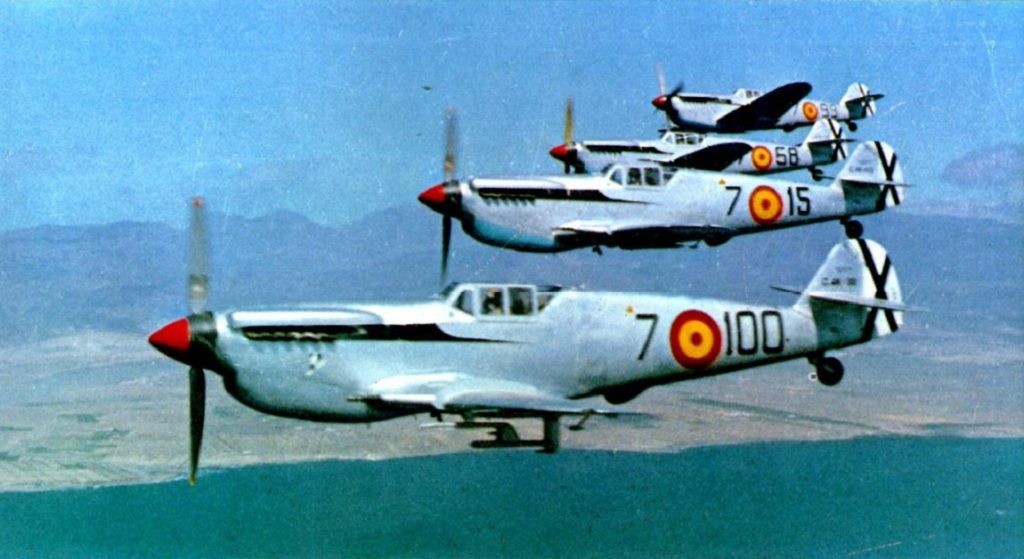
The best-known version, the HA-1112-M1L Buchon, made its maiden flight on March 29, 1954. Equipped with a Rolls-Royce Merlin 500-45 engine and a four-blade Dowty Rotol propeller (similar to the Spitfire IX and XVI), the Buchon required reshaped engine cowls and a new air intake under the nose to accommodate the British powerplant. In total, 172 Buchons were built.
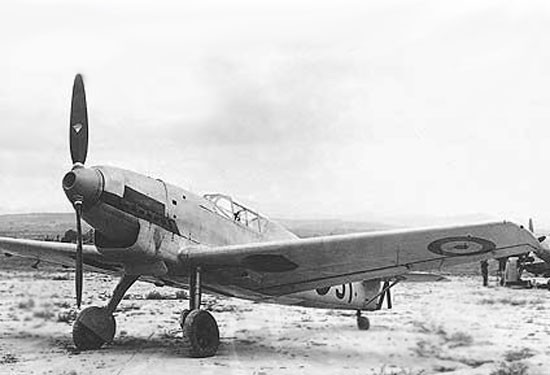
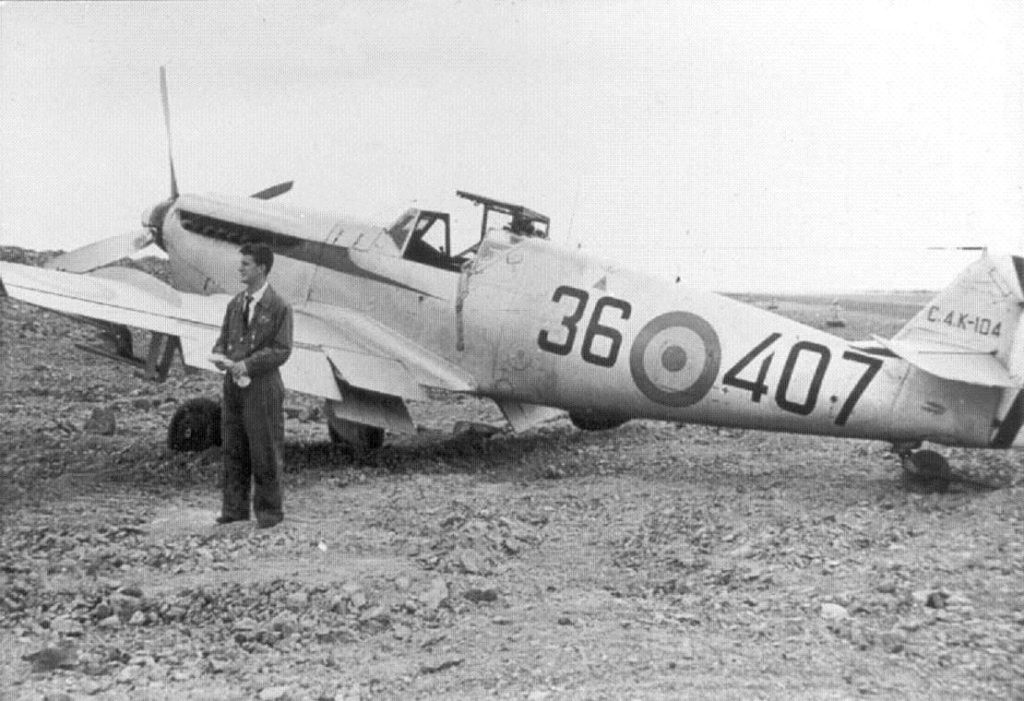


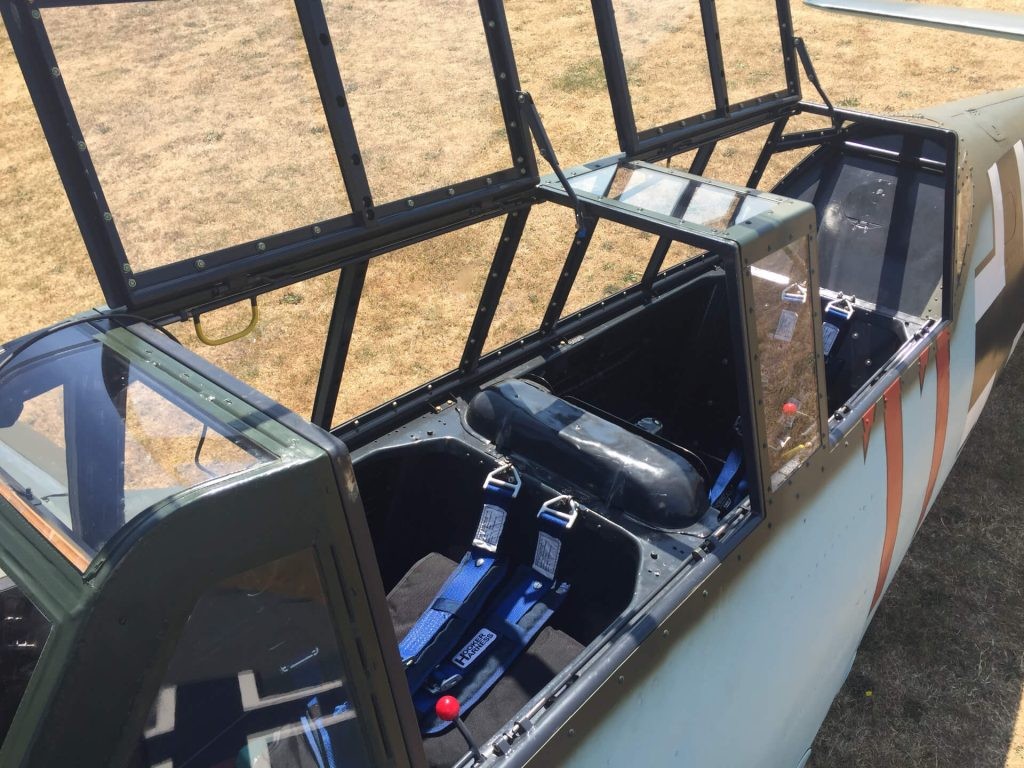
Among these, Hispano created a single, factory-built, two-seat, dual-control version—the HA-1112-M4L. One additional single-seat Buchon was later converted to a dual-control variant, but it was destroyed, making the HA-1112-M4L (registered as G-AWHC) the only surviving example of its type.
Service History and Role in Film
With the advent of the jet age in the 1950s, Buchons became obsolete for front-line service but remained useful for operations in colonial territories, such as the Spanish Sahara. By late 1965, the Buchons were retired and placed into storage. Their story took a cinematic turn when retired RAF Group Captain Hamish Mahaddie acquired 27 Buchons to produce the 1968 epic film The Battle of Britain. Among these aircraft was the unique HA-1112-M4L. The two-seat Buchon allowed the film’s flight crews to familiarize themselves with the “109” before transitioning to the single-seat models. Additionally, the M4L played a crucial role in filming in-cockpit flight sequences, with cameras mounted in the forward cockpit.
The sole remaining airworthy two-seat Hispano Buchon C4K-112 (G-AWHC) was also used as a camera ship during the filming of ‘Battle’. Photo from Chris Pointon, text from Robert J. Rudhall’s book “Battle of Britain Film – The Movie”
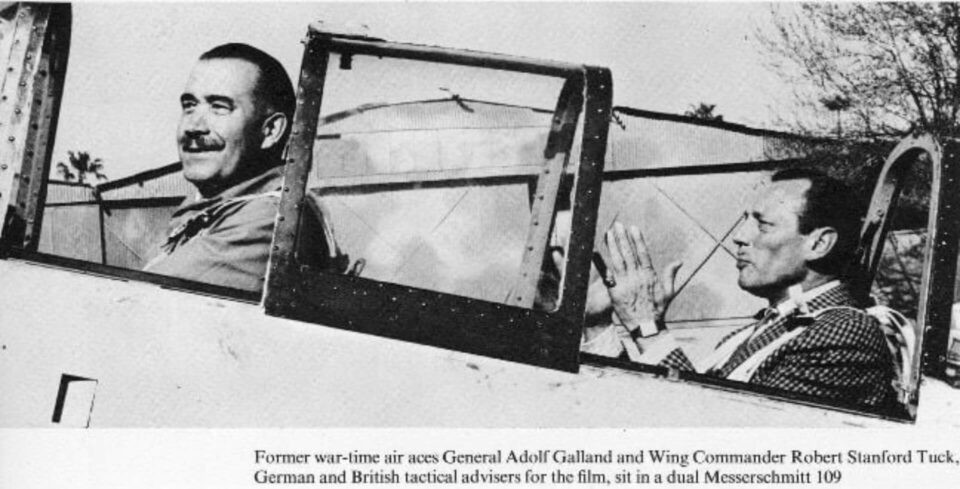
Notable aviation figures, including Luftwaffe ace General Adolf Galland and RAF Wing Commander Robert Stanford-Tuck, contributed to the production. The two reportedly flew together in G-AWHC during the making of the film to exchange their wartime experiences.
Restoration and Current Condition
After its cinematic career, the HA-1112-M4L became part of Connie Edwards’ renowned collection in Texas before being sold to its current owner. The aircraft was subsequently restored to airworthy condition by Air Leasing Ltd. in Sywell, UK, between 2015 and 2017. The Buchon now boasts 62.2 hours since a comprehensive inspection and repair by Air Leasing. Approximately 90% original, it retains its Rolls-Royce Merlin 500-45 engine, also with 62.2 hours since major overhaul by Vintage V-12s in the USA.
A Unique Opportunity
Currently based in the UK, this one-of-a-kind dual-control Buchon offers unparalleled opportunities for its next owner. With proper approvals, it could serve as a revenue-generating aircraft, providing flights for aviation enthusiasts and film buffs eager to experience history firsthand. The HA-1112-M4L is available for inspection by appointment, presenting a rare chance to own a piece of aviation and cinematic history.
 All Aero