Nikitin PSN-1

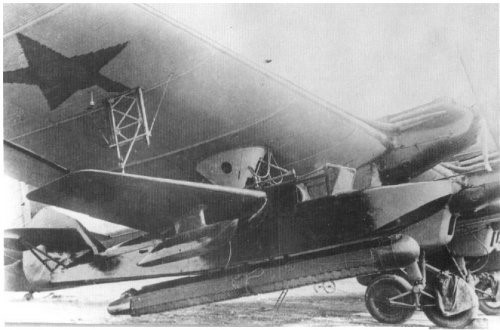
From 1933 a series of special projects was initiated under the PSN banner (Planer Spetsial’nogo Naznachenaya – Glider for Special Purposes). A proposal was made by S.F. Valk for a glider anti-shipping bomb with Infra-Red guidance, which was expanded to include DPT (long-range glider torpedo), LTDD (Long-range flying torpedo) and BMP (towed mine glider). To evaluate the Kvant Infra-Red guidance a piloted anti-shipping missile version was produced as the Nikitin PSN-1. Vasilii Vasilyevich Nikitin and N.G. Mikhelson designed a small single-seat monoplane flying boat glider with floats at approx 1/2 span, carrying a torpedo underneath. The PSN-1 was carried aloft by either Tupolev TB-3 or Tupolev TB-7 motherships and released at the appropriate height.

At least 10 were built in the USSR from 1937 and many of these were flown during trials of the autopilot and the Kvant (Quantum) guidance system.

PSN-1
Powerplant: 1 × MG-11F
Wingspan: 18 m (26 ft 3 in)
Empty weight: 970 kg (2,138 lb)
Gross weight: 2,000 kg (4,409 lb)
Maximum speed: 168 km/h (104 mph, 90 kn)
Crew: 1

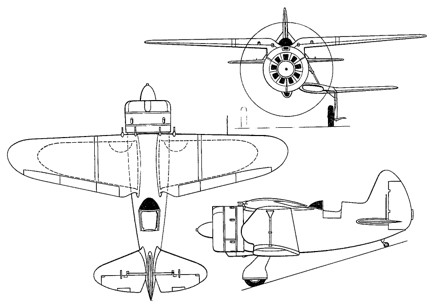
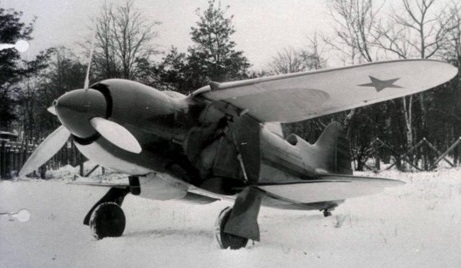
Nikitin IS-2

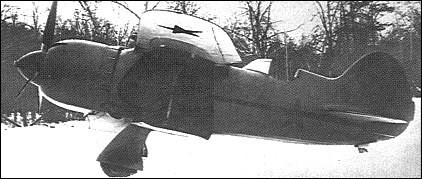
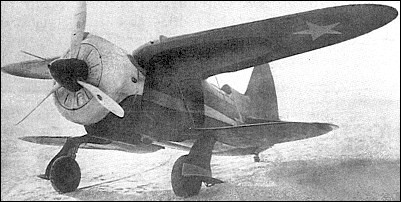
After the IS-1 further improvements were made which led the IS-2. The IS-2 first flew in 1941 with a new M-88 radial engine, and although it produced the same power as the M-63 on the IS-1, it had a smaller diameter and was thus more aerodynamic giving it a top speed of 316mph. Armament was upgraded from four 7.62mm ShKAS MG’s firing at 1800rpm to two ShKAS and two 12.7mm DShK MG’s firing at 600rpm.

Ultimately, while the design proved its concept, the added weight from the actuating mechanism almost completely negated the added lift from the lower wing and left the IS-2 in a useless limbo where it was less maneuverable but faster than contemporary biplanes and more maneuverable but slower than contemporary monoplanes.

Development was cancelled to to these disappointing performance figures and the German invasion of Russia.

Engine: 1,100hp Shvetsov M-88
Wingspan: 27.4ft (8.3m)
Length: 23.4ft (7.1m)
Height: 10.7ft (3.3m)
Wing Area: 497.8 sq.ft (46.3 sq.m)
Empty Weight: 6,555lbs (2,973kg)
Loaded Weight: 6,941lbs (3,148kg)
Wing Loading: 13.9lbs/sq.ft (68.1kg/sq.m)

Nikitin IS-1

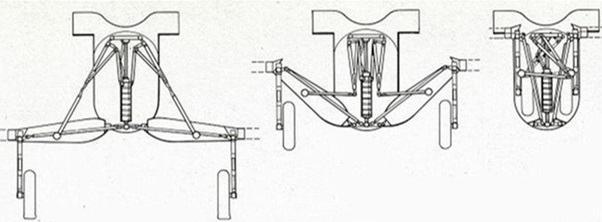
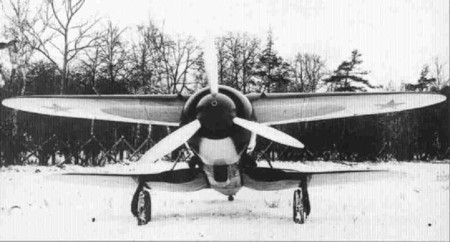
The IS-1 (Istrebitel Skladnoi or folding fighter) was conceived by Nikitin’s Test pilot Vladimir V Shevchenko and designed in collaboration with Vasili V Nikitin. Polymorphic in concept, it could translate from biplane to monoplane configuration and back again in the air. He created the IS-1 by modifying an I-153. He added a retractable lover wing that was pneumatically of hydraulically raised into the upper wing. Control was provided through means of a three-position switch with first raise the landing gear, then raise the wing.

The IS-1 was intended to take-off as an unequal-span biplane, subsequently retracting its main wheels pneumatically into the lower wing and then folding this wing (again pneumatically), the centre section into recesses in the fuselage sides and the outer panels into shallow depressions in the upper wing. Theoretically, the lower wing could be extended during combat to increase manoeuvrability.

The IS-1 was powered by a 1,100hp Shvetsov M-63 nine-cylinder radial and carried an armament of four 7.62mm ShKAS machine guns. Construction was all metal and the prototype was flown for the first time on 6 November 1940, the lower wing being successfully retracted and extended within 7-10 seconds during subsequent trials. Refinement of the basic design for series production had meanwhile resulted in the IS-2, only one prototype of the IS-1 being completed.

Engine: 1,100hp Shvetsov M-63
Wingspan: 8.60 m / 28 ft 3 in
Length: 6.79 m / 22 ft 3 in
Wing area: 13.0-20.8 sq.m / 139.93 – 223.89 sq ft
Take-off weight: 2300 kg / 5071 lb
Empty weight: 1400 kg / 3086 lb
Max. speed: 453 km/h / 281 mph
Range: 600 km / 373 miles
Armament: 7.62mm ShKAS machine guns

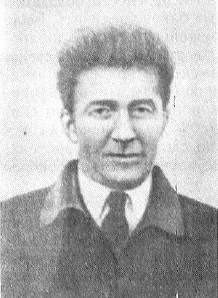
Nikitin, Vasili Vasilievich

Born in 1901, Vasili Vasilievich Nikitin (In Russian: Василий Васильевич Никитин) came to aircraft construction in an unconventional way. An architect by training, he began working in 1922 at DP Grigorovich’s construction bureau. He soon stood out as an organizer and designer, for which he was appointed as responsible for the general composition.

Between 1925 and 1929 he went to work with NN Polikarpov and between 1930 and 1936 at the TsKB.

From 1933 Nikitin designed several airplanes of his own conception and participated in the development of other models in collaboration with several designers.

In 1933 he designed his first own design, the NV-1 single – seater trainer which was soon upgraded into the NV-2 version. The NV-4 of 1936 appeared as a central float plane and Nikitin developed a military version, which competed unsuccessfully in the competition for the KOR-2.

The NV-5 of 1937 was the forerunner of an entire family of biplane training aircraft that was never produced due to the preference given to single-seater trainers.

From the arrest of Mijelson in 1937 Nikitin went on to head the Experimental Department of Factory No.23 in Leningrad, which was responsible for the continuation of his designs. In this period include flying boat MP from 1937 and training floatplanes MU-4 and MU-5.

In addition to his own designs during this period, Nikitin worked on modifications of aircraft from other manufacturers. The R-5T torpedo boat, developed in 1933 on the basis of the Polikarpov R-5 reconnaissance aircraft, vame to light; the R-5 Jumo from 1935, with a German engine and the special RZ to set records from 1937.

In 1937 the PSN models (special mission gliders) were built, flying bombs without motor. The first model was PSN, developed by NG Mijelson and 10 copies of it were built. The second model, called PSN-2, was conceived by MM Yefimov and had already been towed through the air when it was decided to cancel development.

Between 1939 and 1940 VV Nikitin went on to direct the OKB-30 based on the Moscow Tech and later transferred to Factory No.156. Test pilot Vladimir Shevchenko was appointed lead constructor. Between 1939 and 1941 the OKB-30 would build 3 prototypes (IS-1 , IS-2 and NV-6) and would be responsible for the development of 18 aircraft projects. OKB-30 ceased to exist as a result of NKAP order No. 459ss issued on May 20, 1941.

From 1941 on, he held various management positions in aeronautical repair shops and at TsAGI. In 1942 he converted a captured Junkers Ju-52 from the Germans into a test bed for experimental applications at the TsAGI and later took charge of the design and construction of the wind tunnels and the work of the Scientific-Technical Bureau of the institute.

In 1945 he was in charge of transforming a Douglas Douglas A-20 “Boston” attack aircraft into a liaison plane and staff transport with capacity for several passengers.

After the war he went to work at the NI Kamov bureau, dedicated to the development of helicopters, and was soon selected as its reserve.

Overall VV Nikitin was responsible for the creation of 15 original and successful aircraft. This aeronautical constructor managed to pass the piloting courses and generally tested his designs in the air.

Vasili Vasilievich Nikitin died in 1955.

Nikite Wraith

The Nikite/Gold Marque Sports Wraith 260/Shadow 176 was a single seat single engined flex wing aircraft with weight shift control, Rogallo wing with keel pocket. Pilot suspended below wing in trike unit, using bar to control pitch and yaw/roll by altering relative positions of trike unit and wing. Wing braced from above by kingpost and cables, from below by cables; floating cross tube construction with 66% double surface enclosing cross tube; pre¬formed ribs. Undercarriage has three wheels in tricycle formation; no suspension on any wheels. Push right go left nosewheel steering independent from yaw control. No brakes. Aluminium tube trike unit, with optional pod. Engine mounted below wing driving pusher propeller.

Designed by Dave Nick¬els, the Wraith 260 trike unit is a mono pole design and is intended for use with Gold Marque Sports’ Shadow 176 wing.

An all new combination, the trike unit first flew in April 1983.

The trike unit is distinctive in that instead of the normal folding seat frame, the seat frame slides complete, along a runner on the bottom tube. When rigged, the frame is held at the rearward end of the runner by a pin.
The company standardised on Hunting engines, the choice for the single seater being the single-¬cylinder HS260A, which has electric start as standard. The Wraith 260 trike unit came ready to-¬fly or as a kit. The kit has 90% of the holes drilled in the main frame and is ready for the engine to bolt on.

The Nikite/Southdown Sailwings Wraith 525/Lightning DS is the same as the Wraith 260/Shadow except: Tan¬dem two seater. Rogallo wing with fin. >75 % double surface.

Most companies start off building single seaters and then move on to dual machines, but with Nikite the reverse occurred, as the Wraith 525 trike unit was actually first flown before the 260. This mono pole two seater first took to the air in October 1982 and has been designed to be compatible with two Rogallos the Chargus Titan and the Southdown Sailwings Lightning DS. Unlike the single seater, the 525 was not designed in house but by John Sharpe, a North¬ampton enthusiast who handed the design over to Nikite for production. There are obvious similarities to the solo machine, particularly as regards make of engine and seat stowing mechanism. Like the solo, it was sold either ready to fly or as a kit.

Wraith 260/Shadow 176
Engine: Hunting HS260A, 25 hp at 6000 rpm
Prop¬eller diameter and pitch 52x27inch, 1.32×0.69m
V belt reduction, ratio 2.3/1
Max static thrust 175 lb, 79 kg
Power per unit area 0.14 hp/sq.ft, 1.5hp/sq.m
Fuel capacity 2.7 US gal, 2.3 Imp gal, 10.2 litre
Wing span 35.5ft, 10.82 m
Chord at root 8.2ft, 2.50 m
Chord at tip 3.0 ft, 0.91 m
Dihedral 0.7 degrees
Nose angle 130 degrees
Keel pocket depth 1.0 ft, 0.30 m
Total wing area 176 sq.ft, 164 sq.m
Keel pocket area 3.0 sq.ft, 0.28 sq.m
Wing aspect ratio 7.2/1
Wheel track 4.5 ft, 1.37 m
Wheelbase 5.2 ft, 1.57 m
Nosewheel diameter overall 12 inch, 30 cm
Main wheels diameter overall 12 inch, 30 cm
Empty weight 174 lb, 79kg
Max take off weight 388 lb, 176kg
Payload 214 lb, 97kg
Max wing loading 2.20 lb/sq.ft, 10.7kg/sq.m
Max power loading 15.5 lb/hp, 7.0kg/hp

Wraith 525/Lightning DS
Engine: Hunting HS525A, 45 hp at 6000 rpm
Propeller diameter and pitch 52 x 30 inch, 1.32×0.76m
V belt reduction, ratio 2.0/1
Max static thrust 250 lb, 113kg
Power per unit area 0.23 hp/sq.ft, 2.5 hp/sq.m
Fuel capacity 2.7 US gal, 2.3 Imp gal, 10.2 litre
Length overall 11.2 ft, 3.35 m
Wing span 34.5 ft, 10.52 m
Chord at root 8.0ft, 2.44m
Chord at tip 3.5ft, 1.07m
Anhedral 1.5 degrees
Nose angle 130 degrees
Fin height 3.3 ft, 1.01 m
Total wing area 195 sq.ft, 18.1 sq.m
Wing aspect ratio 6.3/1
Wheel track 5.2ft, 1.57 m
Wheelbase 6.0ft, 1.83 m
Nosewheel diameter overall 12 inch, 30 cm
Main wheels diameter overall 12 inch, 30 cm
Empty weight 231 lb, 105 kg
Max take off weight 641 lb, 291 kg
Payload 410 lb, 186 kg
Max wing loading 3.29 lb/sq.ft, 16.1 kg/sq.m
Max power loading 14.2 lb/hp, 6.5kg/hp
Load factors +4.0, 2.0 design; +6.0, 3.0 ulti¬mate
Nihon University Stork

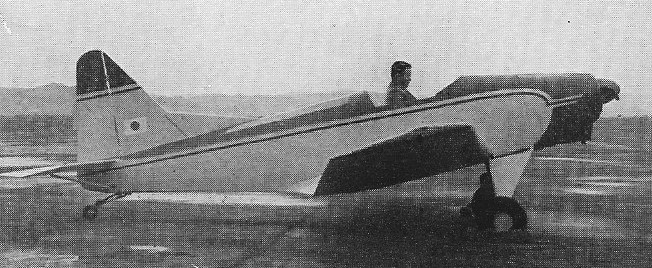
The opening up of the Kremer competition to the world brought forth Professor Hidemasa Kimura and students from the Nihon University in Tokyo and a series of man powered aircraft, one of which achieved a straight line flight of 2095 m (2290 yards) in January 1977.

Professor Kimura’s balsa wood and rice paper Stork had by 1977 doubled John Potter’s record in Japan and was in the running for the Kremer prize.

Nihon University N-58 Cygnet

The students of Nihon University, under the leadership of Dr Hidemasa Kimura, have designed and built two light aircraft. The second is a high-wing four-seat light-plane known as the N-58 Cygnet.

Although the Cygnet bears a close resemblance to the Piper Tri-Pacer, it is a new design utilizing existing Tri-Pacer components only in its undercarriage, engine mounting and control systems. Construction is all-metal, with fabric covering, and it is powered by a 140 hp Lycoming O-290-D2 engine.

Span: 35 ft 2 in
Length: 22 ft 11 in
Height: 8 ft 9 in
Wing area: 185 sq.ft
Gross weight: l,950 lb
Empty weight: l,256 lb
Max speed: 117 mph
Econ cruising speed: 93 mph at 6,600 ft
Stalling speed: 42 mph
Service ceiling: 14,800 ft
TO to 50ft: 1,250 ft
Landing from 50ft: 1,440 ft
Max range 10% res: 445 miles

Nihon University Okamura N-52

The students of Nihon University, under the leadership of Dr Hidemasa Kimura, have designed and built two light aircraft. The first was the Okamura N-52 low-wing monoplane, which flew on April 7, 1953.

Designed by Professor H. Kimura, the N-52 was powered by a 65 hp Continental C65. The N-52 is of mixed construction with fabric covering.

Engine: 65 hp Continental C65
Wingspan: 28 ft 2.5 in
Wing area: 129 sq.ft
Length: 19 ft 8 in
Height: 8 ft 6 in
Empty weight: 660 lb
Loaded weight: 1100 lb
Max speed: 108 mph at SL
Cruise: 101 mph
ROC: 550 fpm
Range: 305 mi

Nihon University

Nihon University
College of Science and Engineering
Surugadai-Machi
Chiyoda-ku
Tokyo

The students of this university, under the leadership of Dr Hidemasa Kimura, have designed and built two light aircraft. The first was the Okamura N-52 low-wing monoplane, which flew on April 7, 1953.
The second is a high-wing four-seat light-plane known as the N-58 Cygnet.

Nihon Z1G3

Under JASDF contract, Japan Aircraft Manufacturing Co carried out a lengthy high-lift research programme with a much-modified Saab-91B Safir.
With the designation Z1G3, this aircraft has a 260 h.p. Continental IO-470-D engine, reduced span of 31ft 6in, blown flaps, large trailing-edge fillets, slotted tailplane and other changes to give it STOL performance.