Noin Alto

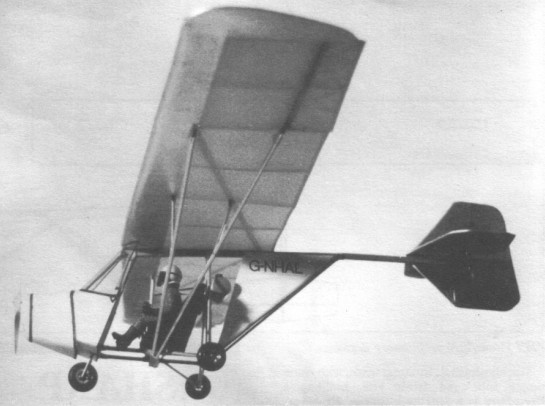
The Noin Alto 1981 hang glider was for Intermediate pilots.

The Alto was quite physical to steer but is stability in trajectory. Easy to land when the Alto was well positioned facing the wind, with a speed well adapted to the conditions.

Alto 15
Wing area: 14.70 m²
Wing span: 9.6 m
Aspect ratio: 6.26
Hang glider weight: 29 kg

Nogrady Avionette AN2

Designer Bela Nogrady started prototype 01 of the AN 2 in 1982 and it made its first flights in July 1982. The Avionnette had a conventional empennage at first, with quar¬ter span spoilers, after which a V tail was tried with fully flying elevons. This butterfly ¬tail configuration with 110 degrees between the two surfaces was adopted for prototype 02, which made its first flights at the end of April 1983, but the elevons are no longer fully flying, hingeing instead from inclined fixed surfaces, this tail being a NACA 0015 profile.

Production Avionnettes retain the constant ¬chord wing without leading edge sweepback, as used on the first prototype, but will be fitted with ailerons and flaps as tried on 02. With a total surface area of 15.1 sq.ft (1.40sq.m), these flaps have three positions: 15, 30 and 55 degrees. The wing tips now have semi elliptic end plates and the profile used on 01, the Worthmann FX S02 184, set at 6 degrees without washout and with 3 degrees of dihedral, has been replaced by an FX 66S-171, set at 6 degrees incidence with the same dihedral and still without washout.

Production was programmed to get up to six machines a month before the end of 1983. The AN 2 comes as standard with dual controls and a retractable main wheel with wheel well door and drum brake; under development is a tail dragger version with laminated carbon ¬fibre main gear. The wings and tail surfaces are easily de mountable and the AN 2 is trailer transportable.

The standard model comes with a three blade propeller, ground adjustable for pitch.

Side by side two seat single engined mid wing monoplane with conventional three axis con¬trol. Wing has unswept leading and trailing edges, and constant chord; V tail. Pitch/yaw control by elevon; roll control by one third ¬span ailerons; control inputs through stick for pitch/roll and pedals for yaw. Cantilever wing of Worthmann FX66 S 171 profile; double surface. Undercarriage has two wheels in tandem with skid under each wing; rubber suspension on main wheel. Push right go right tailwheel steering connected to yaw control. Brake on main wheel. Glass fibre fuselage totally enclosed. Engine mounted at wing height driving tractor propeller. Carbon fibre wing spar with Kevlar, aluminium ribs, Dacron covering and plastic leading edge.

This microlight offers a maximum level speed of 106 mph (170 kph) take off at 23mph (38kph) and cruise be¬tween 56 and 93 mph (90 150 kph) with 43 hp thrust and a gross weight of 662 lb (300 kg). The AN 2 could be mistaken for a modern motor glider, with its composite construction, glide ratio of 26.4/1 and aspect ratio of almost 12/1.

Engine: Hirth 2701R 53, 43 hp at 6750 rpm
Propeller diameter and pitch: 51 x 45 inch, 1.30 x 1.15 m
V belt reduction ratio: 2.21
Power per unit area 0.28 hp/sq.ft, 3.0hp/sq.m
Fuel capacity 10.6 US gal, 8.8 Imp gal, 40.0 litre
Length overall 21.1 ft, 6.38 m
Height overall 5.1ft, 1.80m
Wing span 42.8ft, 13.00m
Constant chord 3.7 ft, 1.10m
Dihedral 3 degrees
Sweepback 0 degrees
Tailplane span 12.2 ft, 3.70 m
Total wing area 152 sq.ft, 14.1 sq.m
Total aileron area 8.6 sq.ft, 0.80sq.m
Tailplane area 22.8 sq.ft, 2.12 sq.m
Total elevon area 11.6 sq.ft, 1.08 sq.m
Wing aspect ratio 2.1/1
Wheelbase 16.1ft, 4.90m
Tailwheel diameter overall: 6 inch, 16 cm
Main wheels diameter overall 19 inch, 48 cm
Empty weight 2651b, 120kg
Max take off weight 6621b, 300kg
Payload 397 lb, 180 kg
Max wing loading 4.351b/sq.ft, 21.3 kg/sq.m
Max power loading 15.41b/hp, 7.0kg/hp
Load factors; +8.0, 4.0 ultimate
Max level speed 106mph, 170kph
Never exceed speed 117mph, 189kph
Max cruising speed 93mph, 150kph
Economic cruising speed 56mph, 90kph
Stalling speed 23mph, 38 kph
Max climb rate at sea level: 600 ft/min, 3.1 m/s
Min sink rate 138ft/min at 30mph, 0.7 m/s at 48 kph
Best glide ratio with power off: 26.4/1 at 45 mph, 72 kph
Take off distance 193 ft, 59m
Landing distance 213 ft, 65 m
Service ceiling 23,000ft, 7000m
Range at average cruising speed: 497 mile, 800km

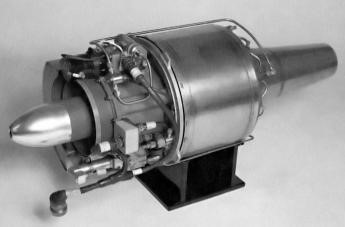
Noel Penny Turbines NPT301

The NPT 301 Turbojet has been developed to equip reusable drones, and target drones requiring power 130-150 Kgp.

The NTP 301-3/4 version has been specially developed to fit the CMC Leopard which made its first flight in January 1989.

NPT 301 Turbojet
Length: 1000 mm
Diameter: 343 mm
Weight: 40 to 45 Kg
Power: 137-143 Kgp

Noel 1911 “Le Moineau” (Sparrow)

The first aeroplane designed by Louis Noel (sometimes mistakenly called Paul Noel) appeared in 1911. It was completed in April in France and flew in June. It was an unequal-span biplane with an all-tubing airframe for disassembly. The box fuselage was uncovered with a rudder hinged at the tail and a huge tail plane set ahead of it. After brief testing at the end of June, the Anzani was replaced with a Viale, itself an Anzani copy, and the balance was changed. Later a Gnome was installed.

Span: upper 39’4″ lower 26’3″
Length: 31’2″

Noël J. N. Type 3

J. N. Type 3

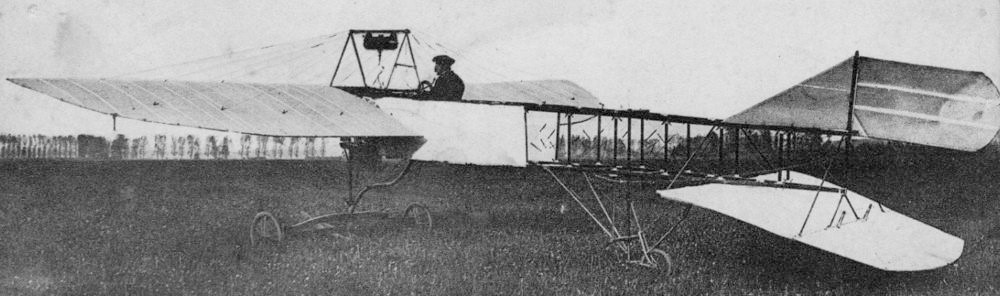
Jules Noël qualified for French license No. 322 on a Sommer and was then employed by Sommer. Before, he had built at least three aeroplanes of his home town Carignan, in the northeast of France. The third was a monoplane with an uncovered rear fuselage and Bleriot-style kingposts. Its empty weight was 210 kg and the machine was powered by a 25 hp Anzani. Noël and an Italian passenger were killed in a testing accident at the Sommer airfield in Douzy on 9 February 1911.

Noble Hardman Aviation Snowbird

Tandem two seat single engined high wing monoplane with conventional three axis con¬trol. Wing has swept back leading edge, unswept trailing edge and tapering chord; cruciform tail. Pitch control by elevator on tail; yaw control by fin mounted rudder; roll control by half span ailerons; control inputs through stick for pitch/roll and pedals for yaw. Wing braced from below by struts; wing profile NACA 4412 with 2.5 deg washout; 100% double surface. Undercarriage has three wheels in tricycle formation; steel spring suspension on all wheels. Push right go right nosewheel steering connected to yaw control. Brake on nosewheel. Aluminium tube framework partially enclosed. Engine mounted below wing driving tractor prop¬eller.

The Snowbird was a conventional three axis machine with dual controls (including a dual throttle) and tube and Dacron construction. Its wing design uses a quarter chord twin-¬tube main spar with resilient foam D sections and tube aft sections. The ribs are capped with aluminium and all fabric is removable for inspection and maintenance.

A feature of the float kit is that the floats will not be attached rigidly to the aircraft but will be fitted with a suspension system consisting of a front rocker bar and air dampers.

Engine: Robin EC44, 50hp at 6500rpm
Propeller diameter and pitch 62 x 27 inch, 1.57 x 0.69 m
Toothed belt reduction, ratio 2.8/1
Max static thrust 320 lb, 145 kg
Power per unit area 0.28 h p/sq.ft, 3.0hp/sq.m
Fuel capacity main tank 4.8 US gal, 4.0 Imp gal, 18.2 litre
Fuel capacity reserve 1.2 US gal, 1.0 Imp gal, 4.5 litre
Length overall 20.0 ft, 6.10 m
Height overall 7.6ft, 2.32m
Wing span 36.0ft, 10.97m
Chord at root 5.6ft, 1.70m
Chord at tip 4.4ft, 1.35m
Dihedral 2 degrees
Sweepback 3 degrees
Tailplane span 6.6 ft, 2.00 m
Fin height 4.1 ft, 1.25 m
Total wing area 180 sq.ft, 16.7 sq.m
Total aileron area 16.5 sq.ft, 1.53 sq.m
Fin area 12.5 sq.ft, 1.16 sq.m
Rudder area 7.5 sq.ft, 0.70 sq.m
Tailplane area 22.4 sq.ft, 2.08 sq.m
Total elevator area 7.5 sq.ft, 0.70 sq.m
Wing aspect ratio 7.2/1
Wheel track 6.3ft, 1.92 m
Wheelbase 5.2ft, 1.58 m
Nosewheel diameter overall 14 inch, 36 cm
Main wheels diameter overall 16 inch, 41 cm
Optional floats: length 12.0ft, 3.66m, buoyancy 1200 lb, 544kg
Empty weight 300 lb, 136 kg
Max take off weight 696 lb, 316kg
Payload 396 lb, 180 kg
Max wing loading 3.87 lb/sq.ft, 18.9 kg/sq.m
Max power loading 13.9 lb/hp, 6.3 kg/hp
Load factors +6.0, 4.0 design
Max level speed 65 mph, 105 kph
Never exceed speed 80 mph, 129 kph
Stalling speed 28 33 mph, 45 53 kph
Max climb rate at sea level 750 ft/min, 3.8 m/s