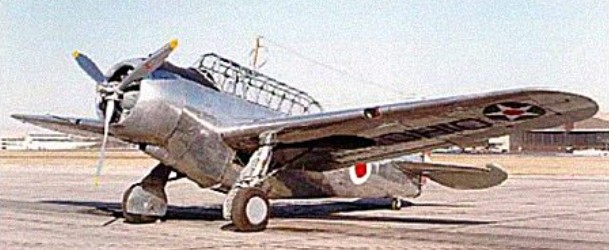
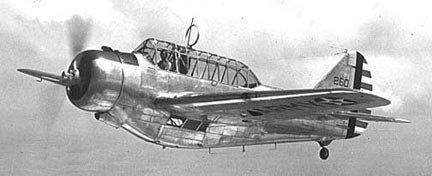
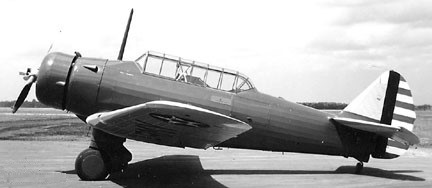
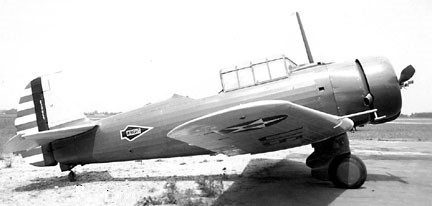
Developed by General Aviation (the precursor of North American Aviation) to meet a US Army specification for an observation aircraft, the GA-15 represented a radical change in design for such a role in that, unlike its predecessors, it was a low-wing monoplane with an enclosed cockpit, seating a three-man crew.
Powered by a 634kW Wright Cyclone engine, the prototype GA-15 / XO-47 36-145, built at Dundalk MD, flew in mid-1935 and to provide an acceptable field of view for the observer a glazed nose position was located under the fuselage. North American put the type into production to meet a USAAC contract for 109 North American O-47A aircraft ordered in February 1937, later increased to 164. They were powered by 727kW Cyclones, while 74 O-47B aircraft had 790kW engines and additional fuel capacity. During World War II they served as trainers and target tugs.
North American O-47A 37-260
The O-47A model was released for export in 1939 and is known as the NA-25. 164 of the 1937 O-47A (NA-25, NA-60) were built: 37-260 to 37-368 and 38-271 to 38-325.
Seventy-four 1939 O-47B (NA-51) were built: 39-139 to 39-141.
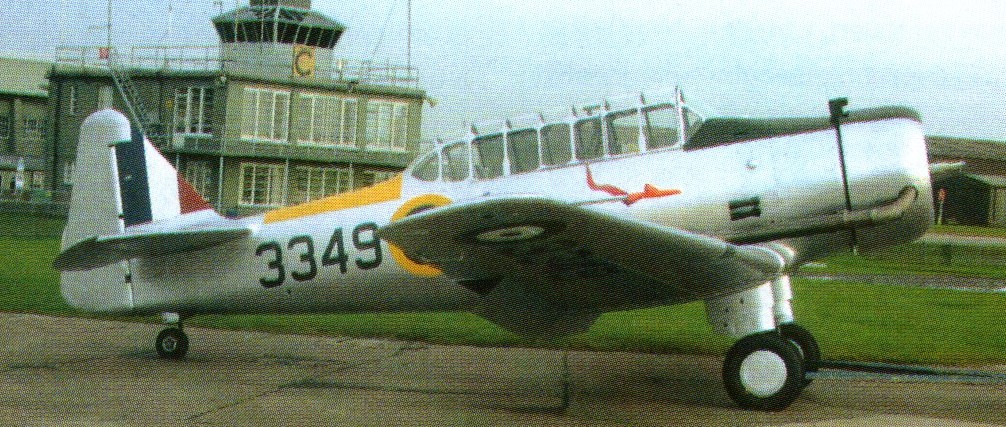
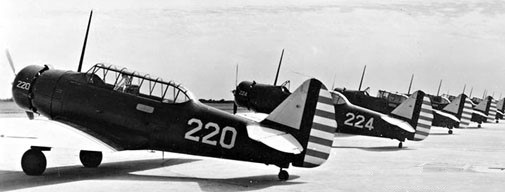
The Texan began life in 1935 as the NA-16, a prototype trainer designed by James H. “Dutch” Kindelberger, president of North American Aviation, Inc. It had two open cockpits and a fixed gear and was powered by a 400-hp engine.
In 1934, the U.S. Army Air Corps had issued specifications for an airplane “to provide a means of command liaison and command reconnaissance for Corps and Divisions, and to provide for the maintenance of the combat flying proficiency of pilots and observers.” Kindelberger and North American worked to secure the contract, and the NA-16 flew for the first time on April 1,1935. The NA-16 was chosen over the competitors’ designs, but before ordering any NA-16s, the Air Corps required North American to enclose the cockpits with a sliding canopy, install streamlined fairings over the wheel struts and add wheel pants.
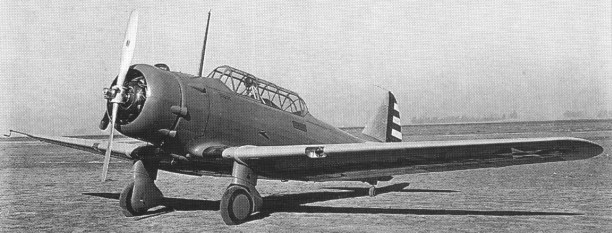
When the modifications were complete, the Air Corps ordered 42 (36-028 to 36-069) under the company design number NA-19; the Air Corps called it the BT-9 (basic trainer, type 9). The first production model was flown on April 15, 1936.
North American BT-9
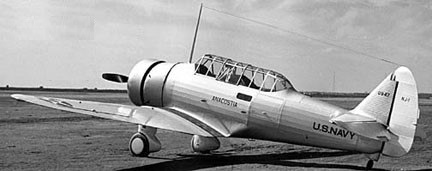
The Navy or¬dered 40 (0910-0949) of them after the existing engine was replaced with a 600hp P&W R-1340 version. That 1937 model was designated the NJ-1 (NA-28, N for trainer and J for North American). The last one was temporarily powered with a 1000hp Ranger XV-770 as NJ-2.
North American NJ-1 0947
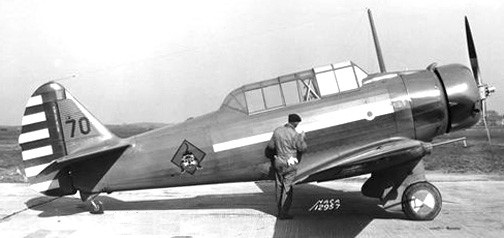
The 40 BT-9As (NA-19A) armed version for Reserve units that followed introduced a fixed forward gun (with gun camera) and a trainable gun in the rear cockpit. Forty were built in 1936, 36-088 to 36-127.
North American BT-9A
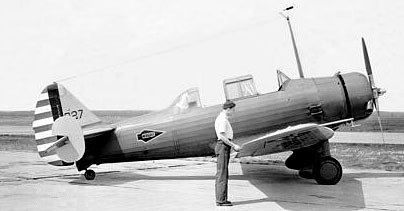
Only small changes were made in the 117 BT-9Bs and 67 BT-9Ds. 117 BT-9B (NA-23) were built in 1937 (37-115 to 37-231) with one modified with new wings and tail as the BT-9D (NA-26) in 1938.
North American BT-9B
The 1937 BT-9C (NA-29) was an armed version of which sixty-seven were built (37-383 to 37-415). One was modified as the Y1BT-10.
North American BT-9C
One BT-9C, 37-383, was repowered with a 600hp P&W R-1340 in 1938 as the Y1BT-10 (NA-29).
North American Y1BT-10 37-383
The Australian Commonwealth Aircraft Corporation was formed in 1936 by several of the largest industrial concerns in Australia. To gain manufacturing experience, it had been decided to acquire a licence to produce an aircraft suitable for advanced training and as a replacement for RAAF Hawker Demons. An Australian Air Board Technical Commission visited the USA and evaluated the North American NA-16, ordered into production for the USAAC as the BT-9 (NA-19) basic trainer.
At the time of the Australian Commission’s visit, North American was working on a development of the BT-99 with a 600 hp Pratt & Whitney R-1340, retractable undercarriage and armament provision as a basic combat trainer. Designated NA-26, this aircraft fulfilled the Australian requirements, although there was disagreement over the need for retractable undercarriage.
As a result, two versions of the A-26 were offered to the Australians, the NA-32 (NA-16-1A) with fixed undercarriage, and the NA-33 (NA-16-2K) with a retractable undercarriage, and in 1937, negotiations for manufacturing rights in both the NA-32 and NA-33 were completed, and an order placed for one of each.
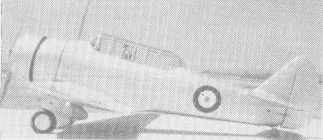
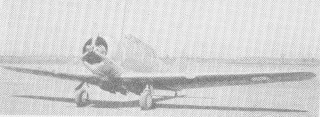
NA-32 / NA-16-1A
The NA-32 was completed in July 1937, although it was not taken on charge by the RAAF until 8 November 1938, and by that time, the NA-33 / NA-16-2K, which had been completed in September 1937 and taken on charge by the RAAF on 2 February 1938, had already been selected for Australian production.
NA-33 / NA16-2K
The NA-16-2K was with a few subtle changes in design to suit it more closely to RAAF requirements and Australian operating conditions, these including a reinforced sub-structure consistent with the rigors of the bombing role and improved offensive/defensive capabilities by the inclusion of 2 x 7.7mm machine guns as opposed to the NA-16’s sole gun.
With the changes, the NA-33 was ordered into production for the RAAF as the A20, the Commonwealth Aircraft Corporation applying the designation CA-1 to the type, and the name Wirraway being adopted. Production of the initial aircraft was handled out of the Commonwealth Aircraft Corporation (CAC) facility at Fisherman’s Bend in Melbourne, Victoria in 1938.
In 1938, Noorduyn acquired the manufacturing rights to the BT-9.
The basic type was then improved with the flying surfaces of the BC-lA and a metal-covered fuselage to produce the BT-14, of which 251 were built with the 336-kW (450-hp) Pratt & Whitney R-985-25 radial. Some 27 were later converted to BT-14A standard with the 298-kW (400-hp) R-985-11 engine.
Concurrently, the French ordered 230 of the BT-9/BT-14 models and called them Tomcats. When France was overrun by the Germans in 1940, Tomcats not yet delivered were given to the Royal Canadian Air Force and designated Yale Mark Is.
BT-9B Powerplant: l x Wright 8-975-7, 298kW (400 hp) Span: 12.8m (42 ft) Length: 8.41 m (27ft 7in) Armament: 2 x 7.62-mm (0.3-in) mg Max T/O weight: 2028 kg (4,471 lb) Max speed: 170 mph at sea level Operational range: 882 miles Seats: 2
Formed originally as a holding company in 1928, North American did not manufacture any airplanes; it was a holding company division of General Motors which had absorbed Atlantic Fokker as General Aviation.
In 1933, North American Aviation Co., Inc., took over the assets of Berliner/Joyce, changing its corporate name to the B/J Co.
In 1935 General Aviation became North American Aviation.
The manufacturing facilities were moved from Dundalk, Maryland, to the West Coast in 1936 and a new modern production plant was erected on the Los Angeles Municipal Airport where the firm has a site of approximately 24 acres. Originally the plant covered an area of 172,000 sq. ft. but it has since been increased to approximately 500,000 sq. ft. The firm maintains one of the most complete laboratories for aircraft production tests and for research in materials.
North American’s first product was the O-47 Army observation aircraft of 1937. The NA-16 Yale two-seat military trainer followed, being developed through fixed- and retractable-landing-gear variants into the T-6 Texan/Harvard trainer which continued in production in Canada until 1954 and served with virtually every non-Communist air arm in the world.
North American’s best known aircraft was the P-51 Mustang fighter, and significant aircraft evolved by North American include the B-25 Mitchell twin-engined medium bomber; the B-45 Tornado, the first American four-jet bomber; the F-86 Sabre, the USAF’s first swept-wing fighter; the F-100 Super Sabre, the world’s first operational fighter capable of supersonic speed in level flight; the T-28 Trojan/Fennec trainer and light ground-attack aircraft which succeeded the T-6; the A-5 Vigilante carrier-based jet bomber/reconnaissance aircraft; the XB-70 Valkyrie supersonic bomber with Mach 3 speed capability; and the X-15 rocket research craft, which attained an altitude of 107,960m in 1963 and was flown at a speed of 7,298km/h in 1967. In the same year
Around 1960 Fokker was looking for and American partner. Lockheed turned down the proposal because they thought it could not be profitable, but Northrop agreed to by a twenty-one percent share. North American and Rockwell merged in 1967, to form the Rockwell Corporation in 1972.
The Aero Commander company was taken over by North American Rockwell.
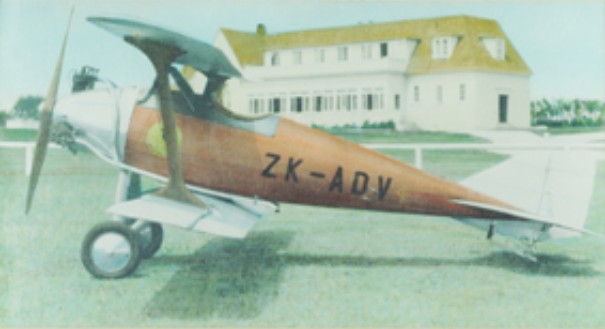
Fred North’s motorcycle business suffered when the depression came so he began to build the Tui. He used Lincoln Standard Sportsplane plans from the USA adapting them for New Zealand regulations. The modifications classed the Tui as a different model to the parent.
He intended it to be the prototype for a New Zealand aircraft manufacturing business. “I thought that if a fellow could build something like that there might be a market for it.” Unfortunately the outbreak of war in 1939 halted the venture.
The fuselage sat in the window of Mr. North’s motorcycle garage and passersby watched the progress. When Mr North moved to Dannevirke he took the Tui with him. He later moved back to Auckland after spending little time on the Tui, but much time repairing aircraft which flew into Dannevirke, and learning about aircraft design.
Mr. North wanted to see the plane in flight so Alan McGruer performed the test flight on 4 January 1934 at Hobsonville. Its top speed was 100 mph, and it stalled at 45 mph. Later, the Tui was used by men wanting to get experience to gain commercial pilots’ licenses. The Tui was cheap to fly at 30 miles to the gallon (10.7 km to the litre).
In 1934 Charles Kingsford Smith flew it from the Auckland aerodrome and, impressed with the construction, declared “You’ll never break her in the air”.
Registered ZK-ADV, after a 1941 crash it was not repaired by the owner.
Manufacturer: Fred A.N. North Type: One-Seat Acrobatic Sportsplane Engine: 1 three cylinder radial Szekeley SR3 Weight: 450lb (empty), 750lb (fuelled) Top Speed: 100mph (160.93km) Wingspan: 6.09m (20 ft) Length: 4.87m (16 ft) Accommodation: Pilot in open cockpit
Norway Formed in 1947 to produce the Finnmark 5A amphibian designed by Birger Honningstad, which did not progress beyond the prototype stage. Norsk also manufactured metal floats for a variety of aircraft.
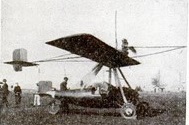
Built in 1930 by designer R.V.Norris of San Franciso, California, the Pendulum plane was to be ‘fool-proof’. It underwent tests at the Redwood City Airport, California, the radial motor is attached to the wing, from which is suspended the fuselage which remains on an even keel during flight. The wing may be tilted in any direction at the will of the pilot, by means of control wires from his seat in the cockpit.
N.T.4 and 4A four-seat anti-submarine and training flying-boats. The N.T.4s were similar to Curtiss H.4s and known as Americas, but there was no connection between the two companies.
In 1909, Norman Arthur Thompson, an Electrical Engineer born in 1874 at Streatham, London, became interested in the science and practice of Aeronautics after reading two books on by the pioneer aerodynamacist Frederick W. Lanchester. Thompson, after securing finance from Dr Douglas White, a wealthy friend, approached Lanchester and persuaded him to collaborate on designing an aircraft. Lanchester designed a two-seat pusher configuration biplane powered by two 50 hp (37 kW) rotary engines, the Thompson-Lanchester No. 1 Biplane or Gray Angel. This was completed during 1910, but proved incapable of any more than brief hops, and was eventually scrapped.
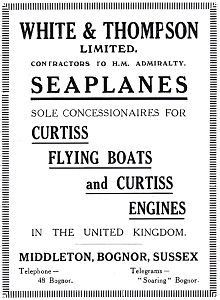
Despite these setbacks, which used up most of White’s initial capital, Thompson and White set up a limited company, “White and Thompson” on 8 June 1912 to continue their aviation business at Bognor Regis. In early 1913 Thompson, working on his own without the involvement of Lanchester designed a second aircraft, the Norman Thompson No. 1 Biplane, another pusher, this time powered by a single 100 hp (75 kW) water-cooled ABC engine, which successfully flew. This was not progressed further, however, as White and Thompson was hired to maintain a Curtiss Model F flying boat, and was appointed the exclusive European agents for Curtiss in February 1914.
In the summer of 1914, White and Thompson designed and built two flying boats to compete in the Daily Mail £5,000 Circuit of Britain race for seaplanes, a single-engined flying boat, and a larger twin-engined aircraft. Although the race was cancelled owing to the outbreak of the First World War, the single-engined aircraft was successful, and a further eight were built for the RNAS as the White and Thompson No. 3, being delivered in 1915, as were 10 examples of the “Bognor Bloater”, a single-engined landplane.
Advertisement, January 1915
White left White and Thompson in 1915 to join the Royal Army Medical Corps, the company being re-organised as the Norman Thompson Flight Company, and expanding its factories to cope with increased demand for its aircraft, orders being placed for the N.T.4, a twin-engined patrol flying boat of similar size to the Curtiss H.4 Small America, and the N.T.2B, a single-engined flying boat trainer. One N.T.2B was shipped to Canada to make forestry patrols from Lake St John, Quebec. A change in RNAS requirements lead to the sudden cancellation of orders for the N.T.4, however, while engine problems caused delays to the delivery of N.T.2Bs.
These problems caused Norman Thompson to go into receivership on 19 April 1918, an attempt to sue Curtiss over breaking the 1914 agreement for White and Thompson to have exclusive sales rights in Europe getting nowhere. The Norman Thompson Flight Company went into Voluntary liquidation on 12 July 1919, the company’s factory and stock being purchased by Handley Page.
Aircraft Thompson-Lanchester No. 1 Biplane / Gray Angel White & Thompson No. 1 Seaplane White and Thompson No. 3 White & Thompson Bognor Bloater Norman Thompson N.1B Norman Thompson N.T.2B Norman Thompson N.T.4