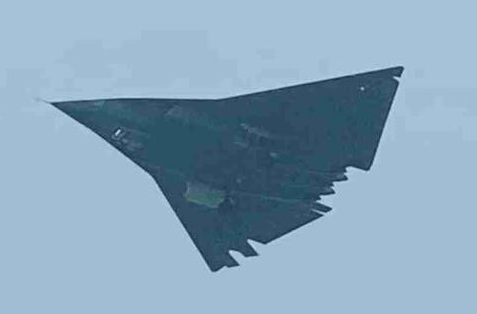
The second J-36 prototype emerged with structural changes and a focus on maneuverability. The aircraft retains its distinctive features, such as large control surfaces at the rear and three engines, but adopts adjustments that suggest the design is advancing toward a model closer to the final product. The images appear just over 10 months after the first prototype was revealed.
The 1928 Airworthy Terrier was a three-place cabin monoplane with three motorcycle engines and “Semi-bat wing.” One was started, registered NX88E c/n 1-T, but a letter from Jolly to CAA 15 November 1928 cancelled the license “since the plane never has been finished.”
The 1926 American Eagle Aircraft Corp Trimotor “Taloga” was a four-place open cockpit biplane conversion of A-1, ordered by Wichita oilman H H Patton, but never finished. Power was to be three 125hp Quick engines.
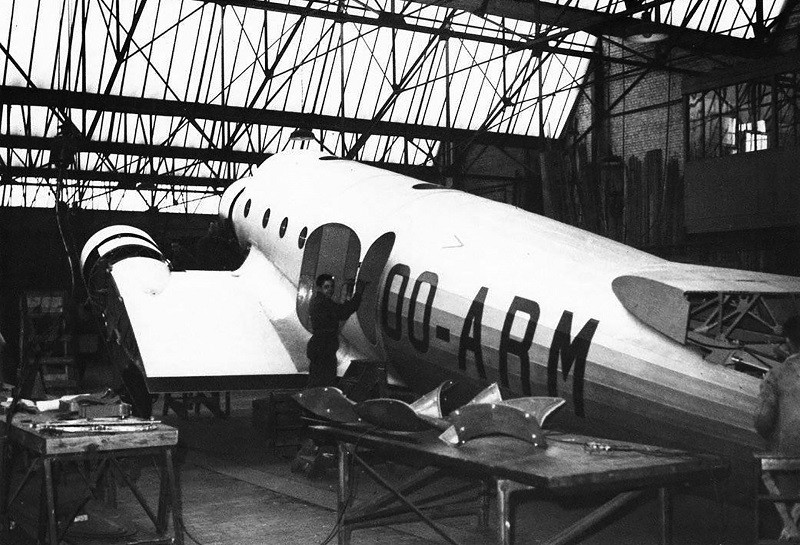
In the late 1930s, Belgian aircraft maker Constructions Aéronautiques G. Renard developed the R.35, a sleek, pressurised airliner built for long-distance travel. Designed to serve SABENA’s route to the Belgian Congo, the R.35 featured a low-wing monoplane layout with three engines and retractable landing gear.
Alfred Renard initiated the design in 1935. SABENA requested a three-engine configuration, prompting a metal monoplane that could seat 20 passengers in a pressurised cabin. On April 3, 1936, an order for a single prototype was confirmed. Though compatible with more powerful engines, the prototype used less powerful Gnome-Rhône 9Ks.
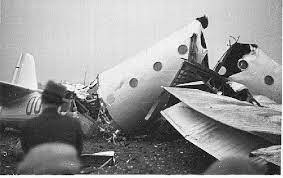
By early 1938, the R.35 was ready for testing. On April 1, it stood on Evere airfield, poised for high-speed taxi trials before a crowd of VIPs and journalists. After one ground run, it unexpectedly lifted off during the second. The pilot, Georges Van Damme, tried to complete a circuit, but the aircraft dove suddenly and crashed, killing Van Damme.
With the cause undetermined, SABENA withdrew its support, and the R.35 project was abandoned.
Powerplant: 3 × Gnome-Rhône 9K, 560 kW (750 hp) each Wingspan: 25.50 m (83 ft 8 in) Length: 17.50 m (57 ft 5 in) Wing area: 87 m2 (940 sq ft) Height: 5.50 m (18 ft 1 in) Empty weight: 6,100 kg (13,448 lb) Max takeoff weight: 10,500 kg (23,149 lb) Capacity: 20 passengers or 2,000 kg (4,400 lb) Crew: 3 (2 pilots and radio operator) Maximum speed: 435 km/h (270 mph, 235 kn) at 5,000 ft (1,500 m) Cruise speed: 350 km/h (220 mph, 190 kn) Range: 1,800 km (1,100 mi, 970 nmi) Service ceiling: 9,000 m (30,000 ft)
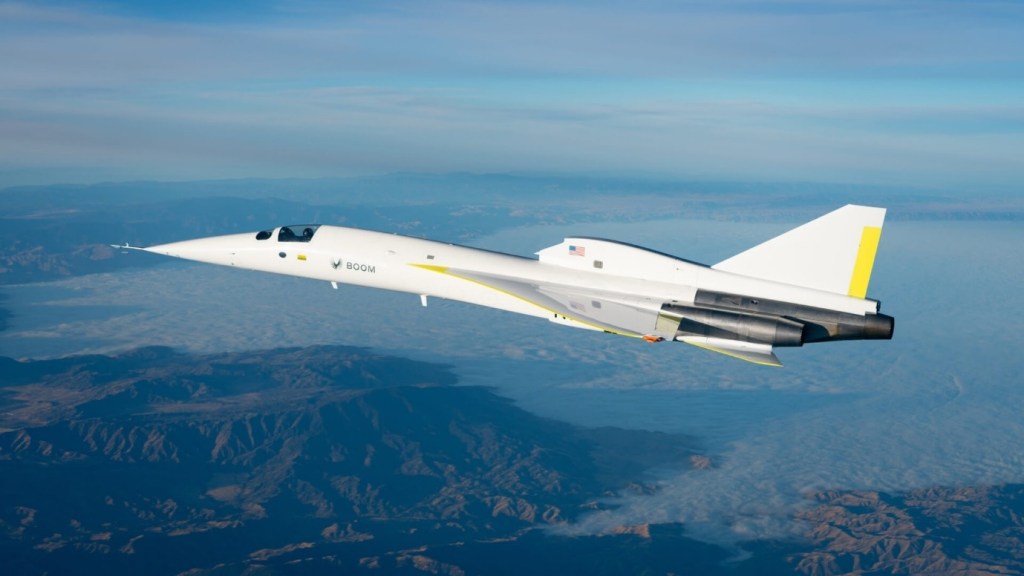
The XB-1 jet, the company’s prototype, was designed to bring back supersonic travel in a more efficient and accessible way, aiming to halve flight time from the traditional eight hours to just 3.5 hours.
After starting its tests in March 2024, the XB-1 reached a record speed of Mach 0.87 and reaching 27,716 feet of altitude during its ninth test flight.
Modifications to the vibration system made after the previous flight helped make the jet’s progress safer and more efficient.
The test pilot is Tristan Brandenburg.
After years of testing and refinement, a pilot flying the aerospace company’s XB-1 scale prototype finally broke the sound barrier during a livestream event—not once, not twice, but three times. XB-1 took off from the runway at Mojave Air & Space Port near Barstow, California at about 11:21 AM EST. From there, Boom Supersonic’s Chief Test Pilot Tristan “Geppetto” Brandenburg ascended in the experimental plane to an altitude of 34,000 ft before turning left and beginning its supersonic test. After successfully achieving Mach 1.1 at 11:32 PM EST, Brandenburg continued XB-1 on its deceleration and descent path. At one point, however, XB-1 briefly broke the sound barrier once again.
XB-1 reached max dynamic pressure during final handling checks during its 10th test flight
“Alright, knock it off, knock it off,” someone in Boom Supersonic’s flight control room could be heard joking during the livestream.
XB-1 surpassed Mach 1 yet again a few minutes later before landing 11:54 PM EST after a total flight time of 33.49 minutes. Tuesday’s success comes less than a year after the demonstrator aircraft’s debut flight on March 22, 2024. The XB-1 conducted another 10 flights prior to today’s Mach 1 breakthrough. Its most recent took place on January 10, when Brandenburg topped out at Mach 0.95 at an altitude of 29,481 ft (575 knots true airspeed, or roughly 661 mph). At almost 63-feet-long, the XB-1 is about one-third the size of Overture, Boom Supersonic’s proposed commercial jet. XB-1’s first flight was originally scheduled for 2021, but required pushbacks to address various engineering and design concerns.
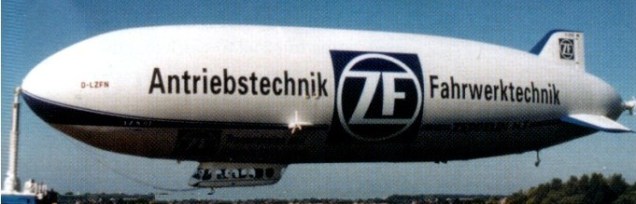
The 75m prototype Zeppelin NT LZ07 first flew in 1997. A semi-rigid airship, the LZ07 received type certification in the commuter category for up to 19 passengers.
In May 2011, Goodyear announced it will be replacing its fleet of three blimps with three semi-rigid airships built by Luftschiffbau Zeppelin.
The new airships are faster, quieter, larger, easier to fly and more manoeuvrable than the blimps it introduced more than 90 years ago. Still, the company plans to keep calling the new models blimps “Because a Goodyear Semi-rigid Dirigible doesn’t roll off the tongue”.
The switch to dirigibles offers a similar-looking, cigar-shaped flying machine but one that’s nearly the length of a football field and about 15 metres longer than the old blimps. With room for three engines instead of two, it will be able to hit speeds of over 110 kilometres per hour.
The quieter engines also will provide an advantage in covering golf tournaments. The ability to hover will allow a pilot to better position the aircraft to capture NASCAR race finishes and key moments in a baseball game.
Construction began in 2012 on the first of three new semi-rigid airships; the first completed in March 2014.
Assembly of Wingfoot One began in March 2013 at Goodyear’s Wingfoot Lake hangar. An international team of engineers and technicians from Goodyear and Germany’s ZLT Zeppelin Luftschifftechnik worked side by side to complete the build project. Parts such as the tail fins and gondola were built in Germany and shipped to the U.S. for assembly. The balloon-like body of the airship – the “envelope” – is made of polyester with an innovative film from DuPont™ called Tedlar®, surrounding a semi-rigid internal structure, which differentiates this airship from previous Goodyear blimps.
Spirit of Innovation, a model GZ-20A blimp (non-rigid airship), was retired on March 14, 2017, and Wingfoot One (N1A), the first such model in Goodyear’s U.S. fleet, was christened on August 23, 2014, by Good Morning America anchor Robin Roberts, near the company’s world headquarters in Akron, Ohio. Wingfoot Two, the name of Goodyear’s second semi-rigid airship, was unveiled in April 2016.
Wingfoot One (N1A (model LZ N07-101), based in Pompano Beach, Florida
Wingfoot One N1A
Wingfoot Two (N2A) (model LZ N07-101), based in Suffield Township, Ohio
Wingfoot Two N2A
All three craft will be outfitted with LED sign technology Goodyear calls “Eaglevision.” This allows the aircraft to display bright, multi-colored, animated words and images. Goodyear also has blimps operating in other parts of the world. These airships are built and operated by Van Wagner of Orlando, Florida.
The new airships are 246 feet long, 52 feet longer than Goodyear’s old model, the GZ-20. The Zeppelin NT model is also slimmer, has a top speed of 70 miles per hour (versus 50 for the blimp), and has a passenger gondola that seats 12 (compared to seven in the blimp). The gondola even has a bathroom.
The blimps are filled with helium. The helium is maintained under low pressure, so small punctures do not pose serious consequences for the blimp. One inspection element of the blimps is to look into the envelope for pinpoints of light which are indicative of small holes.
Goodyear decided a celebration for its centennial year the main event was giving the iconic airship a retro makeover with a black-and-silver color scheme, complete with a vintage Goodyear logo and a reappearance of the blue-and-yellow Goodyear “house flag” that donned the side of the company’s earliest blimps. The retro design is intended to replicate the look of the first Goodyear blimp, dubbed “Pilgrim,” that appeared 100 years ago. It’s important to know that only one Goodyear blimp, Wingfoot One, gets the special treatment. There were currently four Goodyear blimps wafting overhead in 2025: Wingfoot One, Wingfoot Two, Wingfoot Three, and a fourth airship based in Germany, Europe Blimp. It is operated by noted blimp company Zeppelin. These three blimps will maintain their current blue-and-yellow design.
Excursion flights of several hours’ duration at 100 Marks per head proved popular to Germans and foreigners alike over the four years of operation.
The first airship destined for service was the LZ-7 Deutschland which, following a successful deliver flight, was wrecked. A replacement for the LZ-7 Deutschland, the 1910 LZ-8, or the Ersatz Deutschland, was put in hand.
LZ-8 Capacity: 681,600 cu.ft Length: 485 ft Width: 45 ft Height: 54 ft Gross lift: 19.5 ton Useful lift: 6 tons Engines: 3 x Daimler 4 cyl, 120 hp Max speed: 37 mph Range ay cruise: 950 miles Ceiling: 2000 ft Crew: 8 Passengers: 20
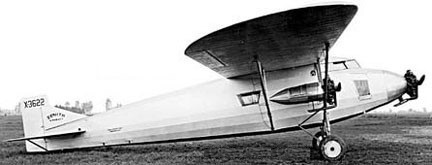
The sole 1927 Albatross Z-12, or Schofield Albatross, NX3622, succeeded, after four attempts, in taking off with 9898 lbs, 2.47 times its empty weight, in a 1928 demonstration flight.
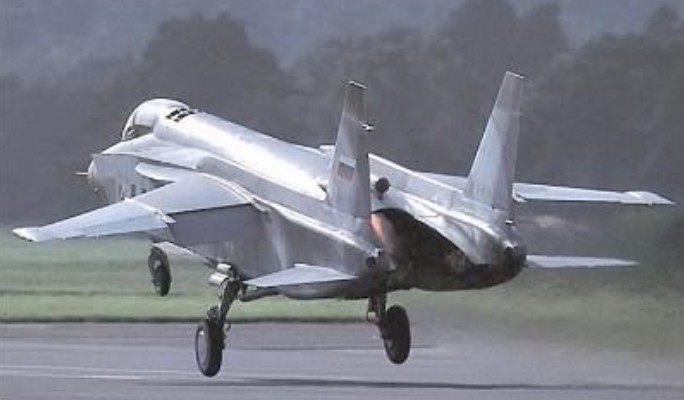
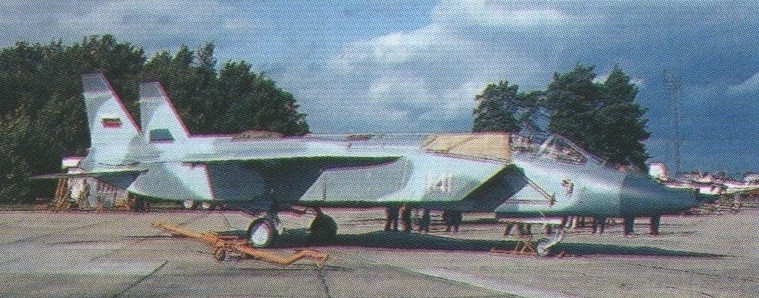
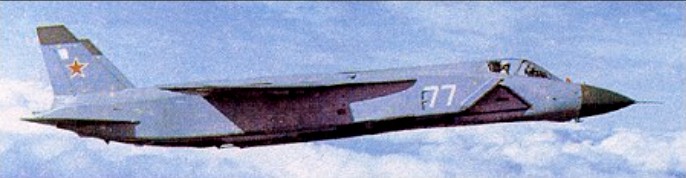
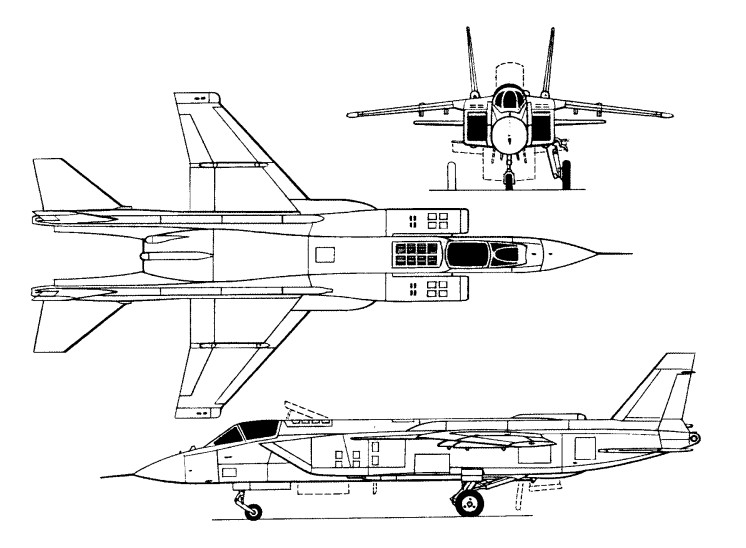
The Yak-141, being the world’s first supersonic STOVL (short take-off/vertical landing) aircraft, has three engines: one lift-cruise R-79 with a thrust of 15500kg and two small-sized RD-41 of 4100kg each. The powerplant allows the plane to lift off vertically with a weight of up to 15,800kg. Alternatively, the Yak-141 can perform short take-offs (60-120m) with a weight of up to 19,500kg. In the latter case the combat radius increases by 1.5-2 times and patrol time in the combat zone by two times. The pilot can use afterburner even when the nozzles are deflected. The Yak-141’s integral flight-control system sets power and deflection of the nozzles so as to optimise making vertical/short take-offs and landings.
The Yak-141 first flew in March 1989, piloted by Andrei Sinitsin.
The Yak-141M was meant primarily for ground-basing. Introduction of new flight regimes, as well as new take-off/landing techniques, has entailed changes in the airframe, leading to a new design, the Yak-141M.
Engine: 1 x R-79V-300, 152.0 kN , 2 x RD-41, 41.8 kN Max take-off weight: 19500 kg / 42990 lb Empty weight: 11650 kg / 25684 lb Wingspan: 10.1 m / 33 ft 2 in Length: 18.3 m / 60 ft 0 in Height: 5.0 m / 16 ft 5 in Wing area: 31.7 sq.m / 341.22 sq ft Max. speed: 1850 km/h / 1150 mph Ceiling: 15500 m / 50850 ft Range w/max.fuel: 2100 km / 1305 miles Range w/max.payload: 1400 km / 870 miles Crew: 1 Armament: 1 x 30mm cannon, 1000kg (VTOL) or 2650kg (STOL) Hardpoints: six
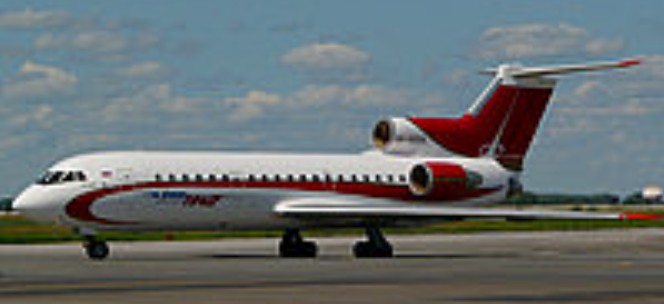
In the Soviet Union the prototype (SSSR 1974) of a new short range civil transport accommodating a maximum 120 passengers, the Yakolev Yak 42, made its maiden flight on 7 March 1975. This was powered by three Lotarev D 36 turbofans, in a similar rear engine layout to the Yak 40. Three prototypes ordered initially; first prototype (SSSR-1974) flew 7 March 1975, with 11 degree wing sweepback and furnished in 100-seat local service form, with carry-on baggage and coat stowage fore and aft of cabin; second prototype (SSSR-1975, later SSSR-42304) had 23 degree sweepback and more cabin windows, representative of 120-seat version with three more rows of seats and no carry-on baggage areas; third prototype (SSSR-1976, later SSSR-42303) introduced small refinements; flight testing proved a 23 degree wing superior.
The second Yak-42 flew in April 1976 and the third, which was exhibited at the Paris Air Show earlier this year and is representative of the production version, flew in February 1977. By May, these three aircraft had totalled some 320 hrs of testing.
The Yak-42 is designed to have a fatigue life of at least 30,000 hrs and 30,000 landings, and the life of the turbofans that power the new aircraft is said to be 18,000 hrs, subject to major overhaul and revision at 6,000 and 12,000 hrs. Glassfibre and carbon fibre composites are used to a considerable degree in the construction of the Yak-42, and it is claimed that the noise levels meet the newest requirements.
The maximum take off weight of the Yak 42 was increased in 1981 to 117,945 lb (53 500 kg), maximum and normal useful loads remaining unchanged. Cruising speeds have been reduced marginally to 466 503 mph (750-810 km/h), and range with max payload has been reduced to 559 mls (900 km) at 478 mph (770 km/h) at 29,530 ft (9000 m). Ranges with 23,148 lb/10500 kg and 14,330 lb/6500 kg payloads are quoted as 1,243 mls (2000 km) and 1,864 mls (3000 km) respectively. The practical life of the Yak 42 is claimed to be 30,000 hours or 30,000 flight cycles over a 15 year period and the service life of its Lotarev D 36 turbofan is 18,000 hours with two major overhauls.
The first series of production aircraft, built to replace some Aeroflot Tu-134, generally similar to SSSR-42303 as exhibited 1977 Paris Air Show. Changes for production included substitution of four-wheel main landing gear bogies for twin-wheel units on prototypes.
The Yak-42 and Il-86 entered regular service with Aeroflot at the end of 1980, after production examples had made proving flights on typical routes from Moscow. The 120 seat Yak-42 operated on the Moscow-Krasnodar route.
An accident in June 1982 caused the type to be grounded until October 1984, the aircraft being drastically redesigned during its temporary withdrawal from service. In 1990 the Yak-42D was introduced, this version having been stretched to include seating for 120 passengers. First exports of the Yak-42 were achieved in 1990, aircraft being sold to Cubana and CAAC.
Yak-42D introduced from second quarter of 1989 and manufactured by Saratov Aviation Plant (SAZ). The Yak-142 transport is a new variant of Yak-42D, featuring mostly US digital avionics and other improvements. Yak-42A and other versions have been produced in small numbers or been proposed.
Power Plant: Three Lotarev D-36 turbofans, 14,320 lb st (6500 kgp) for take-off, with a nominal static rating of 11,015 lb (5000 kg) and a thrust of 3,525 lb (1 600 kg) cruising at Mach 0.75 at 26,245 ft (8000 m) Max fuel load, 27,090 lb (12 300 kg). Max. speed: 870 km/h / 541 mph Typical cruising speed, 510 mph (820 km/h) at 25,000 ft (7600 m) Take-off distance, 4,920 ft (1 500 m) at ISA and 5,900 ft (1 800 m) at ISA plus 15 deg C Landing distance r, 5,900 ft (1 800 m) Range with max fuel, 1,520 mls (2450 km) Range with max payload, 620 mls (1000 km) Range with 26,430-lb (12 000-kg) payload, 1,150 mls (1 850 km). Typical empty weight, 63,788 lb (28 960 kg) Max payload, 31,938 lb (14500 kg) Max fuel, 27,090 lb (12 300 kg) Max take-off, 114,540 lb (52000 kg) Wing span, 112 ft 2.5 in (34,20 m) Length, 119 ft 4 in (36,38 m) Height, 32 ft 3 in (9,83 m) Wing area, 1,615 sq ft (150 sq.m) Undercarriage track, 18 ft 6 in (5,63 m) Wheelbase, 48 ft 5.5 in (14.776 m) Accommodation: max high density, 120 six abreast at 32-in (81-cm) seat pitch. Crew: 2-4









 All Aero