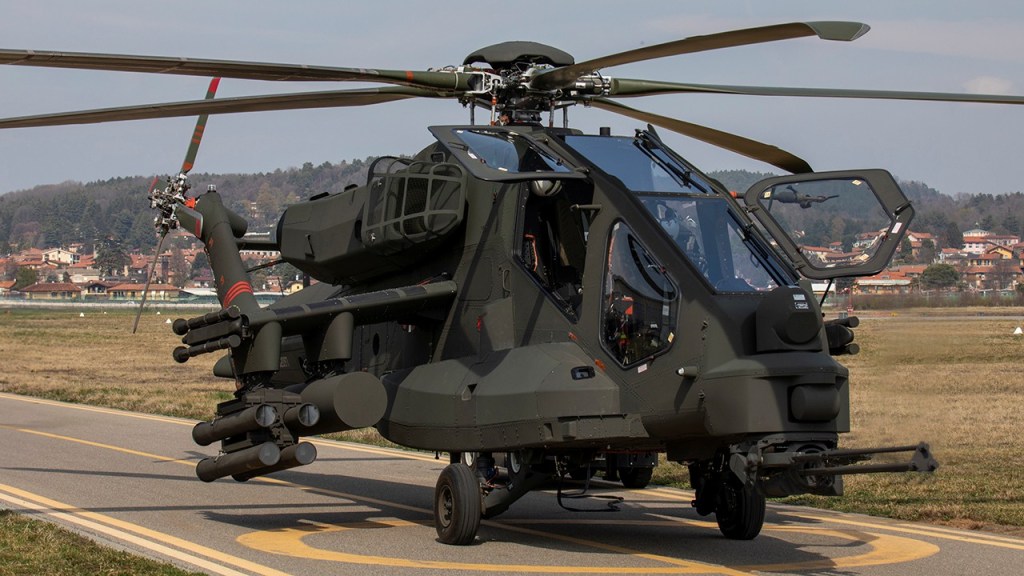
Development of the AW249 formally started upon receipt of a €487 million contract from the Italian Army as a replacement for the Agusta A129 Mangusta. It is to be larger, more survivable, and have greater autonomy than the Mangusta, incorporating stealth technologies and mission systems to control unmanned aerial vehicles (UAV)s. Numerous mature technologies will also be incorporated, such as the OTO Melara TM197B 20 mm chin-mounted cannon, Rafael Advanced Defense Systems Toplite targeting system and Spike missile, it is intended for the AW249 to have lower operating costs than the preceding Mangusta. Leonardo is actively seeking partners to collaborate on the AW249; a letter of intent on this matter was signed with the Polish Armaments Group during July 2018.
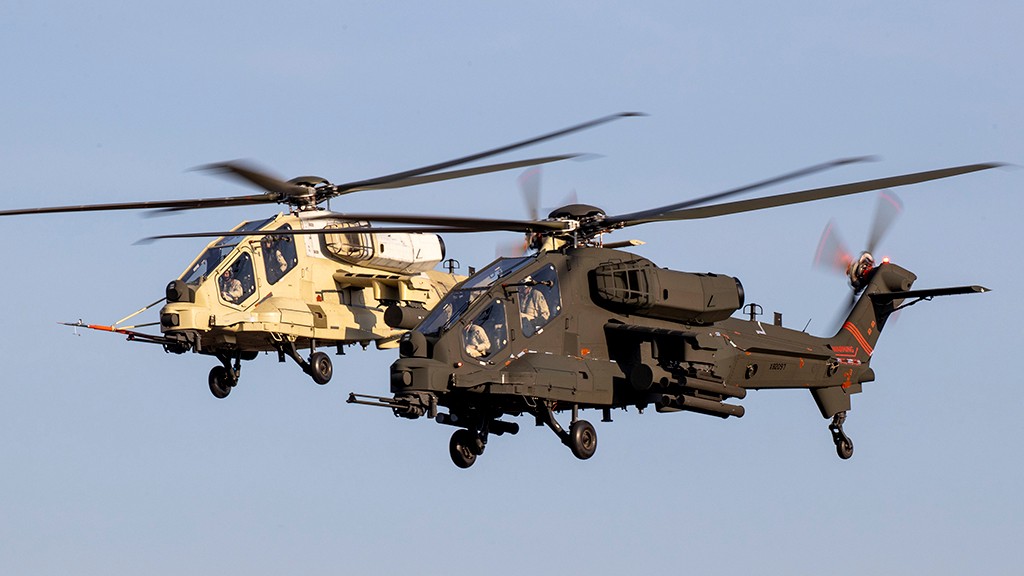
The maiden flight of the AW249 was originally scheduled to take place during 2020, but flew for the first time on 12 August 2022 from the company’s plant in Vergiate. There are to be a single prototype and three pre-serial production rotorcraft built ahead of quantity production AW249s.

Powerplant: 2 × General Electric CT7-8E6 turboshaft
Max take-off power: 2,503 shp (1,866 kW)
Max continuous power: 2,274 shp (1,696 kW))
Span: 14.60 m (47 ft 11 in)
Length: 17.63 m (57 ft 10 in)
Width: 4.60 m (15 ft 1 in)
Height: 4.26 m (14 ft 0 in)
Max takeoff weight: 8,300 kg (18,298 lb)
Maximum speed: 287 km/h (178 mph, 155 kn) (at maximum cruise power, with an average mission weight)
Cruise speed: 259 km/h (161 mph, 140 kn)
Range: 796 km (495 mi, 430 nmi)
Endurance: 4 hours 5 minutes (at maximum take-off power, with an average mission weight)
Service ceiling: 6,100 m (20,000 ft)
Rate of climb: 11.9 m/s (2,350 ft/min)
Capacity: 2,800 kg (6,200 lb) (weapons)
Crew: two
Hardpoints: 6 (2 under each wing, 1 on the wingtip)


 All Aero