
In the late 1930s, Belgian aircraft maker Constructions Aéronautiques G. Renard developed the R.35, a sleek, pressurised airliner built for long-distance travel. Designed to serve SABENA’s route to the Belgian Congo, the R.35 featured a low-wing monoplane layout with three engines and retractable landing gear.

Alfred Renard initiated the design in 1935. SABENA requested a three-engine configuration, prompting a metal monoplane that could seat 20 passengers in a pressurised cabin. On April 3, 1936, an order for a single prototype was confirmed. Though compatible with more powerful engines, the prototype used less powerful Gnome-Rhône 9Ks.
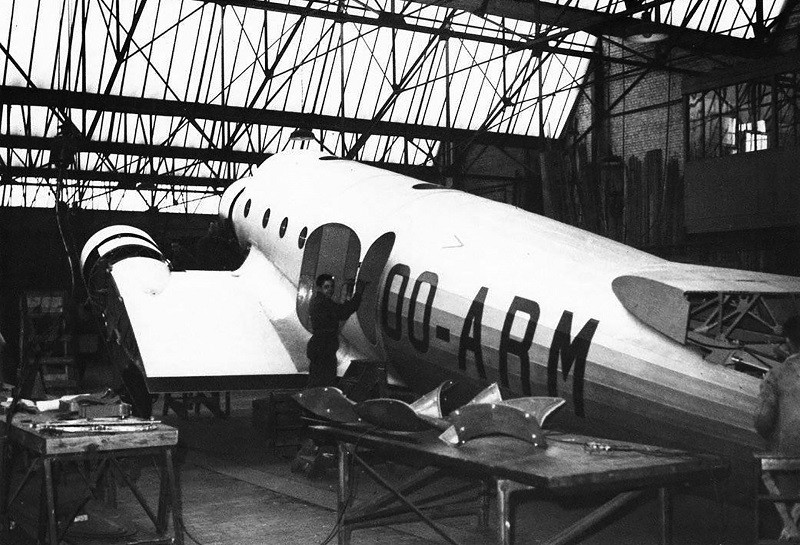
By early 1938, the R.35 was ready for testing. On April 1, it stood on Evere airfield, poised for high-speed taxi trials before a crowd of VIPs and journalists. After one ground run, it unexpectedly lifted off during the second. The pilot, Georges Van Damme, tried to complete a circuit, but the aircraft dove suddenly and crashed, killing Van Damme.
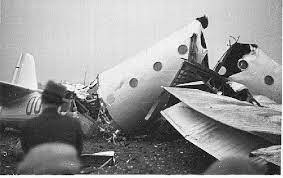
With the cause undetermined, SABENA withdrew its support, and the R.35 project was abandoned.

Powerplant: 3 × Gnome-Rhône 9K, 560 kW (750 hp) each
Wingspan: 25.50 m (83 ft 8 in)
Length: 17.50 m (57 ft 5 in)
Wing area: 87 m2 (940 sq ft)
Height: 5.50 m (18 ft 1 in)
Empty weight: 6,100 kg (13,448 lb)
Max takeoff weight: 10,500 kg (23,149 lb)
Capacity: 20 passengers or 2,000 kg (4,400 lb)
Crew: 3 (2 pilots and radio operator)
Maximum speed: 435 km/h (270 mph, 235 kn) at 5,000 ft (1,500 m)
Cruise speed: 350 km/h (220 mph, 190 kn)
Range: 1,800 km (1,100 mi, 970 nmi)
Service ceiling: 9,000 m (30,000 ft)

 All Aero