Back to Airbus A380

Why The Airbus A380’s Main Landing Gear Needs 20 Tires
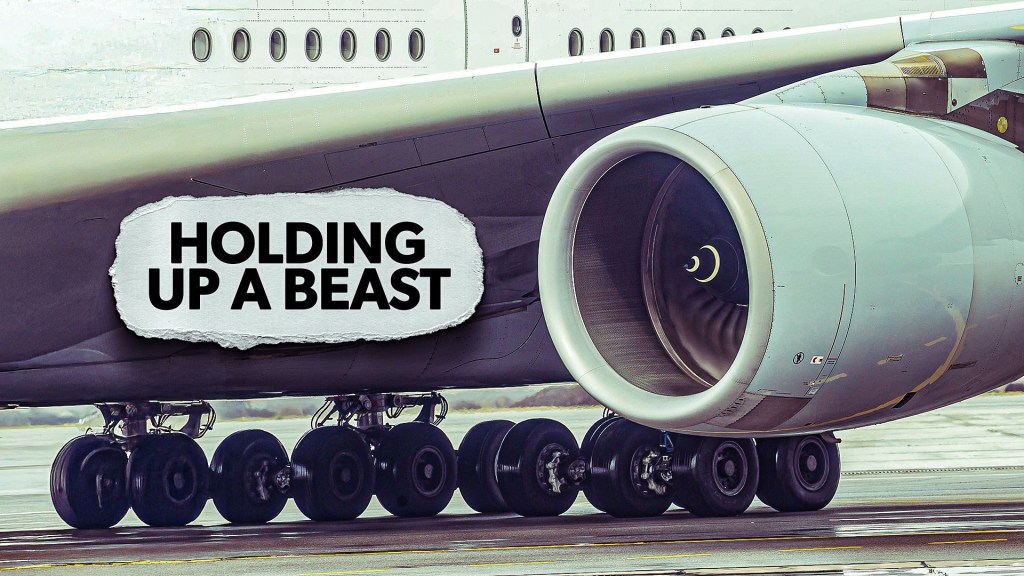
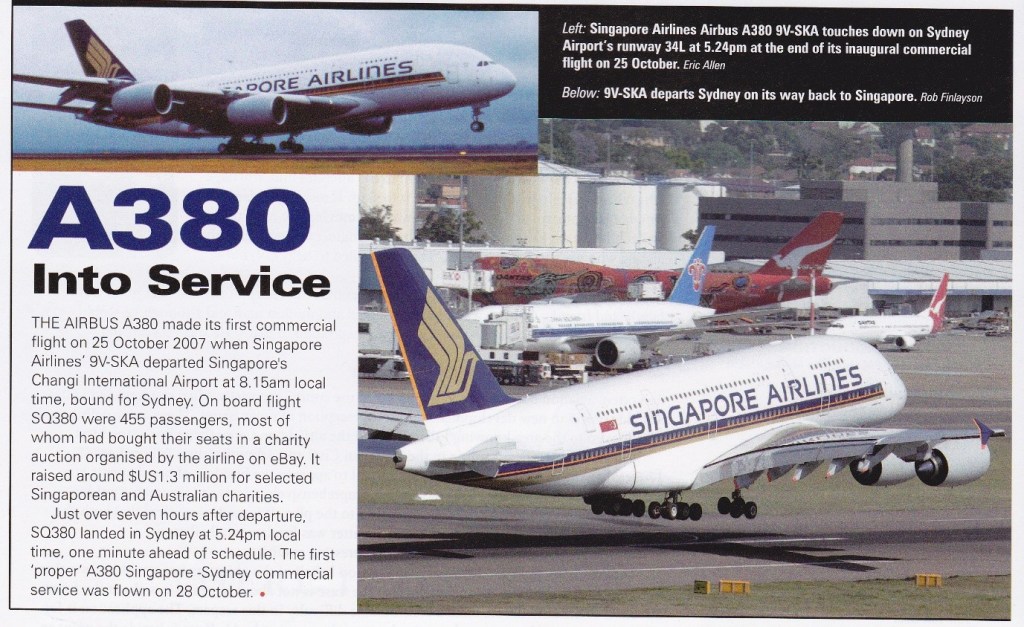
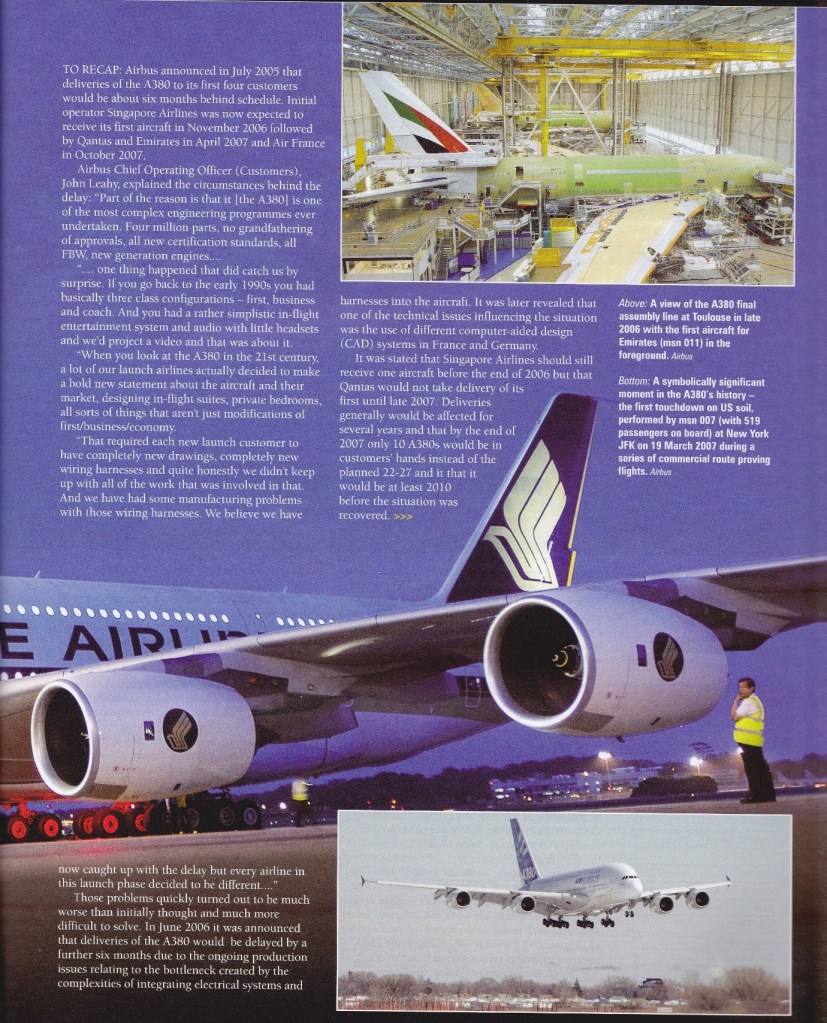
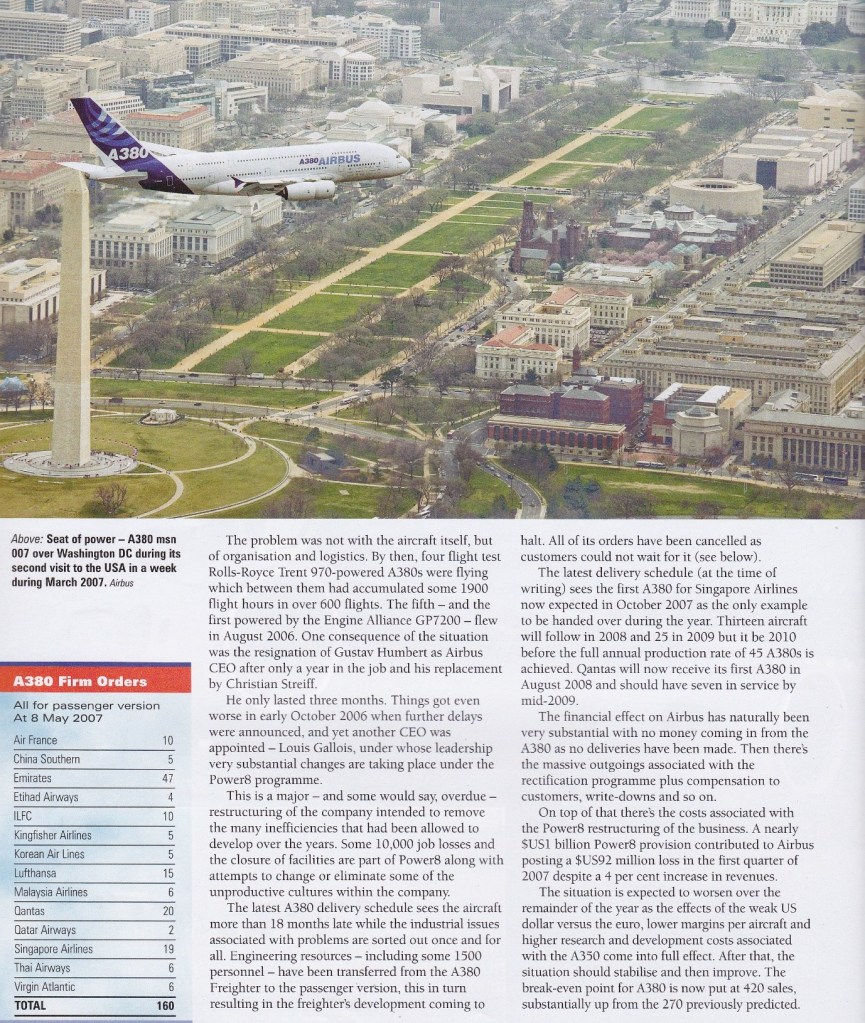
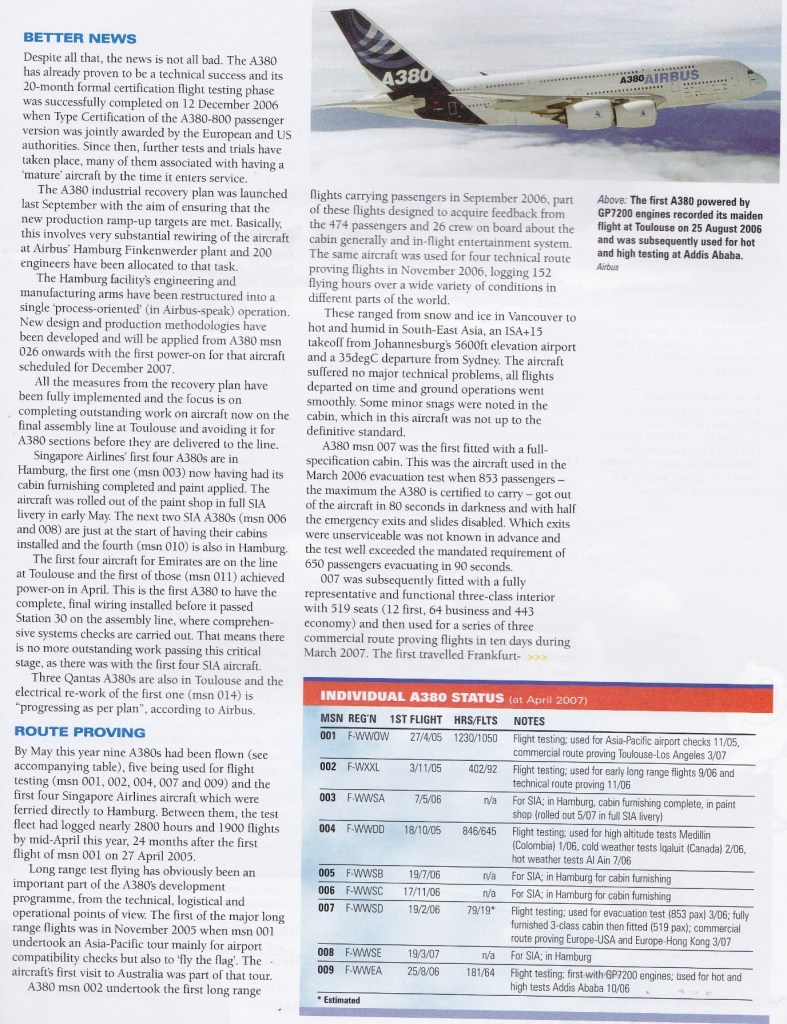
When the Airbus A380 first took to the skies in 2005, beneath its double-decked fuselage and luxurious upper deck lies one of its most complex engineering feats: a landing gear system with 22 wheels.
Designing landing gear for a superjumbo like the A380 presented Airbus with a host of new problems: how to support unprecedented weight without overstressing airport pavements, how to brake and steer such a massive machine, and how to maintain dozens of tires and brakes during normal operations. This guide breaks down the A380’s gear layout, explains why each wheel matters, and shows how airports and airlines keep those 22 tires rolling smoothly.

At maximum takeoff weight, it tips the scales at 1,265,000 pounds (590 tonnes), nearly 40% heavier than a Boeing 747-400. Distributing that load across airport surfaces without damaging the runway required a radically rethought landing gear system. To manage this, Airbus equipped the A380 with a total of 22 wheels: 4 on the nose gear and 18 across the main landing gear (including two underwing bogies and two six-wheel body gear assemblies). Each of the A380’s 22 wheels helps distribute the jet’s weight more evenly, dramatically reducing the pressure of any point on runway pavement.
A380 engineers targeted a maximum per-wheel load of around 75,000 lb (34 000 kg). By comparison, a Boeing 747-400’s main-gear wheels each carry about 90,000 lb (41 000 kg). Splitting the A380’s weight across 16 main wheels vs. the 747’s 16 means each A380 wheel sees less runway stress, even though the type is heavier overall. This design choice protects airport infrastructure and ensures the A380 can operate at more airports worldwide.
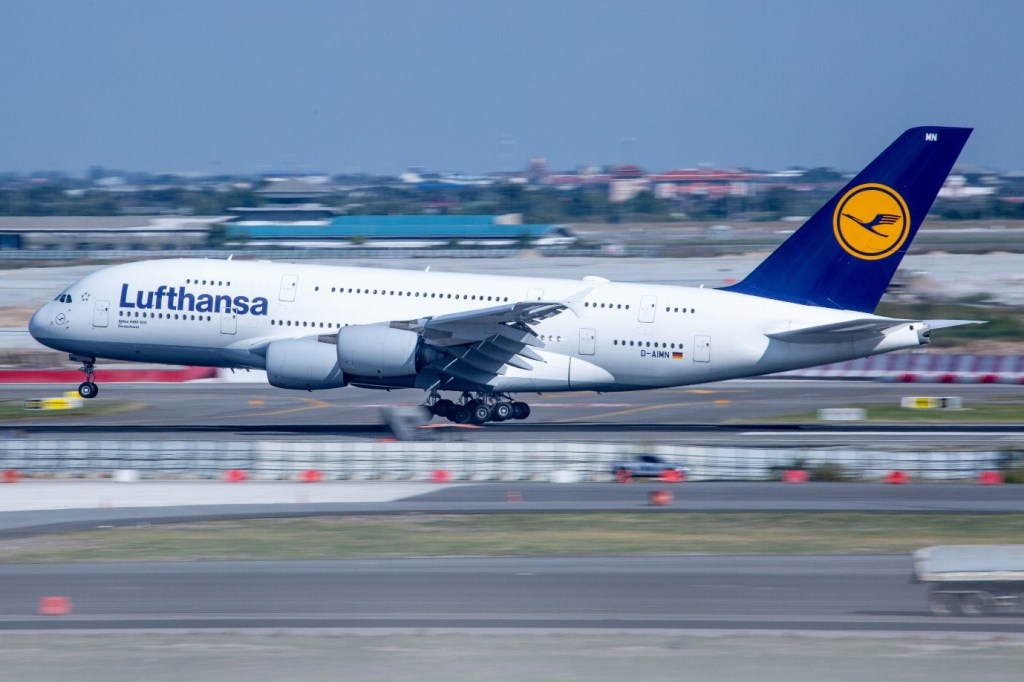
While most twinjets make do with two main gear assemblies, the A380 requires a far more intricate system to safely support its 1.2 million lb (575-tonne) maximum takeoff weight. Unlike smaller jets with just two main gear assemblies, the Airbus A380 uses a more intricate system. Its landing gear is made up of five main sets:
| Gear Location | Wheels | Axles | Notes |
| Nose Gear | 2 | 1 | Non-steerable during taxi turns, used for directional control |
| Wing Gear (Left) | 6 | 3 | Triple-axle bogie; absorbs much of the aircraft’s weight |
| Wing Gear (Right) | 6 | 3 | Identical to left; both sides balance lateral loading |
| Body Gear (Forward) | 4 | 2 | Located behind the wing box; assists with center loading |
| Body Gear (Rear) | 4 | 2 | Steerable bogie; reduces turning radius and tire scrubbing |
| Total | 22 | 14 | Distributed for optimal load handling and pavement protection |
Apart from distributing the immense weight of the aircraft, this unique configuration is also functional with steering and stability, particularly during tight turns at taxi speeds. Moreover, the system also provides redundancy: if one tire fails, multiple others in the same bogie can temporarily bear extra load until safe landing and replacement.
When the Airbus A380 entered service, its unprecedented size forced airports around the world to adapt. Originally designed for smaller widebodies like the Boeing 747, most major hubs had to upgrade infrastructure to accommodate the A380’s mass, wingspan, and turning footprint.
Pavement Classification Number (PCN): Runways and taxiways had to support the A380’s Aircraft Classification Number (ACN) of up to 79 on rigid surfaces, one of the highest for any commercial aircraft. Surfaces require reinforcement to handle frequent operations without structural fatigue.
Gate Infrastructure: Only Code F gates fitted with wider passenger bridges, larger clearances, and strengthened apron slabs can support the A380’s wingspan of 79.75 meters (261.8 ft). Most A380 hubs, such as London Heathrow Airport (LHR) and Los Angeles International Airport (LAX), installed two or even three passenger bridges per gate, allowing simultaneous boarding for both decks and speeding up turnaround times.
Turning Radius: Despite its scale, the A380 maintains impressive ground maneuverability, but it still needs space. The aircraft’s minimum turning radius is just under 180 feet (55 meters), which pushed many airports to expand taxiway shoulders by up to 33 feet (10 meters) on either side. To avoid rutting or collapse during tight turns, pavement edges near turns and holding points were also reinforced.
To meet these challenges, major airports including Singapore Changi Airport, Dubai International Airport, Frankfurt Airport, and Los Angeles collectively invested more than US $75 million in A380-specific modifications. These included wider high-speed exits, dual-level terminal gates, larger parking stands, and upgraded fire-response protocols. Some airports even introduced A380-specific ground vehicles for tugs, catering, and de-icing.
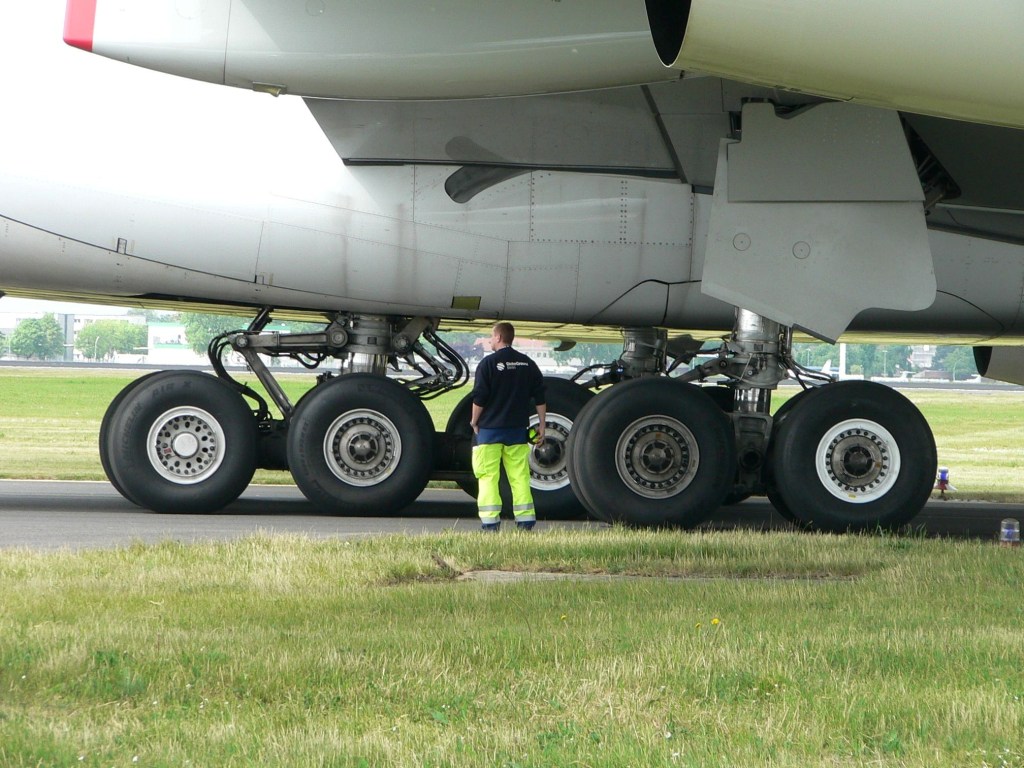
When an A380 touches down at roughly 150 knots, its mass carries about 1.7 gigajoules of kinetic energy, about the same as a lightning bolt or powering 4,000 homes for an hour. To convert that energy into heat, the superjumbo relies on 16 Honeywell Carbenix® carbon-carbon brake assemblies (four per wing bogie, eight on the fuselage gear), each housing five rotors of oxidation-resistant composite material.
In a typical landing, the brakes absorb up to 1.5 GJ of energy, with ventilated disc stacks and segmented heat-shield fins channeling hot air away to prevent fade during quick turnarounds.
An anti-skid control system samples each wheel’s speed at up to 1,000 Hz, modulating hydraulic pressure to maintain peak friction without wheel lockup or flat-spotting. Eight spoilers on each wing deploy simultaneously, dumping lift and adding aerodynamic drag to ease mechanical braking.
In emergency or runway-overrun scenarios, the A380’s maximum braking mode, akin to a rejected takeoff (RTO) autobrake setting, applies full hydraulic pressure to all braked wheels. During certification at Istres AFB, an RTO at V₁ (170 knots, 314.84 km/h) and maximum takeoff weight brought the aircraft to a complete stop in just 6,070 feet, with brakes glowing red but remaining within operational limits, and without using reverse thrust.
Strict adherence to inspection cycles and part availability ensures both operational continuity and flight safety. For a machine as massive as the Airbus A380, something as seemingly mundane as tire integrity is mission-critical; one unnoticed flaw or delayed replacement could compromise landing safety or lead to costly wheel and bogie damage.
Aircraft brakes must absorb large amounts of energy during landing and in the event of a rejected takeoff.
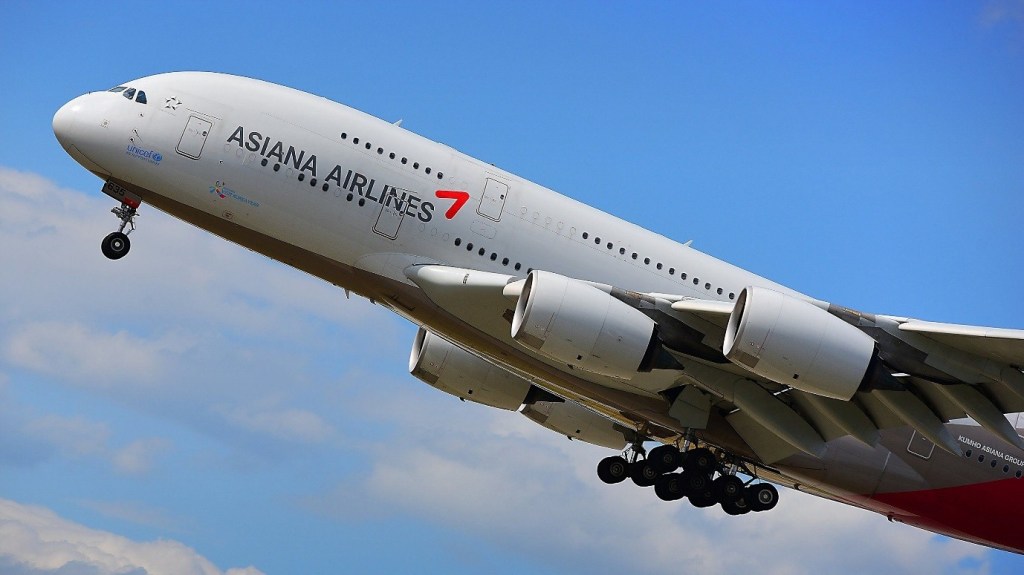
With 22 wheels supporting the Airbus A380’s colossal weight, tire maintenance is a nonstop, high-stakes operation. Every landing subjects these tires to extreme forces, gripping the runway at 150 knots, supporting over half a million kilograms of mass, and enduring lateral shear during crosswind touchdowns or sharp taxiway turns.On average, each of the A380’s 16 main-gear tires endures around 250 landings before replacement becomes necessary. The nose-gear tires, bearing less load and experiencing less friction, typically last up to 500 cycles. However, tire lifespan can vary significantly depending on climate, runway conditions, and landing technique.Airlines follow a multi-tiered inspection protocol to keep the rubber rolling safely. Daily visual inspections are performed on every tire to check for wear, cuts, or foreign object damage. In addition, ultrasonic or shearography scans are conducted approximately every 100 cycles to catch internal delamination, bulges, or cord exposure issues invisible to the naked eye but potentially catastrophic at landing speeds.When it’s time to replace the tires, the procedure is anything but quick. A full main-gear tire change can take up to four hours, involving aircraft jacking, bogie lifting, deflation, removal, and mounting of replacements with precise torque specifications. Because the aircraft uses split-rim wheels, replacing a tire means carefully disassembling and reassembling the rim halves around the new tire casing, adding complexity compared to smaller jets.
To prevent operational delays, major A380 hubs such as Dubai, Heathrow, and Singapore maintain large on-site tire inventories. These “spare pools” can exceed 200 replacement tires per airport, ensuring that aircraft turnaround isn’t compromised by unavailable parts. In many cases, these spare stocks are maintained by third-party ground handling providers working directly with the airline’s maintenance teams.
Strict adherence to these schedules ensures safety and prevents in-flight tire blow-outs or structural damage to the wheels and bogies.

Airbus A380
Launch Customer(s)
Singapore Airlines
Manufacturer
Airbus
Aircraft Type
Widebody
First Delivery
October 15, 2007
Last Delivery
December 16, 2021
Number Delivered
251
Production Sites
Toulouse, France
 All Aero