Back to Messerschmitt Me262
The history of this aircraft is that it went through final assembly in a waldwerk (forest factory) in Obertraubling near Regensburg, Bavaria (specifically, Frankonia, a part of Lower Bavaria near the Czech border) in March 1945 was moved to Memmingen where Messerschmitt factory pilot Sergeant Otto Kaiser flew the aircraft for the first time on March 14, 1945. After testing, it was transferred to Eger, where it underwent conversion from a fighter into an unarmed photo-reconnaissance variant and was fitted with Rb 20/30 vertical cameras (U3: Umrüst-Bausatz 3, Factory Modification Kit No. 3).
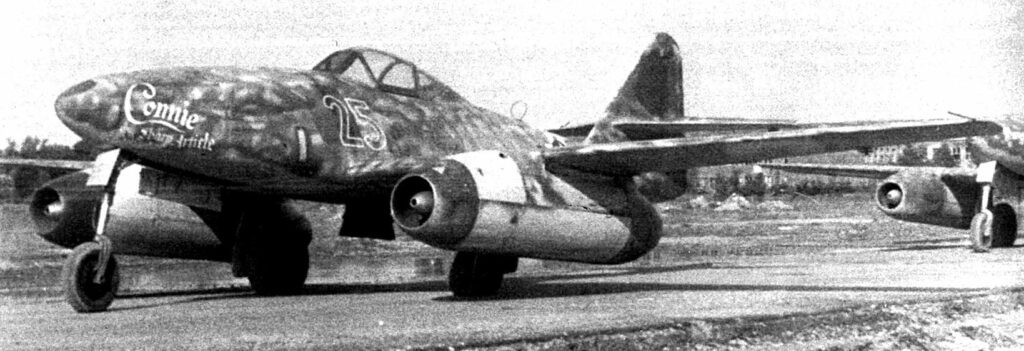
In May 1945, it was found at Lechfeld Airfield (near Augsburg and Munich), Germany and came under the control of the U.S. Army’s 54th Air Disarmament Squadron, whose Master Sgt. Preston named it Connie…My Sharp Article after his wife. Many such laborer-produced airplanes (at the least) — including more than one from this collection — were found to have pleas for help scrawled in Hebrew on the inner surfaces of the skin.
It was turned over to the flight team of Colonel Harold E. Watson of “Watson’s Whizzers” as their #444, and was ferried to Melun, France by Lt. Roy Brown who renamed it Pick II after a nickname derived from his wife’s maiden name. He then ferried it to the French port city of Cherbourg and was shipped aboard HMS Reaper as part of Operation Lusty (LUftwaffe Secret TechnologY) when it received inventory control No. 19, arrived at Newark, NJ and in August 1945, it was ferried to Freeman Field, Seymour, IN.

The nose section of this airframe was exchanged with that of the nose from Me-262A-1a Yellow 7, WkNr. 500491, #888 of Watson’s Whizzers, Foreign Equipment number FE-111 — known as Dennis then Ginny H by Lt. James K. Holt for his fiancée and another of the aircraft acquired as part of Operation Lusty (the victory markings found on this aircraft included one P-51, one P-47 and five B-17s) — for testing against the Lockheed P-80 with the designated Foreign Equipment number FE-4012, later changed to T2-4012.
It then went to Hughes Aircraft Company in Culver City, California for overhaul and then to Wright and Patterson fields for more testing. Edward T. Maloney, the founder of Planes of Fame, obtained this aircraft in the mid-1950s from Cal-Aero Technical Institute in Los Angeles (where it had been used for mechanic training) and displayed it until (what was Paul Allen’s Vulcan Warbirds Inc. (incorporated in 2004) bought it in 2000, and it was sent to JME Aviation Ltd, in Martham, England (and actually, much of the early restoration took place in Norwich, England where the skins were restored and two new panels added to the fuselage and a couple to the wing assembly; when panels were replaced, the Hebrew on the original panels was painstakingly copied); and then GossHawk Unlimited, Inc. in AZ, for restoration.

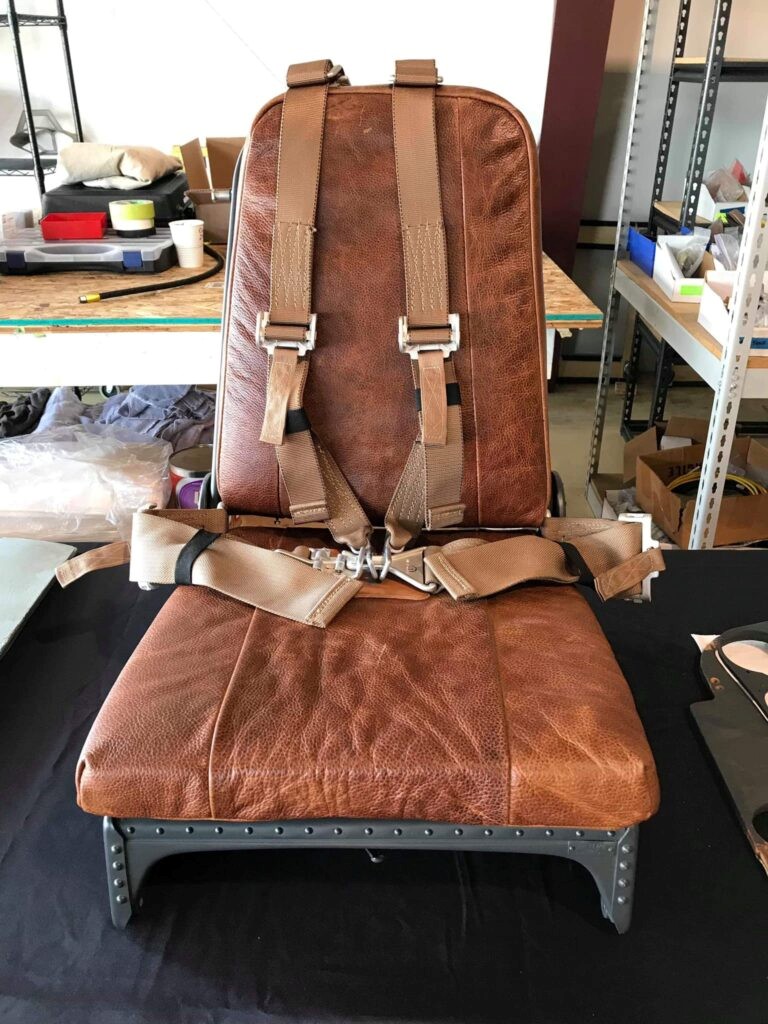
Aero Turbine, Inc. in Stockton, CA rebuilt the engines, and the airframe, now as an A-1 fighter variant, was completed at Morgan Aircraft Ltd. in Arlington, WA. The camera bubbles found on the aircraft in 1945 were removed and replaced by four .30 mm cannon. It is painted in Wellenmuster (squiggle) camouflage of the type worn by this aircraft during its brief tenure with the Luftwaffe. Steve Hinton has been appointed to fly it, although there is only one public flight planned.

This aircraft is part of the collection of Paul Allen’s Flying Heritage & Combat Armor Museum (FHCAM) on Paine Field in Everett, WA. Since at least 2019, it had been at Moses Lake, WA (for unencumbered testing for eventual flight by POF legend Steve Hinton; there are YouTube clips of him taxiing until an oil leak was discovered and corrected) but FHCAM then closed in May 2020 but now reopened as of May 27, 2023. With the acquisition of the entire collection by Wartime History Museum (and to remain based in Everett), it is scheduled to make one public flight and only one.
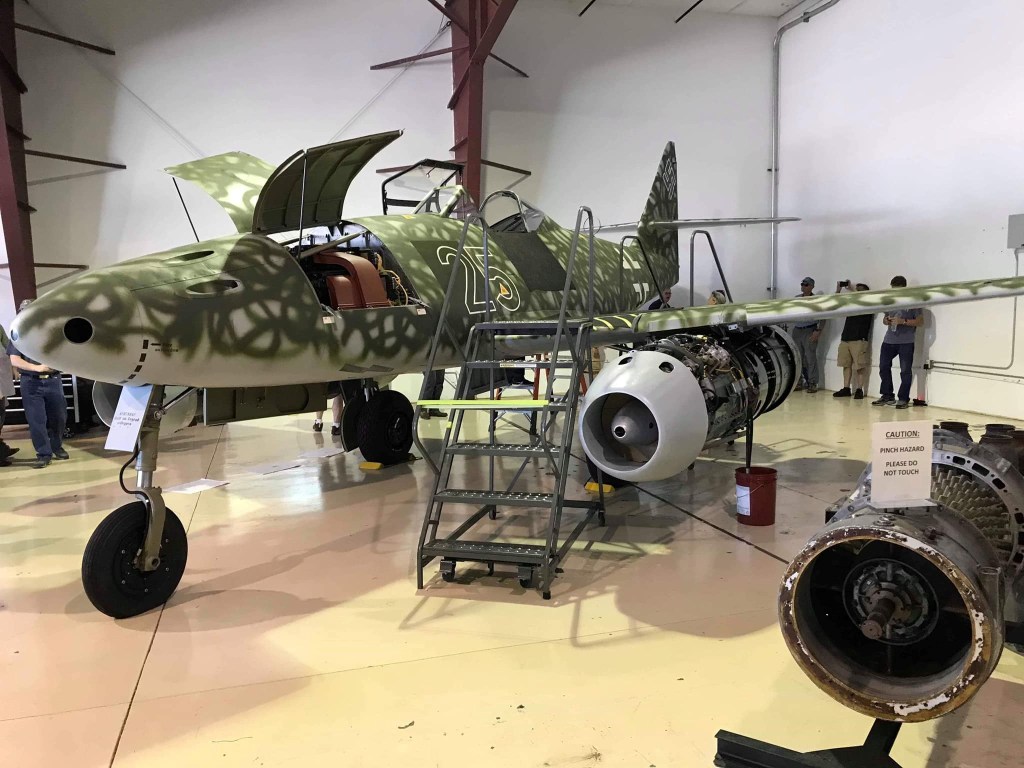
It is powered by rebuilt Junkers Jumo 004B engines made with modern alloys in the heat-critical parts. The intention was to get a couple hundred hours flying time before overhaul rather than the 12 or less during WWII because of heat-sensitive metals available at the time). Paul Allen was urged not to fly it because of its singular rarity but one flight has been indicated by the powers that be under Steuart Walton’s nonprofit Delaware corporation called Wartime History Museum.


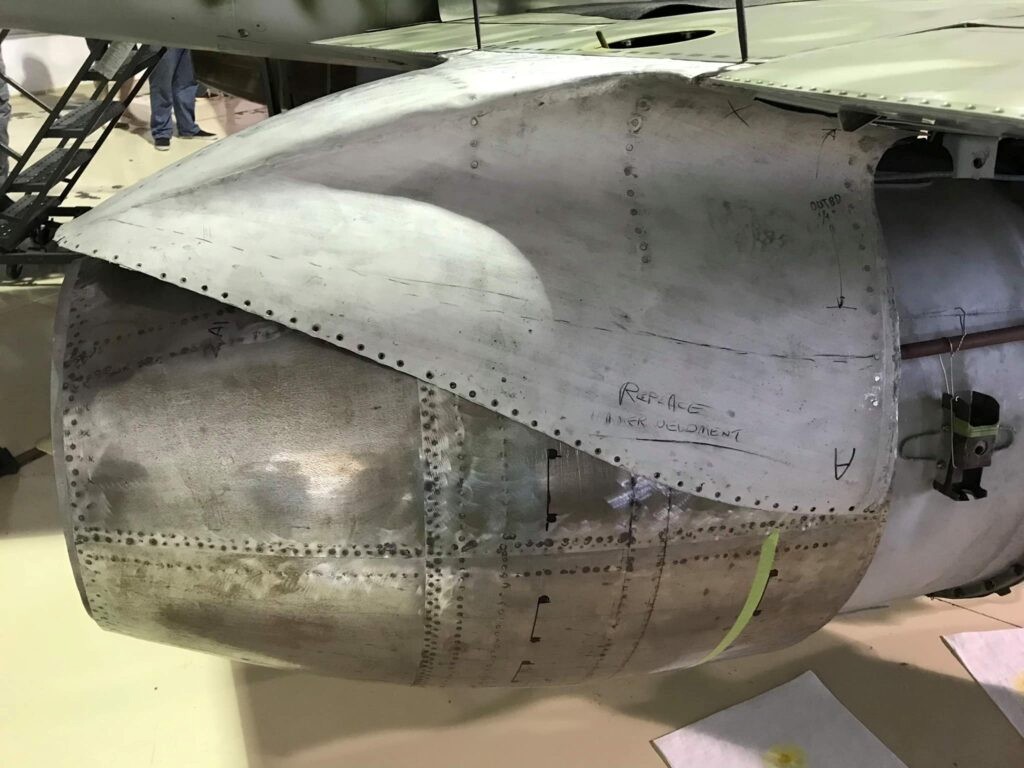
Like so much of the Third Reich’s military production, the original engines were built by euphemistically referred to as “slave laborers” which were in fact concentration camp inmates. away from noted Allied bombing targets. One of the other problems with these engines was the fact that engine fuel tended to collect at the bottom of the nacelles.
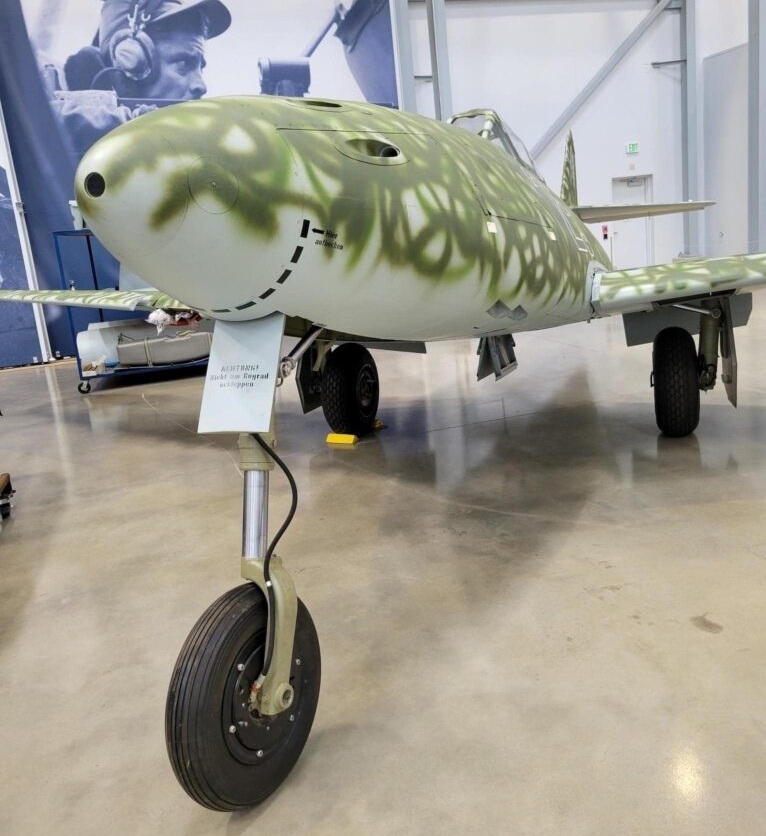
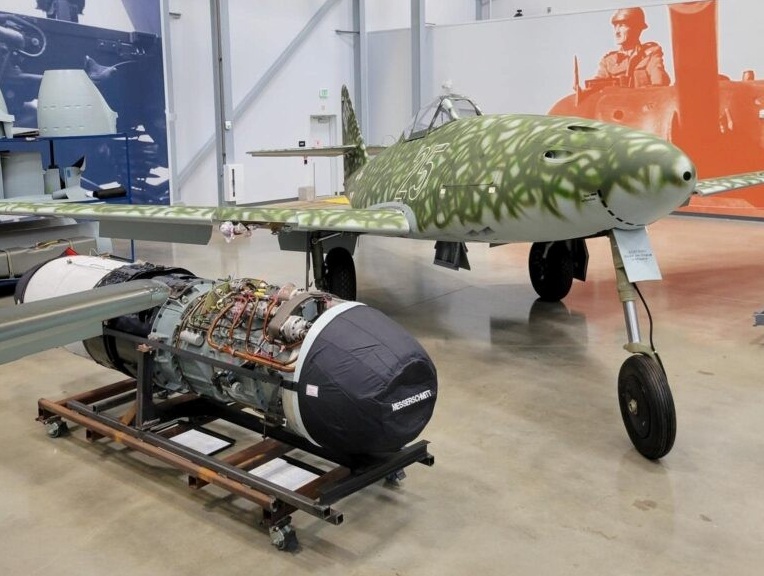

Me 262 A-1a/U3 W.Nr. 500453 was restored to flying condition at the Flying Heritage Collection in Everett, Washington. Uniquely, this aircraft is intended to fly using its original Junkers Jumo 004 engines, a rare and ambitious endeavour. Previously, it was part of the collection at the Planes of Fame Air Museum in Chino, California, before being acquired for restoration.
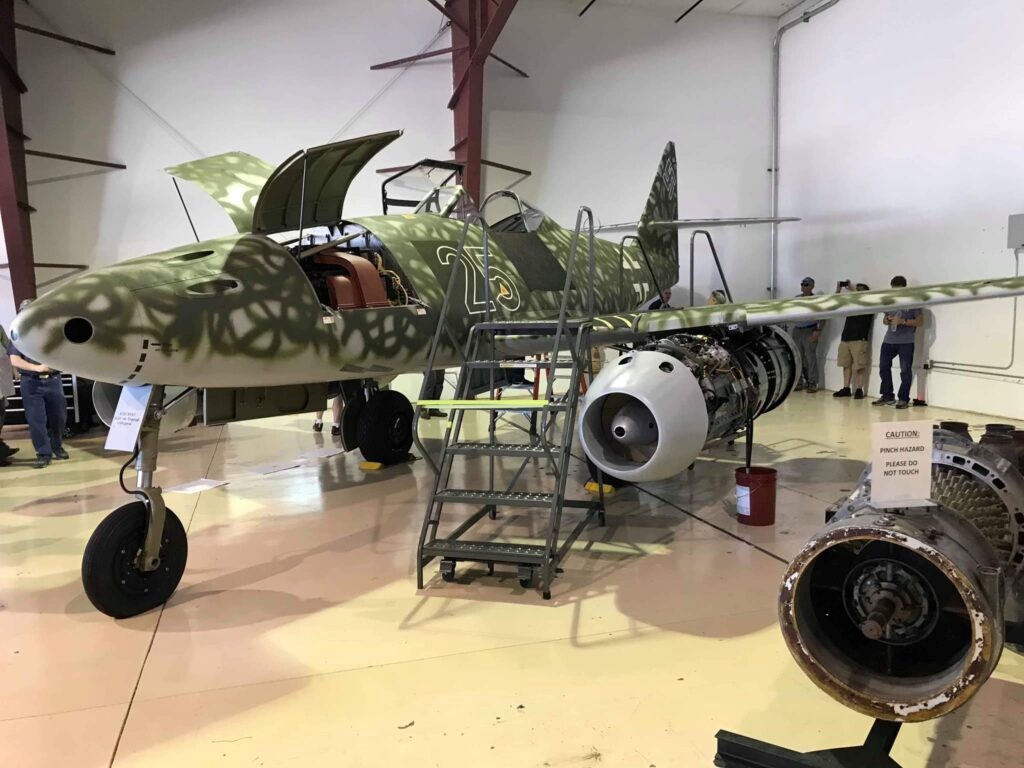
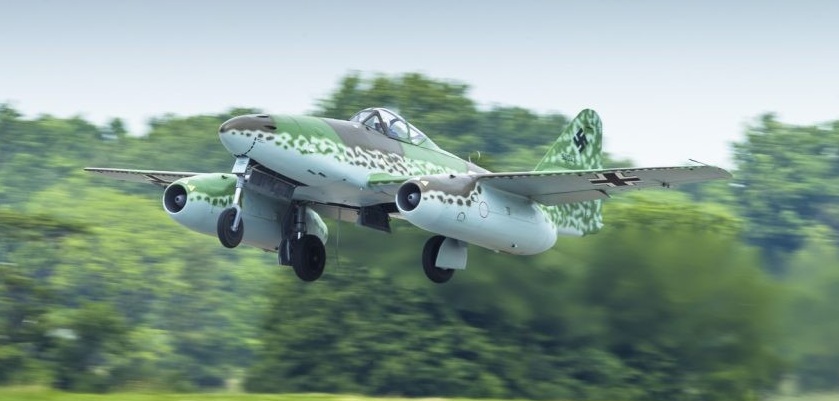
One of the most significant updates was replacing the unreliable wartime Junkers Jumo 004 turbojets, which had notoriously short lifespans due to Germany’s wartime material shortages. Instead, the replicas are powered by down-rated General Electric CJ610 engines—widely used in Learjets—offering vastly improved reliability and maintainability. Additionally, the original Me 262’s problematic drum brakes were swapped out for disc brakes from the Grumman S-2 Tracker. While these brakes initially seemed like a practical alternative, they later presented challenges.
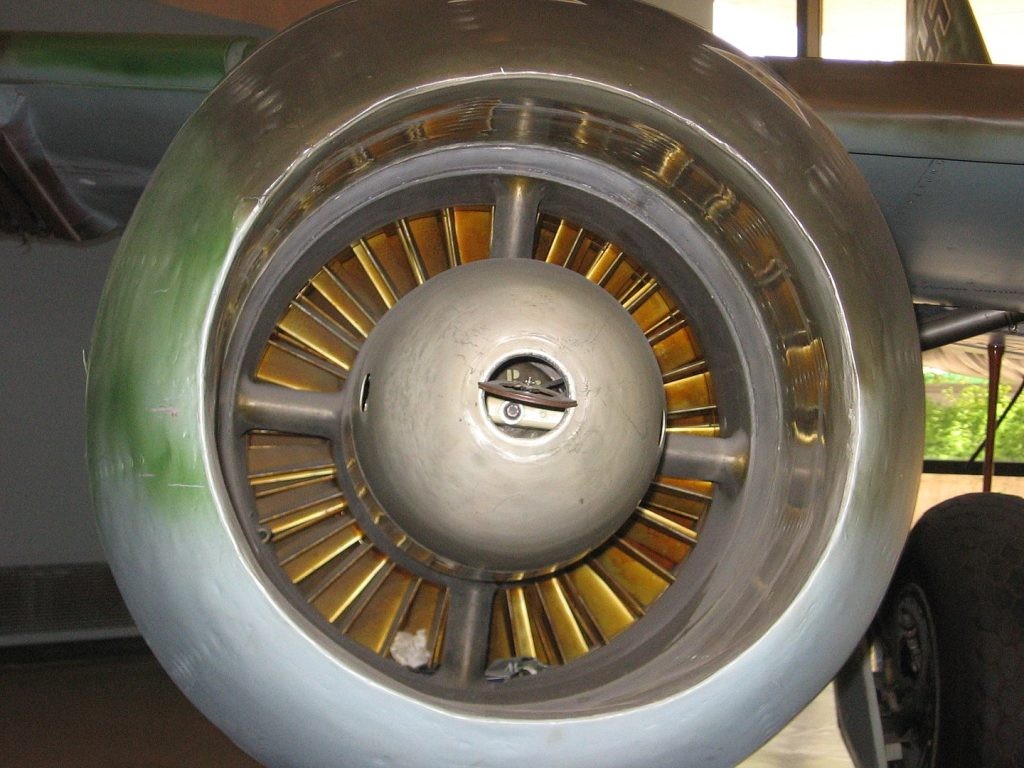
During test flights at Paine Field, where the main runway stretches 9,010 feet, braking demands were minimal, and sufficient taxi time allowed for cooling between stops. However, once the Military Aviation Museum’s Me 262 began operating from Suffolk Executive Airport, which has a much shorter 5,060-foot runway, the brakes were found to overheat quickly. This led to a significant reduction in braking effectiveness—a critical issue that forced the aircraft to be temporarily grounded while the museum sought a more suitable solution.
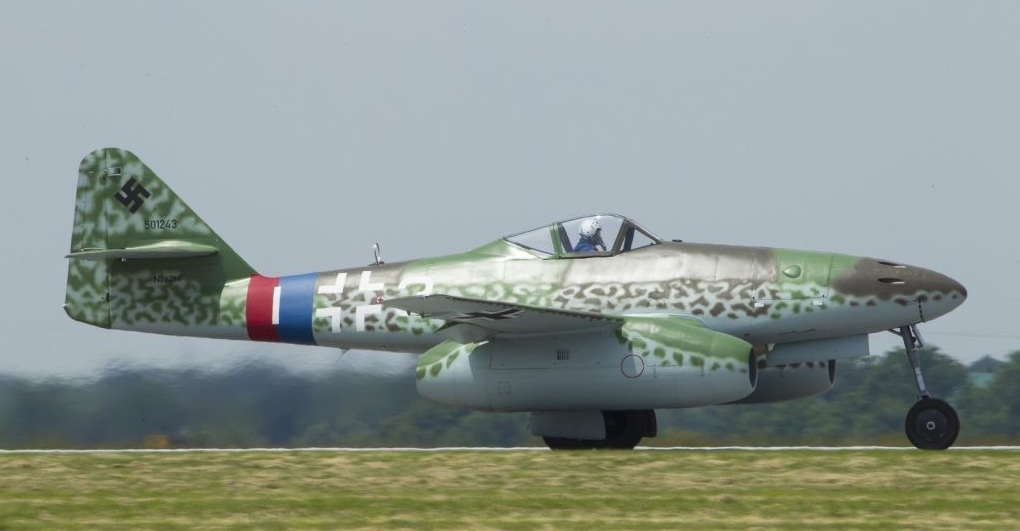
Now, after extensive research and discussions with other operators, the museum believes they have identified a reliable fix. The goal is to return the aircraft to flight in time for AirVenture 2025 in Oshkosh, Wisconsin. While there’s still work to be done, the team remains optimistic that the Me 262 will be ready for this milestone event.
 All Aero