Aviation pioneer
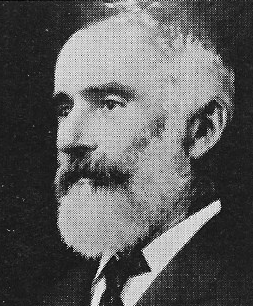
Lawrence Hargrave (1850-1915), was a pioneer in aviation and conducted many experiments into the principles of flight. His work in Australia laid the foundation for the development of modern aircraft. When he began his research in the 1880s, most people believed that it was impossible for machines to fly through the sir.
In 1893, Hargrave became interested in the way birds are sometimes lifted off the ground by the motion of the air above their wings. He experimented with kites, and discovered that a kite with a curved, convex upper surface pulled twice as hard as one with a flat surface. He went on to construct box kites, and at Stanwell Park, in New South Wales, Australia, in 1894, four box kites lifted him 5.3m above the ground.

He built many models, usually of a small size and of simple construction. At first he concentrated on designing and testing model aeroplanes that were propelled by flapping wings. In 1890, he constructed a flapping wing model driven by compressed air that flew 112m. That model is now in the Museum of Applied Arts and Sciences in Sydney, Australia.
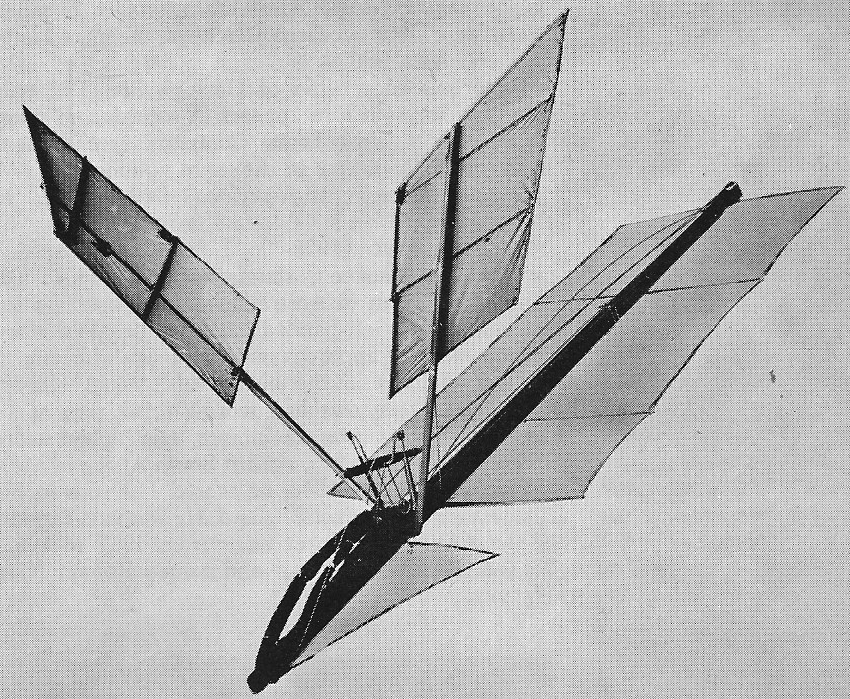
Hargrave also experimented with various methods of propelling aircraft. He built models powered by elastic bands, clockwork, compressed air, steam, and internal combustion engines. He invented a rotary engine driven by compressed air and later by steam. Similar engines driven by petrol powered many early aeroplanes.
Hargrave was born at Greenwich, near London, and was educated at Queen Elizabeth’s Grammer School at Kirkby Lonsdale, in Westmorland. In 1866, he emigrated to Australia, and worked as an engineer with a shipping company. In the 1870s, he joined a series of expeditions to New Guinea. In 1877, he was elected a member of the Royal Society of New South Wales. In 1879, he became an assistant astronomical observer at the Sydney observatory. Five years later he resigned from this post to devote himself into the principles of aeronautics.
Hargraves also experimented with such things as water skis and hydroplanes.
 All Aero