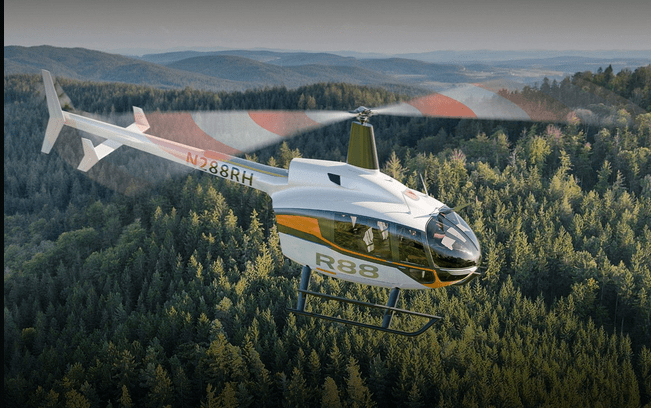
The R88 will feature an open-tail rotor design and two-bladed main rotor system. It also includes new LED aircraft exterior lights, including pulsed landing and taxi lights, tail rotor lighting, scene lighting, and entry lights, further enhancing utility and safety.
The internal payload was expected to accommodate over 2,800 pounds and deliver more than 3.5 hours of flight time and more than 350 nautical miles of range. It will carry up to two pilots and up to eight passengers for a passenger total of 1,800 pounds with a full fuel tank.
Large sliding doors on each side will provide easy access for passengers and cargo. The rear has a fold-down, truck-bed style door for simplified cargo loading or easily accommodating a HEMS stretcher. The aircraft is available with standard skids or optional high skids for increased ground clearance and compatibility with a firefighting water tank.
The Garmin avionics suite includes large Garmin G500H TXI displays and GTN navigators with touchscreen controls for easy operation, vivid displays, and extensive capabilities. The G500H TXI will include a crew-alerting system to provide the pilot with intelligent information about the aircraft’s systems. Offered is a standard 4-axis autopilot from Garmin. This system will provide a full range of important safety functions, including level mode, hover assist, limit cueing, low/high speed protection, and low altitude protection.
A standard data recording system with Datalink automatically will capture engine and system data for simplified operation and maintenance. A standard health usage monitoring system (HUMS) will monitor critical components and provide real-time track and balance data so operators can address issues before they affect operations.
The R88 incorporates dual hydraulics for pitch and roll for critical flight controls. Other standard safety features include an inlet barrier filter and impact-resistant windshields certified to Part 29 transport helicopter requirements.
The R88 introduces dual cyclic controls with removable controls on both sides, allowing the pilot in command to be in either the left or right seat with a passenger in the other seat. The aircraft will be type-certified for optional single-pilot IFR operations. The all-new interior design features comfortable, functional seating, easy-to-maintain materials, and a versatile layout.
New LED exterior lighting, including pulse landing and taxi lights, tail rotor lighting, scene lighting, and entry lights, further enhance safety.
The configurable cabin features a flat floor, allowing for multiple forward and club seating configurations, effective air medical and public safety mission configurations, and multiple future seating options. A fold-down, truck-bed style rear door simplifies cargo loading and accommodates a HEMS stretcher. The air conditioning system is made entirely by Robinson Helicopter.
Robinson partnered with Safran Helicopter Engines to add the Arriel 2W engine.
The R88 offers a wide range of optional OEM-provided mission equipment, including a 3000-lb. HEC-rated cargo hook, utility basket, optional wire strike protection kit, pop-out floats, and more.

With a launch price starting at $3.3 million, the R88 was presented in a configuration of two pilot seats followed by two banks of four passenger seats, illustrating the 275-cubic-foot (7.8-cubic-meter) cabin volume.
Powered by the 1,000-shaft-horsepower Safran Arriel 2W, the R88 has a payload capacity of up to 1,800 pounds (815 kilograms) with full fuel, and a range of 350 nautical miles (650 kilometers), with endurance above 3.5 hours.

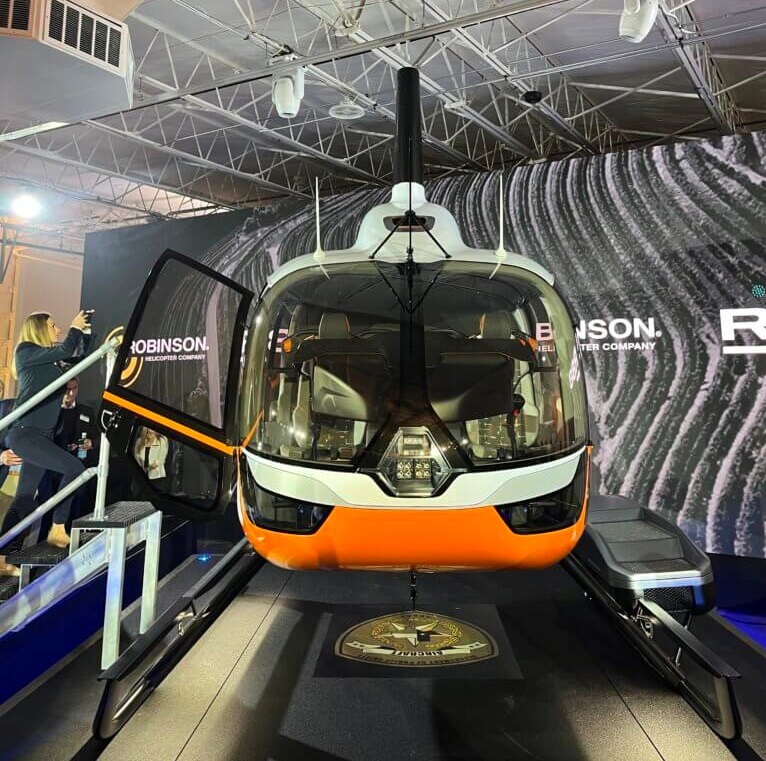
The engine of the R88 is in a different position than it is in the R66 and R44. Those types have a low engine placement within the airframe, while the R88’s engine is moved higher — representing a more “conventional” placement in a helicopter.
It has the standard Robinson two-bladed main rotor and tail, but scaled up to accommodate the increase in power and size provided by the Arriel engine. The blades have a 50 percent bigger chord than those of the R66, and are “quite a bit” longer, said Smith.
The tail boom looks similar to Robinson’s other types, but is higher up on the airframe. When the aircraft is equipped with high skids — as it was during the type’s unveiling in Dallas — the boom is high enough for most people to comfortably walk underneath.
Inside, the cockpit is fully glass, with dual conventional cyclic controls (rather than Robinson’s famed “T” bar — or teetering cyclic — as used in the other types in its range).
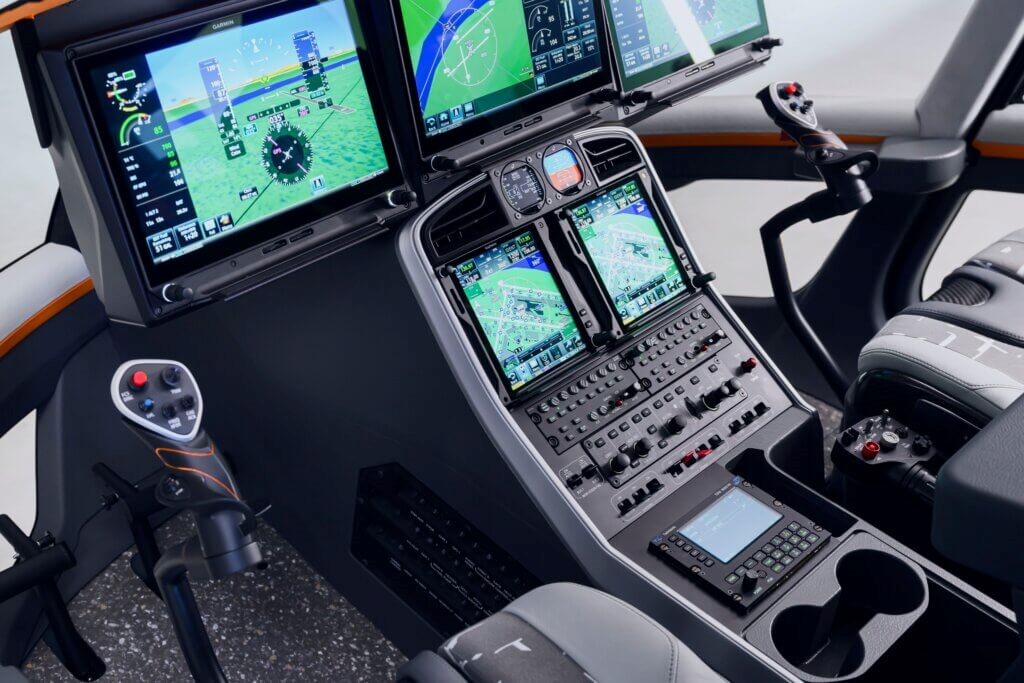
Switching to a conventional cyclic was the result of another functional decision, driven by the aircraft’s large width. They couldn’t get the teetering cyclic to work — it’s too large of a movement.
The R88 has a Garmin avionics suite, including large G500H TXi displays and GTN navigators with touchscreen controls.
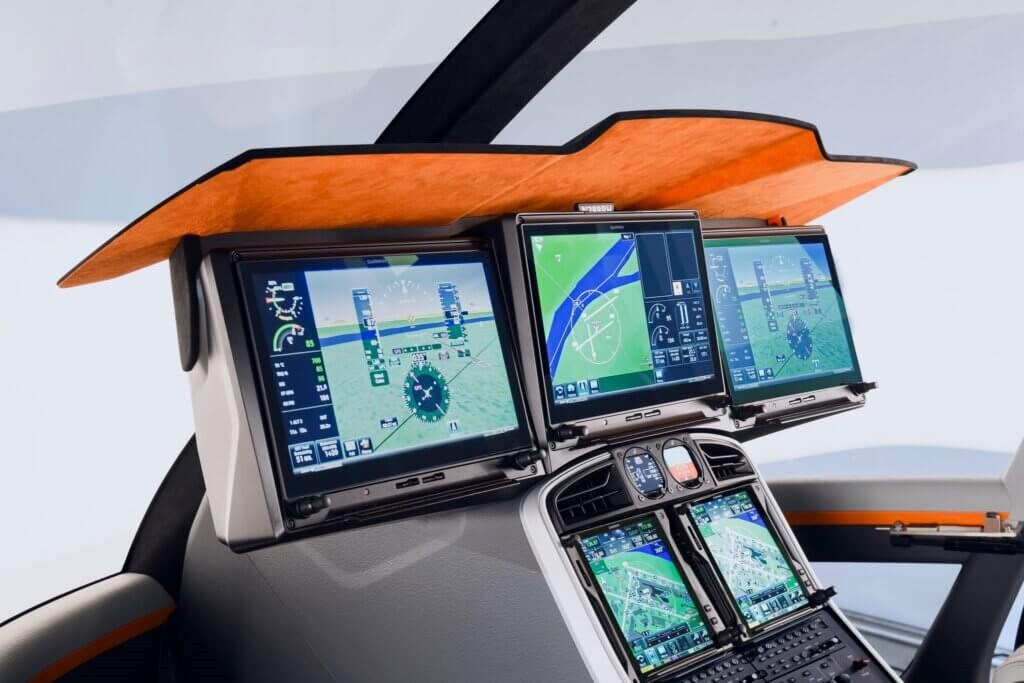
The R88 will have a four-axis autopilot as standard, along with data recording with datalink and a health and usage monitoring system (HUMS). Other safety features include an inlet barrier filter and impact-resistant windshields certified to part 29 transport helicopter standards.
Optional equipment will include a 3,000-pound human external cargo (HEC)-rated cargo hook, utility basket, wire strike protection kit, and pop-out floats.
The cabin has three entry points. Sliding doors — a new feature for a Robinson helicopter — are on both sides, while a fold-down door at the back of the cabin provides access from the rear.
 All Aero