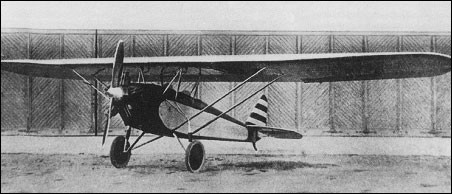
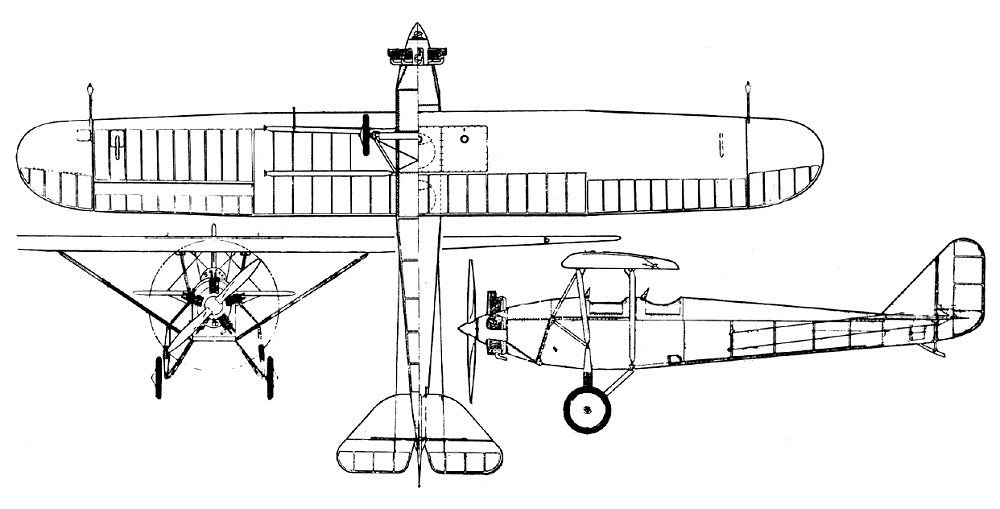
With his next design, the “AIR-3” of 1929, Yakovlev chose to go to a monoplane configuration, resulting in a tidy parasol-winged aircraft powered by a five-cylinder radial Czech-made Walter NZ engine; the AIR-3 had additional fuel tanks for long-range operation. A handful of “AIR-4” machines was built, featuring various improvements such as doors to make it easier for the two crew to get in and out.
The AIR-4s were used for various tests and trials, including one in which the aircraft was given translucent skinning as something of a “visual stealth” measure as the Kozlov PS.
Yakovlev also designed a specialized trainer version of the AIR-4, the “AIR-8”, very similar to the AIR-4 but with various tweaks, particularly reinforcement of landing gear and the like to tolerate the blunders of trainee pilots. Only one was built, the VVS (Voyenno Vozdushniye Sily / Red Air Force) evaluating it, then forgetting about it.
Variation: Kozlov PS
AIR-4
Engine: Walter NZ
Wingspan: 11.1 m / 36 ft 5 in
Wing area: 36.5 m2 / 392.88 sq ft
Length: 6.94 m / 23 ft 9 in
Empty weight: 395 kg / 871 lb
Take-off weight: 630 kg / 1389 lb
Max. speed: 150 km/h / 93 mph
Ceiling: 4000 m / 13,100 ft
Range: 500 km / 311 miles
 All Aero