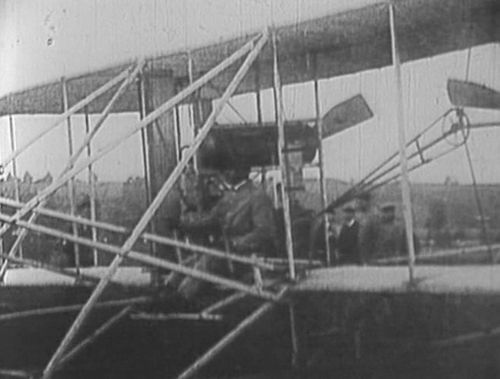
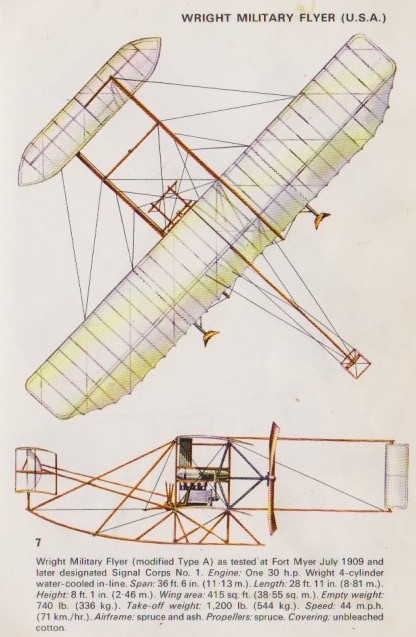
A canard biplane with one 30-to-40-horsepower Wright vertical four-cylinder engine driving two pusher propellers via sprocket-and-chain transmission system. No wheels; skids for landing gear. Natural Muslin fabric finish; no sealant or paint of any kind.
In 1908, the U.S. Army Signal Corps sought competitive bids for a two-seat observation aircraft. Winning designs had to meet a number specified performance standards. Flight trials with the Wrights’ Type A-2 entry began at Fort Myer, Virginia, on September 3, 1908 with the second Wright A built, with a Dayton-built Wright engine.

After several days of successful flights, the longest being 1 hr 15 min, tragedy occurred on September 17, when Orville Wright crashed with Lt. Thomas O. Selfridge, the Army’s observer, as his passenger. Orville survived with severe injuries, but Selfridge was killed, becoming the first fatality in a powered airplane.
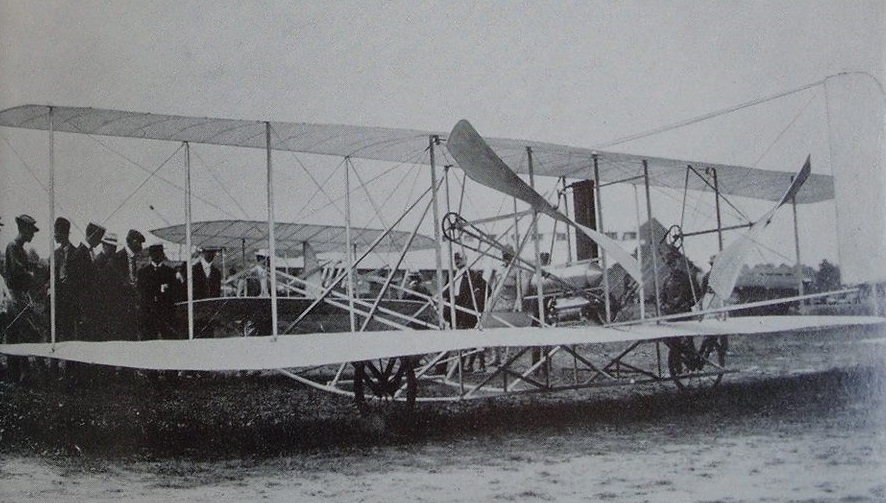
Piloted by Orville Wright, it set an endurance record of 1h:02m on 9 September 1908. Rebuilt as 1909 Military Flyer with a 30hp Wright, wingspan: 36’6″, length: 28’11”, useful load: 460 lb, speed: 42 mph. On June 3, 1909, the Wrights returned to Fort Myer with a new airplane to complete the trials begun in 1908. Satisfying all requirements, the Army purchased the airplane for $30,000 on August 2nd, 1909 – $25,000 (plus a $5,000 bonus for exceeding 40mph).

It performed well (as Knabenshue-Wright) at the 1910 Dominguez Hills Air Meet.
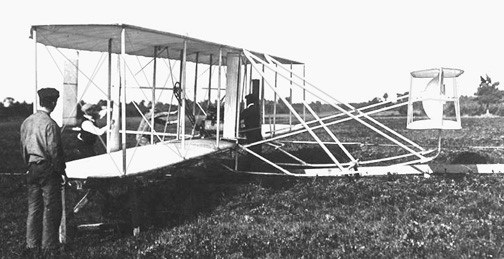
As AS1/SC1 it was used for pilot training at College Park MD and San Antonio TX.
It was used in October 1909 for giving flight instructions to Lts. Frank P. Lahm and Frederic E. Humphreys at College Park, Maryland, and in 1910 it was used by Lt. Benjamin D. Foulois to teach himself how to fly at Fort Sam Houston, in San Antonio, Texas. By March 1911 the airplane was no longer in use and was retired. It was given to the Smithsonian in 1911. It is now on exhibition at the NASM, Washington DC.
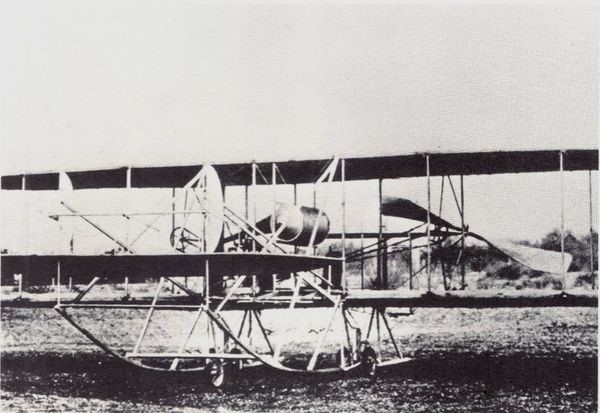
Seven were built, with one shipped to France. In France Wilbur Wright achieved approximately 133 flights in 26 hr 2 min flying time. The longest flight was 2 hr 20 min 23 sec / 77 miles.
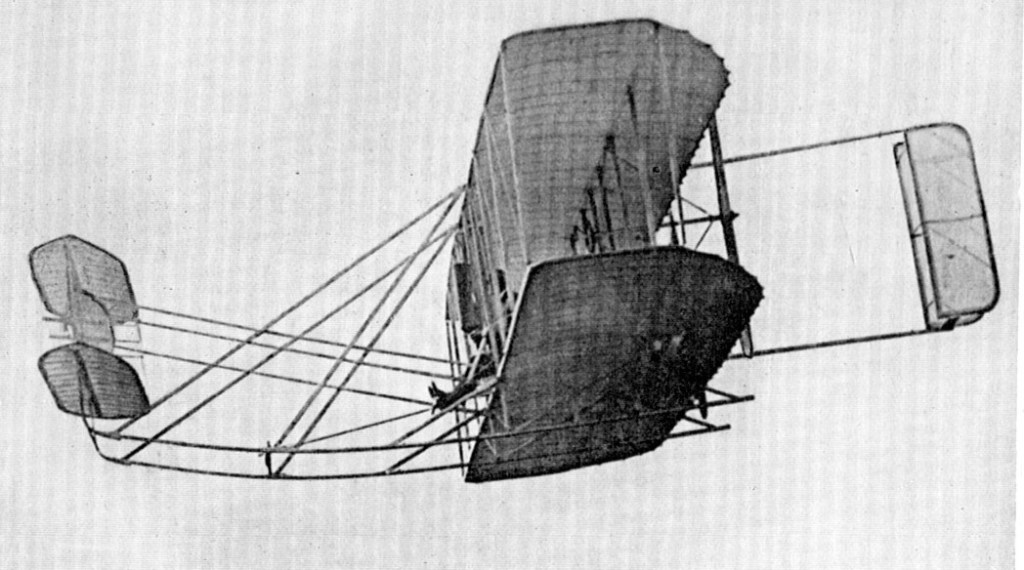
In France, Wilbur flew at Hunaudieres and Auvours from August to December 1908. Passengers were carried on some 60 occasions. It flew from August 18 to October 30 with its original Dayton-built Wright engine then, owing to a breakage, it flew with a Wright engine built under lcence by Bariquand and Marre in Paris.
The two place Transitional Model A of 1910 was 33 ft 9 in long and otherwise similar to the Flier, with variations in control surfaces and a rear-mounted, rudimentary stabilizer and elevator, the first such on Wright’s machines.
The two place Transitional Model A of 1910 was 33 ft 9 in long and otherwise similar to the Flier, with variations in control surfaces and a rear-mounted, rudimentary stabilizer and elevator, the first such on Wright’s machines. The first of their planes with a horizontal surface behind the tail rudders, first fixed and than replaced it with a flexible elevator, giving the plane a front and a rear elevator. Later they reduced the size of the canard.
Built at the Wright’s flight school in Montgomery AL, one set a new altitude record of 6,000′ on 17 June 1910, piloted by Walter Brookins. At least three were built, and several built under license in France and Germany.
One of the first Wright biplanes built in England by the Short Brothers was bought by Alan Ogilvie, who made mainly flights from Camber Sands, near Rye, including a 139.5 mile, 3 hr 25 min flight in 1910.
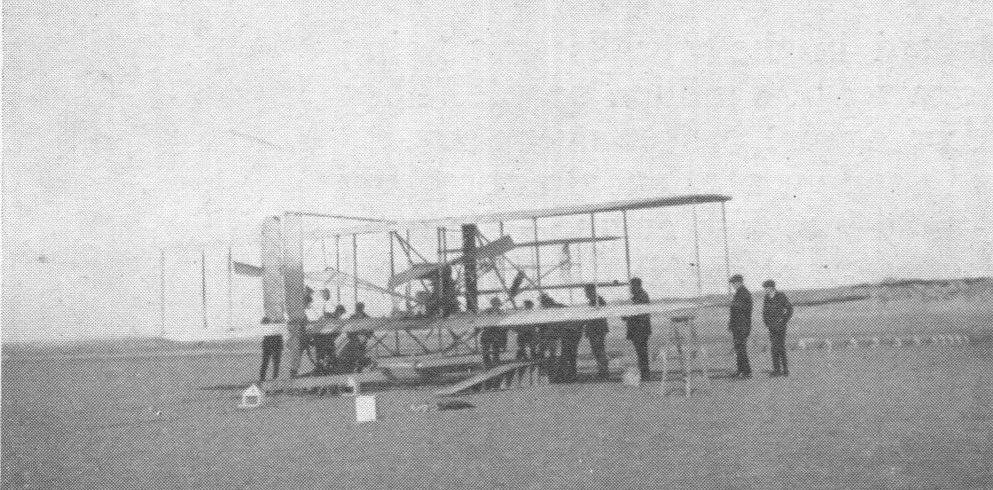
The 1907 Wright Model A was the world’s first production airplane from 1907 to 1909.
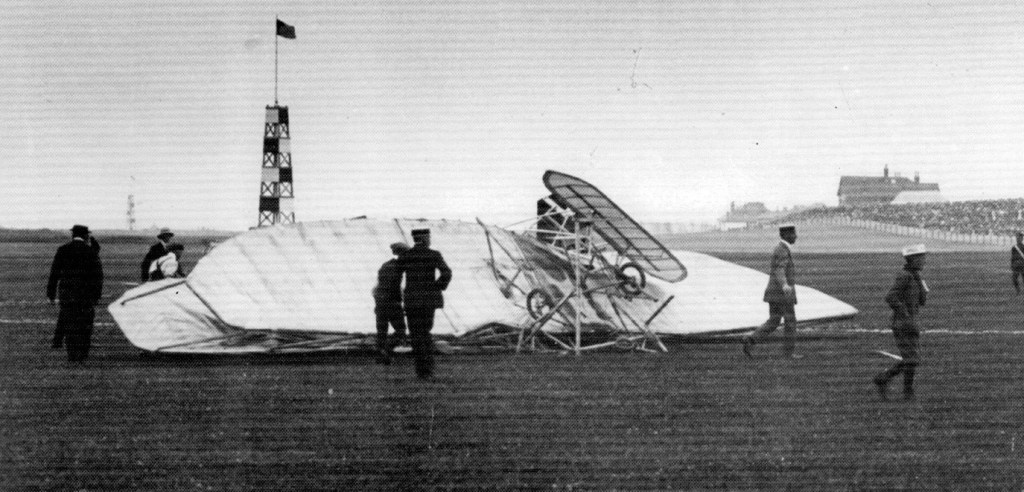
Type A-1
Length: 29 ft (8.5 m)
Wing span: 41 ft (12 m)
Wing area: 510 sq.ft
Flying wt approx: 1000 lb
Engine One 30 hp Wright
Seats: 2
Type A-2
Length: 29 ft (8.5 m)
Wing span: 41 ft (12 m)
Wing area: 510 sq.ft
Flying wt approx: 1000 lb
Engine One 30 hp Wright
Seats: 2
Longest flight: 1 hr 14 min 20 sec / 50 miles
Total no of flights: 10
Total flying time: 5 hr 56 min
A / Flier / Military Flyer
1907
Engine: Wright pusher, 39hp
Wingspan: 36’4″
Length: 28’0″ (some early plans show 27’9″ and 27’10”)
Useful load: 460 lb
Speed: 44 mph
Seats: 2
 All Aero