
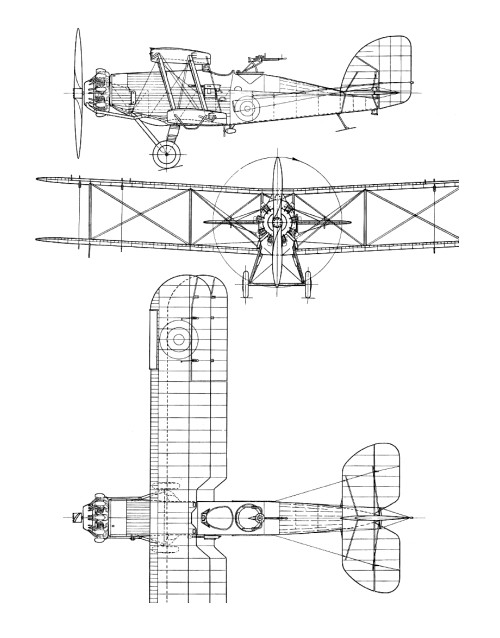
The Wapiti was a two-seat general-purpose biplane incorporating in its design several de Havilland D.H.9A component parts including wings as requested by the Air Ministry. The prototype first flew in March 1927 and the initial order for 25 production Mk I included one specially modified aircraft with a more luxurious rear cockpit for the Prince of Wales to fly in.
Mk I were powered by 313kW Bristol Jupiter VI engines, but subsequent Mk II and Mk IIA had 343kW Jupiter VI and 391.2kW Jupiter VIIIF or similar engines respectively.
The Mk.II switched to metal construction.
Small numbers of lengthened Wapiti V and unarmed Mk VI trainers brought total production for the RAF to 501; while the type was also adopted by Australia, South Africa (also built under licence), Canada, India and China.

An initial order for 38 for the RAAF was placed in October 1928 to replace DH.9s and DH.9As. These were delivered between April 1929 and March 1931. A further six ex-RAF Wapitis were purchased in 1937.

Wapiti Mk I
Engine: 313kW Bristol Jupiter VI
Wapiti Mk II
Engine: 343kW / 460 hp Jupiter VI
Wapiti Mk IIA
Engine: 391.2kW Jupiter VIIIF
Wingspan: 14.15 m / 46 ft 5 in
Length: 9.65 m / 32 ft 8 in
Height: 3.61 m / 12 ft 10 in
Wing area: 43.48 sq.m / 468.01 sq ft
Max take-off weight: 2449 kg / 5399 lb
Empty weight: 1728 kg / 3810 lb
Max. speed: 225 km/h / 140 mph
Cruising speed: 96 kts / 177 km/h
Service ceiling: 20600 ft / 6280 m
Range: 853 km / 530 miles
Armament: 2 x .303in / 7.7mm machine-guns
Bombload: 263kg
Wapiti Mk V
Wapiti Mk VI
Armament: none
 All Aero