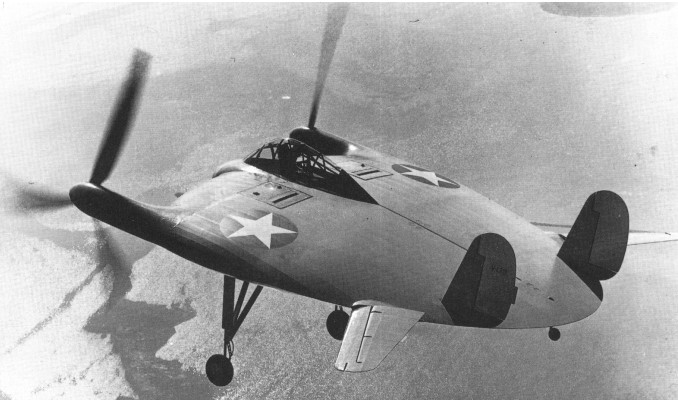
Navy chiefs ordered a full-size flying model to be built to evaluate the flying characteristics of the proposed fighter, and this aircraft, the Vought V 173 designed by Charles H Zimmerman, made its first flight on 23 November 1942 piloted by Boone T Guyton. The V 173 (unofficially dubbed Flying Pancake or Flying Flapjack) was constructed of wood with fabric covering, and had two wingtip-mounted 80 hp Continental engines driving a pair of 5.03 m (16 ft) three-blade, laminated-wood propellers.
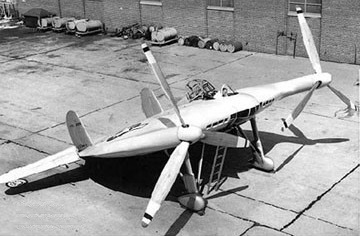
Compared to a typical taildragger’s resting deck angle of around 5 degrees, the V-173 sat at an extreme 22 degrees. This would eliminate all forward vision if not for the addition of windows on the underside of the nose by the pilot’s feet. When on the ground, the pilot simply looked downward, past his feet, and could see the path ahead.
To further reduce takeoff and landing distances, two enormous propellers bathed the entire airframe in propwash, generating lift even at a standstill. The result was a landing speed of only 22 mph and the capability of taking off nearly vertically with typical wind over a ship’s deck.
The V-173 prototype would ultimately weigh just over 3,000 pounds fully loaded, with a massive 427 square feet of wing area. The V-173’s wing loading was just over 5 pounds per square foot.
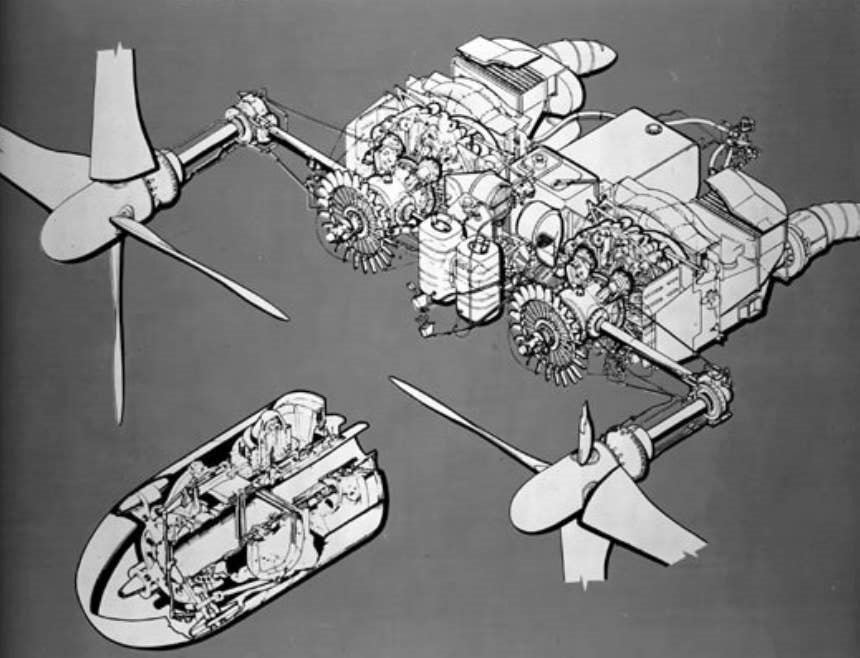
With such ample lift, only modest power would be required. Zimmerman chose two small and light 4-cylinder Continental A80 piston engines. Their small size enabled them to be buried within the saucer-like fuselage.
Zimmerman had US patent #2,431,293 of 18 November 1947.
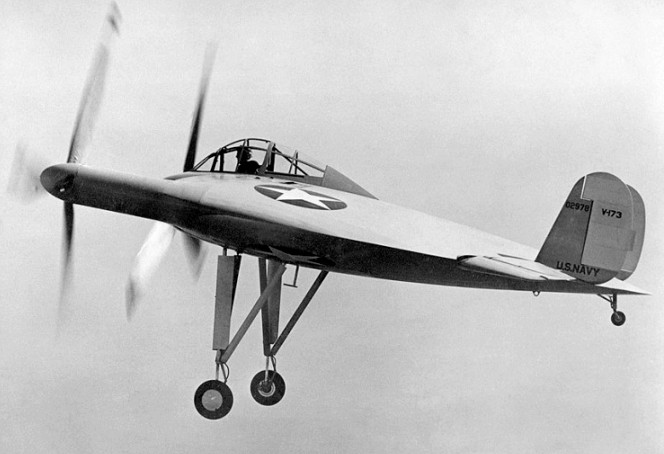
The engines of the V 173 were barely adequate, but the Flying Pancake took off in 15 m (50 ft), or much less with a steady wind, and could cruise at 222 kph (138 mph) despite its low power. Guyton and other pilots who flew the aircraft (including Charles Lindbergh) found it impossible to stall or spin, and full control could be maintained even at a 45 degree angle of attack.
The V-173 confirmed that the type offered viceless handling characteristics as well as an exceptional speed range between 20 mph (32 km/h) and 460 mph (740 km/h). The Vought XF5U was based on the V-173.
At one point, a vapor lock resulted in a forced landing on a beach. While the airplane flipped over onto its back, neither the airplane nor test pilot were significantly harmed.
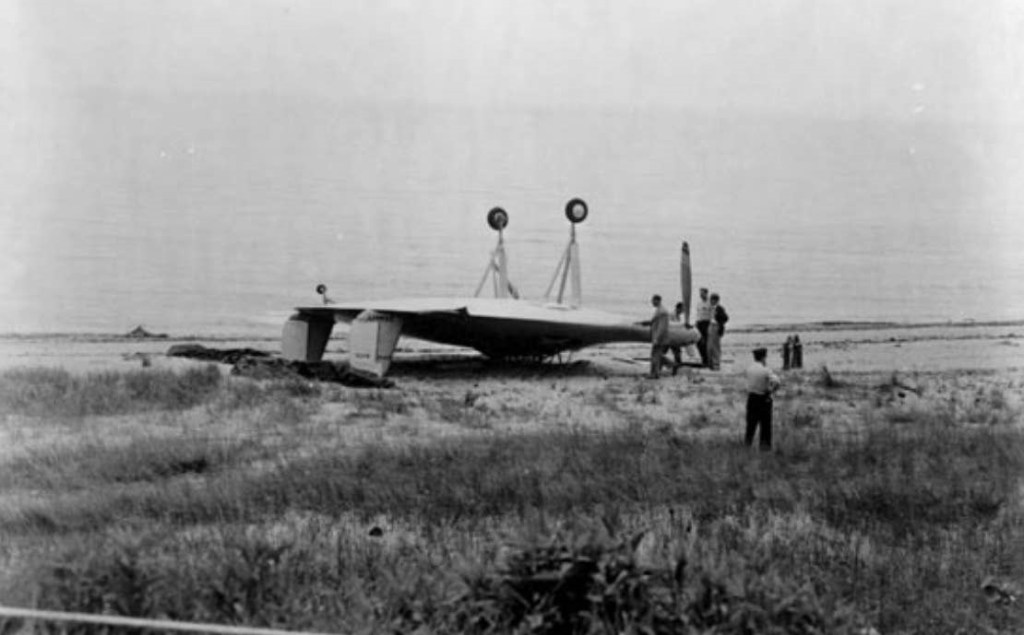
The one V-173 built, 02978 in 1942, completed 171 flights for 131.8 hours flight time.
The V-173 placed into long-term storage. Charles Zimmerman went on to become a division chief for Project Mercury at NASA.
In 2003, the Vought Aircraft Heritage Foundation began a nearly 10-year-long restoration of the aircraft, stripping it down to its wooden airframe and replacing the fabric entirely. Today, the resplendent V-173 stands proudly on display at the Frontiers of Flight Museum in Dallas.
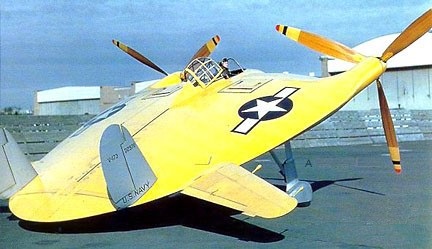
Engines: 2 x 80hp Continental
Wingspan: 23’1″
Length: 26’0″
Wing area: 427 sq.ft
Speed: 138 mph
Landing speed: 22 mph
TO distance: 200 ft
Landing distance: 50 ft
 All Aero