
The Viking was a twin-engined 24-27-seat transport and was the first completely new post-World War II airliner to fly in the world. For speed and cheapness parts of the Wellington bomber were used, particularly in the wings. The fuselage, of stressed skin construction, was new.

British European Airways operated a fleet of 49 on its European network and total production was 163. BEA aircraft were modified to allow them to carry up to 34 or 38 tourist-class passengers when required. Four also flew with the Queen’s Flight.
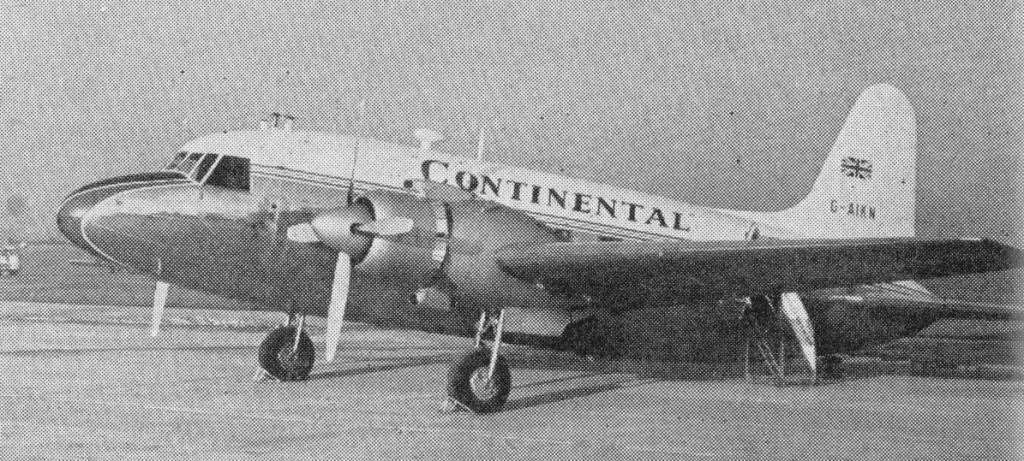
On 1 September 1946 the first Viking joined the British European Airways (BEA) fleet. BEA were to eventually operate 75 Vikings, fitted for 21 passengers.
In December 1946, the Vikings were grounded due to the icing up of control surfaces. After extensive modifications to the elevators and de-icing system, the Vikings were back in the air the following April.
On 30 October 1954 two farewell flights marked the retirement of BEA Vikings and the last commercial service from RAF Northolt.
Engines 2 x 1,690 hp Bristol Hercules
Length 65.1 ft (19.8 m)
Wing span 89.25 ft (27.2 m)
Weight empty 22,910 lb (10, 400 kg.)
Seats: 2 crew and 21 passengers
Cruise speed 210 mph (340 kph)
Ceiling 22,000 ft (6,700 km) fully loaded
Range 1,875 miles (3,000 km)
Viking IB
Engines: 2 x Bristol Hercules 634, 1260kW
Max take-off weight: 15354 kg / 33850 lb
Empty weight: 10546 kg / 23250 lb
Wingspan: 27.2 m / 89 ft 3 in
Length: 19.86 m / 65 ft 2 in
Height: 5.94 m / 20 ft 6 in
Wing area: 81.94 sq.m / 881.99 sq ft
Cruise speed: 338 km/h / 210 mph
Ceiling: 7240 m / 23750 ft
Range w/max.payload: 837 km / 520 miles
Crew: 3-4
Passengers: 21-38
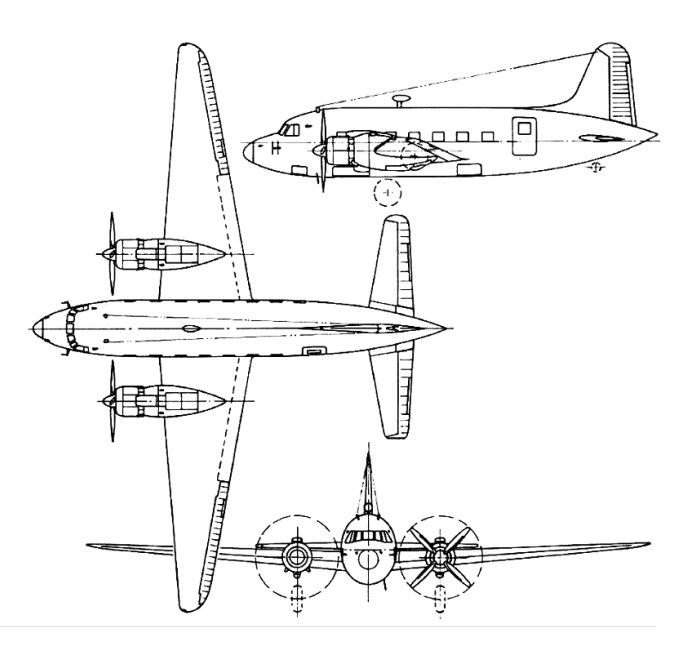
 All Aero