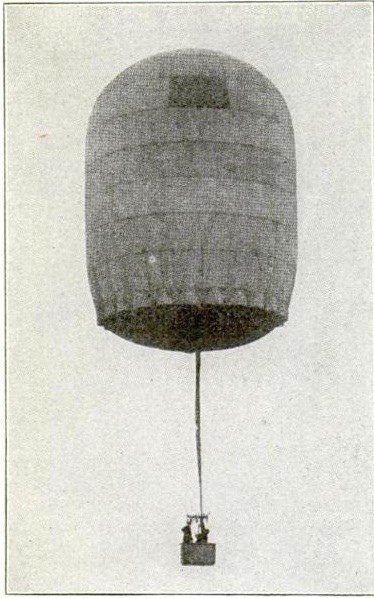
A 1902 design by Captain Eric Unge, patented in the UK. The body of the balloon consisted of plane, cylindrical and conical surfaces, made by long and wide pieces of cloth, so that the lengths of the joints and the corresponding leakage was reduced about 75 per cent. The other inventive features included an outer envelope that would reduce the heating of the gas by the sun. The balloon’s envelope, in an emergency, could also function as a parachute. And indeed it did, when the gas exploded during its second flight (the first being a 24-hour flight from Sweden far into Russia) and Unge and his passenger were unhurt in the following crash.
 All Aero