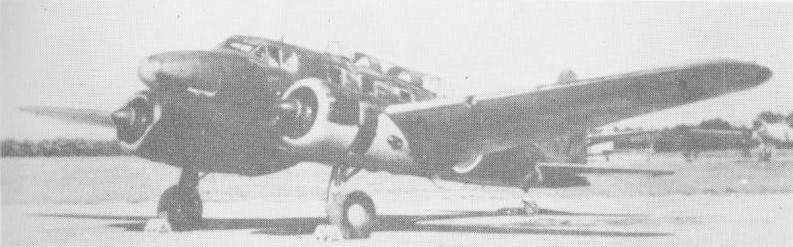
The Ki 54was a 1939 design by Ryokichi Endo of the Tachikawa Hikoki K K, as an advanced trainer/crew trainer, and made its first flight in mid 1940. It was a twin engined, low wing monoplane of all metal construction (except for the control surfaces, which were fabric covered) and had retractable landing gear. It was powered by two wing-mounted Hitachi Ha-13a radial engines. Successful testing led to the initial version intended primarily for pilot training, ordered during 1941 as the Army Type 1 Advanced Trainer Model A (Tachikawa Ki-54a).
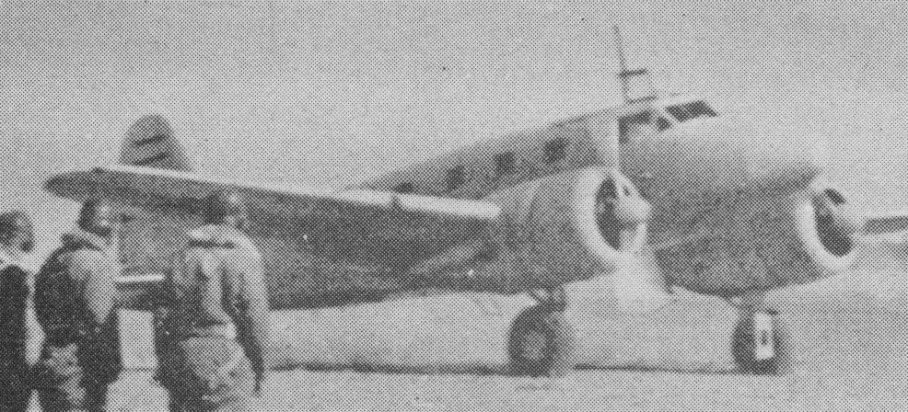
The initial military version, which entered production in 1941, was the Ki 54a or Army Type 1 Advanced Trainer Model A. Both the prototype and the Ki 54a were powered by two 510 hp Hitachi Ha 13a nine cylinder radial engines, each driving a two blade variable pitch propeller. Intended for pilot training, the Ki 54a was built in fairly small numbers before being supplanted by the Model B (Ki 54b), the most widely used version. Both models could carry from five to nine occupants. In the case of the Ki 54b (a bomber crew trainer) there were four stations for gunnery trainees who could each operate a free 7.7 mm (0.303 in) Type 89 machine-gun. The installation was characterized by twin dorsal turrets, a distinctive recognition feature of the Ki 54b.
Its operating reliability and roomy fuselage made the Ki 54 an obvious candidate for light transport and communications duties, and these were the functions of the third production version, the Ki 54c, or Army Type 1 Transport Model C. It differed from the previous variants in being unarmed, and therefore having no turrets on the fuselage. The Ki 54c carried a flight crew of two and eight passengers. Production included about two dozen civil examples (designated Y 59), some of which were used in Manchuria.
A fourth model, the Ki 54d antisubmarine patrol version, or Type 1 Patrol Bomber Model D, could carry an offensive load of 480 kg (1060 lb) of depth charges, but was not built or used in great numbers. Three developed versions of the Ki 54 were not finished before the end of the war. Completion of the Ki 110 prototype a wooden construction version of the Ki 54 was prevented by US air attack. The Ki 114, a development of the Ki 110, and the projected Ki 111 flight-refuelling tanker development of the Ki 59 were never built.
The Ki 54 was the standard aircrew trainer of the Second World War for the pilots of multi-engined aircraft, navigators, bomb aimers, radio operators and air gunners. It. Between 1940 45, Tachikawa produced 1368 examples 1342 of them for the Japanese army air force in a variety of models, all of which were given the name Hickory under the Allied Pacific codename system.
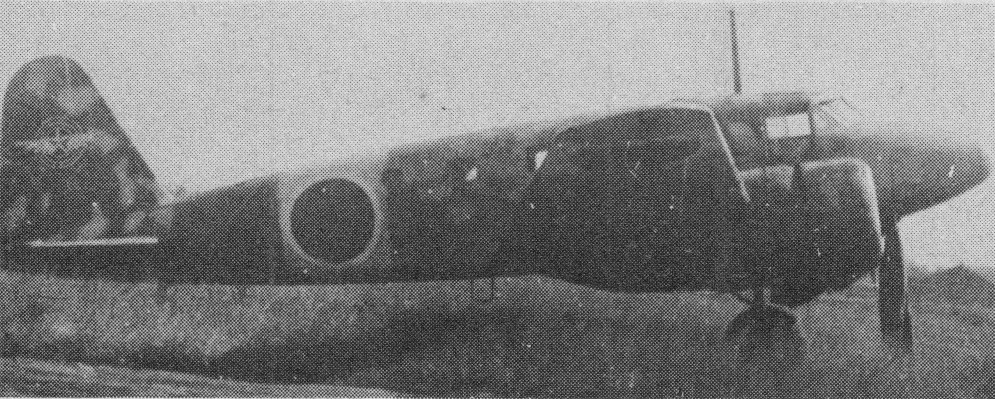
Ki 54b
Engines: 2 x Hitachi Ha-13a, 380kW
Span: 17.9 m (58 ft 9 in)
Length: 11.94 m (39 ft 2 in)
Height: 3.58 m / 12 ft 9 in
Wing area: 40 sq.m / 430.56 sq ft
Empty weight: 2954 kg / 6512 lb
Gross weight: 3897 kg (8590 lb)
Maximum speed: 376 km/h (234 mph)
Ceiling: 7180 m / 23550 ft
Range: 960 km / 597 miles
Crew: 2
Passengers: 8
Armament: 4 x 7.7mm machine-guns
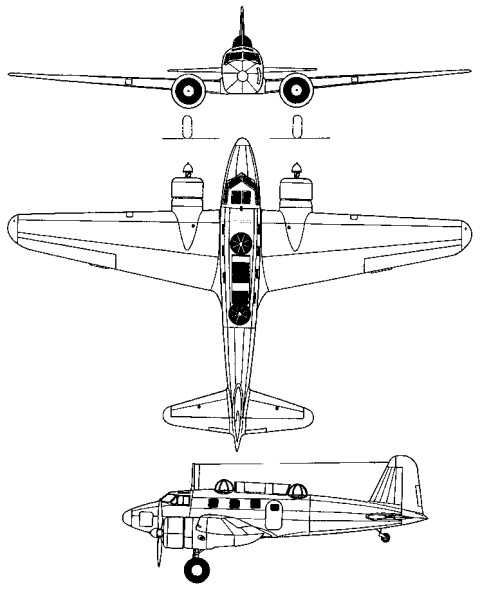
 All Aero