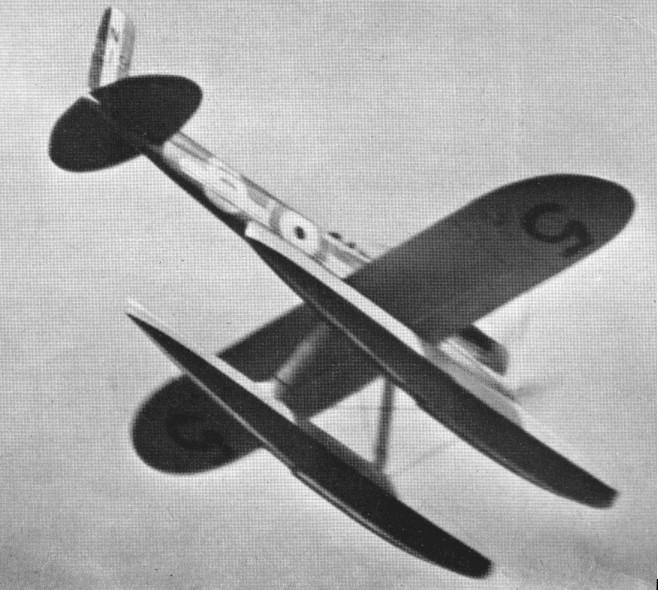
The Air Ministry felt that it could no longer stand by and see foreign aircraft winning the Schneider Trophy contest, so it ordered a number of racing seaplanes and formed a special RAF High Speed Flight to enter them in the 1927 contest at Venice.
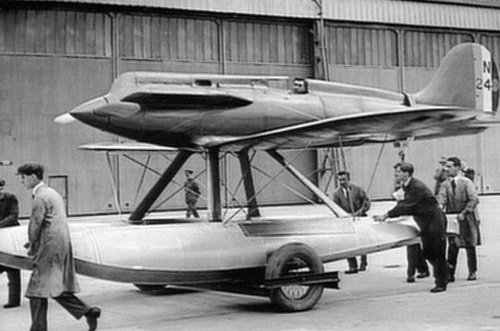
One of the types ordered was the Supermarine S.5, a development of the S.4 with all metal air¬frame and an 875 hp Napier Lion engine. On June 7, 1927 the Supermarine S.5 racing seaplane took to the skies for its maiden flight.

Only three examples of the S.5 were constructed, but they quickly made their mark. At the 1927 Schneider Trophy contest at Venice, two S.5s dominated the field—finishing first (at a speed of 281.65 mph) and second, respectively. Purpose-built for speed and agility, the S.5 featured compact dimensions: a wingspan of 26 feet 9 inches, a length of 24 feet 3.5 inches, and a height of just 11 feet 1 inch. The airframe’s empty weight was 2,680 pounds, with a maximum gross weight of 3,242 pounds.


Powering the S.5 was a Napier Lion VIIA W-12 liquid-cooled engine, producing 900 horsepower. The aircraft achieved a top speed of 319.57 mph. Though none of the original S.5s survive.
The Schneider Trophy never experienced any casualties during competition, but several pilots were killed training for the races. Sam Kinkhead in 1928 and Jerry Brinton in 1931 in a Supermarine S.5, from Great-Britain.
Replics:
Leisure Sports S.5
 All Aero