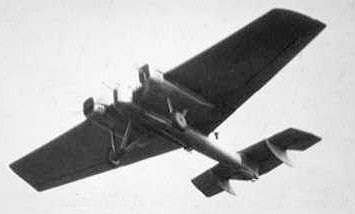
The Stout ST-1 of 1922 was a two-place, open cockpit all-metal monoplane prototype of a projected USN torpedo-bomber; the first all-metal USN plane.
The US Navy Bureau of Aeronautics had a requirement to review several types of torpedo-carrying aircraft. Prototypes of the Curtiss CT, Stout ST, Fokker FT and Blackburn Swift F were evaluated at the Anacostia Naval Yard. William Bushnell Stout approached the Navy with his all-metal torpedo bomber design. He estimated the aircraft would cost $50,000 each to produce. The aircraft was built in Detroit, Michigan over a two-year period. Navy officials visited the facility frequently to inspect the new metal-forming and construction methods.
The aircraft was a twin engine conventional geared mid-winged monoplane. Its primary feature was its corrugated metal construction, a new technique and different from the tube-and-fabric airplanes of the time. In addition, the internally supported cantilever wing developed for the Stout Batwing was employed. The aircraft was test flown successfully, however, the airplane showed signs of inadequate longitudinal stability.
Three were ordered, A5899 to A5901.
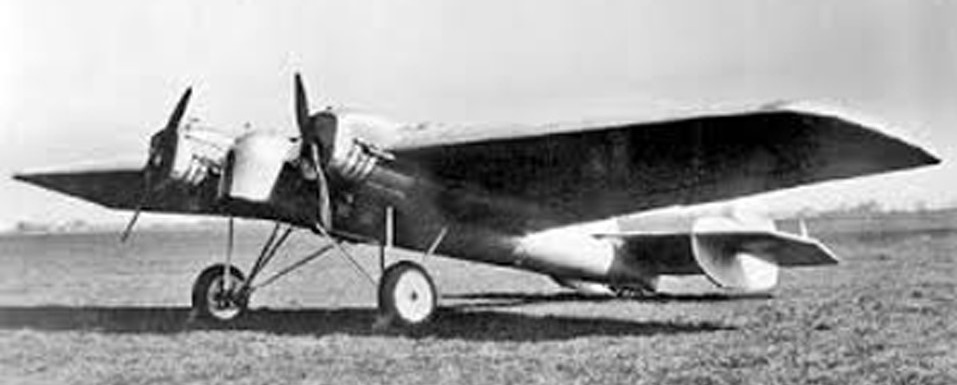
The first flight of the prototype, designated ST-1, was at Selfridge Field on 25 April 1922 with Edward Stinson at the controls. The flight was witnessed by William A. Moffett, chief of Navy Aeronautics. Stinson suggested changes to the aircraft, but none were made.
When the $162,000 prototype A6072 crashed after 14 flights, a contract for 2 more, A5902 and 5904, was cancelled.
Engines: two 400hp Packard V-1237
Wingspan: 60’0″
Length: 37’0″
Max speed: 120 mph
Cruise: 110 mph
Stall: 40 mph
Range: 385 mi
Crew: 2
 All Aero