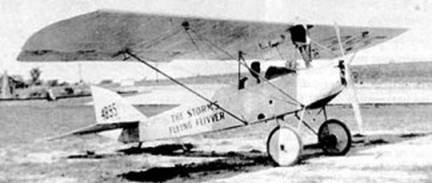
The 1928 Storms Aircraft Co Flying Flivver was a kit plane advertised in kit form, less motor, for $1135. Power was normally a 36hp Ford T engine, or optional 60hp Ford A. A parasol wing was $985.
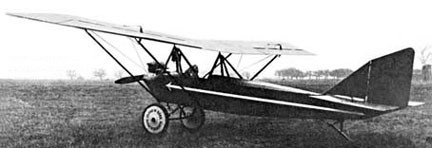
About seven were registered in the USA including;
N4895, which a newspaper report had as crash-landing in 1928, piloted by A J Storm.
N11917, appears in Texas registers as (Wyley J) Wood-Storms
N882Y shows as Lee-Storms
N627W
N882Y
N10212
One was constructed at Wesport, New Zealand in the 1930s. The aircraft kitset imported from the USA by Jack Kilkenny and partners was a Storms WhizBang. In April 1933 following assembly it was inspected by a member of the NZPAF and found to be built from substandard material. Nevertheless the group were not deterred and it was taken to Carters beach with intentions to fly it. However although one of the group had previously had two hours dual instruction, he and Kilkenny’s brother-in-law were unable to get it of the ground. A week or two later John Spencer Allan after additional dual flying tuition successfully flew the aircraft on several occasions however it crashed with Spencer Allan at the controls following engine failure and was badly damaged. Plans to rebuild the aircraft were shelved following a second visit from the PAF inspector who advised them of the consequences should they fly it again.
In June 1970 John Spencer Allan was killed near Taupo in the crash of AESL Airtourer ZK-CXS. His passenger survived.
By all accounts the WhizBang kit was a real “Heath Robinson” affair. The PAF inspector noted that the timber supplied for wings and fuselage was Sugar Pine, the aileron hinges were cheap cupboard hinges and the elevator and rudder hinges were fashioned from leather shoe tongues and tacked to the spars. The Westport aircraft was kit #7 and another kit is believed to have been imported by Mr Hildred, Te Aroha, New Zealand, but it seems probable construction of this aircraft was not completed
Eddie Campbell of Prineville, USA, had, in 1930, got hold of the plans for a homebuilt design called “The Storms Flying Flivver,” a tiny high-wing monoplane powered by a Ford Model A engine. The Model A engine was roughly the same size and weight as the Model T, but made twice as much power. And Eddie worked at a Ford dealership’s repair facility, so he had access to the equipment necessary to soup it up a bit. Ted was out of town for a week when Eddie finished his project, and not expected back for another four days. Eddie, already a fairly experienced glider pilot, grew impatient. Plus, it was his plane; he wanted to be the first to fly it. So, he pulled it out and fired it up and pointed it down the field. It would not take off. He tried it several times; at the proper speed, it simply would not leave the ground. Eddie looked it over, scratched his head, and decided the problem was that it was “nose heavy.” Getting his tools out, he took the wing loose and moved it a little bit forward. Then he climbed back in to try again. This time, the plane came off the ground, all right. It went straight into a steep climb, completely ignoring Eddie’s attempts to control it; stood on its tail, trying to hang from the prop, about 100 feet in the air; then stalled and pitched forward and slammed down into the ground, nose first, ending up in a tangled heap.
Flying Flivver
Engine: 36hp Ford T
Wingspan: 31’0″
Length: 20’6″
Useful load: 350 lb
Max speed: 65 mph
Cruise: 45 mph
Stall: 20 mph
Range: 135 mi
Seats: 1
Flying Flivver
Engine: 60hp Ford A
Wingspan: 31’0″
Length: 20’6″
Max speed: 70 mph
Cruise: 50 mph
Stall: 20 mph
Seats: 1
 All Aero