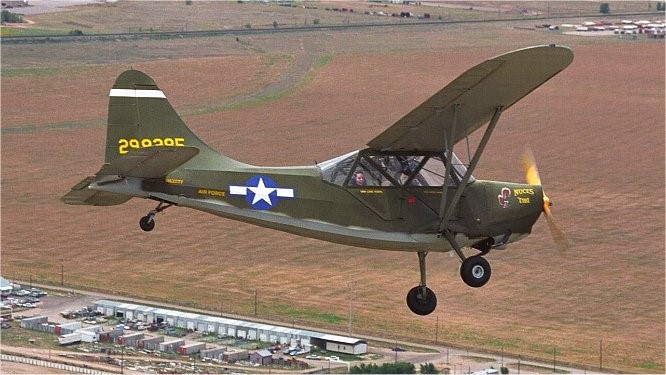
While the YO-54s were being evaluated by the Air Corps, Stinson expected rejection and on speculation they reconfigured the fuselage for tandem seating and added a Plexiglas “greenhouse”, hoping the military would be more interested in this modified version. Known as the V-75B, and later as the V-75C with a more powerful engine, this lightly reworked version of the Voyager was also rejected by the Air Corps without undergoing formal trials. Stinson was advised that if they wished to obtain a contract for a low-cost replacement for the Vigilant that it had to be designed to Army-Navy engineering requirements as the O-49 had, not the lighter-duty CAA standard for civilian airplanes.
At that point, Stinson went back to the drawing board and designed a “clean sheet” tandem-seat airplane that met all of the military requirements. The only features that it shared with the civilian Model 10 / YO-54 were the NACA 4412 airfoil, wing slots, slotted flaps, and oleo-damped cantilevered main landing gear, but no parts were interchangeable and most were of different size and / or construction. Outwardly, it looked similar to the V-75C, but it was a completely different and much stronger airframe from the wheels up. It was also powered by a Lycoming six-cylinder O-435 engine of 175 horsepower that had been designed specifically for use on the new prototype V-76 (a designation in keeping with Stinson’s new parent company Vultee). This aircraft, nicknamed the “Flying Jeep” by factory personnel, was now a very distant third cousin of the HW-75 / Model 105. Accepted in principle by the Wright Field Material Division after accelerated service trials were completed in September 1941, a purchase agreement was reached just days before the Japanese surprise attack on Pearl Harbor. The formal contract for 275 airplanes was signed in January 1942. In succeeding months and years, that contract would be greatly expanded to eventually number 3,590 planes delivered before the war’s end. The RAF in India received 100 of them, and the U.S. Marine Corps 306.
The fuselage was constructed using chrome-moly steel tubing covered with doped cotton fabric. The wings and empennage were constructed of spruce and mahogany plywood box spars, plywood ribs and plywood skins. These components were also covered with fabric. The use of aluminum, which was in critically short supply and more urgently needed for other aircraft, was limited to the engine cowling, tail cone, framework for the ailerons, rudder and elevator, and the landing gear fairings. The L-5 was powered by a six-cylinder Lycoming O-435 engine of 185 horsepower (the prototype was 175) that was increased to 190 hp on the L-5G with improvements a better carburetor and changes in the induction system.
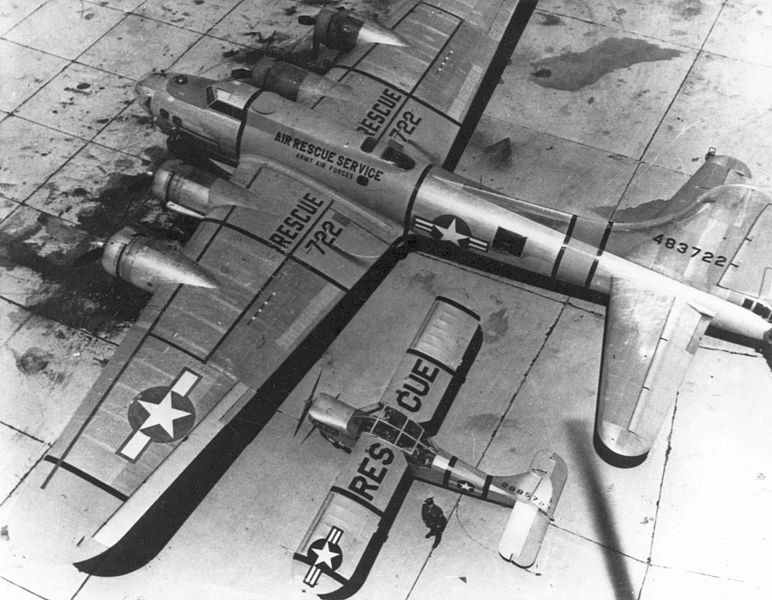
First flying on June 28, 1941 and originally assigned the designation O-62 (‘O’ for observation) in 1941, by the time the first production examples were ready in November of 1942 the light observation category had been renamed “liaison” by the recently re-organized Army Air Forces. This occurred in March 1942 when all the light planes received the L-designation. Under the new system, the Taylorcraft O-57 became the L-2, the Aeronca O-58 became the L-3, and the Piper O-59 Cub became the L-4. The primary purpose of liaison category aircraft was courier and communication work and artillery spotting. In 1943 this was expanded to casualty evacuation. The fuselages of later models of the L-4 and L-5 were modified so that the aircraft could also be used for air ambulance or light cargo work. With a wider and deeper rear fuselage section and a large rear door that folded downward, the L-5B and subsequent variants could accommodate litter patient on all types of American and British “stretchers”, or up to 250 pounds of cargo distributed between the fore and aft platforms. It was designated as the Model 76 (V-76 under the Vultee system)
The USN OY version was adapted from 10 Voyager, with wing tanks and glazed cabin. Popularly, but unofficially, known as “Flying Jeep,” it became the most widely-used Allied utility plane during the war. Designations for those in ambulance service were appended with suffix -VW.
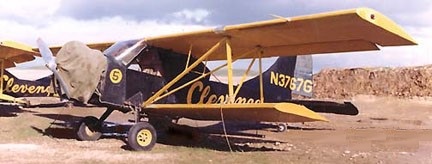
Some surplus L-5s were converted by (Wayne) Clevenger Aircraft Co in 1955 to biplane crop dusters with 220hp Continental W-670.
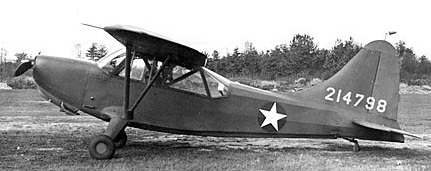
275 were built as O-62-ST; 42-14798 to 42-15072, and 1,538 as L-5-VU and -VW; 42-98036 tp 42-99573, included USN/USMC batch as OY (total transfers from L-5, -5B, and -5E numbered 458), and 40 to the RAF as Sentinel I for service in CBI theater. ATC 764 was issued on 17 December 1945 which covered all production models.
Capable of operating from roads, meadows or short, hastily prepared airstrips, the L-5 “Sentinel” carried messages and VIP’s, delivered troops, supplies, mail and ammunition to front line units. On return flights, wounded or critically ill personnel were often evacuated to rear area field hospitals for medical treatment, boosting the morale of combat troops fighting in remote areas. L-5s were also used for aerial photography, controlling vehicle convoys, para-dropping food, medical supplies and ammunition, laying communication wire, distributing propaganda leaflets, spraying pesticide, transporting prisoners, and directing fighter-bombers to ground targets. The L-5 was also popular with generals and other high-ranking officers for fast, efficient short-range transportation.
After tests on land, the “Brodie” system was first tested in September 1943 for shipboard use with an installation on the liberty ship City of Dalhart. Staff Sergeant R. A. Gregory made ten good takeoffs and hookups with a Stinson L-5 light plane. During the Battle of Okinawa, L-5s operated from an LST using the Brodie landing system which allowed a light aircraft to take off and land without a flat surface by snagging a wire hung between two booms.
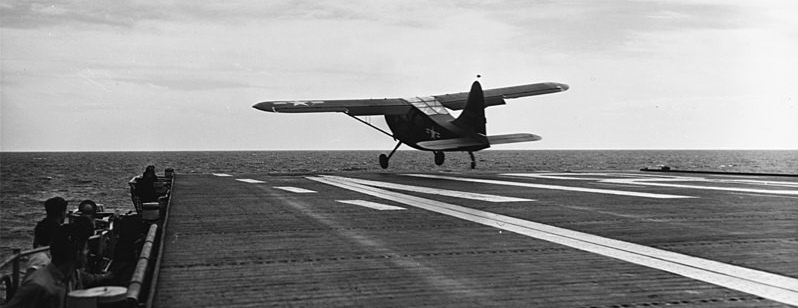
One of the L-5s that used the Brodie system off Okinawa is now on display in the Boeing Aviation Hangar facility of the Smithsonian’s NASM’s Udvar-Hazy Center annex at Dulles Airport just west of Washington, DC.
The USAAF, US Marines, and US Navy used this aircraft in the European, Pacific, and Far East theatres during World War II, and in Korea during the Korean War.
The L-5A designation of 1942 applied to conversions of L-5 with a 24v electrical system and revised gear fairings, but all were cancelled, and revisions became standard equipment on later models.
The 1942 L-5B had an opening aft hatch for a stretcher or 200 lb cargo, and a twin-float capability. 730 were built; 42-99574/99753, 44-16703/17102, -17104/17252, including USN/USMC batch as OY-1, and 60 to the RAF as Sentinel II.
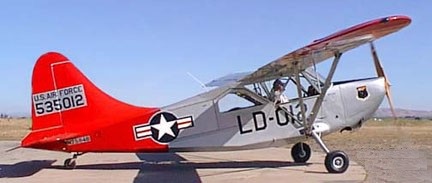
The 1944 L-5C were a photo-recon version of the L-5B with a K-20 camera. 200 were built serials 44-17253 to 44-17452
The 1943 L-5D were L-5C modification from L-5 in service.
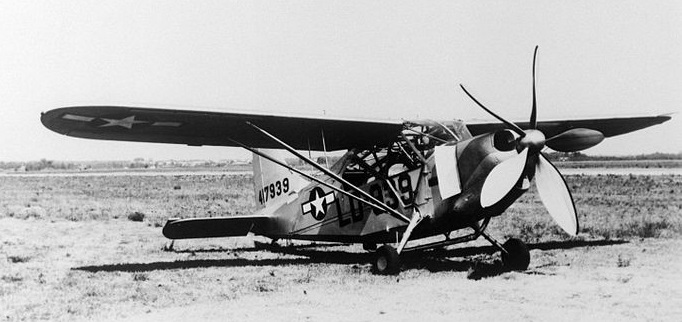
The 750 L-5E of 1944, 44-17453 to 44-18202, had STOL capability with 15-degree drooped ailerons and larger brakes. They included a USN/USMC batch as OY-2. One, 44-17939, was modified by NACA in 1948 with a 5-paddle-bladed prop and geared-down engine (2.8:1) in tests as a low-noise stealth recon.
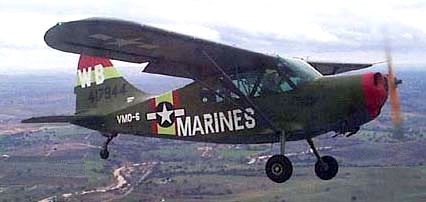
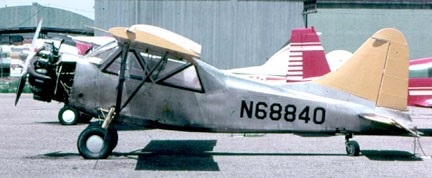
One XL-5F built in 1945, 44-17103, had a 24v electrical system.
115 L-5G of 1945 were built, 45-34911/35025, 57-6278, with 190hp O-435 engines, controllable-pitch prop, and new radios. The last one was redesignated as U-19B. 785 orders were cancelled at the end of hostilities.
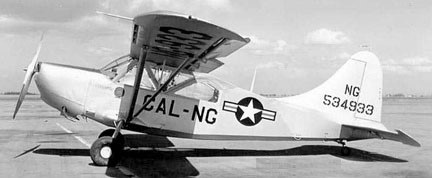
The U-19B 57-6278 of 1957 was an L-5G used as a glider tug at the AF Academy, and was active up to 1962.
The Navy and Marine version of the L-5 through L-5E were designated OY-1, and all these aircraft had 12-volt electrical systems.
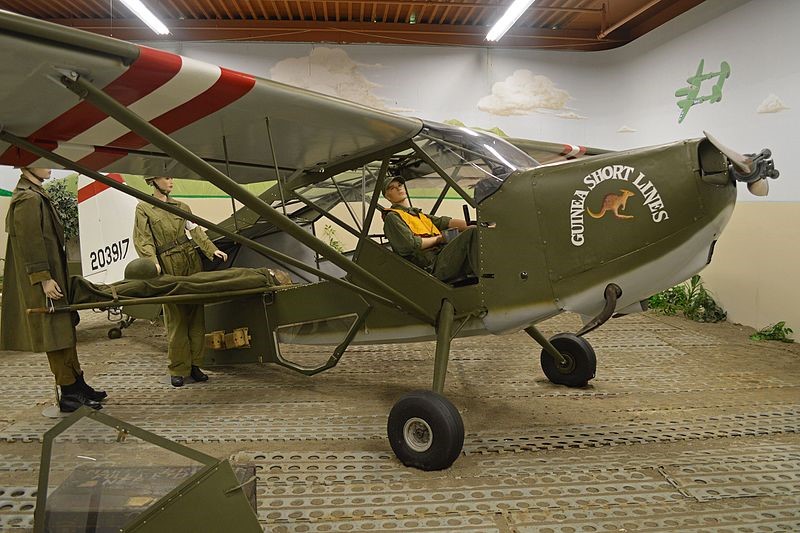
The 24-volt L-5G became the OY-2. Neither the L-5G nor OY-2 saw combat during World War II because production did not begin until July 1945, just weeks before the war ended, but they were used extensively during the Korean War. The British Royal Air Force (RAF) procured 40 L-5s and 60 L-5Bs, and designated them Sentinel Is and Sentinel IIs respectively. These aircraft were used exclusively in the India-Burma theatre of operations.
Some aircraft had jury rigged anti-tank rocket launchers (mainly bazookas) installed and used with success against ground targets in WWII.
After World War II, the L-5 was widely used by the Civil Air Patrol for search and rescue work. Many other countries also received L-5s after the war, particularly India which received 200. A number of these went to Pakistan after the partition of India in 1948. From 1950 in India, L-5s were used by flying clubs to teach civilian pilots until about 1973 when a lack of spares forced their retirement.
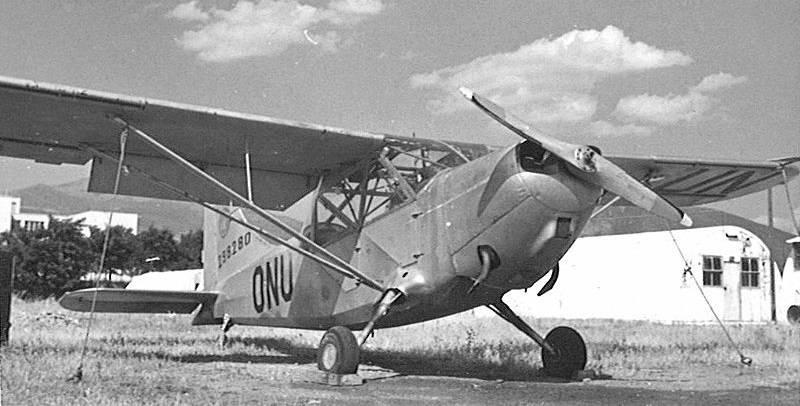
Five versions of the Sentinel were produced for the U.S. Army Air Force (USAAF); the L-5, L-5B, L-5C, L-5E and L-5G. There was no official L-5A variant as is often reported because the designation was intended for a version of the aircraft that was never built. Nonetheless, many people in and out of the military still refer to the standard “observer” version of the L-5 as an L-5A. Like the L-5A, the L-5D was a planned version that was not adopted.
A single L-5E was an L-5B equipped with an experimental low-noise “stealth” propeller and exhaust system for research purposes.
The L-5B through L-5G models were modified to carry a litter patient or light cargo, or a rear seat passenger sitting in the normal position. An L-5H version was on the drawing boards at Stinson when the war ended, and it never reached the prototype stage.
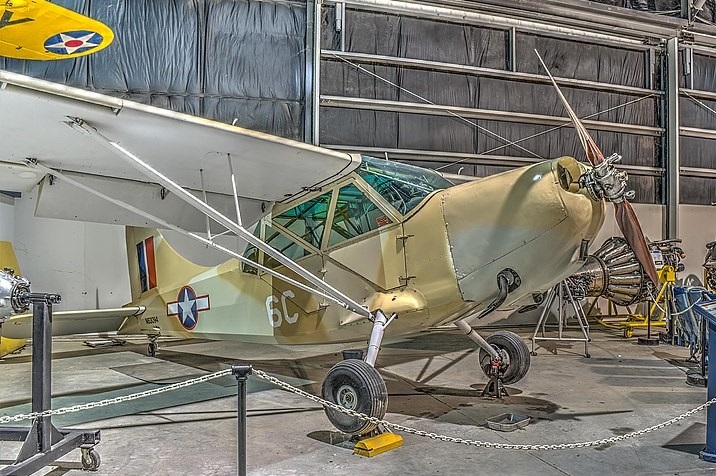
306 of the 1943 OY-1 and OY-2 were built; 02747-02788, 03862-04020, 60460-60507, 75159-75182, and 120442-120474.
The L-5 series was manufactured between November 1942 and September 1945, during which time over 3,896 of the unarmed two-seaters were built for the United States armed forces, making it the second most numerous liaison aircraft of the war behind the Piper L-4 Cub.
Variants:
O-62
Observation, artillery spotting and liaison aircraft, powered by a Lycoming 0-435-1 piston engine; 275 built.
L-5 / OY-1 / Sentinel Mk I
Observation, artillery spotting and liaison aircraft; 1,538 built, 79 transferred to USN/USMC as OY-1.
L-5A
Cancelled conversions of L-5 with 24V electrical system and 200 hp (150 kW) ranger engine.
L-5B / OY-1 / Sentinel Mk II
729 aircraft with rear fuselage hatch to permit loading of a stretcher or cargo; twin-float capability; 60 transferred to RAF as Sentinel Mk II, 40 transferred to USN/USMC as OY-1.
L-5C
200 L5-B were equipped K-20 reconnaissance cameras.
L-5D
Not adopted. No prototype built.
L-5E / OY-2
750 STOL variants with larger tires and brakes and manually drooping ailerons allowing shorter takeoff and landing; 152 transferred to USN/USMC as OY-1. An L-5E-1 variant included larger wheels and tires and heavy-duty brakes. Thirty L-5E’s were later converted to 24 volt electrical systems and re-designated OY-2.
L-5G / U-19B
Similar to L-5E but with a 24 volt electrical system and powered by 190-hp (142-kW) Lycoming 0-435-11 piston engine with improved cylinders and carburetor and fitted with controllable pitch propellers. 115 were built by end of the war and the contract for 785 others was cancelled. Final production model redesignated U-19B in 1962.
XL-5F
One test and evaluation aircraft, powered by a Lycoming 0-435-2 piston engine.
U-19A
L-5 variants still in service redesignated U-19A by the USAF in 1962.
U-19B
L-5G redesignated U-19B in 1962. One used as a glider tug at the United States Air Force Academy.
OY-1
306 L-5 and L-5Bs transferred to the United States Marine Corps and United States Navy.
OY-2
152 transfers of L-5E to USN/USMC; 30 OY-1 conversions to 24V electrical system.
Sentinel Mk I
40 L-5s supplied to the RAF under Lend-Lease.
Sentinel Mk II
60 L-5Bs supplied to the RAF under Lend-Lease.
L-5/235
variant powered by Lycoming O-540-B, 235 hp (175 kW), used for glider towing.
Specifications:
L-5
Powerplant: 1 × Lycoming O-435-1, 185 hp (138 kW)
Propeller: 2-bladed fixed-pitch
Wingspan: 34 ft 0 in (10.36 m)
Wing area: 155 sq ft (14.4 m2)
Airfoil: NACA 4412
Length: 24 ft 1 in (7.34 m)
Height: 7 ft 11 in (2.41 m)
Empty weight: 1,550 lb (703 kg)
Max takeoff weight: 2,050 lb (930 kg)
Cruise speed maximum: 130 mph (210 km/h, 110 kn)
Cruise speed normal:105 mph (91 kn; 169 km/h)
Stall speed: 42 mph (68 km/h, 36 kn)
Never exceed speed: 163 mph (262 km/h, 142 kn)
Range: 375 mi (604 km, 326 nmi)
Service ceiling: 15,800 ft (4,800 m)
Rate of climb: 900 ft/min (4.6 m/s) at sea level
Crew: 2 (pilot and observer)
L-5 Sentinel
Engine: Lycoming O-435-A, 187 hp
Length: 24.114 ft / 7.35 m
Height: 6.89 ft / 2.1 m
Wingspan: 34 ft / 10.35 m
Wing area: 178.252 sq.ft / 16.56 sq.m
Max take off weight: 2183.0 lb / 990.0 kg
Weight empty: 1472.9 lb / 668.0 kg
Max. weight carried: 710.0 lb / 322.0 kg
Max. speed: 117 kt / 216 km/h
Initial climb rate: 944.88 ft/min / 4.8 m/s
Service ceiling: 14764 ft / 4500 m
Wing load: 12.3 lb/sq.ft / 60.0 kg/sq.m
Range: 324 nm / 600 km
Endurance: 3 h
Crew: 2
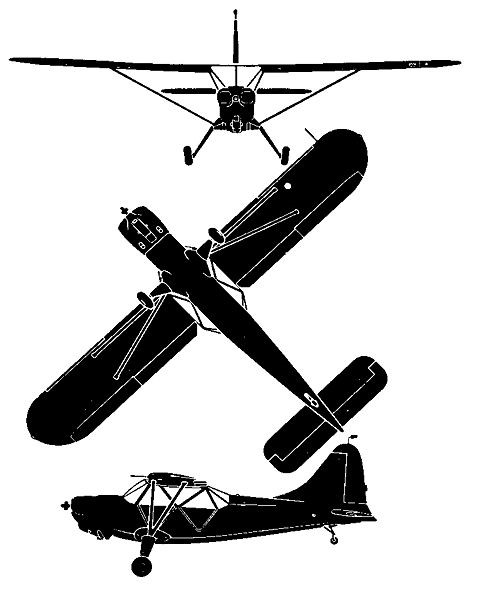
 All Aero