
In 1934, the Stearman Aircraft Company became a Boeing subsidiary and placed its Model 73 into production. It was a variation of both the Stearman Model C series that was produced between 1926 and 1930 and the Model 70 prototype that was completed in 1933. Out of this biplane grew a family of primary trainers, of which more than 2,000 were produced by 1945. The Model 76 was simply a larger version of the Model 75, which was the most prominent member of the family.
The 1934 Model X75 prototype was built for Army evaluation powered by a 225hp Wright engine.
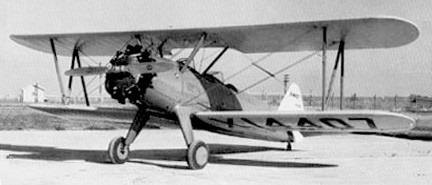
Similar to the X75, the 1937 Mac Short and Harold Zipp designed X75L3 (A75-N1) NX/NC14407 (ATC 2-536) prototype for PT-13 was powered with a 225hp Lycoming R-680 engine. They were priced at $7,710-10,412.

The Model 75 was powered by a 215 hp Lycoming and was designated by the military as the PT-13.
The Model 75 was soon replaced by the 220hp Lycoming R-680-7 powered Model A75, which became the PT-13A, B and C with the army, then in order to avoid a shortage of Lycoming engines the army requested the 220hp Continental R-670-5 be fitted in 1940. The repowered aircraft on to become the PT-17.
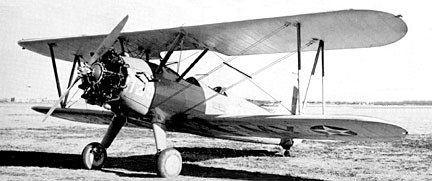
Designed by Mac Short and Harold Zipp, the PT-13 was priced at $7,710-10,412. Twenty-six were built; 36-002 to 36-027.
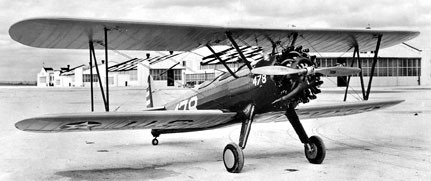
Ninety-two of the 1937 PT-13A were built, powered by a 220hp R-680-7 engine; 37-071 to 37-114, 37-232 to 37-259, and 38-451 to 38-470.
Two hundred and fifty-five of the 1940 PT-13B, were built, powered by a 280hp R-680-11 engine; 40-1562 to 40-1741, and 41-787 to 41-861.
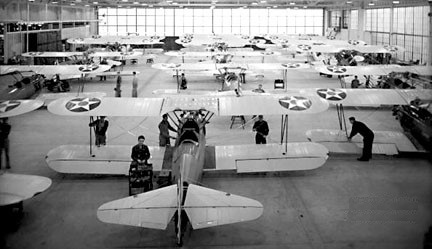
In 1942 six PT-13A were repowered with 280hp R-680-11 engines as PT-13C.
The PT-13D of 1943 were the first of the standardized Army-Navy trainers. Three hundred and fifty-three were built; 42-16846 to 42-17163, 49-1458 to 49-1490, and 51-16084 to 51-16085.
The 1940 A75L3 was an export version of the PT-13 with a 220hp Lycoming R-680 engine. Forty-three were sold to Parks Air College, Brazil, the Philippines, and five of the similar 1941 A75B4 were sold to Venezuela.
The 1947 A75L5 were modified from N2S-4 with a 190hp Lycoming engine. Two were sold to China, along with manufacturing license for that country.
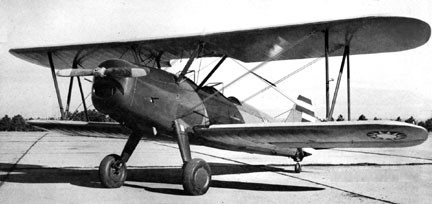
The series that was produced in the largest numbers was the Model A75NI. It was similar to the PT-13 but was powered by a 220 hp Continental radial engine; its military designation was PT-17. The Navy named the Boeing 75 the NS-1, later evolved into the N2S series.
The 1940 PT-17 was basically a PT-13 with a 220hp Continental R-670 engine. 3,519 were built; 40-1742 to 40-1891, 41-0862 to 40-1068, 40-7867 to 40-9010, 40-25202 to 40-26251, and 42-15896 to 42-16845, of which the 42- batch became export PT-27, plus USN models and exports.
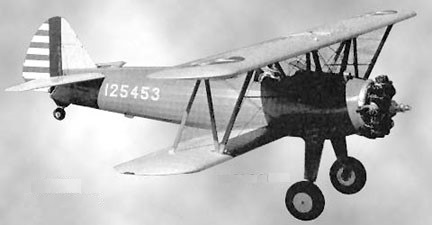
The PT-17A of 1941 had blind-flying equipment. Eighteen were modifications of PT-17.
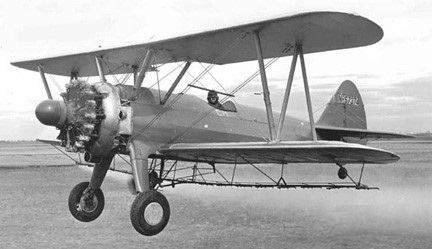
The 1943 PT-17B were three modifications to single-place crop-sprayer with hopper.
The Royal Canadian Air Force ordered 300 winterized versions of the PT-17 and unofficially changed the name to Kaydet, a name that has come to apply to the entire family of Stearmans. These aircraft were modified to PT-27 standard, which included an engine crankcase cowl with movable temperature louvres and a cockpit canopy and heating system for winter flying conditions. A full electrical system, landing lights in the lower wings and the addition of night flying equipment and full instrumentation were also requested.
Production delays with the modifications meant that almost all the aircraft delivered were produced to the basic PT-17 standard. Although they were accepted by the RCAF and introduced into service, the lack of the necessary modifications meant they were unsuitable for the task and in November 1942 the decision was made to withdraw them from service. Over a period of six months in 1943 they were returned to the United States for use by the US Army and Navy.
The last of the 75 series to be produced was the Model E-75 powered by a 220 hp Lycoming engine. When production was terminated on V-J Day, its production totaled more than 1,700 as both the PT-13D and the N2S-5.
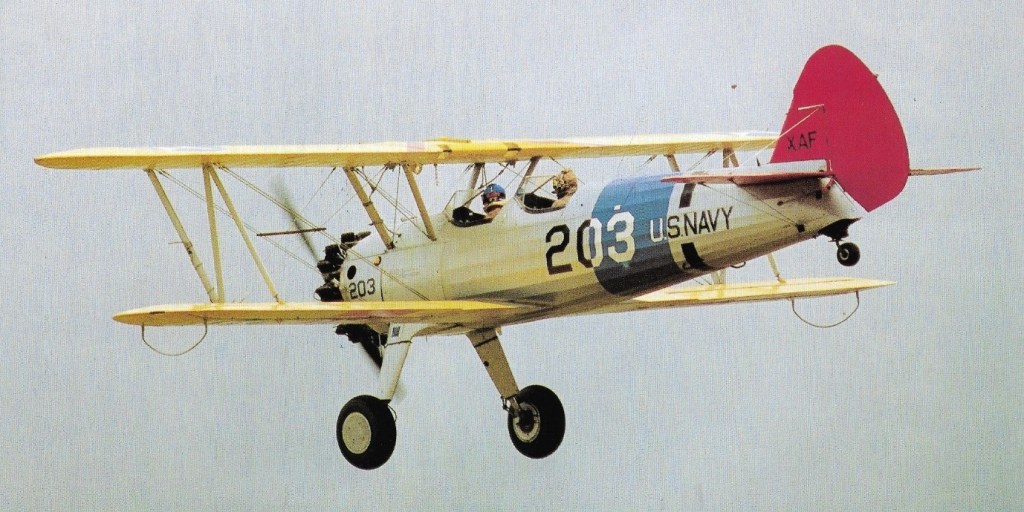
The Stearman Model 75 design evolved out of the X-70 prototype produced in 1934 and the Model 73 (the US Navy NS-1). A prototype X-75 was built, and this was soon followed by an order for 32 as the PT-13, known as the Stearman Kaydet, in 1936. This aircraft was powered by a 215-hp Continental R-680-5. The Model A-75 appeared in 1937 as the PT-13A (92 ordered) and fitted with an R-680-7 of 220 hp.
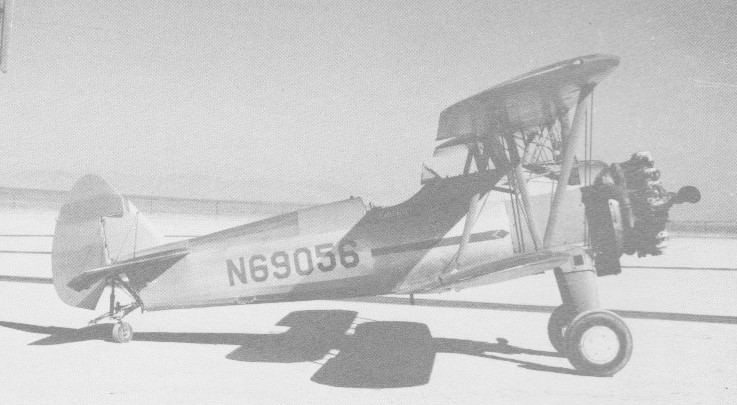
The Model A-75N1 appeared in 1940 as the PT-17BW, of which 3,064 were delivered to the USAAF. This model was powered by a 220 hp Continental R-670-5. Even in wartime the aircraft had an agricultural role – three were converted to PT-17B-BW and fitted with hoppers and spray booms for mosquito control.
Then came 220 PT-13Bs with the 209-kW (280-hp) R-680-11s of which six became blind-flying PT-l3Cs, and 895 PT-13Ds with R-680-1 engines.
A change to the R-670 engine produced the PT-17, of which 2,942 were built including 136 blind-flying PT-17As.
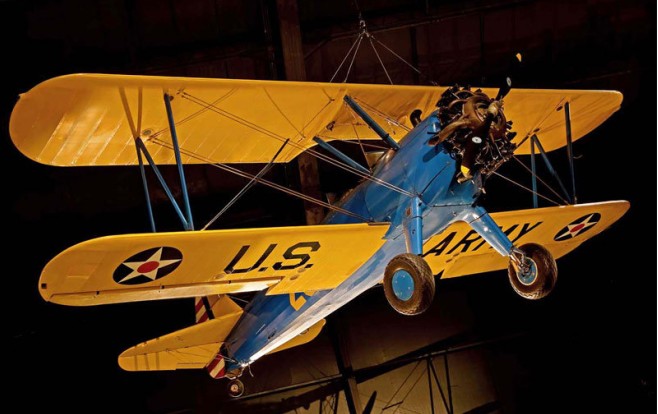
The PT-18, the model A-75J1, was fitted with a Jacobs R-755-7 of 225 hp, and these 150 aircraft, 40-1892 to 40-2041, included six blind-flying PT-18As.

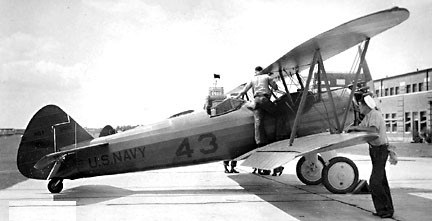
The US Navy also operated over 4,500 Kaydets as trainers and they were designated N2S-1 through to N2S-5: the X70 with the Wright R-790-8 became the NS-1, sixty-one of which were used.
The propellers generally in use on Stearmans are the Sensenich wooden prop; the ground adjustable McCauley steel blade prop and the fixed pitch Hamilton Standard propeller.
Following the NS-1 were 50 N2S-1s, 3145-3394, with the R-670-14 engines. The N2S were dubbed “Midshipman,” but the name never caught on.
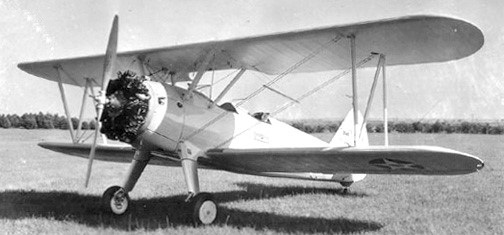
The 125 N2S-2 of 1941, 3520-3644, were the same as PT-13A with 220hp Lycoming R-680-8 engines, night- and blind-flying equipment, and taken from Army production.

1,875 N2S-3 were purchased in 1942 with R-670-4 engines; 3395-3519, 4252-4351, 05235-05434, 07005-08004, and 37988-38437.
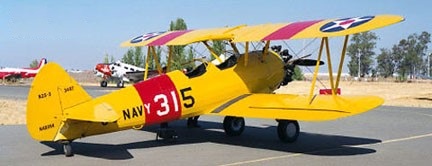
The 455 1942 N2S-4, 27960-28058, 29923-30146, 34097-34101, 34107-34111, and 55650-55771, were the same as the PT-17 and taken from Army production.
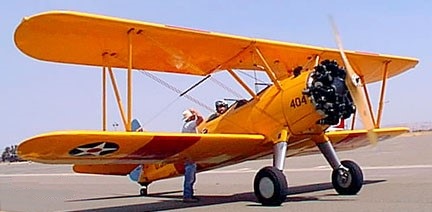
The 1,618 N2S-5 from 1943 were the same as PT-13D, 43138-43637 and 38438-38610, and from AAF PT-17D, 42-109026-109775, and 52550-52626 and 61037-61904 with the R-680-17 engine.
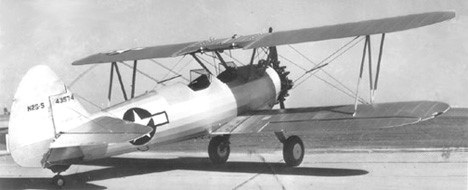
The primary difference between the Army and Navy airplanes, other than engines installed, was the tail wheel. Army airplanes had a fully steerable tail wheel while the Navy airplanes were equipped with a full swivel type with a lock. Most Stearmans today have subsequently been modified with the steerable tail wheel.
Three hundred PT-27s (Model D-75N1s) were built for Royal Canadian Air Force with enclosed cock¬pits. A A winterised version of PT-13 with canopied cockpits and 220hp Continental R-670-5 and -6 engines.

The RCAF’s 300 Model PT-27’s, 42-15570 to 42-15869, were ordered with special modifications for air training, particularly in Canada’s winter weather conditions. The PT-27 required navigation lights, an enclosed, heated cockpit and a blind-flying hood; however, only one Stearman arrived with the enclosed cockpit. After four months of active service with the BCATP, the PT-27s were traded to the US for Fairchild Cornells because of the unsuitability of the open cockpit for winter training.
Exports of a PT-16 batch as PT-26 were 150 to China; 42-15896 to 42-16045, 3 to Cuba 42-16274 to 42-16276, 2 to Guatemala 42-16375 to 42-16376, 2 to Colombia 42-16496 and 42-16497, and 3 to Dominican Republic 42-16648 to 42-16650.
The first production Model 75s were built by the Stearman Aircraft Company, but most were built by Boeing at their Wichita plant in the state of Kansas until 1943. 8,428 aircraft were produced at Wichita, purchased by the US Government for around US$8,600 each until produc¬tion ended in 1943.
The final version of the Stearman was the E75, designated PT-13D/N2S-5. It was the only complete standardization of an Army and Navy production design during WWII and was totally the same for both services. The last Stearman built (c/n 755963, USAAC serial 42-17794) was a modified E75 that was fitted with additional instrumentation, an electrical system and radio at the request of the US Army. After a production run of 10,346 aircraft, a special factory roll-out ceremony for 42-17794 was held in February 1945 before it was delivered to Headquarters personnel of the Army’s Midwest Procurement District. Following the end of the second world war effort was made by Boeing to obtain this particular aircraft for company use at the Srearman plant. The aircraft returned to the plant and was given the civil registration N41766 in June 1946. It was used for publicity and utility purposes until 28 September 1958 when it was donated to the US Air Force Museum in Dayton, Ohio.
This tandem two seat biplane was of mixed construction with fabric covering over wooden wings and fuselage of welded steel tube.
The Stearman 76 primary trainer was based on the Model 73. Five of the 1941 model 76B4 export version powered by a 320hp Wright engine, were exported to Venezuela.
Thirty of the 1938 model 76C3 two-place open/cabin armed conversion with 320hp P&W Wasp engine were exported to Brazil.
Nineteen of the 1937 float-equipped model S76D1 armed trainer, powered by a 320hp P&W Wasp engine, were exported the Argentina and the Philippines.
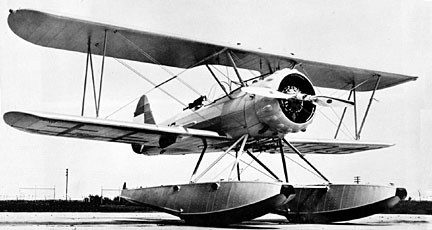
The 1938 model 76D3 was an armed advanced trainer powered by a 400hp P&W Wasp engine. Twenty-four went to Cuba, plus 15 as A76DC3 and 15 as B76DC3 (with 420hp Wright Cyclone) to Brazil.
In 1946, the surplus trainers were sold at prices between US$250 and US$875, many in new condition with zero-timed engines. They were soon modified for agricultural use, retaining the Continental engines but the following year an operator fitted a PT- 17 with a 300-hp R-680 Lycoming and a 140 US gallon hopper.
During the 1950s the Stearman began appearing with the 450-hp Pratt & Witney R-985s, and various changes in the wings and fuselage also started to appear. The traditional open cockpit was replaced with a windshield and support structure, and some aircraft had an enlarged rudder. The wings came in for change as well, with extensions or end plates. The late 1960s saw further modifications with the original top wing fitted with ailerons. Into the ‘70s, an en¬closed cockpit was installed. This did not have side doors – the whole canopy was lifted up and slid rearwards. All these modifications were local STCs, and it was apparent travelling around California that not only were some modi¬fications strictly within the company, but some mods were also confined to within a few counties, and moving on to another county the aircraft would return to stock standard configuration.
Post-war civil requirements for surplus military Stearmans is covered by Aircraft Specification A-743. This document lists all the approved equipment allowed on a standard category Stearman and the items that must have been removed, replaced or modified when the military surplus Stearman was first licensed as a civilian airplane. It was required that all Continental R-670 engines, when transferred to civilian use, be re-designated and have the engine identification plate changed to show the civilian designation.
Permissable Acrobatics
Spins
Inside Loops
Snap Rolls under 106 mph (92 kts)
Slow Rolls under 124 mph (108 kts)
Immelmann Turns
Inverted Flight
Inverted Spins
Boeing built 8584 Kaydets in all versions, plus the equivalent of 2000 more in spares. It was manufactured by the Stearman Aircraft Company in Wichita, Kansas from 1934 through 1945. The actual total of Model 75’s that were completed from the prototype X-75 to the final E75 built in 1945 was 8,428.
X75
Engine: 225hp Wright
Seats: 2
X75L3
Engine 225hp Lycoming R-680
Wingspan: 32’2″
Length: 24’9″
Useful load: 692 lb
Max speed: 125 mph
Cruise: 96 mph
Stall: 45 mph
Range: 350 mi
Seats: 2
75 / PT-13
Engine: Lycoming R-680-5, 160-kW (215-hp)
Fuel consumption: 12-13 USG/hr
Length: 25 ft 1 in
Height: 9 ft 4.5 in
Wing span upper: 32.2 ft
Wingspan lower: 31.2 ft
Wing area: 297 sq.ft
Airfoil: NACA 2213
Empty wt: 1936 lb
Max weight: 2950 lb
Fuel capacity: 46 USG (4-7 USG unusable)
Oil cap: 4.4 USG
Ceiling: 11,200-12,800 ft
Range: 300 sm / 260 nm
Vne: 186 mph (163 kts)
Max speed: 125 mph
Normal Cruise: 95 mph (83 kts)
Power Off Stall: 55 mph (48 kts)
Power On Stall Speed: 51 mph (44 kts)
Take-Off Distance: 600 ft
Landing Distance: 300-500 ft
Initial Rate of Climb: 800 ft./min
Service Ceiling: 13,300 ft
Endurance: 3.4 hours (approx.)
Maximum Baggage: 60 lbs
A75 / PT-13A
Engine: Lycoming R-680-7, 164-kW (220-hp)
Fuel consumption: 12-13 USG/hr
Length: 25 ft 1 in
Height: 9 ft 4.5 in
Wing span upper: 32.2 ft
Wingspan lower: 31.2 ft
Wing area: 297 sq.ft
Airfoil: NACA 2213
Empty wt: 1936 lb
Max weight: 2950 lb
Fuel capacity: 46 USG (4-7 USG unusable)
Oil cap: 4.4 USG
Ceiling: 11,200-12,800 ft
Range: 300 sm / 260 nm
Vne: 186 mph (163 kts)
Max speed: 125 mph
Normal Cruise: 95 mph (83 kts)
Power Off Stall: 55 mph (48 kts)
Power On Stall Speed: 51 mph (44 kts)
Take-Off Distance: 600 ft
Landing Distance: 300-500 ft
Initial Rate of Climb: 800 ft./min
Service Ceiling: 13,300 ft
Endurance: 3.4 hours (approx.)
Maximum Baggage: 60 lbs
A75 / PT-13B
Engine: Lycoming R-680-11, 209-kW (280-hp)
Fuel consumption: 12-13 USG/hr
Length: 25 ft 1 in
Height: 9 ft 4.5 in
Wing span upper: 32.2 ft
Wingspan lower: 31.2 ft
Wing area: 297 sq.ft
Airfoil: NACA 2213
Empty wt: 1936 lb
Max weight: 2950 lb
Fuel capacity: 46 USG (4-7 USG unusable)
Oil cap: 4.4 USG
Ceiling: 11,200-12,800 ft
Range: 300 sm / 260 nm
Vne: 186 mph (163 kts)
Max speed: 125 mph
Normal Cruise: 95 mph (83 kts)
Power Off Stall: 55 mph (48 kts)
Power On Stall Speed: 51 mph (44 kts)
Take-Off Distance: 600 ft
Landing Distance: 300-500 ft
Initial Rate of Climb: 800 ft./min
Service Ceiling: 13,300 ft
Endurance: 3.4 hours (approx.)
Maximum Baggage: 60 lbs
PT-13C
Engine: Lycoming R-680-11, 209-kW (280-hp)
Fuel consumption: 12-13 USG/hr
Length: 25 ft 1 in
Height: 9 ft 4.5 in
Wing span upper: 32.2 ft
Wingspan lower: 31.2 ft
Wing area: 297 sq.ft
Airfoil: NACA 2213
Empty wt: 1936 lb
Max weight: 2950 lb
Fuel capacity: 46 USG (4-7 USG unusable)
Oil cap: 4.4 USG
Ceiling: 11,200-12,800 ft
Range: 300 sm / 260 nm
Vne: 186 mph (163 kts)
Max speed: 125 mph
Normal Cruise: 95 mph (83 kts)
Power Off Stall: 55 mph (48 kts)
Power On Stall Speed: 51 mph (44 kts)
Take-Off Distance: 600 ft
Landing Distance: 300-500 ft
Initial Rate of Climb: 800 ft./min
Service Ceiling: 13,300 ft
Endurance: 3.4 hours (approx.)
Maximum Baggage: 60 lbs
PT-13D
Engine: Lycoming R-680-1
Fuel consumption: 12-13 USG/hr
Length: 25 ft 1 in
Height: 9 ft 4.5 in
Wing span upper: 32.2 ft
Wingspan lower: 31.2 ft
Wing area: 297 sq.ft
Airfoil: NACA 2213
Empty wt: 1936 lb
Max weight: 2950 lb
Fuel capacity: 46 USG (4-7 USG unusable)
Oil cap: 4.4 USG
Ceiling: 11,200-12,800 ft
Range: 300 sm / 260 nm
Vne: 186 mph (163 kts)
Max speed: 125 mph
Normal Cruise: 95 mph (83 kts)
Power Off Stall: 55 mph (48 kts)
Power On Stall Speed: 51 mph (44 kts)
Take-Off Distance: 600 ft
Landing Distance: 300-500 ft
Initial Rate of Climb: 800 ft./min
Service Ceiling: 13,300 ft
Endurance: 3.4 hours (approx.)
Maximum Baggage: 60 lbs
A75B4
To Venezuela
Engine: Lycoming R-680-11
Fuel consumption: 12-13 USG/hr
Length: 25 ft 1 in
Height: 9 ft 4.5 in
Wing span upper: 32.2 ft
Wingspan lower: 31.2 ft
Wing area: 297 sq.ft
Airfoil: NACA 2213
Empty wt: 1936 lb
Max weight: 2950 lb
Fuel capacity: 46 USG (4-7 USG unusable)
Oil cap: 4.4 USG
Ceiling: 11,200-12,800 ft
Range: 300 sm / 260 nm
Vne: 186 mph (163 kts)
Max speed: 125 mph
Normal Cruise: 95 mph (83 kts)
Power Off Stall: 55 mph (48 kts)
Power On Stall Speed: 51 mph (44 kts)
Take-Off Distance: 600 ft
Landing Distance: 300-500 ft
Initial Rate of Climb: 800 ft./min
Service Ceiling: 13,300 ft
Endurance: 3.4 hours (approx.)
Maximum Baggage: 60 lbs
A75J1 / PT-18
Engine: Jacobs R-755
A75L3
Fuel consumption: 12-13 USG/hr
Length: 25 ft 1 in
Height: 9 ft 4.5 in
Wing span upper: 32.2 ft
Wingspan lower: 31.2 ft
Wing area: 297 sq.ft
Airfoil: NACA 2213
Empty wt: 1936 lb
Max weight: 2950 lb
Fuel capacity: 46 USG (4-7 USG unusable)
Oil cap: 4.4 USG
Ceiling: 11,200-12,800 ft
Range: 300 sm / 260 nm
Vne: 186 mph (163 kts)
Max speed: 125 mph
Normal Cruise: 95 mph (83 kts)
Power Off Stall: 55 mph (48 kts)
Power On Stall Speed: 51 mph (44 kts)
Take-Off Distance: 600 ft
Landing Distance: 300-500 ft
Initial Rate of Climb: 800 ft./min
Service Ceiling: 13,300 ft
Endurance: 3.4 hours (approx.)
Maximum Baggage: 60 lbs
A75L5
Fuel consumption: 12-13 USG/hr
Length: 25 ft 1 in
Height: 9 ft 4.5 in
Wing span upper: 32.2 ft
Wingspan lower: 31.2 ft
Wing area: 297 sq.ft
Airfoil: NACA 2213
Empty wt: 1936 lb
Max weight: 2950 lb
Fuel capacity: 46 USG (4-7 USG unusable)
Oil cap: 4.4 USG
Ceiling: 11,200-12,800 ft
Range: 300 sm / 260 nm
Vne: 186 mph (163 kts)
Max speed: 125 mph
Normal Cruise: 95 mph (83 kts)
Power Off Stall: 55 mph (48 kts)
Power On Stall Speed: 51 mph (44 kts)
Take-Off Distance: 600 ft
Landing Distance: 300-500 ft
Initial Rate of Climb: 800 ft./min
Service Ceiling: 13,300 ft
Endurance: 3.4 hours (approx.)
Maximum Baggage: 60 lbs
A75N1 / PT-17
Engine: Continental R-670-4 & -5, 164kW (220 hp)
Wingspan: 32’ 02” / 9.8 m
Length: 24’ 09” / 7.54 m
Wing area: 297.4 sq.ft / 27.59 sq.m
Height: 9.154 ft / 2.79 m
Empty weight: 1031 lbs
Loaded weight (train¬ing role): 2,635 lb
Wing loading: 8.82 lb/sq.ft / 43.0 kg/sq.m
Armament: none
Max T/O weight: 1195kg (2,6351b)
Max speed: 117 kts / 217 kph / 135 mph at sea level
Operational range: 500 miles / 432 nm / 800 km
Crew: 2
PT-17A
Engine: 1 x Continental R-670-5, 164kW (220 hp)
Fuel consumption: 12-13 USG/hr
Length: 25 ft 1 in
Height: 9 ft 4.5 in
Wing span upper: 32.2 ft
Wingspan lower: 31.2 ft
Wing area: 297 sq.ft
Airfoil: NACA 2213
Empty wt: 1936 lb
Max weight: 2950 lb
Fuel capacity: 46 USG (4-7 USG unusable)
Oil cap: 4.4 USG
Ceiling: 11,200-12,800 ft
Range: 300 sm / 260 nm
Vne: 186 mph (163 kts)
Max speed: 125 mph
Normal Cruise: 95 mph (83 kts)
Power Off Stall: 55 mph (48 kts)
Power On Stall Speed: 51 mph (44 kts)
Take-Off Distance: 600 ft
Landing Distance: 300-500 ft
Initial Rate of Climb: 800 ft./min
Service Ceiling: 13,300 ft
Endurance: 3.4 hours (approx.)
Maximum Baggage: 60 lbs
PT-17E
Engine: Lycoming, 225 hp
Wing span: 32 ft (9.75m)
Length: 25.5 ft (7.8m)
Height: 11 ft (3.4m)
MTOW: 2900 lb (1300 kg)
A75N1 / N2S-1
Engine: Continental R-670-4
Fuel consumption: 12-13 USG/hr
Length: 25 ft 1 in
Height: 9 ft 4.5 in
Wing span upper: 32.2 ft
Wingspan lower: 31.2 ft
Wing area: 297 sq.ft
Airfoil: NACA 2213
Empty wt: 1936 lb
Max weight: 2950 lb
Fuel capacity: 46 USG (4-7 USG unusable)
Oil cap: 4.4 USG
Ceiling: 11,200-12,800 ft
Range: 300 sm / 260 nm
Vne: 186 mph (163 kts)
Max speed: 125 mph
Normal Cruise: 95 mph (83 kts)
Power Off Stall: 55 mph (48 kts)
Power On Stall Speed: 51 mph (44 kts)
Take-Off Distance: 600 ft
Landing Distance: 300-500 ft
Initial Rate of Climb: 800 ft./min
Service Ceiling: 13,300 ft
Endurance: 3.4 hours (approx.)
Maximum Baggage: 60 lbs
A75N1 / N2S-2
Engine: Lycoming R-680-8
Fuel consumption: 12-13 USG/hr
Length: 25 ft 1 in
Height: 9 ft 4.5 in
Wing span upper: 32.2 ft
Wingspan lower: 31.2 ft
Wing area: 297 sq.ft
Airfoil: NACA 2213
Empty wt: 1936 lb
Max weight: 2950 lb
Fuel capacity: 46 USG (4-7 USG unusable)
Oil cap: 4.4 USG
Ceiling: 11,200-12,800 ft
Range: 300 sm / 260 nm
Vne: 186 mph (163 kts)
Max speed: 125 mph
Normal Cruise: 95 mph (83 kts)
Power Off Stall: 55 mph (48 kts)
Power On Stall Speed: 51 mph (44 kts)
Take-Off Distance: 600 ft
Landing Distance: 300-500 ft
Initial Rate of Climb: 800 ft./min
Service Ceiling: 13,300 ft
Endurance: 3.4 hours (approx.)
Maximum Baggage: 60 lbs
A75N1 / N2S-4
Engine: Continental R-670-4 & -5
Fuel consumption: 12-13 USG/hr
Length: 25 ft 1 in
Height: 9 ft 4.5 in
Wing span upper: 32.2 ft
Wingspan lower: 31.2 ft
Wing area: 297 sq.ft
Airfoil: NACA 2213
Empty wt: 1936 lb
Max weight: 2950 lb
Fuel capacity: 46 USG (4-7 USG unusable)
Oil cap: 4.4 USG
Ceiling: 11,200-12,800 ft
Range: 300 sm / 260 nm
Vne: 186 mph (163 kts)
Max speed: 125 mph
Normal Cruise: 95 mph (83 kts)
Power Off Stall: 55 mph (48 kts)
Power On Stall Speed: 51 mph (44 kts)
Take-Off Distance: 600 ft
Landing Distance: 300-500 ft
Initial Rate of Climb: 800 ft./min
Service Ceiling: 13,300 ft
Endurance: 3.4 hours (approx.)
Maximum Baggage: 60 lbs
A75-N1 / 75L3
ATC 743
Engine: 225hp Lycoming R-680 or 220hp Continental O-470
Wingspan: 32’2″
Length: 24’10”
Useful load: 689 lb
Max speed: 124 mph
Cruise: 104 mph
Stall: 50 mph
Range: 360 mi
Seats: 2
B75 / N2S-2
Engine: Lycoming R-680-8
Fuel consumption: 12-13 USG/hr
Length: 25 ft 1 in
Height: 9 ft 4.5 in
Wing span upper: 32.2 ft
Wingspan lower: 31.2 ft
Wing area: 297 sq.ft
Airfoil: NACA 2213
Empty wt: 1936 lb
Max weight: 2950 lb
Fuel capacity: 46 USG (4-7 USG unusable)
Oil cap: 4.4 USG
Ceiling: 11,200-12,800 ft
Range: 300 sm / 260 nm
Vne: 186 mph (163 kts)
Max speed: 125 mph
Normal Cruise: 95 mph (83 kts)
Power Off Stall: 55 mph (48 kts)
Power On Stall Speed: 51 mph (44 kts)
Take-Off Distance: 600 ft
Landing Distance: 300-500 ft
Initial Rate of Climb: 800 ft./min
Service Ceiling: 13,300 ft
Endurance: 3.4 hours (approx.)
Maximum Baggage: 60 lbs
B75N1 / N2S-3
Engine: Continental R-670-4
Fuel consumption: 12-13 USG/hr
Length: 25 ft 1 in
Height: 9 ft 4.5 in
Wing span upper: 32.2 ft
Wingspan lower: 31.2 ft
Wing area: 297 sq.ft
Airfoil: NACA 2213
Empty wt: 1936 lb
Max weight: 2950 lb
Fuel capacity: 46 USG (4-7 USG unusable)
Oil cap: 4.4 USG
Ceiling: 11,200-12,800 ft
Range: 300 sm / 260 nm
Vne: 186 mph (163 kts)
Max speed: 125 mph
Normal Cruise: 95 mph (83 kts)
Power Off Stall: 55 mph (48 kts)
Power On Stall Speed: 51 mph (44 kts)
Take-Off Distance: 600 ft
Landing Distance: 300-500 ft
Initial Rate of Climb: 800 ft./min
Service Ceiling: 13,300 ft
Endurance: 3.4 hours (approx.)
Maximum Baggage: 60 lbs
D75N1 / PT-27 Kaydet
To Canada
Engine: Continental R-670-6N, 220 hp
Wing Span: 32ft 2in (9.6m)
Length: 24ft 4in (7.3m)
Height: 9ft 2in (2.8m)
Range: 505 miles (813 km)
Speed: 124mph (199km/h)
E75 / PT-13D / N2S-5
Engine: Lycoming R-680-17
Fuel consumption: 12-13 USG/hr
Length: 25 ft 1 in
Height: 9 ft 4.5 in
Wing span upper: 32.2 ft
Wingspan lower: 31.2 ft
Wing area: 297 sq.ft
Airfoil: NACA 2213
Empty wt: 1936 lb
Max weight: 2950 lb
Fuel capacity: 46 USG (4-7 USG unusable)
Oil cap: 4.4 USG
Ceiling: 11,200-12,800 ft
Range: 300 sm / 260 nm
Vne: 186 mph (163 kts)
Max speed: 125 mph
Normal Cruise: 95 mph (83 kts)
Power Off Stall: 55 mph (48 kts)
Power On Stall Speed: 51 mph (44 kts)
Take-Off Distance: 600 ft
Landing Distance: 300-500 ft
Initial Rate of Climb: 800 ft./min
Service Ceiling: 13,300 ft
Endurance: 3.4 hours (approx.)
Maximum Baggage: 60 lbs
76
Engine: Wright R-975, 420 hp
Wright R-760-E2, 320 hp
Pratt & Whitney R-985-T1B, 320 hp
Pratt & Whitney R-985-SB, 400 hp
Length: 24 ft 11.5 in
Height: 9 ft 4.5 in
Wing span upper: 32.2 ft
Wingspan lower: 31.2 ft
Wing area: 297 sq.ft
Airfoil: N-22
Empty wt: 2495 lb
Max weight: 3653 lb
Fuel capacity: 56-100 USG
Ceiling: 20,800 ft
Max speed: 156 mph (Wright R-975-E3)
76B4
Engine: 320hp Wright
76C3
Engine: 320hp P&W Wasp
Seats: 2
S76D1
Engine: 320hp P&W Wasp
Float-equipped
76D3
Engine: 400hp P&W Wasp
A76DC3
B76DC3
Engine: 420hp Wright Cyclone
NS
Engine: 220hp Wright R-790-8
Wingspan: 30’1″
Length: 25’1″
Speed: 118 mph
Ceiling: 12,200′
 All Aero