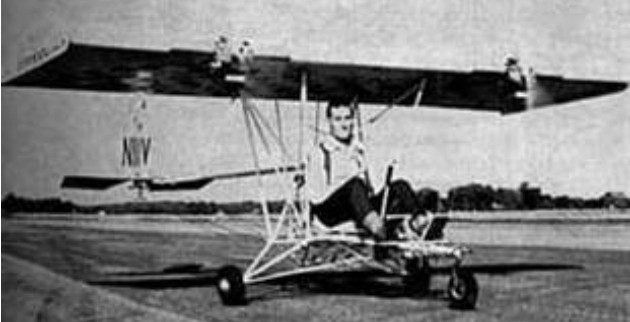
Wilbur Staib built this small airplane in limited spare time and working in limited hangar space in 1966. The “Airy-Plane” is a twin-engine aircraft registered N11V. Three months and about $500 were spent on the craft.
The LB-4 is a high-wing, uncovered welded steel tube fuselage, single seat twin-engine tricycle gear aircraft. It was registered by the FAA in 1966, and was considered at the time to be the world’s smallest twin engine aircraft. The wing ribs were a shortened pattern from a Piper Cub, assembled with staples. The tail is section is mounted on a wire braced removable boom for storage. Fuel tanks are made from 1 U.S. gallon (3.8 L; 0.83 imp gal) paint-thinner cans.
The engines are more or less inserted into the leading edge of the rather thick wing. Equipped with recoil starters they swing 24 in Troyer wood props.
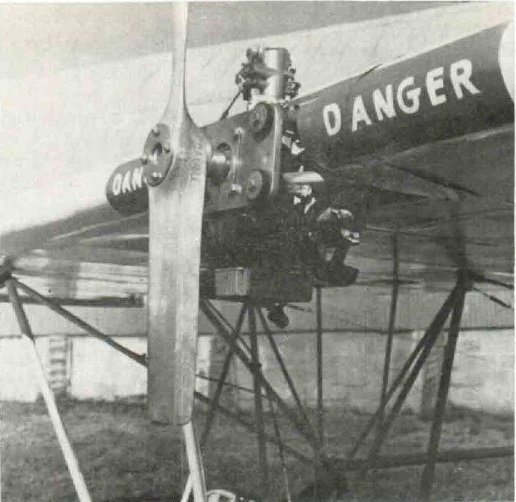
The fuel is carried in two 1 USG paint thinner cans. Instruments consist of an airspeed indicator and a tacho with a left-right toggle switch to pick up the reading from either engine.
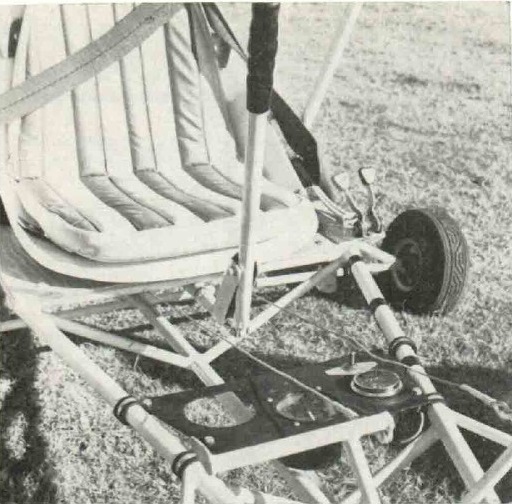
Registration was N11V.
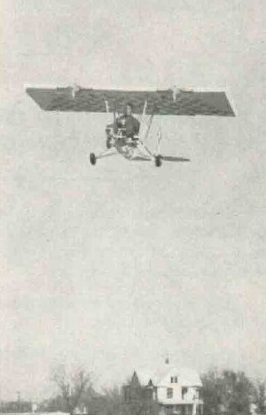
First flying in 1966, only the one was built. The LB-4 was test flown in 1966 at Carthage, Missouri. The aircraft cruises at 60 mph (97 km/h) and must be flown at full throttle. Later configurations included a third 10 hp (7 kW) engine mounted on top of the wing in pusher configuration.
Engines: 2 x 10 hp (7.5 kW) West Bend 820 chain-saw
Propellers: 2-bladed Troyer
Wing span: 14 ft (4.3 m)
Wing area: 70 sq ft (6.5 m2)
Airfoil: Modified Clark-Y
Length: 15 ft (4.6 m)
Empty weight: 175 lb (79 kg)
Gross weight: 340 lb (154 kg)
Useful load: 165 lb
Fuel capacity: 2 U.S. gallons (7.6 L; 1.7 imp gal)
Maximum speed: 52 kn (60 mph, 97 km/h)
Cruise speed: 52 kn (60 mph, 97 km/h)
Stall speed: 30 kn (35 mph, 56 km/h)
Seats: 1
 All Aero