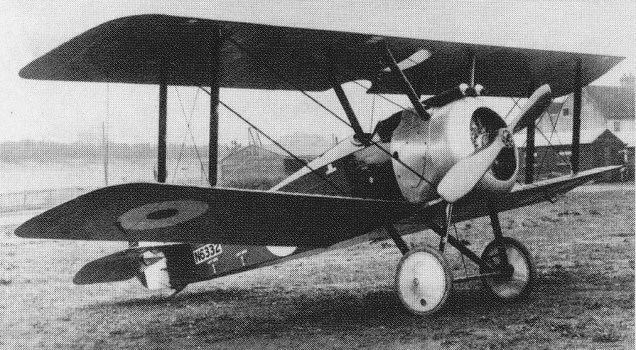
The first prototype flew in December 1916 powered by a 130 hp Clerget, and two main versions were produced by a variety of contractors, the F1 and the 2F1 shipboard variant, both powered by no fewer than six different rotary engines at various stages.
Subcontractors included:
Boulton & Paul
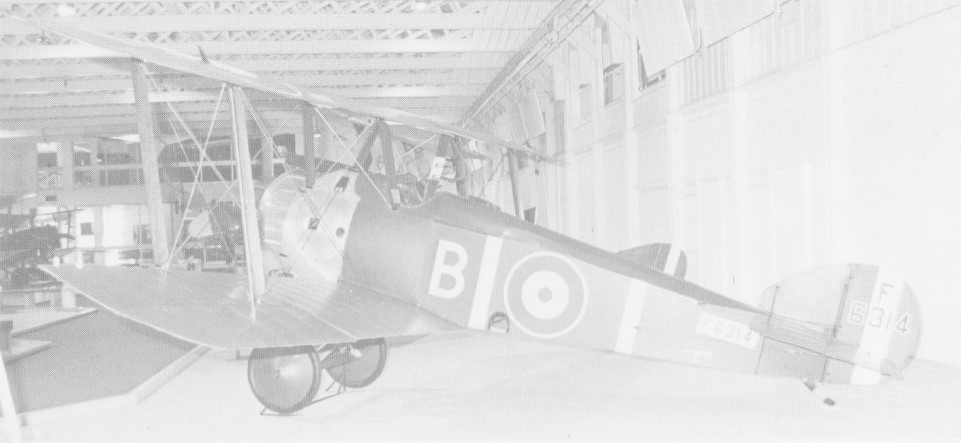
Its handling characteristics were a gift to the skilful pilot but could kill the slow or unwary. This made the Camel ideal for daylight combat but versatile enough to allow it to be used as a night fighter and ground attack aircraft. The shipboard 2F1 Camel (340 built) also saw some success operating against German airships and seaplanes over the North Sea.
The Camel was flown from a lighter towed behind a fast destroyer.

Within an hour of making this successful take off on 11 August 1918 Lt. S.D. Culley shot down Zeppelin L.53 in flames off Ameland.
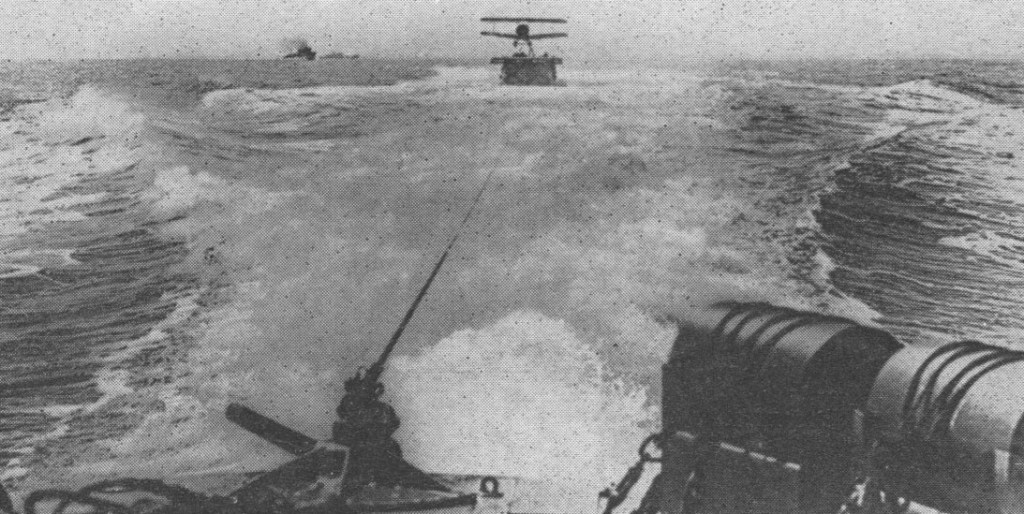
By the Armistice the Camel equipped 32 RAF Squadrons.
Flying the Sopwith F.1 Camel – Frank Tallman
A single bay biplane, the two spar wooden wings are fabric covered. The wooden fuselage has metal covering forward of the bottom wings, plywood covering to just aft of the cockpit and fabric covering on the rear fuselage. Ailerons are on all four wings.

On naval Camel 2F.1’s the rear fuselage was detachable to save stowage space.
The first prototype flew in December 1916 and two main versions were produced by a variety of contractors, the F1 and the 2F1 shipboard variant, both powered by no fewer than six different rotary engines at various stages.
Its handling characteristics were a gift to the skilful pilot but could kill the slow or unwary. This made the Camel ideal for daylight combat but versatile enough to allow it to be used as a night fighter and ground attack aircraft. The shipboard 2F1 Camel also saw some success operating against German airships and seaplanes over the North Sea.
The Camel entered service in July 1917 with 4 Squadron RNAS and soon after with 70 Squadron RFC. Their first Camel victory was scored by New Zealander Clive Collett on July 27 1917. The Camel equipped the Australian 4 AFC until just before the Armistice. Capt A.H. Cobby was the highest scoring AFC pilot, gaining 29 victories while flying Camels.
Camels remained in first-line use until the Armistice. The Camel saw extensive service in home defence, over the Western front, in the UK on training and test work until 1923 and in other countries up until 1928. As well as the RFC and RNAS (later RAF) the aircraft was also operated during WWI by French and US squadrons.
The Camel is remembered as the most successful British single-seat fighter of World War I and is credited with 1,294 ‘kills’. Total Camel production was 5,490, serving also with Belgian and AEF squadrons and with other air forces. It was a Camel that shot down the German ace Rittmeister Manfred von Richthofen (the ‘Red Baron’) at the hands of Captain Roy Brown of No.209 Squadron, RAF, over Sailly-le-Sec on 21 April 1918.
Camels were built in two main versions, the F.1 for the RFC and the 2F.1 for the RNAS with detachable rear fuselage, to save stowage space on board ship, a one foot shorter span and armament of one Vickers and one Lewis gun. Engines fitted as an alternative to the 130 hp Clerget included the 110 hp Clerget, 110 hp Le Rhone and 150 hp B.R.l. The armament was also varied sometimes. Home Defence Camels had two Lewis guns mounted on the wing centre section. The T.F.1 trench strafer had two Lewis guns firing through the floor of the cockpit. Four 25 1b. bombs could be carried. Experimental versions were used for everything from dive bombing to training, as two seaters, and for experiments in using airships as flying aircraft carriers. One Camel was built with tapered wings.

An F.1 Camel was built in 1977 by Viv Bellamy at Lands End, as a flyable reproduction for Leisure Sport Ltd. It was painted to represent B7270 of 209 Squadron, RAF, the machine which Captain Roy Brown flew when officially credited with shooting down Baron Manfred von Richthofen, it has a Clerget rotary engine of 1916 and was registered as G-BFCZ until 2003. First displayed at the Brooklands museum in Weybridge, Surrey, in January 1988 for Sir Thomas Sopwith’s 100th birthday celebrations, it was purchased by the museum later that year.
A Camel was completed in 1992 with a 160 hp Gnome Monosoupape model 9N rotary at the Old Rhinebeck Aerodrome in Red Hook, New York as B6299. Built by Nathaniel deFlavia and Cole Palen. It replaced one of the Dick Day-built and -flown Camel reproductions formerly flown at Old Rhinebeck by Mr. Day in their weekend vintage airshows, which had left the Aerodrome’s collection some years earlier.
Dick Day built an airworthy F.1 at the Cavanaugh Flight Museum in Addison, Texas. It was by original factory drawings. The aircraft is fitted with original instruments, machine guns and an original Gnome rotary engine. It is painted in the scheme of the World War I flying ace Captain Arthur Roy Brown (RAF officer), a Canadian who flew with the Royal Air Force.
Dick Day also constructed an airworthy replica F.1 for the Javier Arango Collection in Paso Robles, California. It powered by a 160 hp Gnome Monosoupape 9N rotary, and registered as N8343.
Rolland Carlson in Wi, Canada, built an F.1 from Replicraft plans. Airworthy in Oliver BC Canada, it was operated as C-FGHT by the Royal Flying Corps School of Aerial Fighting Ltd, powered by a Warner Super Scarab 165 hp engine.
A full-scale replica fitted with a 119 kw (160 hp) Gnome rotary engine was built by Gerald Hampshire in Illinois in the USA where it was registered as N4463 in May 1985, eventually being registered ZK-JMU (c/n 11-11-18) in New Zealand on 26 March 2001.
C.J.Warrilow of High Wycombe, UK, was working on a Pup replica with the registration G-AVPA c/n CJW-1, in 1967.
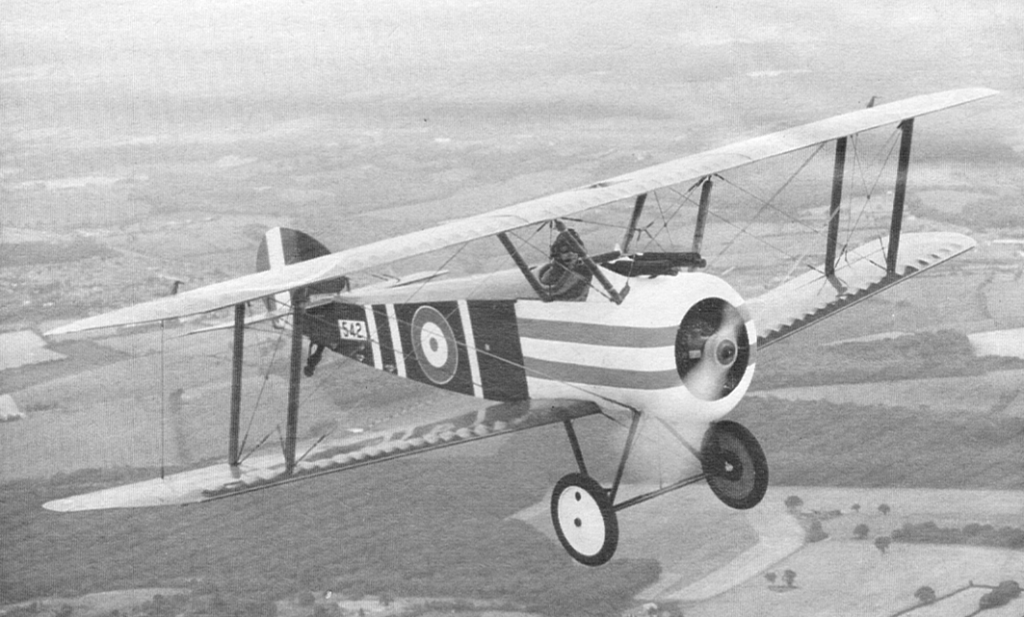
75% Scale Replica:
Lowther, John Sopwith Camel
100% Scale Replica:
Redfern Sopwith Camel
Slingsby T-57 Sopwith F-1 Camel
Northern Aeroplane Workshops F.1 Camel
Thornhill TS 1
Swanson Sopwith Camel
F.1
Engine: Le Rhone, 110 hp
Wingspan: 28 ft
Wing area: 231 sq.ft
Length: 18 ft 8 in
Height: 8 ft 6 in
Empty weight: 889 lb
Loaded weight: 1422 lb
Wing loading: 6.1 lb/sq.ft
Max speed: 118 mph at 10,000 ft
Service ceiling: 24,000 ft
Rate of climb: 1000 fpm
Endurance: 2 hr 15 min -2 hr 30 min
Armament: 2 x Vickers mg
Crew: 1
F.1 Camel
Engine: Clerget 9B, 130 hp / 96kW
Wingspan: 28 ft (8.5 m)
Wing area: 231 sq.ft (21.5 sq m)
Length: 18 ft 9 in (5.7 m)
Height: 8 ft 6 in (2.6 m)
Empty weight: 929 lb (421 kg)
Loaded weight: 1453 lb (659 kg)
Fuel capacity: 37 Imp.Gal
Wing loading: 6.4 lb/sq.ft
Max speed: 117 mph (188 km/h) at 6000 ft
Service ceiling: 19,000 ft (5790 m)
Rate of climb: 880 fpm
Range w/max.fuel: 350 km / 217 miles
Endurance: 2 hr 30 min
Armament: 2 x .303 inch Vickers mg
Bombs: Four 20-lb Cooper bombs
Crew: 1
2F.1
Engine: Bentley B.R.1, 150 hp
Wingspan: 26 ft 11 in
Wing area: 231 sq.ft
Length: 18 ft 8 in (5.7m)
Height: 8 ft 6 in
Empty weight: 962 lb
Loaded weight: 1471 lb
Wing loading: 6.5 lb/sq.ft
Max speed: 121 mph at 10,000 ft
Service ceiling: 20,000 ft
Rate of climb: 995 fpm
Range: 480km (300 sm)
Endurance: 2 hr 15 min -2 hr 30 min
Armament: 2 x Vickers mg
Bombs: Four 20-lb Cooper bombs
Crew: 1
2F.1
Engine: Gnome Monosoupape, 150 hp
Wingspan: 26 ft 11 in
Wing area: 231 sq.ft
Length: 18 ft 8 in
Height: 8 ft 6 in
Empty weight: 962 lb
Loaded weight: 1471 lb
Wing loading: 6.5 lb/sq.ft
Max speed: 121 mph at 10,000 ft
Service ceiling: 20,000 ft
Rate of climb: 995 fpm
Endurance: 2 hr 15 min -2 hr 30 min
Armament: 2 x Vickers mg
Crew: 1

 All Aero