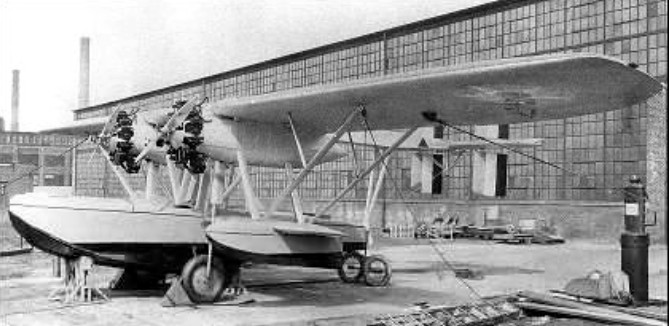
Sikorsky developed the S-36, a larger version of the S-34, and six S-36 amphibians were built, usually with two 200hp Wright J-4 Whirlwind engines. Certified ATC 2-275, the 1927 S-36 had various seating arrangements and various wingspans, from 56’0″ to 72’0″. The latter span for the long-range version. Length was 34’0″.

Five built were NX1282, N3001 (temporary, cancelled), NX3699, and N4567, plus XPS-1 A8005 in 1928.
The US Navy used the PS-1, PS-2, PS-3, based on S-36 and -38, on patrol, transport and utility duties as the XPS-1. One was built as XPS-1 A8005 in 1928.

Also in 1928, two PS-2 were built; A8089 and A8090.
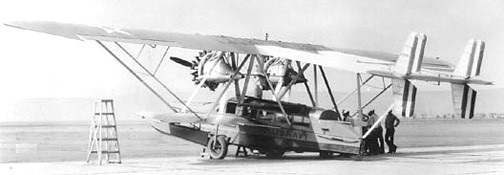
Four PS-3 were built in 1929 (A8284 to 8287), later being designated RS-3. One was produced for the USN (A9055) and two for the USMC (A8922 and 8923).
Other S-36s, carrying two crew and up to six passengers on two facing bench seats with a table between, were delivered to Andean National Corporation and, on 7 December 1927, to the newly formed Pan American Airways for survey flights in the Caribbean.
An S-36, named Dawn, was bought by Mrs Frances Grayson, a niece of President Wilson, who wanted to be the first woman to fly the Atlantic. After take-off on 23 December 1927, with Mrs Grayson and two pilots on board, it vanished over the ocean.
XPS-1
Engines: Two 220hp Wright R-790
Wingspan: 71’0″
Length: 36’8″
Ceiling: 9,000′
Seats: 3-4
PS-2
Engines: Two 450hp P&W R-1340B
Wingspan: 71’8″
Length: 40’3″
Ceiling: 19,400′
Seats: 3-4
PS-3
Engines: Two 450hp P&W R-1340C
Wingspan: 71’8″
Length: 40’3″
Ceiling: 14,800′
Seats: 3-4
 All Aero