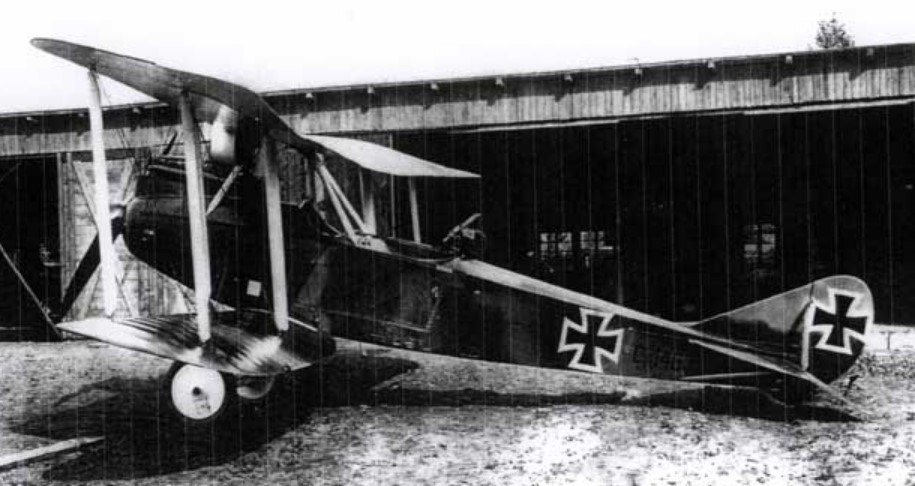
The Rumpler C.IV was a German single-engine, two-seat reconnaissance biplane. It was a development of C.III with different tail surfaces and using a Mercedes D.IVa engine in place of the C.III’s Benz Bz.IV. The Rumpler 6B 2 was a single-seat floatplane fighter variant with a 120 kW (160 hp) Mercedes D.III engine built for the Kaiserliche Marine (Imperial Navy).
For a two-seater reconnaissance aircraft, Rumpler C.IV had an excellent performance, which enabled it to remain in front-line service until the end of World War I on the Western Front, as well as in Italy and Palestine. Its exceptional ceiling allowed pilots to undertake reconnaissance secure in the knowledge that few allied aircraft could reach it.
300 aircraft were licence-built by Pfalz Flugzeugwerke as the Pfalz C.I, differing in ailerons on all four wings. From February 1917 they were renamed Rumpler C.IV (Pfal).
Replica
Slingsby T.58 Rumpler C.IV
Rumpler C.IV
Powerplant: 1 × Mercedes D.IVa, 190 kW (260 hp)
Propeller: 2-bladed fixed-pitch
Wingspan: 12.66 m (41 ft 6 in)
Wing area: 33.5 m2 (361 sq ft)
Length: 8.41 m (27 ft 7 in)
Height: 3.25 m (10 ft 8 in)
Empty weight: 1,080 kg (2,381 lb)
Gross weight: 1,530 kg (3,373 lb)
Maximum speed: 171 km/h (106 mph, 92 kn) at 500 m (1,640 ft)
Endurance: 3½-4 hr
Service ceiling: 6,400 m (21,000 ft)
Crew: 2 (pilot and observer)
Guns: 1 × fixed, 7.92 mm (.312 in) LMG 08/15 and 1 × 7.92 mm (.312 in) Parabellum MG14 machine gun
Bombs: 100 kg (220 lb)
 All Aero