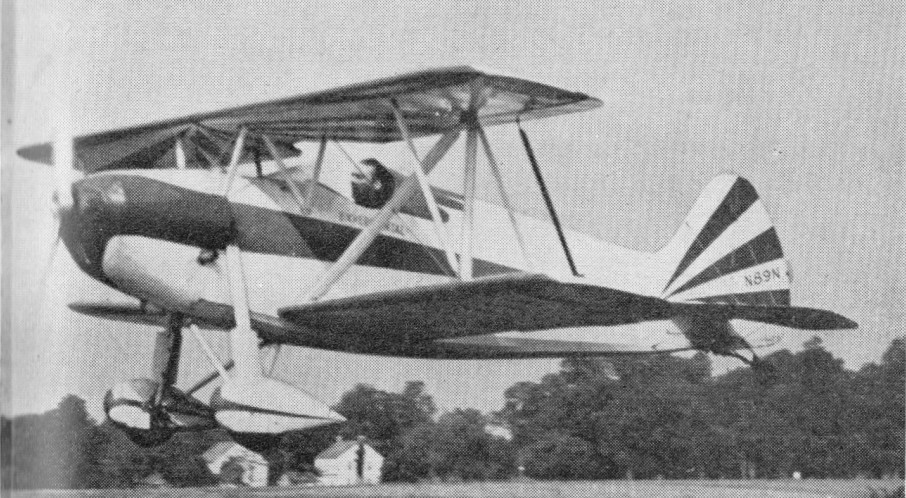
As flying began to recover from the depression, the little Rose Parakeet appeared in 1934. This was built by the Rose Aeroplane & Motor Co. of Chicago, Illinois. Powered with the new (and relatively expensive) 37-hp Continenal A.40 flat-four engine, it drew heavily on the layout of the old Lincoln Sport but incorporated welded steel-tube fuselage and tail construction and greatly modified wing rigging. The airfoil was a Rose design, nearly symmetrical. In spite of winning an ATC, only eight were built before the venture folded.
After acquiring in 1948 the manufacturing and marketing rights to the prewar Rose Parakeet single-seat sports biplane from Rose Aeroplane & Motor Company, Hannaford Aircraft Co offered production versions of the airplane with 40- 85hp engines. The design reappeared in the post-World War II homebuilt boom as the “Hannaford Bee,” the plans for which were available to the homebuilders. With 65-to 90-hp engines, the Bees, and some refurbished Parakeets became very suitable sport planes.
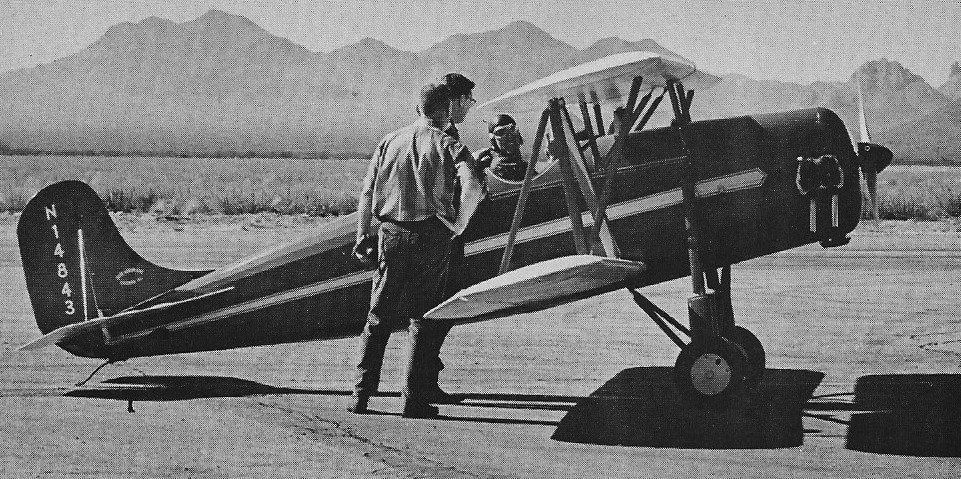
The design was revived in 1969 by Doug Rinehart, who used a 100-hp Continental 0-200 engine and intended to make the new Parakeet an ATC’d model for the general aviation market. The market did not accept it.
Replica:
Westphal Rose Parakeet
Parakeet
Engine: Continental, 80-90 hp
Wingspan: 20 ft
Wing area: 116 sq.ft
Length: 17 ft
Empty weight: 550 lb
Gross weight: 860 lb
Wing load gross: 7.2 lb/sq.ft
Wing load 777lb aerobatic: 6.6 lb/sq.ft
Pwr load Gross: 9.5 lb/hp
Pwr load aerobatic: 8.5 lb/sq.ft
Top speed: 135 mph
Cruise: 120 mph
Parakeet
Engine: Lycoming, 125 hp
Wingspan: 20 ft
Length: 17 ft
Cruise: 135 mph
 All Aero