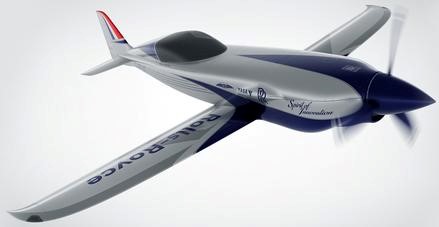
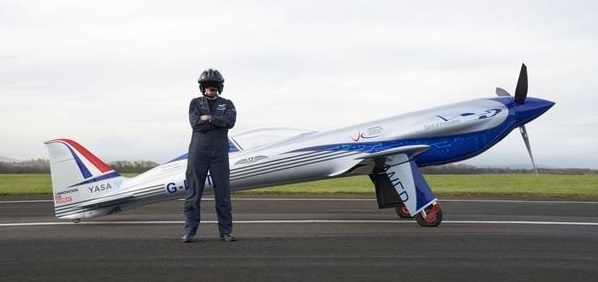
Rolls-Royce developed the ACCEL (Accelerating the Electrification of Flight) as an electric aircraft demonstrator racing aircraft to gain the all-electric air speed record, targeting over 480 km/h (260 kn). The existing electric aircraft record at that time was 182 kn (337 km/h), set in 2017 by a Siemens powered Extra 330.
Designed at Gloucestershire Airport, the project is partly funded by the UK government and involves partners such as electric motor and controller manufacturer YASA Limited and aviation start-up Electroflight.
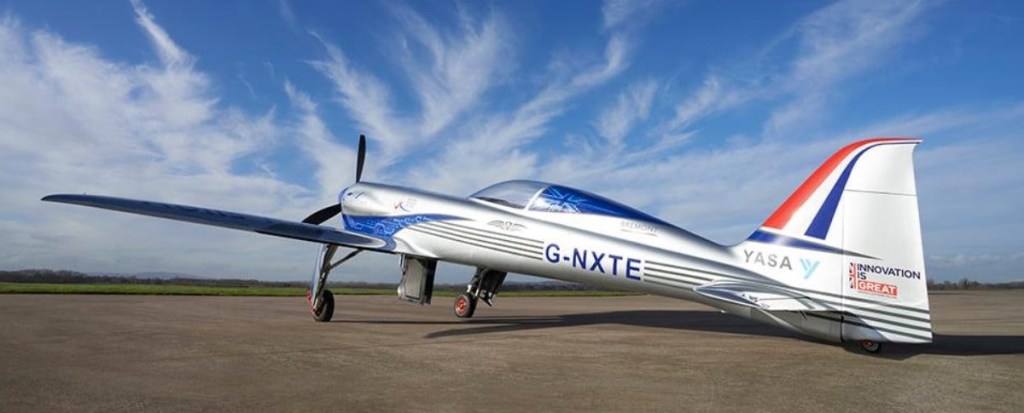
The team aimed to reach the 1931 Schneider Trophy speed, which was won by a R-R-powered Supermarine S.6B, reaching 298 kn (552 km/h).
On 15 September 2021, Rolls-Royce announced the aircraft, named “Spirit of Innovation”, had successfully completed its first flight, flying from MoD Boscombe Down for fifteen minutes.
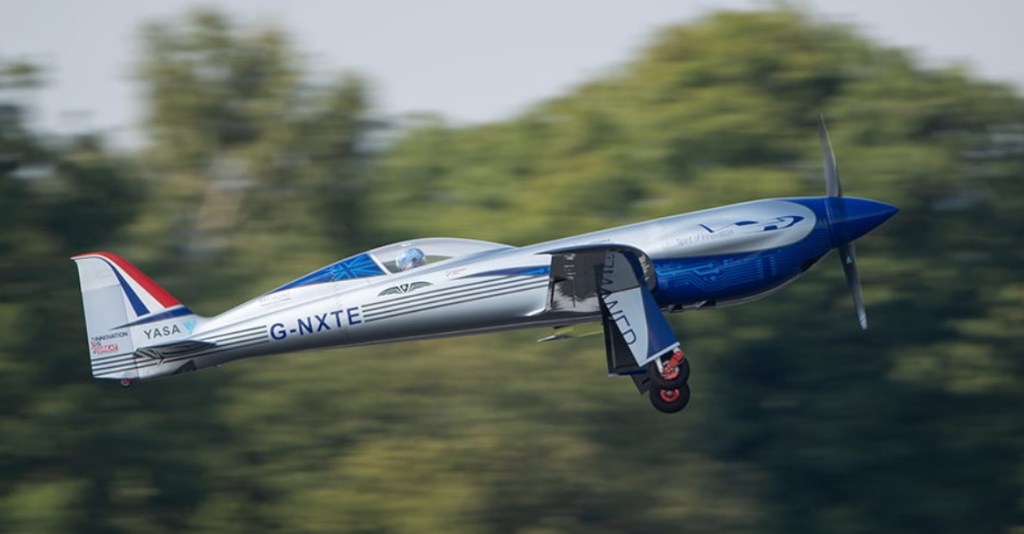
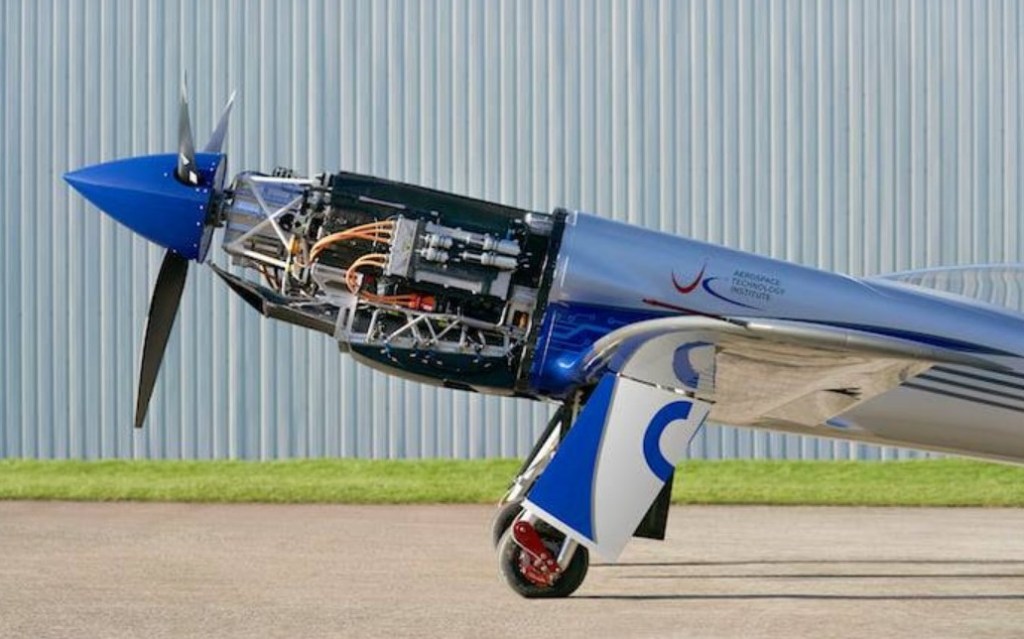
The 24 ft (7.3 m) span aircraft is powered by three high power density electric motors driving a single three-blade propeller spinning at 2,400 RPM, designed and manufactured by YASA, running at 750 volts and delivering over 400 kW (536 hp) combined from its 6,480-cell battery pack with cork insulation. Its cooled battery pack should have the highest energy density for an aircraft and should allow a 320 km; 170 nmi range.
It is derived from the carbonfibre Sharp Nemesis NXT racer, cruising at 282 kn (522 km/h) with a 350hp (260kW) piston engine, but reaching 355 kn (657 km/h) with a highly tuned engine. Battery power output will be 500 hp (373 kW) continuous, reaching 750kW (1,006hp) at maximum power. The battery, motors and control equipment weigh the same as the regular engine and fuel tank while the NXT has a maximum take-off weight of 1,200kg (2,645lb). Its 216 KWh battery pack weighs 1350 kg.
Rolls-Royce said that its all-electric Spirit of Innovation aircraft has set three new world speed records, making it the world’s fastest all-electric aircraft. The company has submitted data to the Fédération Aéronautique Internationale (FAI)— the World Air Sports Federation which controls and certifies world aeronautical and astronautical records—that at 15:45 (GMT) on 16 November 2021, the aircraft reached a top speed of 555.9 km/h (345.4 mph) over 3 kilometers, smashing the existing record by 213.04 km/h (132mph).
In further runs at the UK Ministry of Defense’s Boscombe Down experimental aircraft testing site, the aircraft achieved 532.1km/h (330 mph) over 15 kilometers—292.8km/h (182mph) faster than the previous record—and broke the fastest time to climb to 3000 meters by 60 seconds with a time of 202 seconds. It subsequently reached a top speed of 623 km/h (336 kn), 555 km/h (300 kn) over 3 km (1.6 nmi), 532 km/h (287 kn) over 15 km (8.1 nmi), and was able to climb to 3,000 m (9,840 ft) in 3min 22s. The speeds achieved were accepted as world records for electric aircraft by the Fédération Aéronautique Internationale in January 2022.
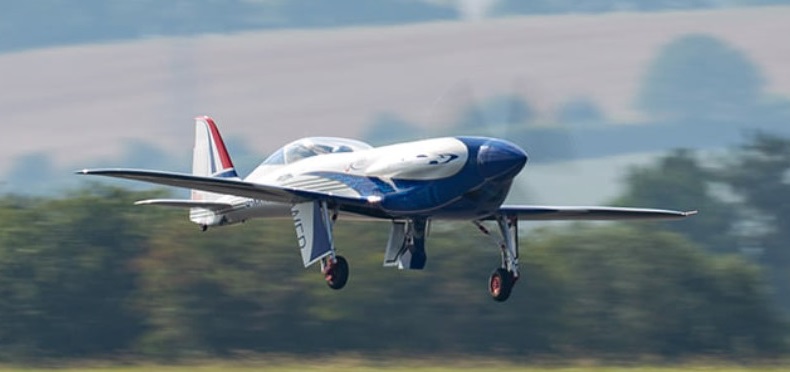
During its record-breaking runs, the aircraft clocked up a maximum speed of 623 km/h (387.4 mph)—making the Spirit of Innovation the world’s fastest all-electric vehicle.
 All Aero