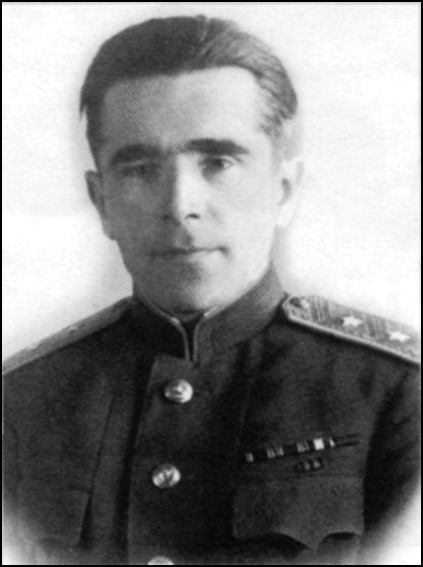
Vladimir Sergueyevich Pyshnov (Russian: Владимир Сергеевич Пышнов) was born on March 6, 1901 in Moscow. In 1918 he finished secondary school at the 3rd Muscovite Gymnasium and in 1919 he entered the Moscow Technical Aviation School, directed by the famous Professor N. Ye. Zhukovski.
In June 1920 VS Pyshnov voluntarily joined the ranks of the Red Army at a call from the school’s leadership and a month later, July 29, 1920 the Revvoyensoviet (Revolutionary Military Soviet) issued an order establishing the transfer of subordination of the school to the Main Directorate of the Red Air Fleet, although methodologically it was still linked to the technical-professional education structure.
Changes continued and the 26 of September of 1920 the Revvoyensoviet N.1946 issued a new order, which established reorganize the School of Aviation Moscow at the Institute of Engineers of Red Zhukovsky Air Fleet (Russian: Институт инженеров Красного Воздушного Флота имени Н. Е. Жуковского) in honor of its creator and on November 23 the state position on the institute was made official.
During the study period, Pyshnov carried out the practices under the guidance of the aeronautical constructor AA Porojovschikov, together with another group of students who worked in his factory as turners, milling cutters and assemblers. On the other hand, from the first year of study Pyshnov decided to try forces in the development of gliders.
In 1921, with the help of some fellow students, he built his first glider. In November of this year on this glider a group of young students, including Pyshnov himself, BI Cheranovski, VN Belyayev, VV Utkin-Yegorov and others, made more than 20 flights. In the last one carried out, the glider was destroyed and was never restored.
These were years of intense development of gliders in the USSR. At the request of the Directorate of the Air Fleet Directorate (Glavvozduxflot), a circle of gliding was created under the auspices of the Air Fleet Scientific Office.
Professor VP Vetchinkin at a meeting on October as November as 1921 asked to name this circle “Paryaschi Poliot” (thermal flying). The first president of the circle was AA Zhavrov, being soon replaced by KK Artseulov. Among the members of this circle, VS Pyshnov was registered.
In May 1923 and from an initiative of the direction of the Academy of the Air Fleet and the Military Academy of the RKKA a military scientific society was organized that greatly promoted the activities of the aviation and planning sections. The AVF leadership allowed students to build gliders and light aircraft using the academy workshops.
By November 1923, the gliding section, with 11 people, participated in the First National Sailing Competitions held in Crimea. Three students from the academy: MK Tijonrarov, VS Pyshnov and SV Ilyushin presented their own gliders named respectively AVF-1 Arap, AVF-2 Strizh and AVF-3 Mastyazhart.
At the Second National Sailing Competitions held in Crimea in September 1924, four-year students Pyhsnov and Tijonrarov were selected for members of the technical committee, led by Professor VP Vetchinkin.
The 2 of April of 1925 there was the first graduation of engineers in the AVF. Among the graduates was Pyshnov, after defending his diploma project under the mentorship of the famous aeronautical builder DP Grigorovch.
After finishing the Pyshnov academy he went on to serve as an engineer in the 8th Squadron of the independent brigade “Krasnaya Moskvá ”. In May 1926, he was placed on the reserve and sent to serve in the industry.
Pyshnov expressed his interest in continuing his studies and in October 1926 he again entered the Military Aeronautical Academy (VVA), where a year later he defended his dissertation, receiving the teaching category. From 1927 he began his work as a teacher at the VVA. As of January 1932, he was appointed head of the chair of Aerodynamics Aeronautics and later, on April 16, 1935, head of the chair of Flight Dynamics.
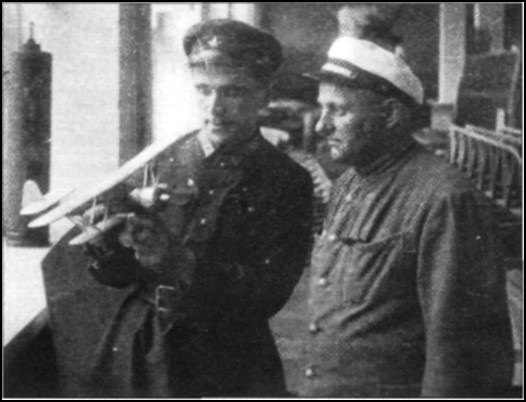
In 1935 Pyshnov developed a light aircraft that received the name VVA-1 of which a copy was built that was flown successfully, although with poor performance.
The 23 of February of 1937 he received the rank of professor and from the 14 of March of 1938, by Resolution No.235 of the SNK, it became part of the Aviation Committee within the Defense Committee of the USSR.
At the beginning of the Great Patriotic War and by order №02201 of the Popular Defense Committee, Pyshnov was appointed consultant to the head of the NII VVS on aviation matters. In this position he stood out for his work to develop a methodology for flight tests and work on the evaluation of military aircraft projects.
In June 1942 he was promoted to Major General of the Aviation Engineering Service and in that same year he received the distinction of Honorary Personality of Science and Technology of the USSR.
In March 1946 he was promoted again to lieutenant general engineer service and order №0763 of the direction of the VVS of the August 12 went on to serve as a consultant scientist and a permanent member of the Technical Committee on Aviation VVS (ATK VVS). Three years later, by ministerial order №01240, he became president of Section 1 (Aeronautics) of the ATK VVS, a position he held until 1958.
In 1958 he received the title of Doctor of Technical Sciences.
In November 1968 Vladimir Pyshnov was graduated, although he remained in teaching until the year of his death, which occurred in 1984, in Moscow.
Titles and distinctions
Twice Order of Lenin ;
Twice Order of the Red Banner ;
Order of the Red Banner of Labor ;
Order of the Patriotic War of the 1st level;
Medals;
Honorary Personality of Science and Technology of the USSR.
Aeronautical construction
1921 glider
AVF-2 “Strizh”
VVA-1
Works and published works
“Aeronautical Auger” (Russian: “Штопор самолета”), 1929;
“Aerodynamics of flight” (in Russian: «Аэродинамика самолета»), 1939;
“Dynamic Properties of Airplanes” (Russian: “Динамические свойства самолета”), 1951;
“Main stages of development of aviation” (in Russian: “Основные этапы развития самолета”), 1984.
Pyshnov was also the author of a large number of articles published by popular and specialized magazines, as well as several text brochures used in the subjects taught at the Zhukovski Military Aeronautical Engineering Academy.
 All Aero