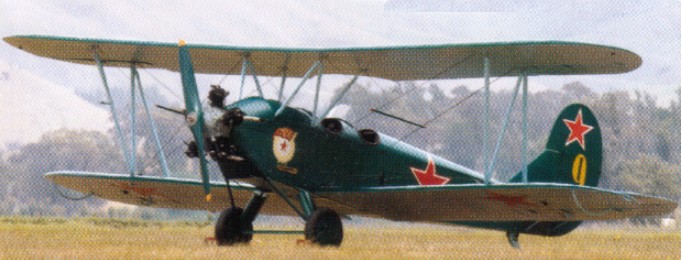
The U-2TPK prototype, which appeared in early 1927 was designed by N.N.Pellyakov, had been built to achieve economy in repair and maintenance, the wings comprising four identical thick-section interchangeable rectangular panels with square tips. Similarly, a common control surface was used for ailerons, elevators and rudder. The result was a biplane with very poor flight characteristics. It had thus to be redesigned, appearing as a neat, manoeuvrable biplane having staggered single-bay wing with rounded tips, conventional cross-axle landing gear, and tandem open cockpits for instructor and pupil. Powered by a 75kW radial engine, the new prototype made its first flight on 7 January 1928. An immediate success, it was placed in quantity production, deliveries starting in 1928, and by the time of the German invasion of the Soviet Union in mid-1941 over 13,000 had been completed.
Though its principle role was primary training, the U-2 was soon modified as a light passenger transport, air ambulance and agricultural aircraft. Production continued on a massive scale during World War II, and the U-2 took on an even wider range of duties, including liaison, light attack, night nuisance raider and propaganda aircraft complete with microphone and loudspeaker.
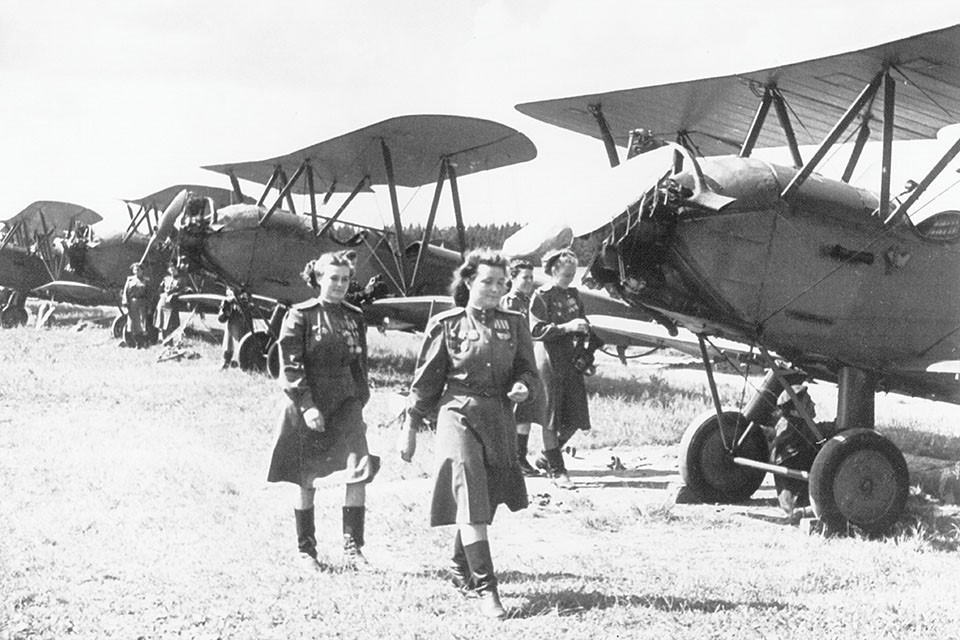
The Russians organized an entire regiment of women pilots to attack German targets at night. Called Nächthexen, or “Night Witches,” by the Germans, they operated Po-2s.
On 3 March 1944 the German 1st Easrwen Squadron ( I.Ostfliegerstaffel) was transferred to Lida airfield near Vilna (Lithuania). This unit consisted of Russian volunteers who flew captured Soviet U-3 biplanes, they called ‘sewing machines’. The unit had been set up in Daugavpils (Latvia) in December 1943, and now its members flew operations in the zone of Luftflotte 6 under General Ritter von Greim. The observers on board he U-2s dropped small-calibre bombs by hand. The aircraft flew every night when visibility permitted, crossing over the Soviet lines with nuisance raids.
In time, the Po-2 set a record for a basic design: A grand total of some 40,000 were produced. The Soviet Union built Po-2s from 1928 to 1951, and Poland turned them out under license from 1948 to 1955. But that was not the end of it. Numerous aeroclubs and enthusiasts kept constructing them in Russia until 1959.

After Polikarpov’s death, on 30 July 1944, the U-2 was redesignated Po-2 in his honour, and post-war it continued in production in the USSR for several years. Trainer and ambulance variants were built on a large scale in Poland from 1948 to 1953, Po-2s served with many Soviet allies and a small number still remain in flying condition in the USSR and several other countries. The total built is credibly reported to be in excess of 40,000.
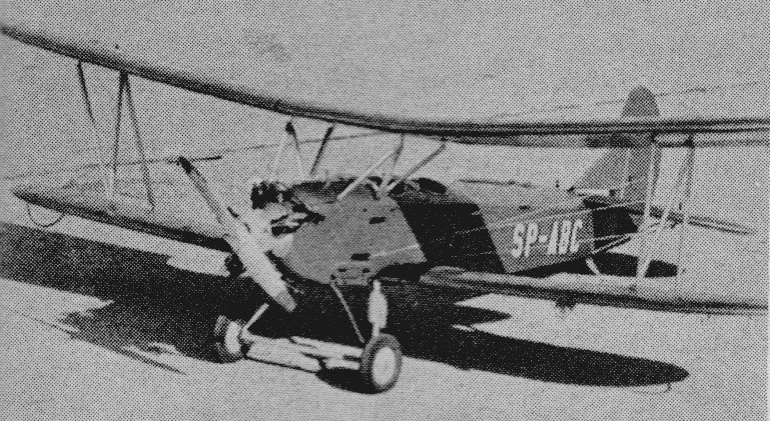
In 1947, the aviation of the People’s Army of Poland turned to the Polish aviation industry with an order to start serial production of the Soviet Po-2 training and liaison aircraft. In the USSR, it was agreed to sell its license and in 1948, the Central Aircraft Study in Warsaw, under the direction of Stanisław Lassota, the licensing documentation for the aircraft was prepared. The license version of the aircraft differed from the Po-2 prototype in a different type of ailerons, had a trim on the elevator, different shock absorber fairings and some on-board instruments, minor improvements in the airframe design, as well as an improved engine, so the designation was changed to CSS-13.
The production of the aircraft began at WSK-Mielec in December 1948. The prototype of the aircraft, SP-AKZ, made its first flight on December 18, 1948 and the pilots were Ludwik Lech and Kazimierz Tyrlik. In the following year, its testing was carried out at the Institute of Aviation in Warsaw. During the tests, it was found that the aircraft has good handling characteristics and behaved safely at take-off and landing.
In 1999, the first serial model was flown. Serial production of the aircraft lasted at PZL Mielec from 1949 to 1950, and then 1952-1956 at WSK Okęcie in Warsaw. In total, 560 CSS-13 aircraft were produced in the years 1949–1956, of which 180 at PZL Mielec and 380 at WSK Okęcie. Airplanes of this type, popularly known as “Pociaki” or “Papayas”, were used by military, agricultural aviation as well as by flying clubs.
The first new aircraft were directed to aviation units and military schools as early as 1949. In the first half of the 1950s, CSS-13 aircraft were the basic aircraft in squadrons and liaison keys of the air forces. The following versions were used: liaison equipped with a double control system, bomber with a sight glass in the lower right wing for targeting with a gunsight and bomb locks under the wing and placed on the top of the fuselage, behind the second cabin on a rack, a movable aircraft machine gun. In addition to the air force, CSS-13 aircraft were used in the aviation units of the Navy and in the Border Protection Forces to patrol the state border.
During 1953–1955, LOT Polish Airlines operated 20 CSS-13 aircraft adapted for agricultural purposes (dusting crops and forests). In the flying clubs, CSS-13 aircraft were used in the 1960s for pilot training, training flights, glider towing, and parachute jumpers transport.
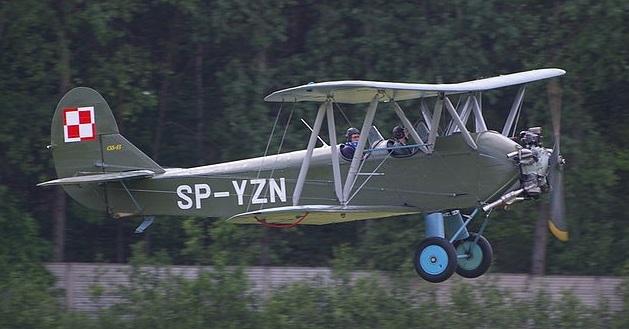
In 1953, a prototype of the version of the CSS-13 aircraft was built and flown at the Okęcie airport in Warsaw, marked as CSS S-13, designed by Tadeusz Sołtyk, M.Sc. A total of 59 aircraft of this type were produced.

Dozens of them have been exported, e.g. to Romania and Hungary. The last copy was withdrawn from use in 1978.
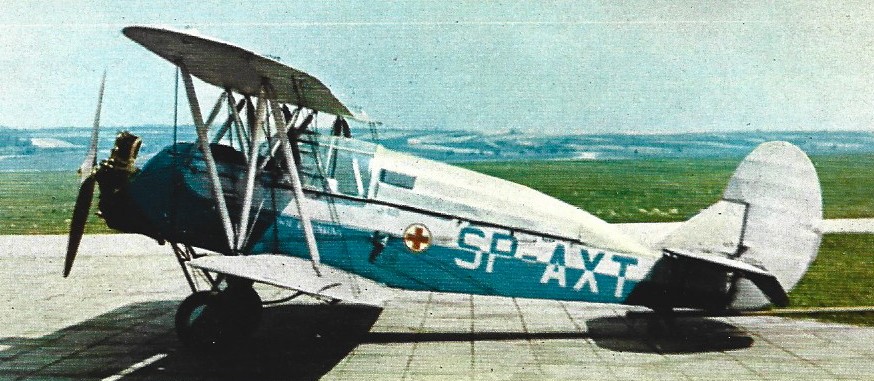
A Polish-built ambulance version has a raised rear decking.
Replica:
Rusavia Polikarpov U-2
Variants:
U-2: Basic model, built in large numbers as a two-seat primary trainer. It was also built in many different versions, both as civil and military aircraft. The U-2 variants also included a light transport, utility, reconnaissance and training aircraft. Power plant was the M-11 radial piston engine of 75 kW (100 hp). Later models were also equipped with uprated M-11 engines of 111 kW (150 hp). Some aircraft were fitted with a rear closed cabin, other were fitted with sledges or floats.
U-2A: Two-seat agricultural crop dusting aircraft, powered by an 86 kW (115 hp) M-11K radial piston engine. Later redesignated Po-2A after 1944.
U-2AO: Two-seat agricultural aircraft.
U-2AP: Agricultural aircraft, with a rear cab replaced with a container for 200–250 kg (441-551 lb) of chemicals. 1,235 were built in 1930–1940.
U-2G: This experimental aircraft had all the controls linked to the control column. One aircraft only.
U-2KL: Two aircraft fitted with a bulged canopy over the rear cabin.
U-2LSh: Two-seat ground-attack, close-support aircraft. The aircraft were armed with one 7.62 mm (0.30 in) ShKAS machine-gun in the rear cockpit. It could also carry up to 120 kg (265 lb) of bombs and four RS-82 rockets. Also known as the U-2VOM-1.
U-2LPL: Experimental prone-pilot research aircraft.
U-2M: This floatplane version was fitted with a large central float and two small stabilizing floats. Not built in large numbers. Also known as the MU-2.
U-2P: Floatplane version, built only in limited numbers, in several variants with different designations.
U-2S: Air ambulance version, built from 1934. It could take a physician and an injured on a stretcher on a rear fuselage, under a cover. Variant U-2S-1 from 1939 had a raised fuselage top upon the stretcher. From 1941 there were also used two containers for stretchers, that could be fitted over lower wings or two containers for two seating injured each, fitted under lower wings.
U-2SS: Air ambulance aircraft.
U-2ShS: Staff liaison version, built from 1943. It had a wider fuselage and a closed 4-place rear cab.
U-2SP: Civil transport version, could carry two passengers in open individual cabs, built from 1933. Other roles included aerial survey, and aerial photography. A total of 861 were built between 1934 and 1939.
U-2SPL: This limousine version was fitted with rear cabin for two passengers.
U-2UT: Two-seat training aircraft, powered by an 86 kW (115 hp) M-11D radial piston engine. Built in limited numbers.
U-2LNB: Somewhat like the earlier -LSh version, a Soviet Air Force two-seat night attack version, built from 1942. Armed with one 7.62 mm (0.30 in) ShKAS for rear defense, plus up to 250 kg of bombs under the wings for land support. Earlier aircraft were converted to improvised bombers from 1941.
U-2VS: Two-seat training and utility aircraft. Later redesignated Po-2VS after 1944.
U-2NAK: Two-seat night artillery observation, reconnaissance aircraft. Built from 1943.
U-3: Improved flying training model, fitted a 149 kW (200 hp) seven cylinder M-48 radial engine.
U-4: Cleaned-up version with slimmer fuselage; not built in large numbers.
- (Total U-2 manufacture: 33,000)
Po-2: Postwar basic trainer variant.
Po-2A: Postwar agricultural variant.
Po-2GN: “Voice from the sky” propaganda aircraft, fitted with a loud speaker.
Po-2L: Limousine version with an enclosed passenger cabin.
Po-2P: Postwar floatplane version; built in small numbers.
Po-2S: Postwar air ambulance variant, with a closed rear cab.
Po-2S-1: Postwar ambulance version, similar to the pre-war U-2S.
Po-2S-2: Postwar ambulance version, powered by a M-11D radial piston engine.
Po-2S-3: Postwar ambulance version, which had two underwing containers, each one was designed to transport one stretcher patient. Also known as the Po-2SKF.
Po-2ShS: Staff communications aircraft, fitted with an enclosed cabin for the pilot and two or three passengers.
Po-2SP: Postwar aerial photography, geographic survey aircraft.
RV-23: This floatplane version of the U-2 was built in 1937. It was used in a number of seaplane altitude record attempts. The RV-23 was powered by a 529 kW (710 hp) Wright R-1820-F3 Cyclone radial piston engine.
CSS-13: Polish licence version, built in Poland in WSK-Okęcie and WSK-Mielec after World War II (about 500 built in 1948–1956).
CSS S-13: Polish ambulance version with a closed rear cab and cockpit and Townend ring (53 built in WSK-Okęcie in 1954–1955, 38 converted to S-13).
E-23: Research version, built in the Soviet Union in 1934, for research into inverted flight.
Engine: 1 x Schvetsov M-11, 74-118kW
Max take-off weight: 983 kg / 2167 lb
Empty weight: 740 kg / 1631 lb
Wingspan: 11.4 m / 37 ft 5 in
Length: 8.2 m / 27 ft 11 in
Height: 3.1 m / 10 ft 2 in
Max. speed: 146 km/h / 91 mph
Cruise speed: 100-130 km/h / 62 – 81 mph
Ceiling: 5000 m / 16400 ft
Range w/max.payload: 430 km / 267 miles
Crew: 1
Passengers: 1-2
CSS-13
Engine: M-11D, 125 hp (92 kW)
Wing span: 11,4 m
Wing area: 33,15 m2
Length: 8,17 m
Height: 3,1 m
Empty weight: 723 kg
MTOW: 1057 kg
Maximum speed: 150 km/h
Stall: 70 kph
Ceiling: 3000 m
ROC: 2.0 m/s
Range: 650 km
Armament: 1 x 7.62 mm ShKAS machine gun
Bombload: 300 kg
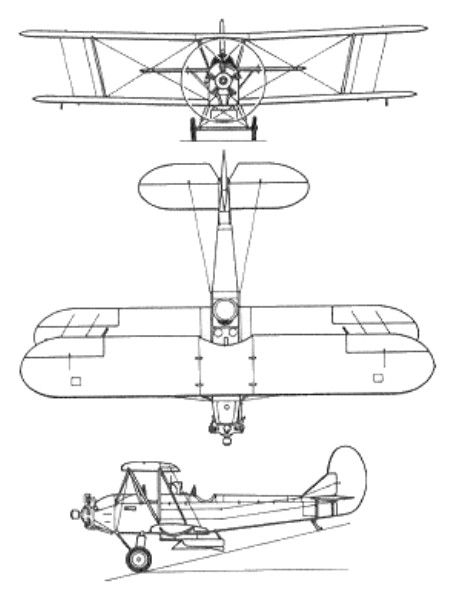
 All Aero