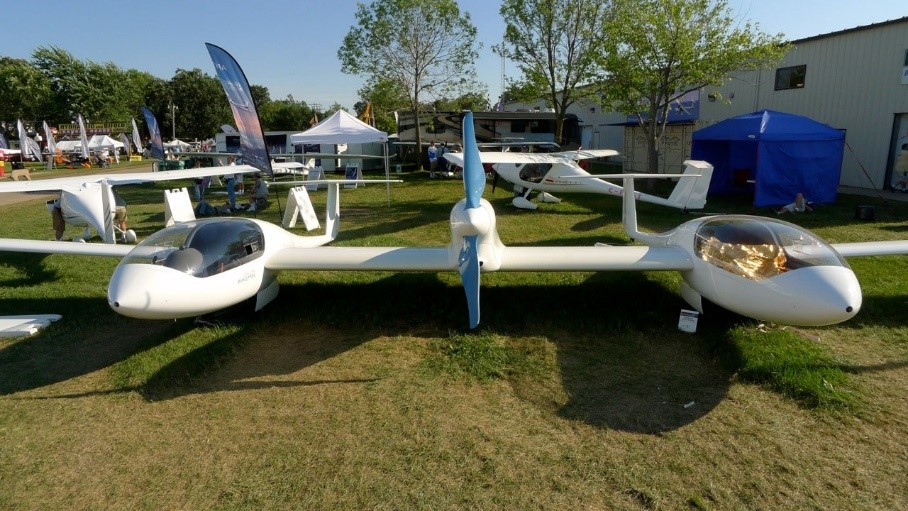
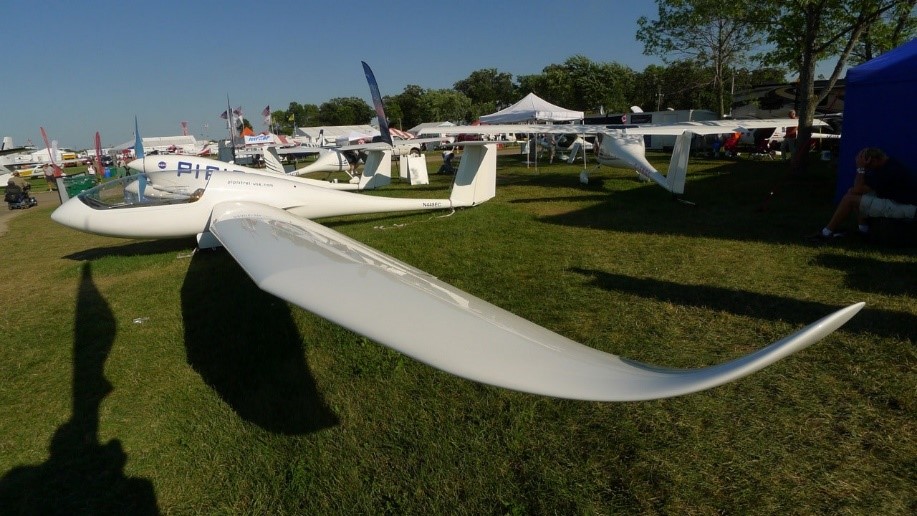
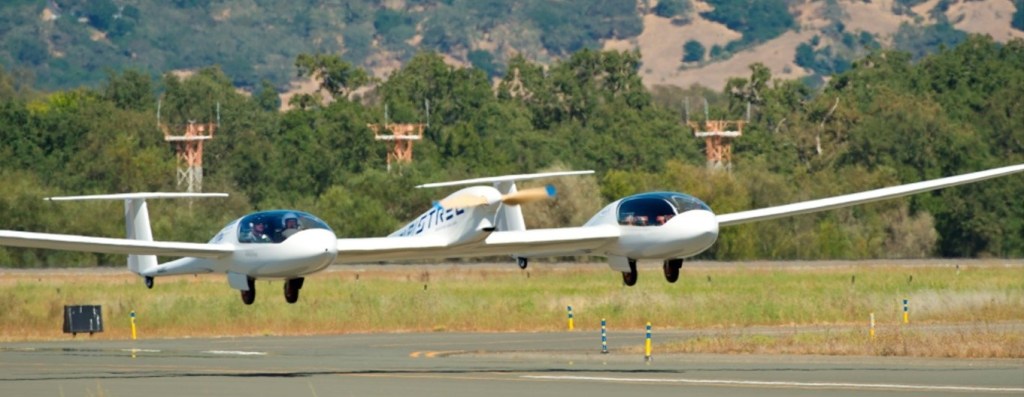
The Taurus G4 is a test bed to develop a high-power electric propulsion system. It features twin fuselages, room for four and an electric motor.
The Taurus G4 was built entirely in house, and mostly of carbon fiber with some Kevlar here and there. It is essentially a pair of Pipistrel’s Taurus self-launch glider fuselages joined by a single wing.
Mounted between the fuselages is a 150 kilowatt (200 horsepower) electric motor. It is the most powerful electric motor seen thus far in an all-electric airplane design. The Taurus G4 carries more than 1,100 pounds of lithium polymer batteries. There is more than 75 kilowatt-hours available via the company’s proprietary management system.
The airframe is very light. Although the aircraft weighs roughly 2,350 pounds empty, nearly half of that is the battery. Maximum takeoff weight is 3,300 pounds.
The right fuselage of the Taurus G4 contains the cockpit with dual controls.
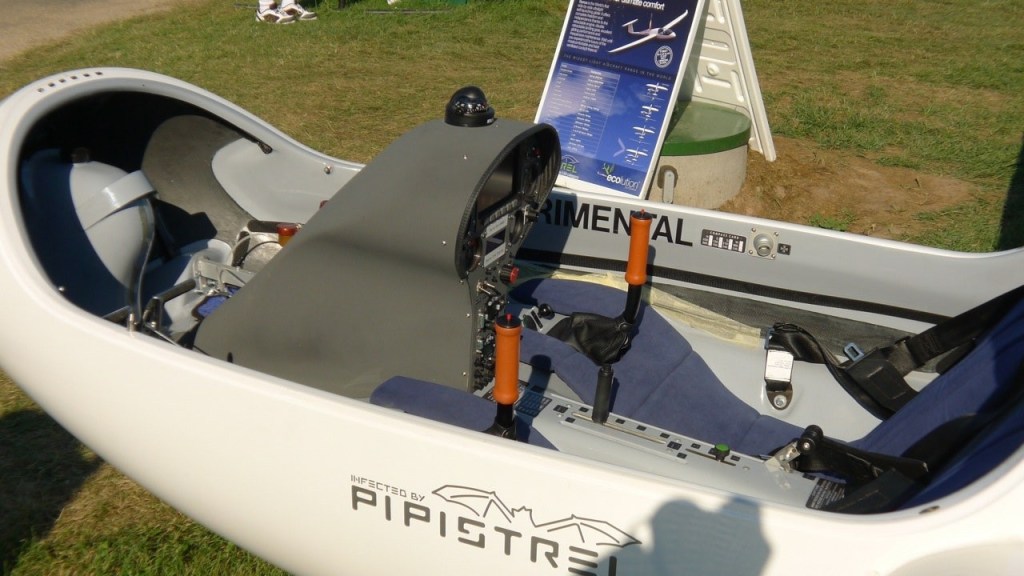
The airplane was designed and built in the course of four months. The G4 was built specifically for the NASA/CAFE Green Flight Challenge. Its sizing and aerodynamic features, as well as the power train and battery capacity were matched to the requirements. The competition is aimed at developing highly fuel-efficient, yet practical, aircraft. Competitors must fly at least 200 miles in less than two hours while averaging at least 200 seat miles per gallon. With its four seats, the Taurus G4 has a distinct advantage if Pipistrel can meet the performance requirements.

The airplane is purely a demonstrator, with no plans for production. Pipistrel is using the G4 to develop the motor, battery and power management system for a more traditional design.
It was designed by DLR Institute of Engineering Thermodynamics of the German Aerospace Center, based on the Pipistrel Taurus G4, the German Aerospace Center / DLR HY-4 is a four-seat hydrogen fuel cell powered aircraft. It made its maiden flight on 29 September 2016 from Stuttgart Airport.
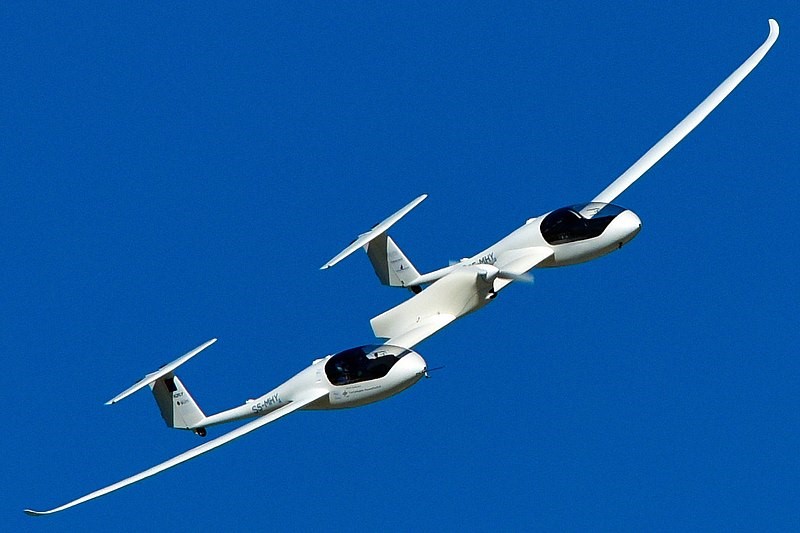
In late September 2011, Google sponsored the CAFE Green Flight Challenge at the Sonoma County Airport in Santa Rosa, California. Three aircraft competed and two met the challenge requirements to fly 200 miles in less than 2 hr and use less than the energy equivalent of one gallon of fuel per passenger. The first place prize of $1.35 M was won by the Pipistrel-USA.com team led by Jack Langelaan of State College, Pennsylvania. Pipistrel’s new, twin-fuselage plane was created by combining two Taurus G2 fuselages, connected by a 5-m-long spar. A 145-kW brushless electric motor, developed for Pipistrel’s new 4-seat Panthera aircraft, is mounted between the passenger pods and drives a 2-m-diameter, two-bladed propeller in a tractor configuration. The Taurus G4’s full wingspan is about 21.36 m (75 feet) and it flew 200 miles nonstop while achieving 403.5 passenger mpg.
 All Aero