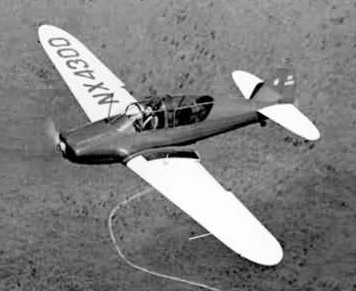
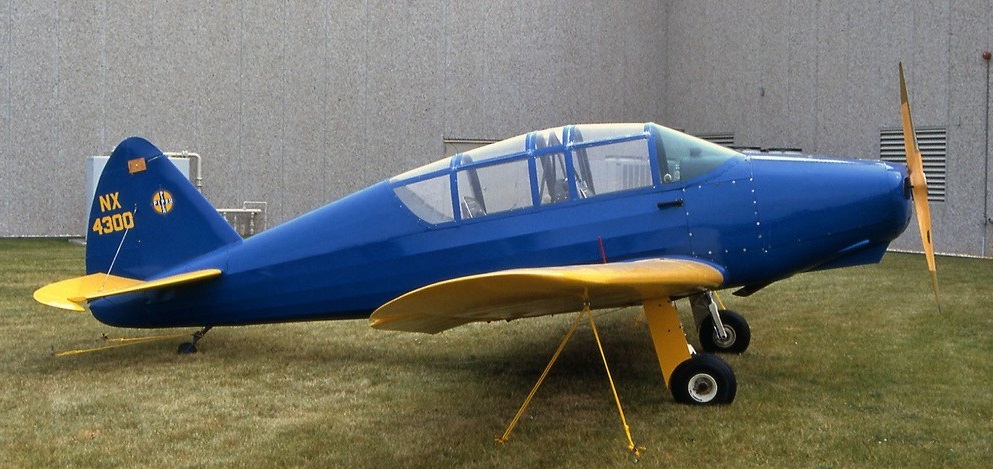
The Piper PT-1 was a 1940s American two-seat primary training monoplane designed and built by Piper for Army or Navy primary flight training. A low-wing tandem two-seat monoplane, the PT-1 was the first Piper aircraft to have a low-wing. It had a fabric covering over an all-metal fuselage frame and wooden spar wings and tail unit. The PT-1 had a retractable tailwheel landing gear and was powered by a 130 hp (97 kW) Franklin 6AC-2980D engine.
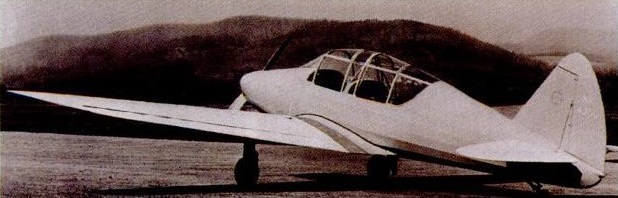
Designed by David Long, the prototype NX4300 first flew in 1942, no further aircraft were built. A four-seat development was designed as the Piper PWA-6 / PA-6 which did not go into production either.
Engine: 1 × Franklin 6AC-298, 130 hp (97 kW)
Propeller: 2-bladed fixed pitch wooden airscrew
Wingspan: 35 ft 2 in (10.72 m)
Length: 22 ft 8 in (6.9 m)
Height: 6 ft 6 in (1.98 m)
Empty weight: 1,325 lb (601 kg)
Gross weight: 2,000 lb (907 kg)
Maximum speed: 150 mph (240 km/h, 130 kn) plus
Cruise speed: 135 mph (217 km/h, 117 kn) plus
Landing speed: less than 50 mph (43 kn; 80 km/h)
Range: 700 mi (1,100 km, 610 nmi)
Service ceiling: 12,400 ft (3,800 m)
Rate of climb: 750 ft/min (3.8 m/s) to 1,000 ft/min (300 m/min)
Crew: 2
 All Aero