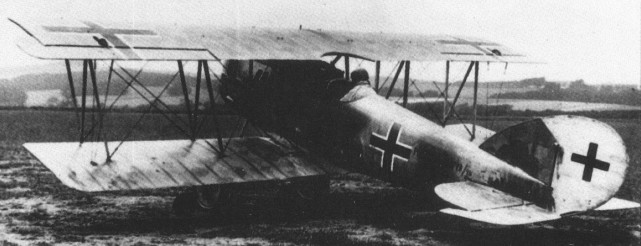
The last Pfalz design to be built in numbers was the D XII fighter, a type designed for the second German tighter competition held in May 1918. In layout the type was a sturdy twin-bay biplane with a plywood-covered semi-monocoque tuselage, a large tailplane and horn-balanced control surtaces. The prototype first flew with the Mercedes D.llla inline, but in the competition examples were flown with the Mercedes DIII and BMW Ill engines. The D XII was ordered into production mainly as an insurance against problems with the Fokker D VIII, and was generally used by Bavarian units. After initial disappointment that they had not received the Fokker tighter, these units soon came to appreciate the very real virtues of the Pfalz machine, which were adequate performance, good agility and extreme strength. Production totalled some 200 aircraft.

The two-spar wings, with plywood leading edges, had wire trailing edges, and ailerons on the top wing only. The fin and control surfaces were welded steel tube construction.

The D.XII equipped ten frontline squadron in the last three month of the war.
Pfalz DXII
Powerplant: l x Mercedes D.IIIa, 134kW (180 hp)
Span: 9m (29ft 6.25 in)
Wing area: 233.6 sq.ft
Length: 6.35m (20ft 10 in)
Height: 8 ft 10.25 in
Empty weight: 1578 lb
Max T/O weight: 900 kg (1984 lb)
Fuel capacity: 18.75 Imp.Gal
Max speed: 106 mph at 10,000ft
Service ceiling: 18,500 ft
Operational endurance: 2 hr 30 min
Armament: 2 x 7.92-mm (0.312-in). Spandau LMG 08/15 mg.
Seats: 1
 All Aero