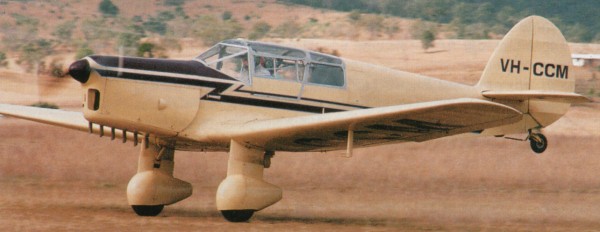
The prototype Gull G-ABUR flew in 1932 as a 3 seat touring aircraft, all wooden construction, powered by a 130hp Cirrus Hermes IV. The aircraft was designed by Australian Edgar Percival and constructed by Lowe-Wylde British Aircraft Company at a small glider factory Maidstone, Kent. The following year the prototype was re-engined with a Napier Javelin II, and its speed and performance was further improved. Edgar Percival flew it in races in England and it was later written off in Rhodesia during a speed record attempt to the Cape.
The first production model was the Percival “D” Series Gull, 29 built by George Parnall and Company at their works at Yate, Gloucestershire under contract to Percival Aircraft Co Ltd. They were designated D.1 or D.2 depending on engine installed, top/side hatch cockpit entry and tripod undercarriage legs, but were all called Percival Gull IV. In 1934 Percival Aircraft Co Ltd established its own works at Gravesend Airport, Kent. Here 19 type D.3 Gulls named the Percival Gull VI were built, featuring side opening cockpit doors and single leg undercarriage with spats, powered by a 200hp Gipsy Six.
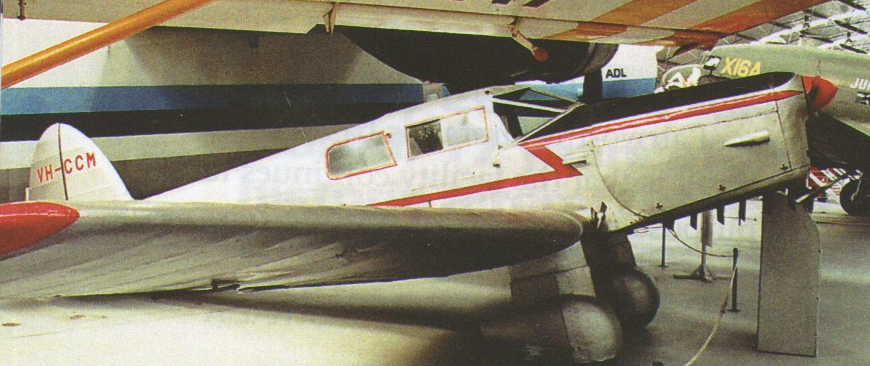
Gull Six
Engine: de Havilland Gypsy Six I, 184 hp at 2,100 rpm / 205 hp at 2,350 rpm. for takeoff.
Propeller: two-bladed fixed-pitch
Wingspan: 36 feet, 2 inches (11.024 meters)
Length: 24 feet, 9 inches (7.544 meters)
Height: 7 feet, 4½ inches (2.248 meters)
Empty weight: 1,170 pounds (530.7 kilograms)
Gross weight: 2,050 pounds (929.9 kilograms).
Max speed: 178 miles per hour (286.5 kilometers per hour)
Service ceiling: 16,000 feet (4,876.8 meters)
Range: 700 miles (1,126.5 kilometers).
Crew: 1
Passengers: 2
 All Aero