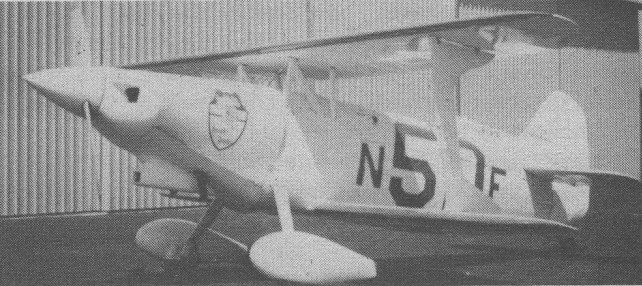
The Payne Knight Twister is a single-seat, single-engine aerobatic sport aircraft first flown by Vernon Payne Sr. in the United States in 1932 and marketed in plans form for homebuilding.
It is a conventional biplane design with slightly staggered wings of unequal span. The wings are of fully cantilever design and do not require the bracing wires commonly used on biplanes or even interplane struts; however, most builders brace the wings with I-struts and at least one pair of wires. The cockpit is open, and the undercarriage is of fixed, tailwheel type with divided main units. The wings and horizontal stabilizer are of wooden construction, skinned in plywood, while the fuselage and vertical stabilizer are of welded steel tube covered in fabric.
Payne designed the Knight Twister in 1928 while teaching aircraft design and repair at a school attached to the Aviation Service and Transport Company in Chicago. Construction of a prototype by Payne and his students commenced the following year but ended shortly thereafter when the school was forced to close as a consequence of the Great Depression. Payne began building a second prototype in 1931, which first flew in fall the following year powered by a Salmson 9Ad radial engine. This aircraft was damaged in a forced landing due to fuel exhaustion during a demonstration flight for the press, and parts of the airframe were reused to build the second Knight Twister in 1935. This machine, powered by a converted Ford Model A automobile engine, was built for an Argentine buyer who eventually declined to take delivery. After it had passed through several hands, Payne himself bought the aircraft back after World War II and his son, Richard, was killed in it during a test flight on which the engine failed shortly after take-off.
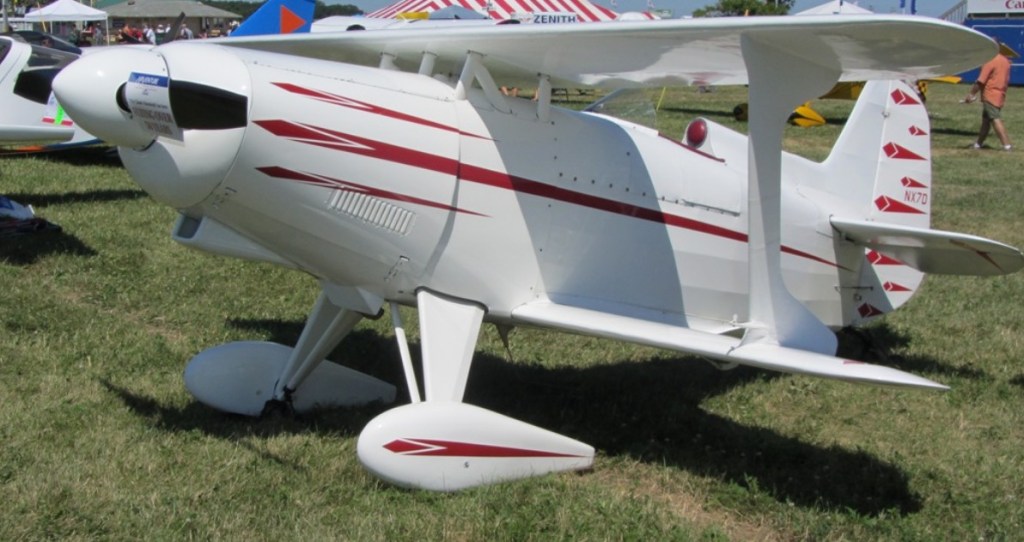
The Knight Twister built a reputation as a racing aircraft. In 1964, Clyde Parsons flying the “Parsons Twister”, won the Sport Biplane Championship race at Reno with a speed of 144.7 mph. In the 1970s, Don Fairbanks competed with a Knight Twister preserved initially at the Motorsports Hall of Fame of America museum in Novi, Michigan, and later in the lobby of Sporty’s Pilot Shop at Clermont County Airport, Batavia, Ohio. Fairbanks set the world record in the sport biplane class of 178 mph (284 km/h) with this aircraft.
The Knight Twister has a reputation as a “handful” to fly, but this has been vigorously denied by both its designer and by Fairbanks. Both men have attributed this reputation to the controls being lighter and more responsive than those of the light aircraft that most pilots are more familiar with.
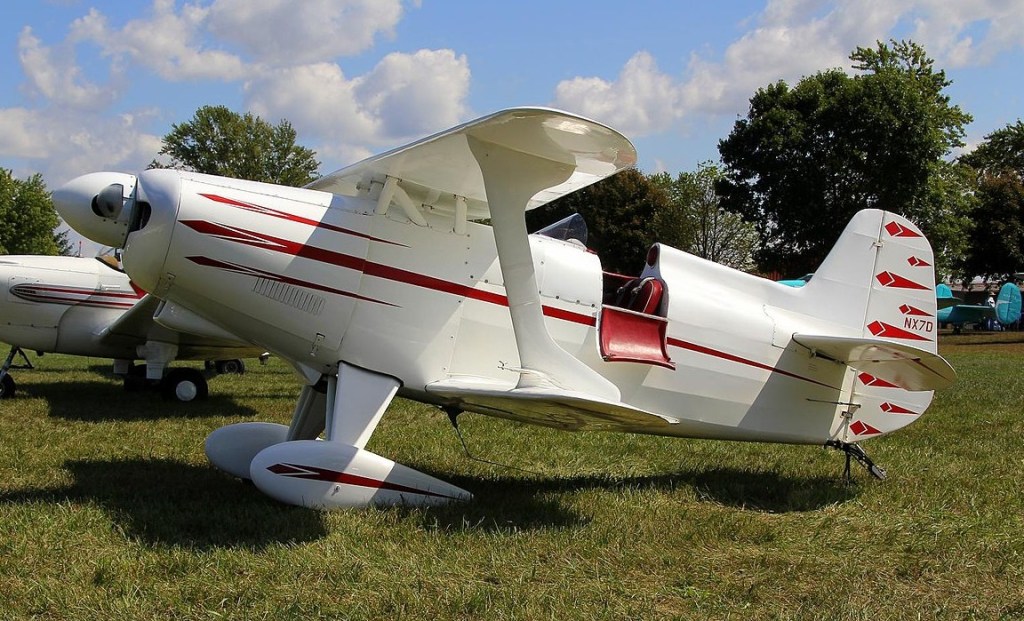
In the 1990s, the rights to the design were acquired by Steen Aero, who continue to offer plans for sale in 2009.
Variants
KT-125
KTS-1 – first prototype with Salmson 9Ad engine (1 built)
KTD-2 – second prototype with converted Ford Model A engine designated Douglas Bear (1 built), later redesignated Knight Twister Junior 75-85
KT-50 – version with 50 hp (37 kW) Continental or Franklin engine and 18-ft wingspan
KT-75 Knight Twister Junior – version with 75 hp (56 kW) Continental or Lycoming engine and 17 ft 6 in-wingspan
KT-80 – version with 80 hp (60 kW) Franklin engine
KT-85 – standard version with Continental engine of 85 to 90 hp (63 to 67 kW) and 15-ft wingspan
KT-90 – version with 90 hp (67 kW) engine and 15-ft wingspan
KTT-90 – version with 90 hp (67 kW) Lycoming engine and 18-ft wingspan
KT-95 – version with 95 hp (71 kW) Lambert engine
KT-125 – version with 185 hp (138 kW) engine
KT-140 – version with 140 hp (104 kW) engine.
SKT-125 Sunday Knight Twister – version with 125 hp (93 kW) Lycoming engine and 19 ft 6 in-wingspan
KT Imperial – version with engine of 135 to 150 hp (101 to 112 kW) and wing area increased (span: 17 ft 6 in) to comply with Sport Biplane class rules
KT Holiday – version with 125 hp (93 kW) engine and wingspan of 19 ft 6 in
KT Acro – version with wingspan of 15 ft 6 in
KT Coed – version with passenger seat in tandem with pilot’s; wingspan of 22 ft 6 in.
Double Twist – A two place model with an untapered 21 ft M6 airfoil.
Pretty Prairie Special II model 1 – Straight leg conventionally braced based on a Knight Twister, stretched 16 inches
Pretty Prairie Special III – A Menasco powered variant displayed in the EAA Airventure Museum in Oshkosh, Wisconsin until 2006, and now at the Kansas Aviation Museum.
Payne Knight Twister
Span upper: 15.00 ft
Span lower: 13 ft
Length: 14 ft
Knight Twister Imperial
Engine 140-hp Lycoming.
Gross Wt. 900-1100 lb
Empty Wt. 694 lb
Fuel capacity 35 USG
Wingspan 17 ft
Length 16 ft 1 in
Top speed 170 mph
Cruise 120 mph
Stall 50 mph
Climb rate 1000 fpm
Takeoff run 475 ft
Landing roll 800 ft
Range 680 miles
KT-85
Powerplant: 1 × Continental C90 , 90 hp (67 kW)
Wingspan: 15 ft 0 in (4.57 m)
Wing area: 60 sq ft (5.6 m2)
Length: 14 ft 0 in (4.27 m)
Height: 5 ft 3 in (1.60 m)
Empty weight: 535 lb (243 kg)
Gross weight: 960 lb (435 kg)
Maximum speed: 160 mph (257 km/h, 140 kn)
Range: 390 mi (625 km, 340 nmi)
Rate of climb: 900 ft/min (4.6 m/s)
Crew: One pilot
 All Aero