
The Wee Mite was a parasol monoplane with a welded steel frame with wooden wings and a fixed landing gear with a tailwheel. Designed by Cecil Noel and built by him and Harold James Le Parmentier it was initial powered by a 30 hp (22 kW) ABC Scorpion engine.
A second-hand ABC Scorpion engine of 30-40 hp coming on the local market made the proposition feasible, and the necessary planning and designing began. Even with his past experience as a pilot-instructor, Mr Noel found that the limitations of the island with regard to take-off and landing made the theoretical side of the business a tricky undertaking, and it was nearly six months before the plans and blueprints were completed.
Early in the summer of 1932 the practical work was commenced, and in this the designer was joined by a small band of enthusiasts. The first job of the work was the creation of the propellor. This was of mahogany, two-bladed, 3ft 4 in pitch, and was manufactured entirely in Guernsey. When fitted to the engine it was tested out on the sandy foreshore mounted on a Ford chassis.
A high wing, semi-cantilever monoplane, V-strutted, a split ‘Oleo’ undercarriage was fitted and open cockpits.
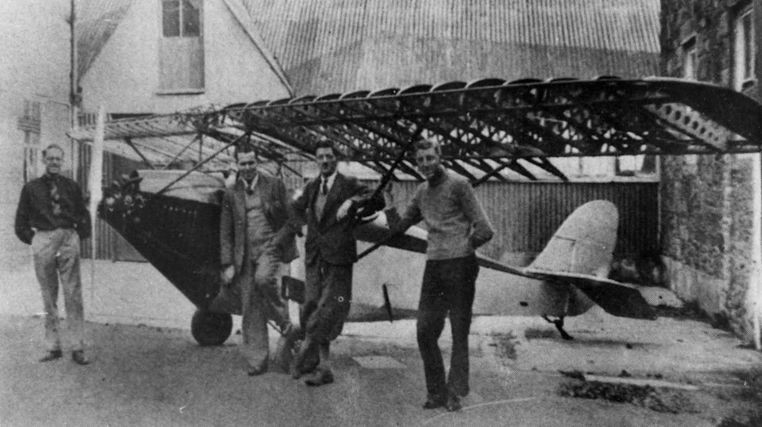
The engine was put aside until the following winter while the fusealge was built to receive it. The engine in position and early one summer morning, Guernsey’s air pioneers smuggled the aircraft through the sleeping streets to the sandy stretch of Vazon Bay.
Here it was put through her speed, control and acceleration tests. As was to be expected, adjustments were necessary, but these were so slight that they served rather to flatter the skill of the designers and builders and the exactitude of their labours.
The calulation of the centre of gravity was found to be slightly at fault, having been estimated at from 1½ to 2 inches too far forward, necessitating an alteration of the wing position. This satisfactorily adjusted, the Wee Mite with Mr W C Noel at the controls essayed her first flight. First flown at Vazon Bay, Guernsey on 10 April 1933. Still slightly out of trim though she proved, her initial flutter of a few hundred yards was successful.
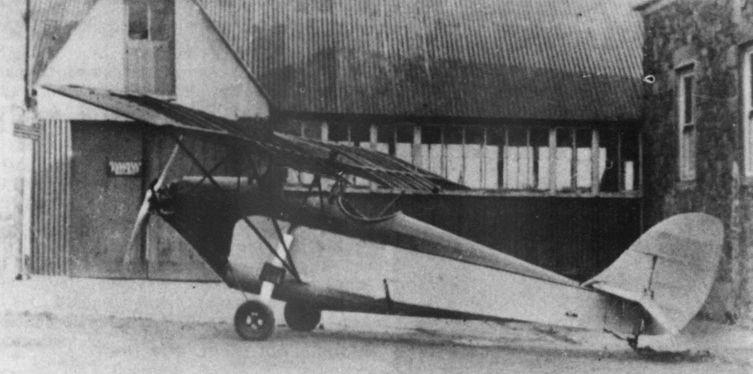
To improve her the engine was geared and she was fitted with a four-bladed metal prop of 6ft pitch, 5 ft 9 in in diameter. The metal prop burst and set up such a tremendous vibration that it crystallised the front part of the metal air-frame, practically ruining the front of the fuselage.
An A D Salmson of 40-50 hp, repairs having been completed, it was installed with a two-bladed wooden propellor and a lengthened fuselage by 18 in (46 cm). this proved ideal for vibration was noticeable less and with the experience gained further teat flights were successfully accomplished, until the ‘Wee Mite’ was ready to be re-christened the ‘We Can,’ to the confusion of all the local doubters.
It was successfully flown around Guernsey in a 50 minute flight on 15 September 1933.

It was registered as G-ACRL to Parmentier on 21 April 1934.
The aircraft crashed on 21 January 1935. Le Parmentier, at the controls, found himself unable to keep it aloft in inclement weather. Gusts of wind were buffeting the beach as he took off, one of which caught the underside of the aircraft and turned it upside down while in flight.
Fortunately, Wee Mite wasn’t very high when at the time, but its aerodynamic properties were completely thrown out and it fell to earth. The propeller and wings were destroyed and, although the engine remained intact, it was beyond practical or economical repair. Its registration was cancelled in spring of 1935.
It was dismantled and stored in March 1936.
In her occupation diaries, Ruth Ozanne recounts how, in March 1941, the owner of a garage in St Peter Port found what was apparently the remains of the plane stowed in the loft.
The Bailiff had no choice but to report the discovery to the German forces, who ordered its destruction so it couldn’t be used either against their own men or to escape the island. A post on the Priaulx Library website recounts the same story.
However, the online history of the Guernsey Aero Club tells a different tale. The club had been established by Wee Mite’s designer, Cecil Noel, and in 1935 it bought an Avro 594 Avian IV, which was damaged in a gale. What was left of it was stowed in the loft of a St Peter Port garage and, when discovered during the occupation, shipped off to Germany.
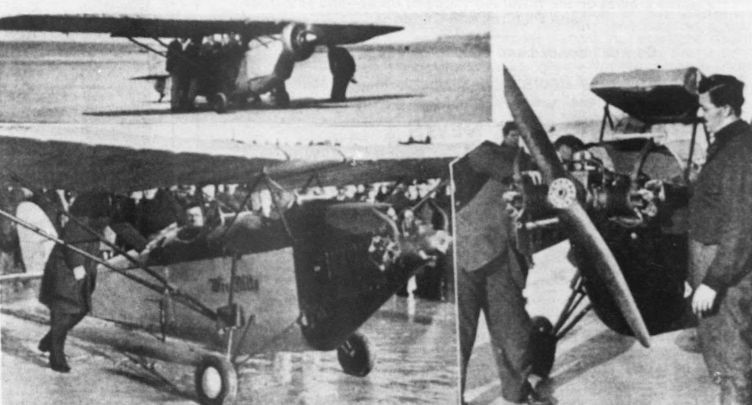
Powerplant: 1 × British Salmson AD.9, 40 hp (30 kW)
Wingspan: 31 ft 0 in (9.45 m)
Wing area: 148 sq ft
Chord: 5 ft
Length: 20 ft 0 in (6.10 m)
Height: 6ft 1½ in
Empty weight: 650 lb (295 kg)
Gross weight: 970 lb (440 kg)
Wing loading: 6.55 per sq ft
Maximum speed: 92 mph (148 km/h, 80 kn)
Cruise speed: 75 mph (121 km/h, 65 kn)
Take-off speed: 38-40 mph
Landing speed: 30-35 mph
Take-off distance: 100-120 yards
Landing distance, 100 yards
Ceiling: 8,000 ft
Tested height: 3,000 ft
Initial rate of climb: 450 ft per min
Crew: one
Capacity: one passenger
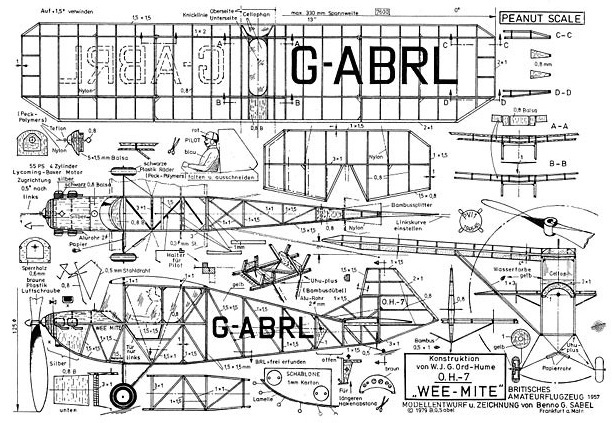
 All Aero