
North American engineers designed two variants of the BC-1 to sell to overseas buyers as fighters and attack planes. One was a single-seat fighter and the other a two-seater; both had five .30-caliber ma¬chine guns in the wings and nose.
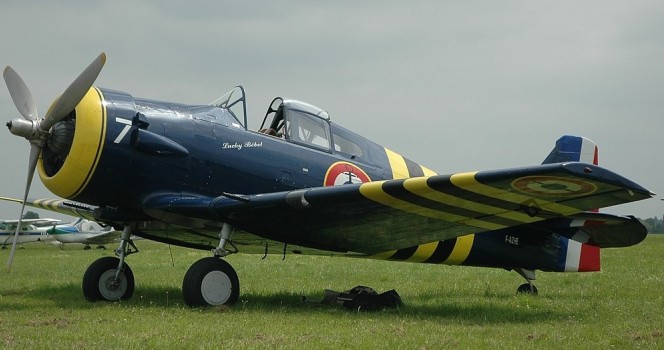
Conceived as a low-cost fighter for use by smaller nations demanding comparatively simple warplanes, yet embodying such modern features as an enclosed cockpit and a retractable undercarriage, the NA-50 was a single-seat derivative of the NA-16 tandem two-seat basic trainer. Of all-metal construction with semi-monocoque fuselage, the NA-50 was powered by an 870hp Wright R-1820-77 Cyclone radial.
First flying on 1 September 1940 piloted by Lewis Waite, one prototype was built for the USAAF (NX25607).
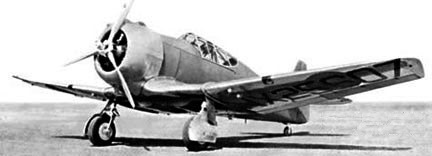
The first order, from the Siamese air force, was for 10, including both versions. Brazil, Peru and Chile ordered 49 single-seat fighters.
In January 1938, a contract was placed on behalf of the Cuerpo de Aeronautica del Peru for seven NA-50s, delivery being completed in May 1939. In Peruvian service, the NA-50s were equipped with racks for up to 249kg of bombs, and the type saw active service in 1941 during a conflict with Ecuador. The last Peruvian NA-50 was withdrawn in 1961.
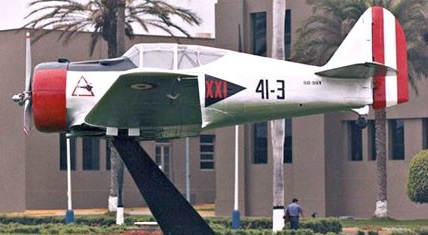
The company Model NA-50A P-64 ordered by Siam on 30 December 1939, was little more than a single-seat pursuit ship patterned after the Harvard trainer and developed from the NA-50 used by Peru. Tension was increasing at the time between Siam and French Indochina, and the State Department prohibited the transfer. The six examples of this strictly export craft were built at Inglewood and painted in Siamese markings, and were en route to Siam when the US Army confiscated them. The aircraft were diverted to the Philippines, where they were taken over by the U.S. Army Air Corps (41-18890/18899). They removed the armament, and assigned them to training duties at Luke Field, Arizona, designated the P-64.
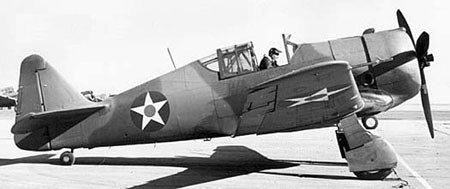
A widely-published report that the Siam-bound aircraft were caught at Pearl Harbour during the 7 December 1941 Japanese attack is inaccurate: the NA-50As were apparently embargoed in October 1940 and a camouflaged example in USAAF markings was noted at Luke as early as 16 September 1941.
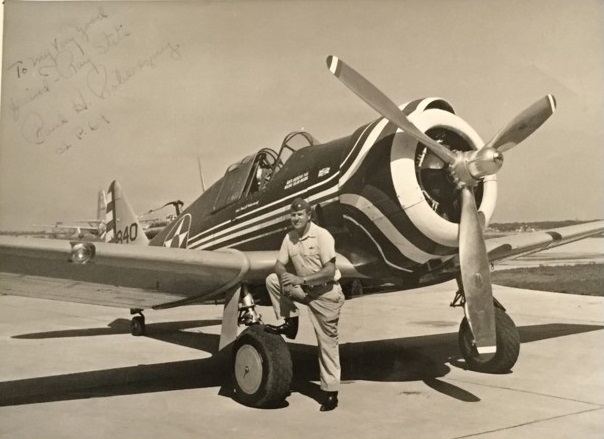
Never really a fighter in USAAF service, the six P-64s were essentially base ‘hacks’ and possibly never received American serial numbers. A privately-owned survivor in civil registry as N840 was airworthy in the US as recently as 1975.
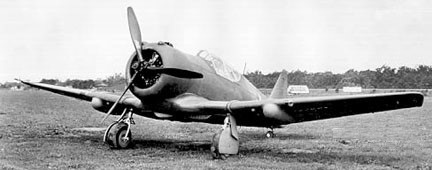
One survives in the EAA collection (41-19085, NX37498, XBKUU, N686220).

In early 1964, a North American P64 was ferried from San Diego to Flabob Airport in Riverside Ca. Once we realized it’s rarity, Ray contacted Paul Poberezny and a deal was made to acquire the P64 for the EAA Museum. I spent over two months working on the P64 to get it airworthy so Paul could ferry it to Wisconsin. Attached pictures are the P64 as it sat on Flabob Airport and after Paul finished the restoration (Paul in uniform with his pride and joy). Don Stits
NA-50
Max take-off weight: 2585 kg / 5699 lb
Empty weight: 2028 kg / 4471 lb
Wingspan: 11.35 m / 37 ft 3 in
Length: 8.21 m / 26 ft 11 in
Height: 2.67 m / 8 ft 9 in
Wing area: 21.93 sq.m / 236.05 sq ft
Max. speed: 475 km/h / 295 mph
Range: 1038 km / 645 miles
NA-50A
Engine: Wright R1820-77 Cyclone 9, 870 hp
Wing span: 37 ft 3 in
Wing area: 236 sq.ft
Length: 26 ft 11 in
Empty weight: 4470 lb
MAUW: 6800 lb / 3084 kg
Max speed: 270 mph at 9500 ft
Cruise: 255 mph at 16,500 ft
Range: 645 mi
Armament: 2 x .30 mg & 2 x 20mm cannon + 4 bombs underwing.
P-64
Engine: Wright R-1820, 875hp
Max take-off weight: 2717 kg / 5990 lb
Empty weight: 2113 kg / 4658 lb
Wingspan: 11.35 m / 37 ft 3 in
Length: 8.23 m / 27 ft 0 in
Height: 2.74 m / 8 ft 12 in
Wing area: 21.18 sq.m / 227.98 sq ft
Max. speed: 434 km/h / 270 mph
Cruise speed: 235 mph
Stall: 71 mph
Ceiling: 4260 m / 14000 ft
Range: 1380 km / 858 miles
Seats: 1
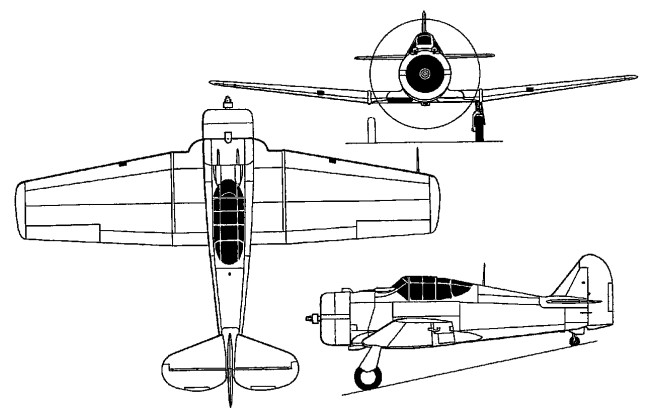
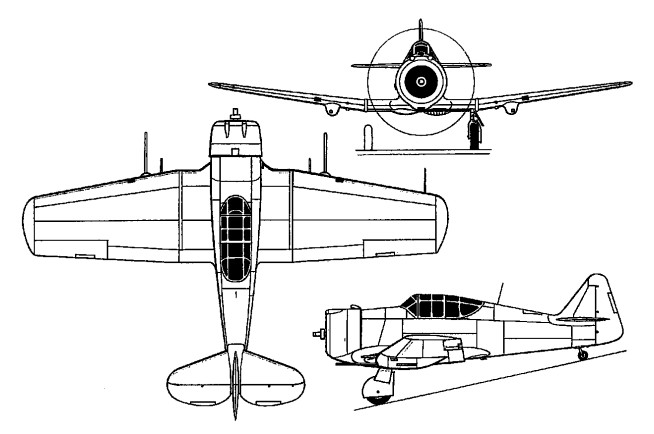
 All Aero