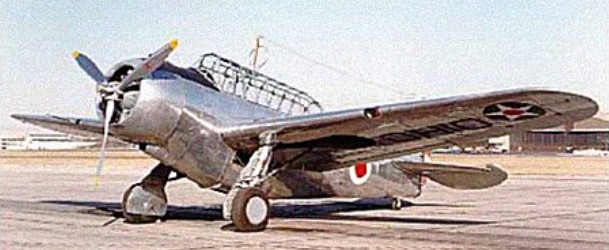
Developed by General Aviation (the precursor of North American Aviation) to meet a US Army specification for an observation aircraft, the GA-15 represented a radical change in design for such a role in that, unlike its predecessors, it was a low-wing monoplane with an enclosed cockpit, seating a three-man crew.
Powered by a 634kW Wright Cyclone engine, the prototype GA-15 / XO-47 36-145, built at Dundalk MD, flew in mid-1935 and to provide an acceptable field of view for the observer a glazed nose position was located under the fuselage. North American put the type into production to meet a USAAC contract for 109 North American O-47A aircraft ordered in February 1937, later increased to 164. They were powered by 727kW Cyclones, while 74 O-47B aircraft had 790kW engines and additional fuel capacity. During World War II they served as trainers and target tugs.
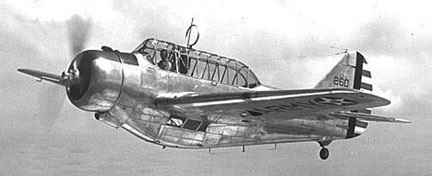
The O-47A model was released for export in 1939 and is known as the NA-25. 164 of the 1937 O-47A (NA-25, NA-60) were built: 37-260 to 37-368 and 38-271 to 38-325.
Seventy-four 1939 O-47B (NA-51) were built: 39-139 to 39-141.
GA-15 / XO-47
Engine: Wright R-1820 Cyclone, 850hp
O-47
Engine: Wright R-1820
Wingspan: 46’4″
Length: 33’7″
Useful load: 1656 lb
Max speed: 221 mph
Cruise speed: 200 mph
Range: 400 mi
Ceiling: 23,200′
Crew: 2
O-47A
NA-25, NA-60
Engine: 975hp R-1820
O-47B
NA-51
Engine: 1060hp R-1820
 All Aero